
Social connection is as essential for our health and happiness as a balanced diet and regular exercise. It reduces our risk of stroke, heart disease, and Alzheimer’s. It enhances our creativity and adds years to our life span. Yet many of us struggle to form strong and meaningful bonds – and the problem lies not with our personalities but with a series of cognitive biases that stop us from fulfilling our social potential.
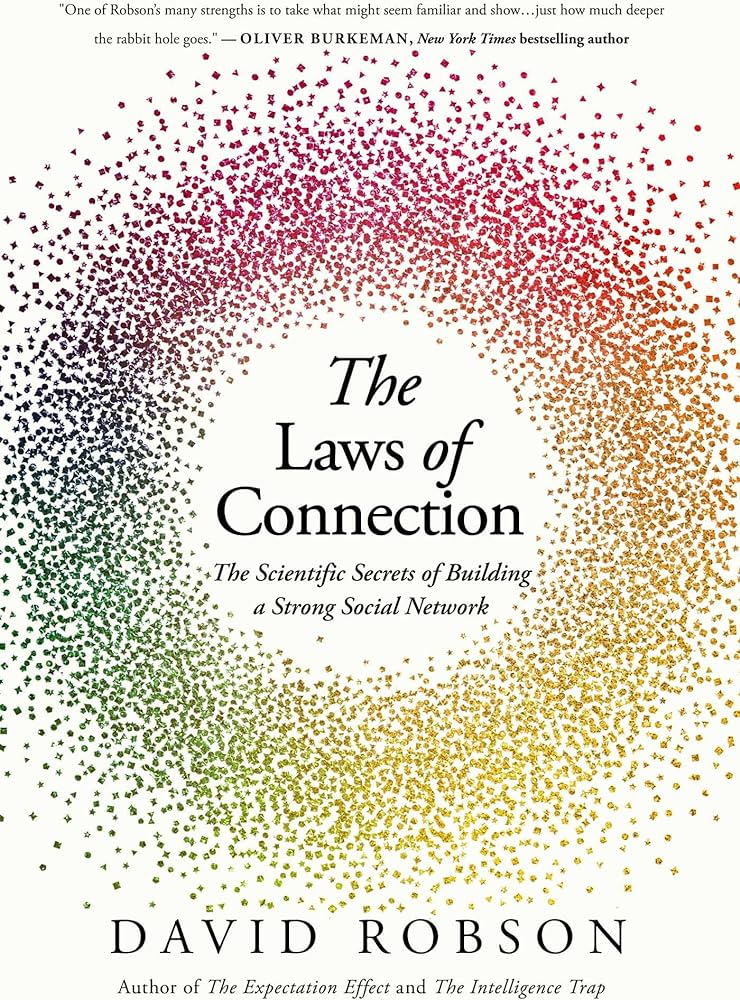
In The Laws of Connection, award-winning science writer David Robson describes the psychological barriers that lead us to keep others at a distance and offers evidence-based strategies to overcome them.
Drawing on philosophy, neuroscience, and cutting-edge psychology, Robson introduces readers to new concepts such as the liking gap, the novelty penalty, the fast-friendship procedure, the beautiful mess effect, and the Japanese art of amae (a Japanese term used to describe acting like a spoiled child). Whether we are shy or confident, introvert or extrovert, we can all build deeper relationships. The Laws of Connection shows us how.
David Robson’s The Laws of Connection is a captivating exploration of the science behind human relationships. Drawing on a wealth of psychological research, Robson delves into the cognitive biases and social barriers that can hinder our ability to connect with others. The book offers a compelling argument that strong social connections are essential for our well-being, challenging the notion that our personality traits are fixed determinants of our social success.
At the heart of Robson’s argument is the idea that our thought processes and behaviors play a crucial role in shaping our relationships. He introduces various cognitive biases that can inadvertently sabotage our social interactions. For instance, the “liking gap” refers to our tendency to underestimate how much others like us, while the “novelty penalty” suggests that we may be less likely to form bonds with people who are too similar to us.
The book also explores the concept of the “beautiful mess effect,” which highlights the importance of embracing imperfections in our relationships. Rather than striving for idealized connections, Robson argues that it is often the messy, imperfect moments that strengthen our bonds.
In addition to cognitive biases, Robson discusses the social barriers that can hinder our ability to connect with others. These barriers include fear of rejection, lack of self-confidence, and cultural differences. The book provides practical strategies for overcoming these challenges and fostering deeper connections.

One of the key themes in The Laws of Connection is the power of intentional connection. Robson emphasizes that building strong relationships requires effort and conscious attention. He introduces techniques such as the “fast-friendship procedure” and the “disclosure reciprocity effect” to help readers forge deeper bonds with others.
The fast-friendship procedure involves asking a series of personal questions to create a sense of intimacy and connection. The disclosure reciprocity effect suggests that we are more likely to open up to others if they first share personal information with us.
Throughout the book, Robson provides compelling examples and anecdotes to illustrate his points. He draws on research from various fields, including psychology, sociology, and neuroscience, to support his arguments.
Here are Robson’s Laws of Connection:
- Be consistent in your treatment of others. Avoid becoming a stressful frenemy.
- Create a mural understanding with the people you met.
- Ignore superficial similarities and instead focus on your internal world, and the peculiar ways that your thoughts and feelings coincide. Trust that others, on average, will like you as much as you like them, and be prepared to practice your social skills to build your social confidence.
- Check your assumptions; engage in ‘perspective/getting rather than ‘perspective-taking’ to avoid egocentric thinking and misunderstandings.
- In conversation, demonstrate active attention, engage in self-disclosure, and avoid the novelty penalty, to build mutual understanding and contribute to the merging of our minds.
- Praise people generously, but be highly specific in your words of appreciation.
- Be open about your vulnerabilities, and value honesty over kindness (but practice both, if possible).
- Do not fear envy. Disclose your successes but be accurate in your statements and avoid comparing yourself to others. Enjoy ‘confelicity’.
- Ask for help when you need it, in the expectation that your pleas for support can build a stronger long-term bond.
- Offer emotional support to those in need, but do not force it upon them. Validate their feelings while providing an alternative perspective on their problems.
- Be civil and curious in disagreements; show interest in the other side’s viewpoint; share personal experiences; and translate your opinions into their moral language.
- For your wellbeing, choose forgiveness over spite. Look at the big picture in arguments. Ensure your apologies define the offense, take responsibility for your actions, and express regret. Have faith that people can change for the better.
- Reach out to the people who are missing in your life. Let them know that they are still a part of your thoughts.
Overall, The Laws of Connection is a thought-provoking and informative book that provides valuable insights into the science of human connection. It is a must-read for anyone interested in improving their relationships and understanding the psychological factors that influence our social interactions.
Beyond its practical applications, the book also offers a deeper understanding of the human condition. Robson’s exploration of the science of connection sheds light on the fundamental need for social connection and the ways in which we can cultivate meaningful relationships.
The Laws of Connection is a valuable resource for anyone seeking to improve their social lives and build stronger relationships. It offers practical strategies, thought-provoking insights, and a deeper understanding of the science behind human connection

Part of a regular series on 27gen, entitled Wednesday Weekly Reader.
During my elementary school years one of the things I looked forward to the most was the delivery of “My Weekly Reader,” a weekly educational magazine designed for children and containing news-based current events.
It became a regular part of my love for reading, and helped develop my curiosity about the world around us.
 27gen.com