
Every day, across countless dining rooms, coffee shops, and kitchen tables, we’re all performing.
Not in the sense of putting on a fake show, but in the sociological sense that Erving Goffman described in his landmark 1959 work The Presentation of Self in Everyday Life: we’re managing impressions, playing roles, and collaborating with others to create shared meanings. And nowhere is this performance more revealing – or more universal – than in our relationship with food and drink.
Over the past month, a four-part series has explored how food experiences illuminate fundamental truths about social interaction, identity, and community through Goffman’s dramaturgical lens. From the café regular earning their place among neighbors, to the historical meanings embedded in beverage choices, to the choreographed care of professional hospitality, to the autobiographical recipes we cook into our identities – these articles revealed that our daily food rituals are elaborate performances that construct who we are and how we belong.
Let’s wrap the series with a quick look back and a challenge going forward.
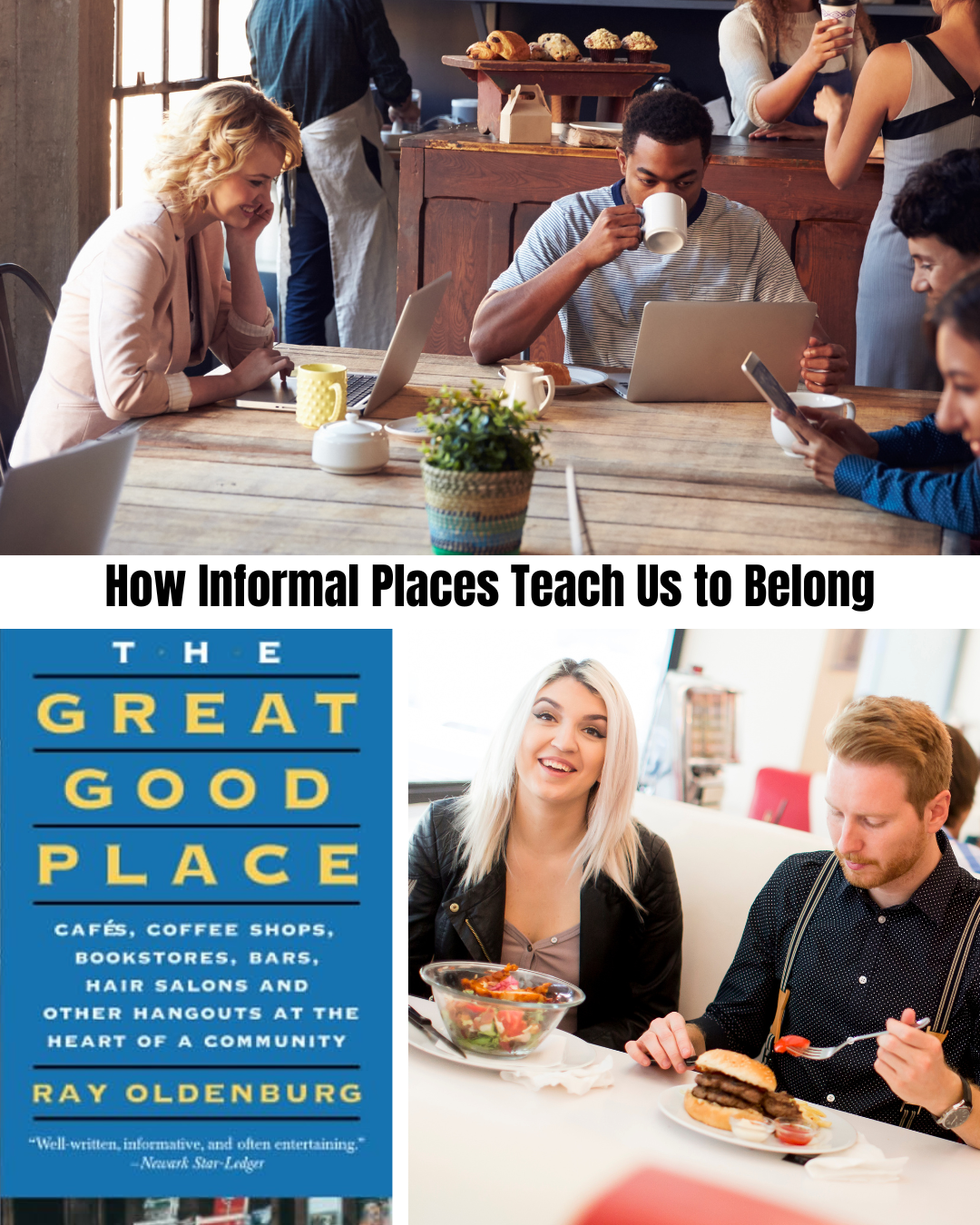
Third Places: Where We Rehearse Belonging
The series opens in the informal gathering spots that sociologist Ray Oldenburg calls “third places” – those cafés, diners, and neighborhood haunts that exist between the demands of home and work. These spaces serve as crucial stages where we perform a different kind of self, one that’s neither purely professional nor entirely domestic.
At Big Bite’z Grill in Cornelius, North Carolina, as a weekly regular I get to experience what countless others do in their own third places: the satisfaction of being known. The cooks start preparing my buffalo chicken pita when they see him crossing the parking lot. The owner brings it to his favorite table in the back. It’s a small drama of recognition that repeats thousands of times across America’s remaining community gathering spots.
But this recognition isn’t automatic – it’s earned through performance. The progression from stranger to regular represents a fascinating arc: initially hyper-aware of where to stand and how to order, gradually dropping certain masks as you return again and again. You achieve what Goffman calls “team membership” – you’re now part of the café’s ongoing social drama, granted backstage access that new customers don’t enjoy.
The core thesis: Third places create unique “regions” where social masks can be partially lowered, yet new performances emerge around being a “regular” or “local.” These spaces teach us to perform the casual, egalitarian sociability that democracy requires – practicing being the kind of people who belong somewhere, who participate in the daily drama of shared public life.
The tragedy, as both Oldenburg and personal experience reveal, is the systematic destruction of these rehearsal spaces. Suburbanization, chain standardization, and remote work have eliminated the informal gathering spots previous generations took for granted. Without them, we lose practice in the weak ties and casual interactions that create social cohesion.
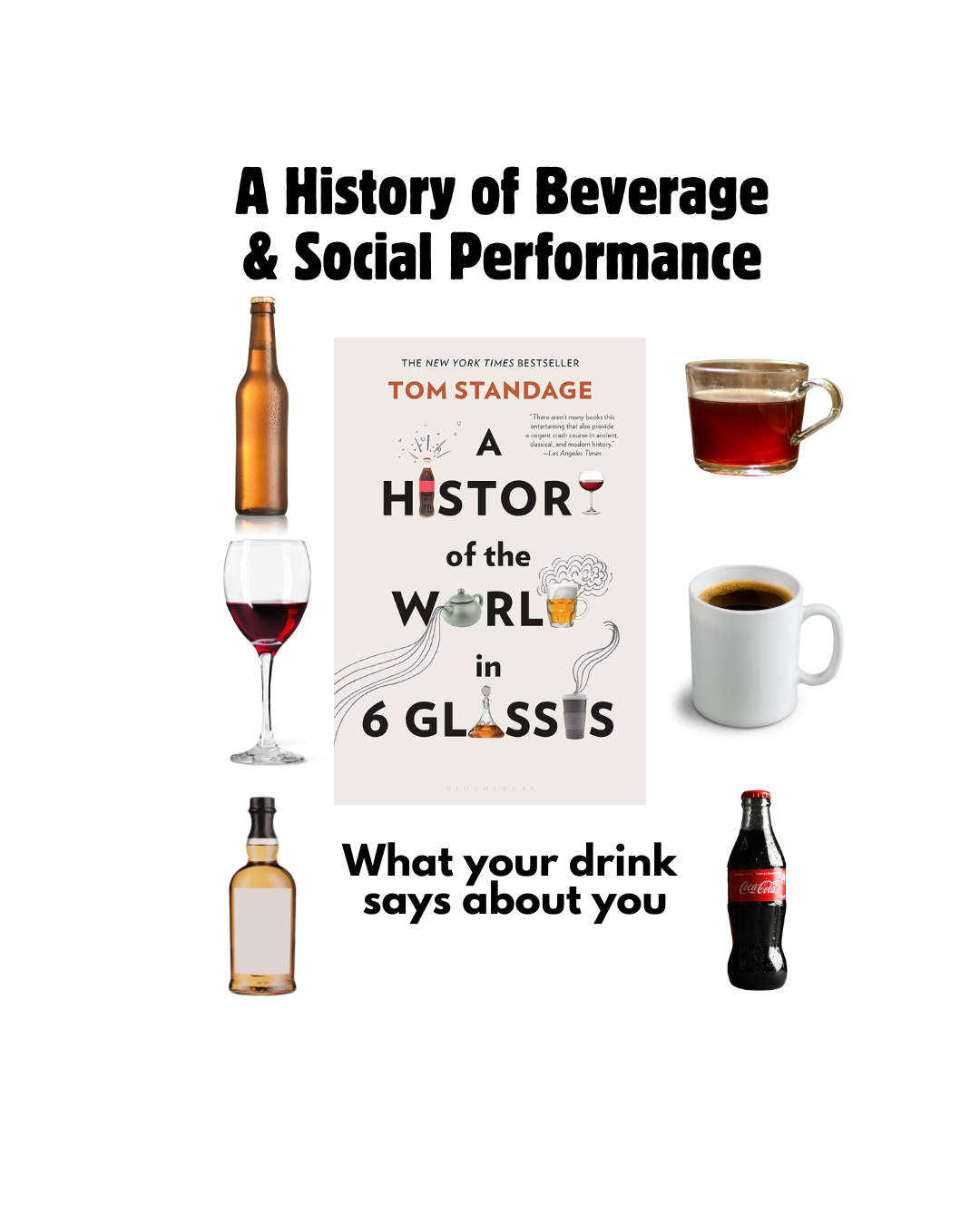
Beverages: Centuries of Signaling Status
If third places are the stages, beverages are the props – but props that carry centuries of accumulated meaning. The second article traces how beer, wine, spirits, coffee, tea, and cola became tools for signaling status, allegiance, and belonging throughout human history.
Consider the remarkably rapid incorporation of each new beverage into systems of social performance. Ancient Sumerians had multiple words for different beer qualities within generations of fermentation’s discovery. Greek symposiums developed elaborate protocols around wine – the type, dilution, even the angle of reclining all signaled education and status. When distillation made spirits accessible to the lower classes, moral panic ensued: gin became “mother’s ruin” while brandy retained elite respectability, despite being chemically identical.
The coffeehouse revolution of 17th-century England created what Standage calls “penny universities” – radical spaces where titled nobility and common merchants could sit together, performing enlightened citizenship over stimulating rather than intoxicating beverages. But this democratic potential was always contested. Tea became the drink of British imperialism, with rituals that enforced class and gender boundaries so strictly that myths persist today about proper pinkie extension. Coca-Cola’s rise represents American capitalism’s ability to bottle and commodify social performance itself.
The core thesis: Throughout history, beverages have shaped and signaled social performances. What we drink performs power, identity, and belonging – marking us as insiders or outsiders, sophisticated or gauche, traditional or progressive. Every sip is a statement, every toast a small drama of affiliation and distinction.
Today’s landscape amplifies these performances exponentially. The craft cocktail revival, specialty coffee culture, wine connoisseurship, the latest cola flavor fad, even bottled water selection – all become stages for performing knowledge, taste, and class status. Social media transforms private consumption into public identity construction, as latte art and cocktail garnishes become evidence of the kind of people we want others to believe we are.
The question isn’t whether we perform through our drink choices – we inevitably do. The question is whether we’re conscious of the centuries-old scripts we’re following.
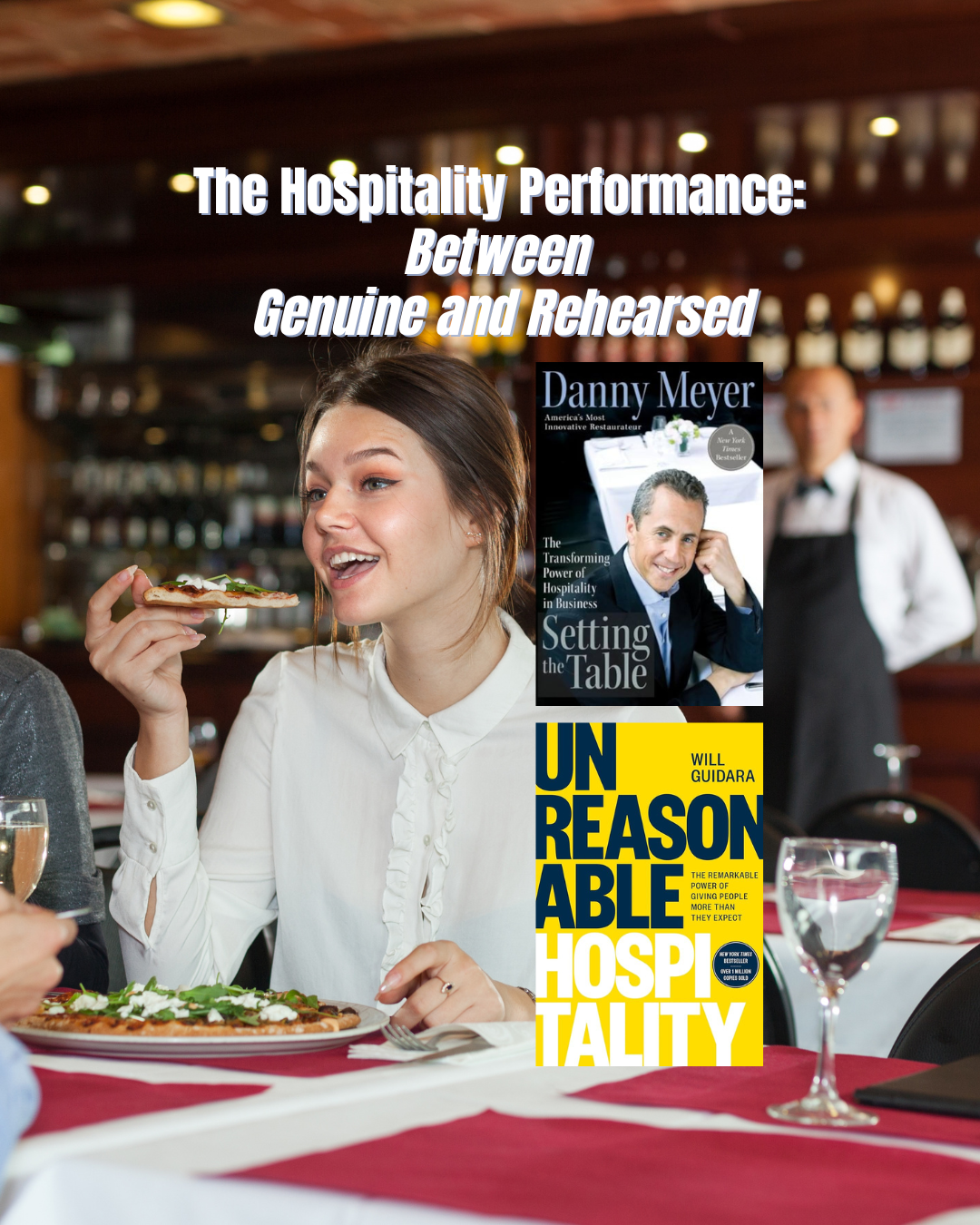
Restaurant Hospitality: Choreographing Authentic Care
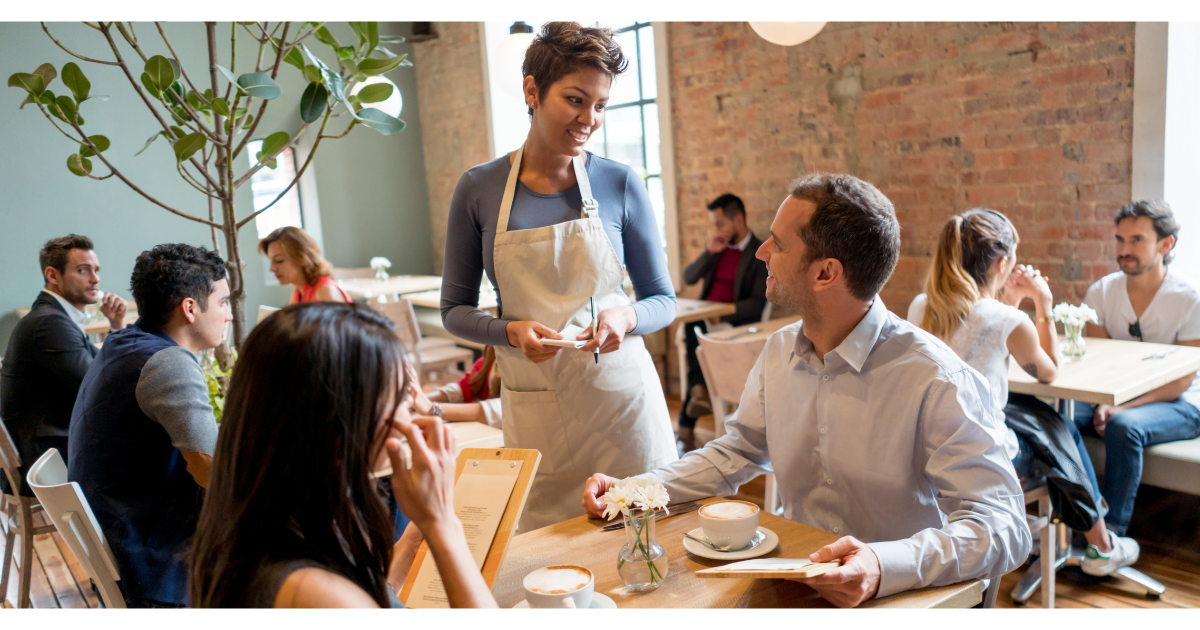
The third article examines perhaps the most sophisticated performance of all: professional hospitality. At my favorite restaurant, 131 Main, I always play a game with my family, counting how many servers stop by their table throughout the meal. My personal record? Seven different staff members, each contributing to an experience that feels effortless but requires elaborate choreography.
Danny Meyer built his empire on “enlightened hospitality”-systematizing the supposedly spontaneous qualities of warmth, empathy, and care. Will Guidara pushed further at Eleven Madison Park with “unreasonable hospitality”- empowering staff to break scripts entirely. When his team overheard guests mention they’d never had a New York hot dog, they sent a runner to a street cart and served it on fine china. For a Spanish family, they built a beach in the dining room, complete with sand.
These restaurateurs navigate a fascinating paradox: How do you engineer authentic connection? How do you perform genuine care?
Meyer distinguishes sharply between service (technical delivery) and hospitality (emotional care). But both require what Goffman calls “dramaturgical discipline” – maintaining character under pressure, never letting the mask slip. Servers must read each table in real time, adjusting their performance: warm with one group, briskly efficient with another, invisible to a couple in deep conversation.
The core thesis: Professional hospitality reveals how performing care, when executed with enough skill and genuine investment, creates real connection. The restaurant operates as complex team performance, with front-of-house and kitchen staff collaborating to sustain the illusion of effortless grace. When one member breaks character, the entire performance suffers.
The digital age adds new complexity. Staff must now perform for two audiences simultaneously: the guests in the room and the potential thousands who might see photos or read reviews. But Meyer and Guidara navigate this by focusing on immediate human connection, letting digital performance emerge organically rather than engineering it for likes and shares.
The profound question both books raise is whether performing care can become real care. Meyer believes consistently acting with hospitality transforms who you are. Guidara argues unreasonable hospitality isn’t performance at all, but a mindset. Perhaps the truth lies between: we perform care until we internalize the script, and the line between authentic and performed dissolves entirely.
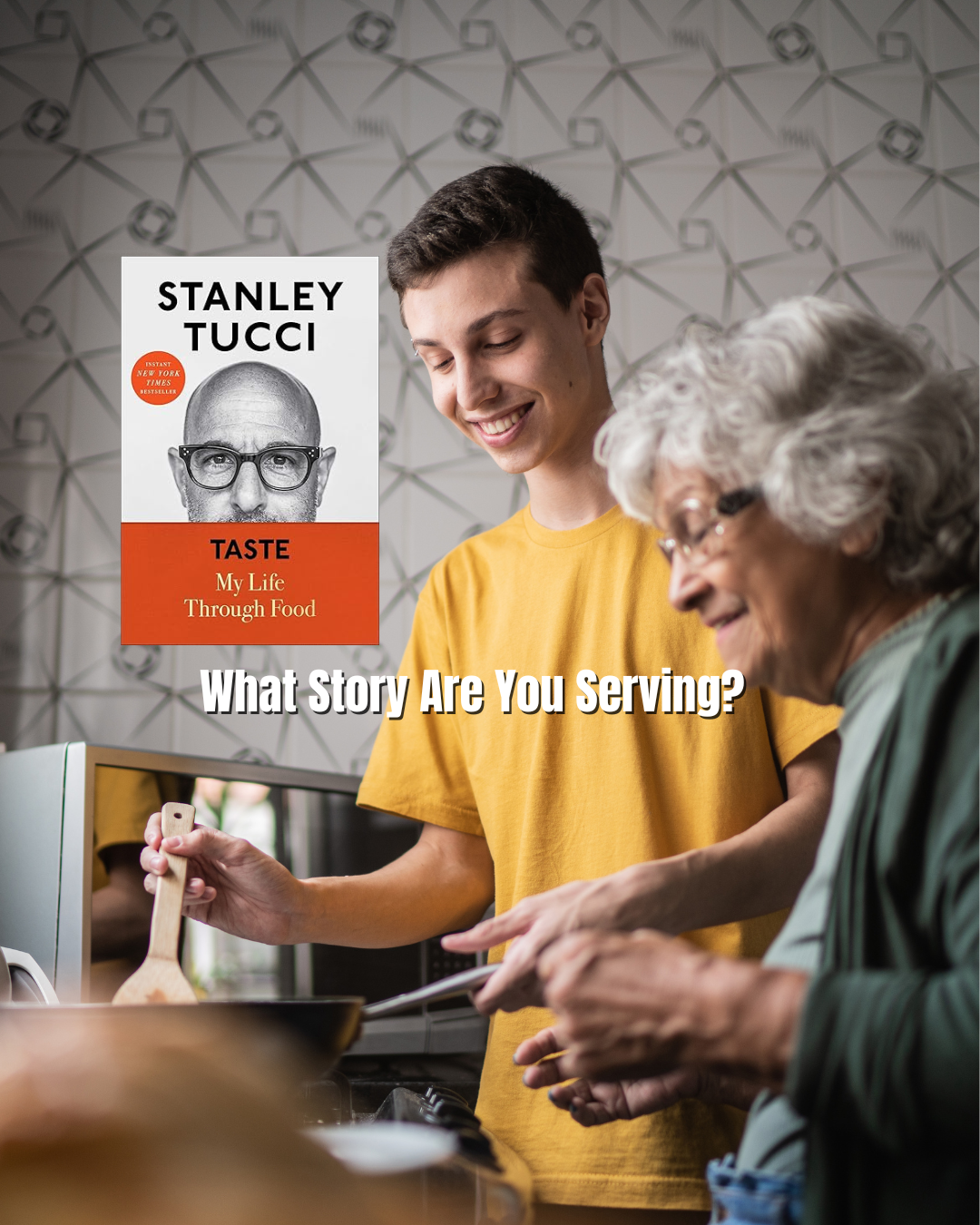
Food as Autobiography: Cooking Our Life Stories
The final article examines how we use food to write our autobiographies. Stanley Tucci’s memoir Taste: My Life Through Food weaves his life story through recipes and meals – from Italian-American childhood to grief to cancer to renewal. His signature dishes aren’t just food; they’re identity markers that perform heritage, sophistication, resilience, and joy.
Your grandmother’s biscuit recipe isn’t just instructions for combining flour and butter. It’s a ritual connecting you to her, to your childhood, to a particular vision of home. When you make those biscuits for your own family, you’re performing continuity across generations, claiming heritage, saying “this is where I come from.”
But food autobiography is never just preservation – it’s also curation and invention. We want our cooking to prove we’re connected to something larger (family, culture, tradition) while demonstrating our unique taste and creativity. We’re simultaneously claiming membership and asserting distinction.
The core thesis: We write our autobiographies not just in words but in meals. The food we prepare, share, and remember becomes the narrative structure of our lives. We organize time through food rituals – birthday cakes, holiday feasts, anniversary dinners. We mark transitions through food – the first meal in a new home, the last dinner before someone leaves, the foods we can’t eat anymore.
Tucci’s memoir reveals food’s role in performing continuity during disruption. After his first wife’s death, cooking became both refuge and challenge. The meals he made weren’t just sustenance – they were performances of normalcy, of continued life, of love persisting beyond loss. When everything else changes, familiar meals ground us.
The immigrant experience intensifies this dynamic. Do you cook heritage foods to maintain connection? Adopt local cuisines to perform assimilation? Some combination demonstrating bicultural fluency? Each choice performs a different relationship to identity and belonging.
Contemporary dietary choices – vegan, paleo, gluten-free, locavore – function as identity categories complete with values and communities. Declaring your diet performs beliefs about health, environment, animal welfare, or counter-cultural positioning.
Living Goffman’s Insights: A Challenge
These four articles reveal a consistent truth: food experiences are never just about sustenance. They are performances through which we construct identity, signal belonging, navigate power, and create meaning. Understanding this doesn’t diminish the authenticity of our food lives – it deepens our appreciation for the work involved in maintaining social connection.
Here’s your challenge: For the next week, observe your own food performances with new awareness.
Notice your third place behaviors. When you enter your regular café or restaurant, pay attention to the small rituals of recognition. How do you signal you’re a regular? How does being known there make you feel? If you don’t have a third place, consider what you’re missing and where you might find one.
Examine your beverage choices. What are you signaling when you order that craft cocktail, specialty coffee, or particular wine? Are you performing knowledge, sophistication, or belonging to a particular community? There’s no judgment here – just awareness of the centuries-old scripts we’re following.
Observe service interactions. Next time you dine out, watch the performance unfold. Count how many staff members contribute to your experience. Notice when servers read the room correctly and adjust their approach. Appreciate the emotional labor involved in making care seem effortless. And consider: what performance are you giving as a guest?
Reflect on your signature dishes. What do you cook that feels like “you”? Where did you learn it? What story does making it tell about your identity, heritage, or values? When you feed others, what version of yourself are you presenting?
The goal isn’t to become cynical about social performances or to stop performing. That would be impossible – as Goffman showed, all social interaction involves performance. The goal is conscious participation in the dramas we’re already enacting.
When you understand that the café regular isn’t born but made through repeated performances, you can be more intentional about creating community. When you recognize that beverage choices signal identity, you can make more deliberate decisions about what you’re communicating. When you appreciate that hospitality requires choreographed care, you can value the work involved – whether you’re giving or receiving it. When you see that food is autobiography, you can be more thoughtful about the stories you’re cooking into existence.
Goffman taught us that social life is theatrical, but theater reveals truth. The performances we give around food – the daily dramas of drinking coffee with neighbors, choosing what to order, serving guests graciously, cooking family recipes – these aren’t fake. They’re how we construct authentic connection in a world that often leaves us isolated.
The swinging kitchen door separates front stage from backstage, performance from preparation, the polished from the raw. But we’re all standing on one side or the other, constantly. Understanding the performance doesn’t diminish the magic. It deepens our appreciation for the work involved in making each other feel human, valued, and connected.
That’s the real lesson from this series: performing care, again and again, with discipline and creativity and unreasonable generosity, is one of the most authentic things we can do. The care is real. The performance makes it possible. And that’s not a contradiction – that’s just life, lived with intention and grace.
So go to your third place. Choose your drink consciously. Appreciate the performance of hospitality. Cook your story. And recognize that in these daily food dramas, you’re not just eating – you’re rehearsing what it means to be human together.

Part of a regular series on 27gen, entitled Wednesday Weekly Reader.
During my elementary school years one of the things I looked forward to the most was the delivery of “My Weekly Reader,” a weekly educational magazine designed for children and containing news-based current events.
It became a regular part of my love for reading, and helped develop my curiosity about the world around us.
 27gen.com