221B Baker Street: Where the Legend Began

Nearly 135 years after he first appeared in print, Sir Arthur Conan Doyle’s legendary detective Sherlock Holmes continues to captivate audiences around the world. The eccentric but brilliant Holmes, along with his faithful friend Dr. Watson, has transcended the original stories to become a true pop culture icon.

At the core of Holmes’ lasting popularity is Conan Doyle’s skill in crafting intricate mysteries filled with memorable characters, vivid atmospheres, and unpredictable twists. Holmes himself is a complex figure – arrogant yet forensically gifted, cold yet harboring flashes of warmth and humor. Watson serves as an everyman narrator, allowing readers to experience the marvels of Holmes’ deductive reasoning through relatable eyes.

Many literary critics and historians believe Holmes’ Victorian-era adventures also provide a comforting nostalgia and escape, with Holmes as a restorer of order and justice in an increasingly chaotic, industrialized world. The stories romanticize late 19th century London while indulging the thrill of new forensic sciences like fingerprinting, ballistics, and toxicology analysis.

While the original canon of 60 stories ends with Holmes alive but retired, later authors have imagined his life continuing, allowing for endless retellings and updates. The 20th century saw Holmes revived in novels, plays, radio dramas, and eventually film and television adaptations. Recent major interpretations include the films starring Robert Downey Jr., the BBC series Sherlock with Benedict Cumberbatch, and CBS’ Elementary procedural.

In these new versions, each writer leaves their own stamp on the character. Some, like the Robert Downey Jr. films, adopt a more comic, action-oriented tone, while others like Sherlock aim for a modern, sleeker vibe. Regardless of the approach, all celebrate Holmes’ deductive brilliance and the game of intellectual cat-and-mouse between the detective and his adversaries.

Today, Holmes has become bigger than any single take, a true multi-media phenomenon inspiring works in formats as diverse as Japanese anime, strategy board games, and the immersive experience of live mystery theaters. With each generation, Holmes lives on, reinvented again to reflect our endless fascination with puzzle-solving, forensic science, and that most fundamental question:

What really happened?

In 1887, Sir Arthur Conan Doyle introduced the world to one of literature’s most enduring characters: Sherlock Holmes. The detective made his debut in the novel A Study in Scarlet. Released in a magazine entitled Beeton’s Christmas Annual, it was an inauspicious start, setting the stage for a legacy that would span four novels and 56 short stories, captivating readers for generations to come.

A Study in Scarlet not only presents the enigmatic detective but also introduces his faithful companion and chronicler, Dr. John Watson. The story begins with Watson, a military doctor recently returned from service in Afghanistan, seeking affordable lodgings in London. Through a mutual acquaintance, he meets Sherlock Holmes, and the two agree to share rooms at 221B Baker Street – an address that would become one of the most famous in fiction.

From the outset, Holmes is portrayed as a unique and brilliant individual. His vast knowledge of specific subjects, combined with his apparent ignorance of other common topics, immediately piques Watson’s curiosity. Holmes’s keen observational skills and deductive reasoning are quickly demonstrated, astounding both Watson and the reader.

The novel showcases Holmes’s unconventional methods as he tackles a perplexing murder case. Two corpses are discovered in separate locations, each with the word “RACHE” – German for “revenge” – written in blood nearby. As Holmes investigates, readers are treated to his innovative techniques, including the use of magnifying glasses, chemical analysis, and the study of footprints and other minute details often overlooked by conventional police methods.

Conan Doyle’s Holmes is a complex character. Described as tall and lean, with piercing gray eyes and a hawklike nose, his physical appearance is as striking as his intellect. He is portrayed as aloof and occasionally arrogant, yet possessing a dry wit and an unwavering commitment to justice. His famous deerstalker cap and pipe, while not explicitly mentioned in A Study in Scarlet, would later become iconic symbols associated with the character.

One of the most intriguing aspects of Holmes’s character, as revealed in this first novel, is his disdain for emotion and his focus on cold, hard logic. He views detective work as a science, emphasizing the importance of observation and deduction over intuition or guesswork. This analytical approach sets him apart from other fictional detectives of the time and contributes significantly to his enduring appeal.

A Study in Scarlet also introduces readers to Holmes’s nemesis: Scotland Yard. While the police are not portrayed as incompetent, they are shown to be out of their depth when faced with particularly challenging cases. This dynamic sets up the recurring theme of Holmes being called in to solve mysteries that baffle the authorities.

The novel’s structure is noteworthy, divided into two parts. The first follows Holmes and Watson as they investigate the London murders, while the second takes readers to America for an extended backstory explaining the motive behind the crimes. This format allows Conan Doyle to explore themes of revenge, justice, and the far-reaching consequences of past actions.

A Study in Scarlet laid the foundation for what would become a cultural phenomenon. Sherlock Holmes’s methods of deduction, his quirky personality, and his partnership with Watson became the template for countless detective stories that followed. The novel’s success prompted Conan Doyle to write more Holmes adventures, eventually creating a character so beloved that fans mourned when the author attempted to kill him off, only to later demand his resurrection.

In essence, A Study in Scarlet not only introduced a captivating mystery but also birthed a literary icon whose influence on detective fiction and popular culture continues to this day, more than a century after his first appearance.


Inspired by


Part of a regular series on 27gen, entitled Wednesday Weekly Reader.

During my elementary school years one of the things I looked forward to the most was the delivery of “My Weekly Reader,” a weekly educational magazine designed for children and containing news-based current events.

It became a regular part of my love for reading, and helped develop my curiosity about the world around us.

Exploring Arthur Conan Doyle’s Literary Worlds Beyond Sherlock Holmes

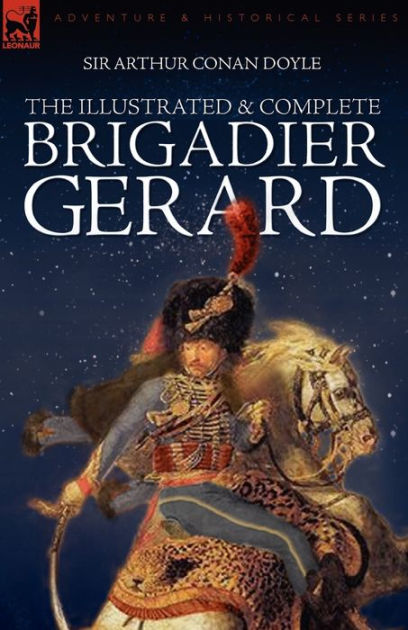
While Sherlock Holmes remains Arthur Conan Doyle’s most famous and enduring literary creation, the prolific author populated his stories with several other memorable recurring characters. Among them were the eccentric Professor George Edward Challenger and the boastful but courageous Brigadier Gerard, each starring in their own book series showcasing Doyle’s talent for adventure tales and historical fiction respectively.

Professor Challenger first appeared in the 1912 novel The Lost World, in which the ill-tempered but brilliant scientist acted as the combustible narrator who recounts an expedition to a remote plateau in South America where dinosaurs and other prehistoric creatures still roamed. This imaginative work not only offered thrilling accounts of discovery and survival, but engaged with early 20th century theories about the extinction of ancient species and natural selection. 

If sounds familiar, author Michael Crichton’s novel The Lost World (1995) was heavily influenced by Conan Doyle. Bringing a dead character back (Ian Malcolm)  was an idea Crichton got from Conan Doyle, who did the same with his character Sherlock Holmes.

Crichton later stated that the novel’s title is an homage to Doyle’s 1912 novel of the same name, as well as the 1925 film adaptation of Doyle’s novel, also titled The Lost World. Crichton’s novel also shares some story similarities with Doyle’s novel, as they both involve an expedition to an isolated Central American location where dinosaurs roam.

Challenger proved so popular that Doyle brought him back as the cantankerous hero of four more novels – The Poison Belt (1913), The Land of Mist (1926), The Disintegration Machine (1927), and When the World Screamed (1928) – as well as several short stories. These tales saw the gruff academic encounter catastrophes like a cloud of toxic gas enveloping the earth, psychic phenomena, and futuristic destructive technology, allowing Doyle to indulge his fascination with the supernatural and speculative science.

During the 10-year period between effectively “killing off” Sherlock Holmes and bringing him back in 1903, Arthur Conan Doyle dedicated much of his writing to historical fiction. His most acclaimed works from this era were the short stories recounting the exploits of Brigadier Gerard, a fictional French officer who served in Napoleon’s army up to the Battle of Waterloo. 

In most of these tales, Etienne Gerard himself narrates his highly implausible yet entertaining adventures. Readers are transported to feeling like they are sitting in a Parisian cafe in the mid-19th century, listening to this aging soldier’s boastful boasting and witty stories. Gerard hails from the Gascony region of southwest France, embodying the stereotypical Gascon personality of being vain, brave and crafty.

The stories showcase Doyle’s zeal for historical accuracy. While Gerard himself was an invented character, his adventures drew inspiration from the memoirs and biographies of over 20 real soldiers from that era, especially Baron de Marbot who became one of Napoleon’s aides and generals and even earned a mention in Napoleon’s will. Doyle meticulously researched to ground the fantastical tales in realism.

With his oversized ego, lust for glory, and utterly undeserved self-confidence, the Brigadier personified the stereotype of the arrogant French soldier. And yet, despite or perhaps because of his oblivious buffoonery, Gerard still managed heroic feats of courage and daring on the battlefield, creating a lovable characters that Doyle clearly relished writing about over the course of nearly two decades.  

While very different in personality and the eras they occupied, both Professor Challenger and Brigadier Gerard provided Arthur Conan Doyle with wonderful vehicles to showcase his talent for adventure writing outside the Holmes mysteries. The curmudgeonly scientist and the blusteringly vain soldier allowed Doyle to transport readers to lost worlds of the prehistoric past, psychic dimensions, and the age of Napoleonic conquest through his endlessly creative literary imagination.


Part of a regular series on 27gen, entitled Wednesday Weekly Reader.

During my elementary school years one of the things I looked forward to the most was the delivery of “My Weekly Reader,” a weekly educational magazine designed for children and containing news-based current events.

It became a regular part of my love for reading, and helped develop my curiosity about the world around us.

Shelf Discovery: The Journey from One Book to Many

For avid readers, finishing one book is often just the beginning of a journey into a new subject or author. A great book has a way of piquing your curiosity and leaving you hungry to learn more. You find yourself wanting to dive deeper into the world or ideas the book exposed you to. 

This was the case for me recently after reading Michael Dirda’s On Conan Doyle, Or, The Whole Art of Storytelling. Dirda’s passionate celebration of Sir Arthur Conan Doyle as a master storyteller cast new light on the Sherlock Holmes tales I had read years ago. His analysis made me want to revisit the classic detective stories with a fresh perspective.

In his book, Dirda explores how Conan Doyle’s own fascinating life experiences allowed him to inject realism and detail into his fiction writing. He quotes extensively from Conan Doyle’s works, breaking down the author’s techniques for building suspense, vividly depicting London at that time, and bringing the charismatic characters of Holmes and Watson to life. 

After being reminded by Dirda of the sheer genius of Conan Doyle’s storytelling powers, I couldn’t resist pulling my old collection of the complete Sherlock Holmes canon off the shelf to re-read the stories and novels. This time, armed with Dirda’s insights, I found myself newly appreciating Conan Doyle’s intricate plotting, clever foreshadowing, and rich descriptions that allowed the late 1800s-era London to jump off the page.

I also discovered background information I hadn’t known before, like how Conan Doyle had modeled the brilliant but eccentric Holmes on one of his former university professors. And his time studying at a medical school gave him knowledge about forensics and analytical skills that informed how he wrote Holmes’ deductive reasoning process.

From there, my curiosity propelled me to explore literary biographies about Conan Doyle’s life, writings by Sherlock Holmes experts dissecting the stories, books analyzing Conan Doyle’s lasting influence on the mystery genre, and more.

One book had opened up an entire new area of interest to dive into.

This is the power and delight of being a lifelong reader – books become portals to universes of knowledge, allowing you to find new areas to explore in depth simply by following your curiosity from one page to the next. A single book can act as a key that unlocks fascinating connections, insights, and paths of discovery you may never have anticipated.


Though Sherlock Holmes is widely recognizable, few could craft as lively and personal an account of the detective’s creator’s life and lesser-known works as Michael Dirda does in On Conan Doyle, Or, The Whole Art of Storytelling

A passionate lifelong fan of the Sherlock Holmes adventures, Pulitzer Prize–winning critic Michael Dirda is a member of The Baker Street Irregulars – the most famous and romantic of all Sherlockian groups. Combining memoir and appreciation, On Conan Doyle is a highly engaging personal introduction to Holmes’s creator, as well as a rare insider’s account of the curiously delightful activities and playful scholarship of The Baker Street Irregulars.

Dirda interweaves his own childhood discovery of Holmes and Watson with details about Sir Arthur Conan Doyle’s life and writing career. While casual readers associate Conan Doyle solely with the Holmes stories, Dirda makes a strong case for exploring the author’s extensive bibliography across multiple genres like adventure, historical fiction, supernatural tales, and writings on spiritualism. However, Holmes remains the main draw, and the fascinating culture of the Irregulars society is as rich as any of Conan Doyle’s fictions.

Dirda provides a personal journey exploring the creator of Sherlock Holmes and his prodigious output across various genres beyond the famous detective stories. Most know Conan Doyle tried to kill off his iconic character, which he cared little for compared to works like The Lost World. However, Dirda still centers much of his discussion on Holmes while striving to highlight Doyle’s other writings too – his horror, fantasy, non-fiction essays, letters, and his favorite creation Professor Challenger. Recounting his own boyhood introduction to Doyle’s books, Dirda reminisces about joining the Baker Street Irregulars society devoted to Holmes and includes an abridged pastiche of his own Sherlock-inspired fiction.

Dirda particularly excels at appreciating Conan Doyle’s direct yet versatile literary style spanning genres, and examining the values of civic duty the author aimed to impart through his writing (values he felt the Holmes tales lacked).

On Conan Doyle is a much-needed celebration of Arthur Conan Doyle’s genius for every kind of storytelling.

It is also an excellent launching pad for further investigations into Conan Doyle’s other works!


Part of a regular series on 27gen, entitled Wednesday Weekly Reader.

During my elementary school years one of the things I looked forward to the most was the delivery of “My Weekly Reader,” a weekly educational magazine designed for children and containing news-based current events.

It became a regular part of my love for reading, and helped develop my curiosity about the world around us.