

Part One of a Four-Part Series
We often perform our lives over food and drink. Every meal shared, every café visited, every toast raised involves a carefully choreographed social dance that most of us execute without conscious thought. We know instinctively how to behave at a business lunch versus a family dinner, when to linger over coffee and when to order and leave, how to signal sophistication or casualness through our beverage choices. These aren’t merely habits or etiquette – they’re performances, in the truest sociological sense.
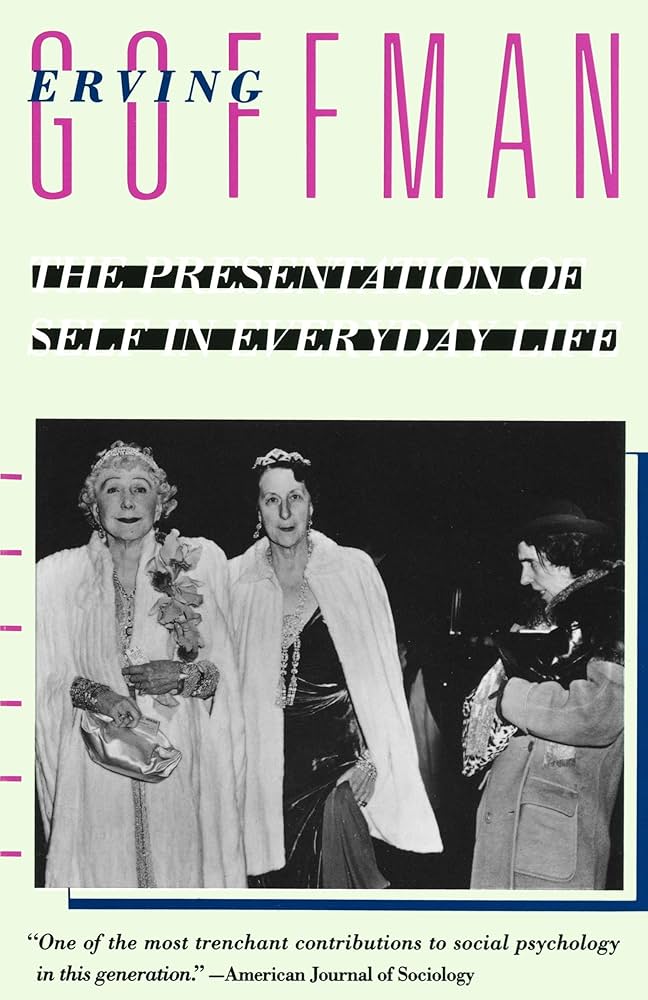
In 1959, sociologist Erving Goffman published The Presentation of Self in Everyday Life, arguing that all social interaction operates like theatrical performance. We manage impressions, maintain character, distinguish between front stage and backstage behavior, and collaborate with others to sustain shared definitions of reality. His framework transformed how we understand the seemingly mundane encounters that fill our days.
Television history serves as a sprawling archive of our collective social choreography, mirroring the very “performances” described by Erving Goffman. Since the 1980s, the sitcom has functioned as a primary stage for these observations, transitioning from the blue-collar sanctuary of the diner to the aspirational urbanity of the coffee house. From the gold standard of the “workplace as family” from Cheers, or the curated wit shared over a booth in Seinfeld at Monk’s Café or the practiced intimacy of the orange velvet couch from Friends at Central Perk, these televised spaces have documented how we manage impressions and signal belonging.
As we trace the evolution of the “third place” on screen – from the neighborhood haunts of the past to the high-stress kitchens of the modern era – we see a reflection of our own instinctive social dances.
This four-part series applies Goffman’s dramaturgical lens to food experiences, exploring how what we eat, drink, and share reveals the fundamental performances that structure social life. From the neighborhood café to the professional dining room, from historical taverns to personal kitchens, food spaces serve as stages where we rehearse belonging, signal identity, navigate power dynamics, and write our autobiographies.
Our first article examines the “third place” – those informal gathering spots between home and work where we perform a uniquely accessible version of community. Ray Oldenburg’s classic study The Great Good Place provides our roadmap for understanding why these spaces matter, while Goffman helps us see the intricate performances that transform casual coffee drinkers into recognized regulars, and strangers into neighbors. The result is a deeper appreciation for the small social dramas that unfold daily over espresso and conversation – performances that teach us how to belong.
Note: I will use the term “café” most of the time, but you can substitute diner, restaurant, coffee shop, library, etc.
For years I have been a regular, weekly customer of Big Bite’z Grill in Cornelius, NC. I call it my “Lunch and Learn” and it usually occurs on Tuesdays. The first stop is at the library to drop off and pick up books, then a short drive to the restaurant. I try to arrive early, both to avoid the lunch rush and to claim my table – it’s the two-top all the way in the back, next to the kitchen door. While there, I not only have a great lunch, but make connections with the staff and a chance to skim a new book just picked up.
My food order on these visits is always the same: buffalo chicken pita, onion rings, and sweet tea. Everyone, from the owner John, to his son Demetri, to the cooks in the kitchen know my order. Most days, the cooks have already started the order when they see me walking across the parking lot. When I walk in the front door, it’s already being rung up. If John is busy, he will bring me the food when it’s ready and I’ll pay before leaving.
I’m one of the hundreds of “regulars” that frequent Big Bite’z throughout the week. One or two of the regular vendors are finishing up John’s orders for the week. There’s the construction crews that rotate in and out to the patio seating. Over there are Cornelius policemen, regular customers like me. Increasingly, there is a constant stream of delivery drivers who come in to pick up a carryout.
If he’s not too busy, I will always have an ongoing conversation with John about the current state of the world. Demetri keeps me up to date on his family. Even when it is busy, one or both of them makes it a point to stop by my table, just to chat even if just for a short while.
My story above delivers a particular kind of satisfaction that comes from being known at your local restaurant. Not famous, not important -just known. The cooks start making your usual before you order. Another regular nods as you walk in. You may or may not have learned their name, but you’ve shared this space . This seemingly trivial social dance reveals something profound about how we perform belonging in our everyday lives.
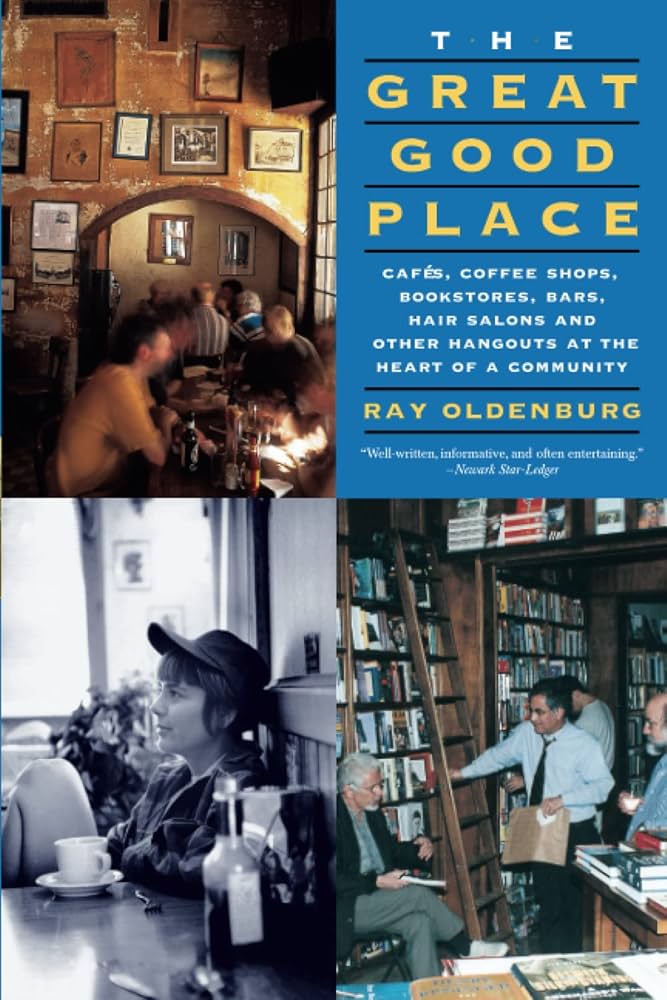
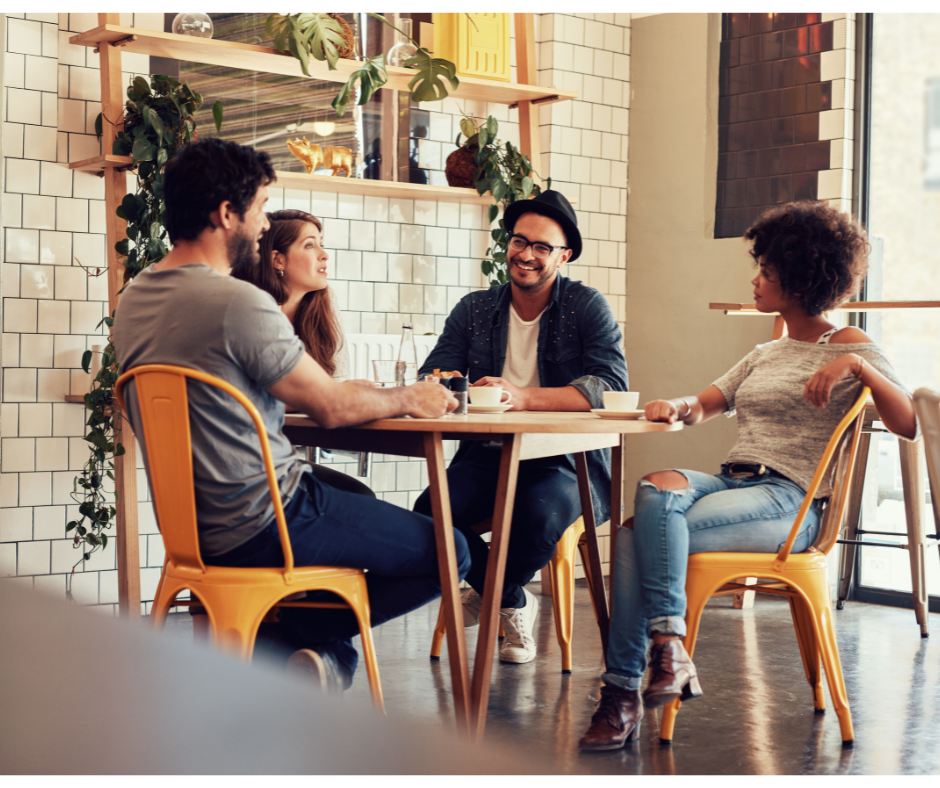
Ray Oldenburg’s 1989 book The Great Good Place champions what he calls “third places” – those informal public gathering spots that exist outside the demands of home (our first place) and work (our second place). Cafés, diners, barbershops, pubs, and corner stores have historically served this function, providing what Oldenburg describes as “the heart of a community’s social vitality.” But these spaces do more than simply exist between our other obligations. They serve as crucial stages where we rehearse a different kind of social performance, one that reveals the intricate ways we signal belonging and construct community.
Oldenburg identifies several characteristics that define genuine third places: they’re on neutral ground, they level social distinctions, conversation is the main activity, they’re accessible and accommodating, they host regulars, they maintain a low profile, the mood is playful, and they feel like a home away from home. What makes this framework so compelling is how it maps onto sociologist Erving Goffman’s dramaturgical theory of social life. If all the world’s a stage, as Goffman famously argued, then third places represent a unique theatrical space – one where we can experiment with performances that neither our domestic nor professional roles typically allow.
At work, we perform professional competence, managing impressions to maintain credibility and advance our careers. At home, we navigate familial roles and intimate relationships, often dropping some of our more public masks. But in our favorite coffee shop? We’re performing a subtly different self – one that Oldenburg suggests is somehow more authentic, or at least more freely chosen. We’re the person who knows good coffee, who has time to linger, who’s part of this micro-community of regulars. We’re sophisticated enough to appreciate the space but unpretentious enough to be approachable.
Goffman would recognize this immediately as “front stage” behavior – we’re still managing impressions – but it’s a front stage with different stakes and different rules. The regular at a café performs casualness, performs being the kind of person who belongs to a community of peers rather than subordinates or superiors. Oldenburg calls this “leveling,” the way third places neutralize social hierarchies. The lawyer and the freelance writer sit at adjacent tables, both just neighbors in this shared space. But achieving this egalitarian atmosphere requires its own subtle performances: dressing down just enough, not dominating conversations, respecting unspoken territorial claims over favorite seats.
At Big Bite’z, even the owner moves from my favorite table when I come in and beckons me to sit there. If that’s not “leveling”, I don’t know what is!
Yet even in these supposedly egalitarian spaces, new hierarchies emerge. There’s social capital in being recognized, in having earned your place among the regulars. Watch a true regular enter their space and you’ll see Goffman’s theory in action. They’re greeted by name, they know where things are, they understand the unwritten rules. They’ve been granted backstage access – they might walk behind the counter to grab a napkin, or stay past closing time finishing a conversation. New customers, meanwhile, perform a different role: the uncertain stranger, carefully observing protocols, hoping to graduate someday to regular status.
This progression from stranger to regular represents a fascinating performance arc. Initially, we’re hyper-aware of our presentation: where to stand, how to order, whether we’re taking up too much space. We’re all front stage, all impression management. But as we return again and again, something shifts. We begin to drop certain masks. The barista learns we’re going through illness, or that we’re writing a novel, or that last Tuesday was hard. We’ve achieved what Goffman might call “team membership” – we’re now part of the café’s ongoing social drama, not just audience members.
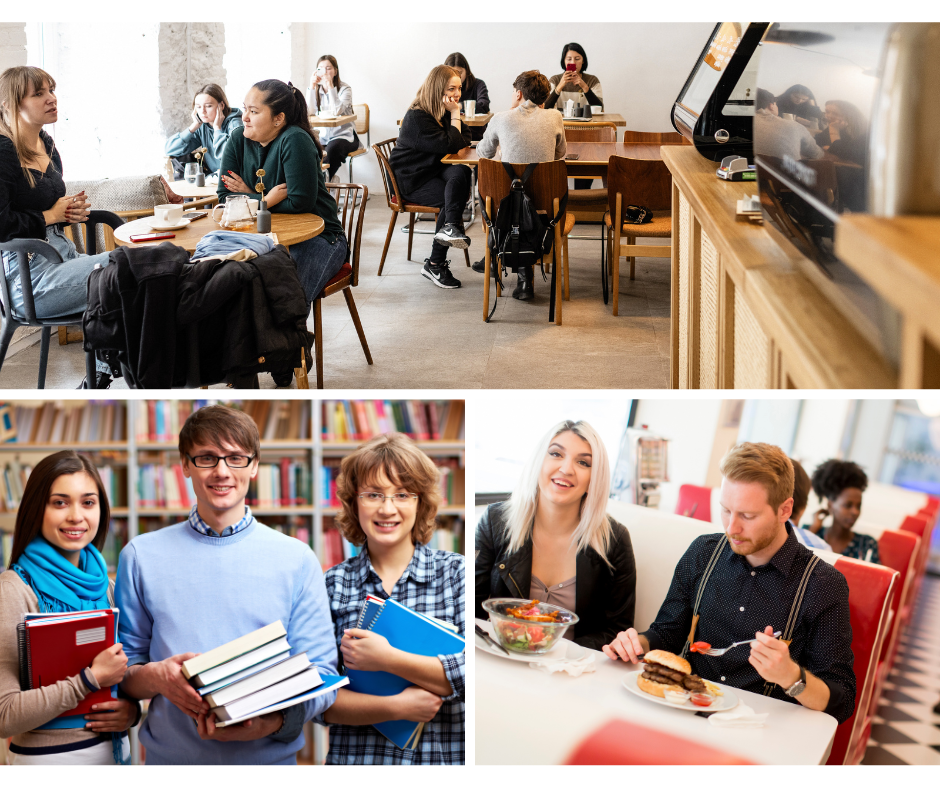
The tragedy of contemporary American life, as Oldenburg documents, is the systematic destruction of these third places. Suburbanization, car culture, chain standardization, and now remote work have all conspired to eliminate the informal gathering spots that previous generations took for granted. When every café looks identical, when there’s nowhere to walk to, when we’re encouraged to order ahead and leave quickly, we lose these rehearsal spaces for community performance.
The implications extend beyond nostalgia for neighborhood hangouts. Without third places, we lose practice in performing the casual, egalitarian sociability that democracy requires. We lose spaces where we can be seen as something other than our job title or our family role. We lose the “weak ties” – those acquaintances who aren’t quite friends but aren’t quite strangers – that sociologists increasingly recognize as crucial for social cohesion and personal well-being.
Though most of this story revolves around a food place, “third places” exist outside of that realm. For instance, my first stop before the weekly trip to Big Bite’z is to my local library. On my regular visit, I can count on the library being filled with moms and their kids for the weekly reading event. There are always adults and kids around the tables, with tutoring or homework help happening. There are weekly book clubs, maker spaces, game nights – I could go on, but you get the picture: community is taking place across and among all ages.
What Oldenburg and Goffman together reveal is that belonging isn’t passive – it’s something we perform into existence through repeated social rituals. The café regular isn’t born; they’re made through countless small performances of presence, recognition, and reciprocity. Every nod to a fellow regular, every moment of comfortable silence over a newspaper, every time we choose this place over the identical chain store down the street – these are performances of community, small dramas that accumulate into something larger than ourselves.
In an age of increasing isolation and digital connection, perhaps we need these performance spaces more than ever. Not just for the coffee, but for the chance to rehearse being the kind of people who belong somewhere, who are known and know others, who participate in the daily drama of shared public life. The third place, it turns out, isn’t just good for community. It’s where we practice being human together.

Part of a regular series on 27gen, entitled Wednesday Weekly Reader.
During my elementary school years one of the things I looked forward to the most was the delivery of “My Weekly Reader,” a weekly educational magazine designed for children and containing news-based current events.
It became a regular part of my love for reading, and helped develop my curiosity about the world around us.


 27gen.com