
I’m always up for a refresher course on my ABCs and a history lesson, especially when food is involved…
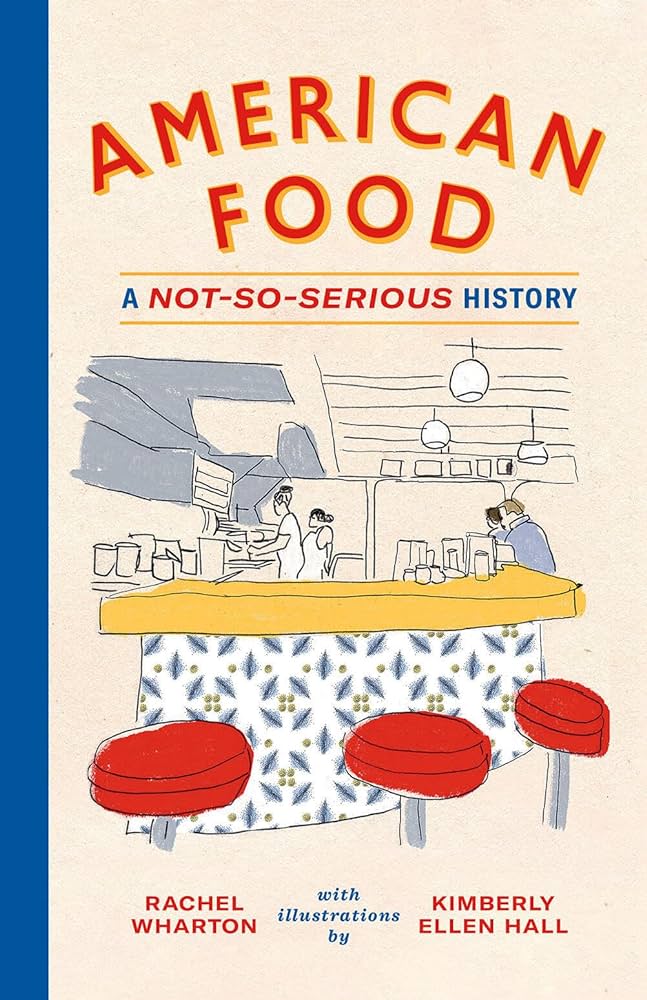
An illustrated journey through the lore and little-known history behind ambrosia, Ipswich clams, Buffalo hot wings, and more.
This captivating and surprising tour of America’s culinary canon celebrates the variety, charm, and occasionally dubious lore of the foods we love to eat, as well as the under-sung heroes who made them. Every chapter, organized from A to Z, delves into the history of a classic dish or ingredient, most so common – like ketchup – that we take them for granted.
These distinctly American foods, from Blueberries and Fortune Cookies to Pepperoni, Hot Wings, Shrimp and Grits, Queso, and yes, even Xanthan Gum, have rich and complex back stories that are often hidden in plain sight, lost to urban myth and misinformation.
American Food: A Not-So-Serious History by Rachel Wharton (and illustrated by Kimberly Ellen Hall) digs deep to tell the compelling tales of some of our most ordinary foods and what they say about who we are – and who, perhaps, we are becoming.

Here’s an appetizer sampler of the delightful stories you will discover:
- The likely African American origin of the original Buffalo wing, during a time when black restaurants received no mainstream press coverage.
- The Native American roots of New Mexican green and red chile enchiladas, one of the earliest iconic dishes in the United States.
- The spread of hero, hoagie, and submarine sandwiches along the eastern seaboard, facilitated by Italian longshoremen and black jazz players.
- The intertwined history of fortune cookies with the internment of Japanese Americans in WWII, evidenced by a 70-year-old set of steam ovens in San Francisco.
- The Mexican origin of queso, influenced by the fact that South Texas was once part of Mexico.
- The likely contribution of an enslaved North Carolina cook named Ellen to the creation of ambrosia, a dish associated with the head of the Confederacy.
- The roots of shrimp and grits in the cuisine of the Gullah-Geechee people of the Low Country’s barrier islands, rather than in Charleston.
As with many origin stories, you’ll have to take them with a grain of salt, as there are often competing (and unverifiable) versions to the birth of a beloved dish. But that’s part of the fun of food history – you can enjoy the results while happily disagreeing on the merits of the origins of the dish!

Part of a regular series on 27gen, entitled Wednesday Weekly Reader.
During my elementary school years one of the things I looked forward to the most was the delivery of “My Weekly Reader,” a weekly educational magazine designed for children and containing news-based, current events.
It became a regular part of my love for reading, and helped develop my curiosity about the world around us.
 27gen.com