Becoming a Beginner Again: Finding New Purpose in Life’s Second Act

The journey through midlife (ages 45-65) often brings us to an unexpected crossroads – one where we’re invited to transform our relationship with success, purpose, and personal growth. While our earlier years might have been dominated by external measures of achievement (what we do, what others think, what we own, and what we control), midlife presents an opportunity for a profound shift in perspective.

Developmental psychologist Erik Erikson suggests a powerful alternative mindset: “I am what survives me.” This simple yet profound reframing encourages us to consider our legacy and impact on future generations, moving beyond immediate gratification to focus on lasting contribution.

Think of yourself as a plant that occasionally needs repotting to flourish. Throughout our careers, we accumulate valuable seeds of knowledge and wisdom. Midlife offers the perfect opportunity to transplant these seeds into new soil, allowing us to grow in different directions. With decades of experience, we’re better equipped to recognize the environments where our talents will thrive.

The modern workplace increasingly supports this evolution. The pandemic accelerated the trend toward flexible work arrangements, with more companies offering phased retirement options. This shift acknowledges that stepping back from full-time work doesn’t mean retiring completely – instead, it’s an invitation to reimagine how we can apply our skills and knowledge in new ways.

One of the most valuable contributions older professionals can make is teaching and mentoring. As Arthur C. Brooks notes, the best synthesizers and explainers of complex ideas tend to be in their mid-60s or older. This makes intuitive sense – wisdom accumulated over decades creates natural teachers. Beyond technical expertise, older professionals offer “invisible productivity” – the ability to elevate the performance of entire teams through their well-developed social skills and emotional intelligence.

The key to thriving in this new chapter lies in becoming a beginner again. While it might seem counterintuitive to start fresh when you’ve mastered certain skills, introducing novelty into your life creates distinct memories and actually slows down your perception of time. When we engage in new activities that put us in a state of flow, we temporarily lose track of time, creating a psychological pause in aging.

Curiosity plays a crucial role in this reinvention process. Like hunger or thirst, curiosity creates a dopamine-fueled motivation to seek information and learn. Particularly valuable is what author Jeff Wetzler calls “connective curiosity” – the desire to understand others’ thoughts, experiences, and feelings. This form of curiosity, rooted in the Latin word for “care,” becomes an act of genuine interest in others that deepens relationships and learning opportunities.

To maintain your curiosity, practice what Simon T. Bailey calls “vujá dé” – the opposite of déjà vu. This means seeing familiar situations with fresh eyes and understanding common experiences in new ways. It’s about finding extraordinary insights in ordinary moments through careful observation and openness to new perspectives.

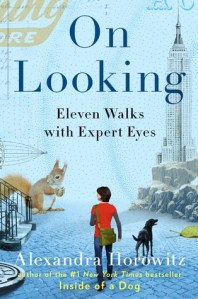
I’m reminded of a quote by Alexandra Horowitz: In childhood, then, attention is brightened by two features: children’s neophilia (love of new things) and the fact that, as young people, they simply haven’t seen it all before.

Can you learn to have the curiosity of a child again?

Having rediscovered this curiosity, what does that mean for our legacy?

Most of us want to leave a legacy, even in the smallest ways. Here are five questions that could help define your legacy:

  1. Who will benefit most from what you leave behind?
  2. What invisible but valuable gifts can you offer?
  3. How will you prepare and deliver your legacy?
  4. When is the most meaningful time to share your wisdom?
  5. Why does this matter to you personally?

Here’s some wisdom from David Viscott: “The purpose of life is to discover your gift. The work of life is to develop it. The meaning of life is to give your gift away.” Midlife isn’t about retiring from life – it’s about transitioning from “human doing” to “human being.” It’s an opportunity to move beyond the pursuit of happiness to the practice of joy, finding fulfillment in sharing your accumulated wisdom and experience with others.

My journey of becoming a Modern Elder involves embracing both the wisdom I’ve gained and the beginner’s mind that keeps me growing. By maintaining my curiosity, seeking new challenges, and focusing on meaningful contribution, I am creating a second half of life that’s as rich and rewarding as the first – perhaps even more so.

This transformation doesn’t happen automatically – it requires intentional effort to see familiar situations with new eyes and remain open to learning from others. Surrounding yourself with people who challenge your thinking and illuminate your blind spots helps maintain this growth mindset. As I continue to navigate this transition, I am reminded that my greatest contribution might not be in what I do, but in how I help others grow and develop through my accumulated wisdom and experience.


How to Take a Walk With All Your Senses

Welcome to the age of white noise.

We live our lives in a constant tether to phones, to apps, and to social media – mostly acquiescing to FOMO.

In this age of distraction, the ability to experience and be present is often lost, as is our capacity to think and to see and to listen.

Rob Walker, The Art of Noticing

In an effort to battle this, I’m inviting you to join me in taking a walk – with all your senses.

In short, I want you to pay attention.

At a basic level, paying attention is simply making a selection among all the stimuli bombarding you at any moment.

Even if we ignore most of what is going on around us, we can only take in so much of the world at a time. Our sensory system has a limited capacity, both in range and in speed of processing.

The sensory system I’m referring to are your five classical senses: sight, sound, touch, taste, and smell.

Limited capacity aside, many times we unfortunately ignore the parts that are available to us. Leonardo da Vinci reflected sadly that the average human:

“looks without seeing, listens without hearing, touches without feeling, eats without tasting, moves without physical awareness, inhales without awareness of odor or fragrance, and talks without thinking.”

A Brief Primer on How Our Senses Work

Sound The outer ear catches and channels sound waves to the middle ear, which contains three tiny bones. These bones vibrate, transmitting the sound the inner ear, where thousands of hair cells are stimulated by the movement of the fluid within the inner ear. An electrical impulse is transmitted along the hearing nerve to the brain creating the sensation of hearing.

Sight The experience of sight begins when photons from the world hit the lens of our eye, and get focused onto over 130 million receptor cells on the retina. These receptor cells convert incoming light into electrical signals to be sent to the brain, making sight possible.

Smell Every day we are confronted with a smorgasbord of smells. Our five million olfactory cells can sniff out one molecule of odor-causing substance in one part per trillion of air. We take about 23,000 breaths per day processing about 440 cubic feet of scent-laden air.

Touch Our bodies have more than 500,000 touch detectors and 200,000 temperature sensors. Each of these sensors gathers sensory information and relay it through specific nerve bundles back to the central nervous system for processing and possible reaction

Taste The complex process of tasting begins when tiny molecules released by the substances around us stimulate special cells in the nose, mouth, or throat. These special sensory cells transmit messages through nerves to the brain, where specific tastes are identified.

Enough of the science lab! God designed our bodies to sense, interpret, and react to the millions of stimuli that occur around us every day.

What do you miss, every day, right in front of you, while walking around the block?

I was paying so little attention to most of what was right before me that I had become a sleepwalker on the sidewalk. What I saw and attended to was exactly what I expected to see. That attention invited attention’s companion: inattention to everything else.

Alexandra Horowitz, On Looking

inspired by Alexandra Horowitz’s On Looking

and Rob Walker’s The Art of Noticing

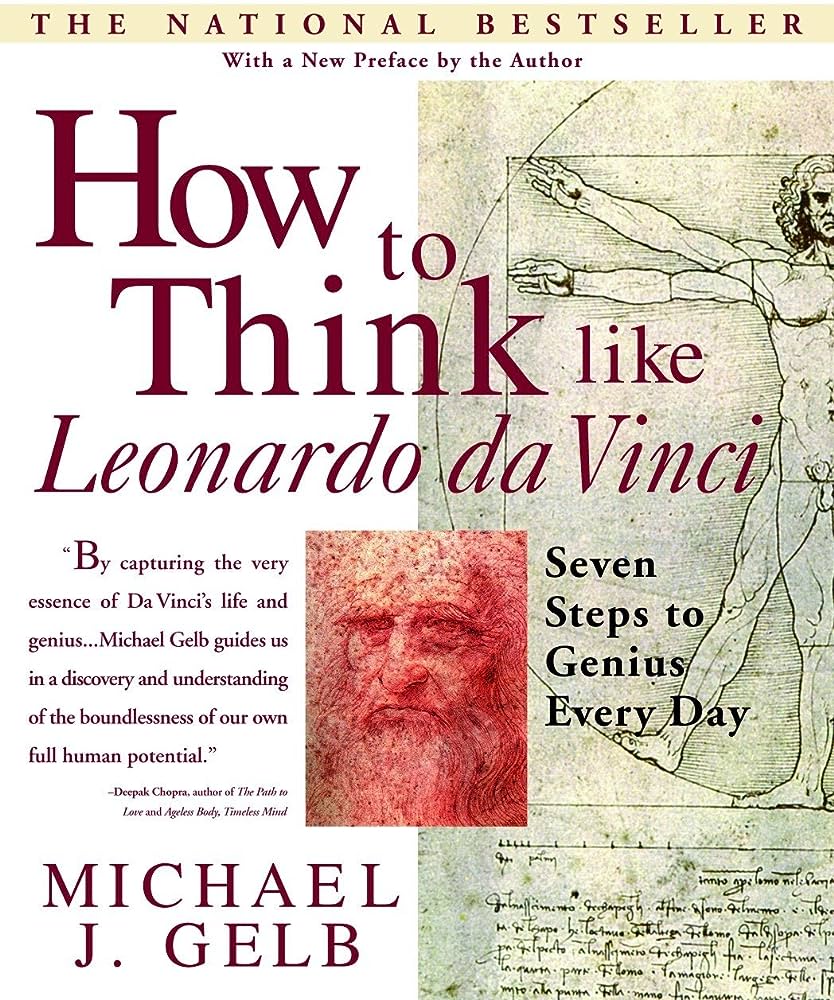
and Michael J. Gelb’s How to Think Like Leonardo da Vinci


Part of a regular series on 27gen, entitled Wednesday Weekly Reader

During my elementary school years one of the things I looked forward to the most was the delivery of “My Weekly Reader,” a weekly educational magazine designed for children and containing news-based, current events.

It became a regular part of my love for reading, and helped develop my curiosity about the world around us.

Listening for a Connection

One of the best ways to make connections with other people is by closing your mouth and opening your ears.

That’s right – Listening.

And that often starts with paying attention.

Here’s an earlier post on “paying attention” that fits right into that concept.

So, assuming you are paying attention to your surroundings, how do you enter into a conversation that will help you connect better with people around you?

Surprisingly, one of the most important tools that you need to develop in your communication skills is not your mouth. It is those two things on either side of your head.

Use your ears more than your mouth in a conversation, and become an active listener.

The most basic explanation of active listening is that is is the kind of listening that involves the use of one’s full concentration. The goal of this type of listening is to understand the person delivering the message.

Active listening is a skill which you have to develop over time, constantly practice, and fine tune along the way.

Here’s a tool developed by Dave Ping to help you listen to other people and establish a better connection with them.

Whether you’re talking with a relative, a neighbor, a friend, or a co-worker, the more you know about the person’s likes, dislikes, anxieties, and hopes, the easier it will be to connect with his or her world to establish, and then grow, a relationship.

Download the form above, and use it to listen and observe, filling in the blanks as you think the other person would.

Any answers you don’t know can serve as opportunities to listen more and to grow in your relationship.