Digital Fluency: Thriving in the Technology-Driven Workplace

In today’s workplace, where digital transformation reshapes every industry, technological competence is no longer optional – it’s essential. For the modern elder, digital fluency represents both a challenge and an opportunity. Rather than viewing technology as the exclusive domain of younger generations, experienced professionals who develop digital fluency unlock powerful new ways to share their accumulated wisdom and extend their professional impact well into the future.

Today’s article is the third of a 12-part exploration of the Modern Elder’s core competencies distilled from my 40+ year career journey. In the case of Digital Fluency, I’m going to suggest the skill goes beyond basic technical competence. It’s a holistic approach that combines technological comfort, continuous learning, and the ability to critically evaluate how digital tools can enhance professional effectiveness. The modern elder approaches technology not as an intimidating frontier, but as a powerful extension of their professional capabilities.

Breaking Through Technology Hesitation

Many experienced professionals feel overwhelmed by technological change. The key is to reframe technology as a tool for connection and impact, rather than a barrier. Start by identifying specific professional objectives that technology can help achieve. Whether it’s improving communication, streamlining workflow, or reaching new audiences, technology becomes less intimidating when viewed through the lens of practical problem-solving.

Psychological barriers often present the greatest hurdle. The fear of appearing incompetent or making public mistakes can paralyze even the most accomplished professionals. Modern elders overcome this by adopting a learner’s mindset – approaching technology with the same curiosity and resilience they’ve applied to other professional challenges throughout their careers. As leadership expert Brené Brown notes, “Vulnerability is the birthplace of innovation, creativity, and change” – a principle that applies perfectly to digital learning.

Continuous Learning Strategies

Digital fluency requires an intentional learning approach:

  • Embrace bite-sized learning through online courses and tutorials
  • Seek guidance from younger colleagues
  • Experiment with new tools in low-stakes environments
  • Connect technological skills to existing professional strengths

Successful modern elders often create personal learning plans that identify key technologies relevant to their field and establish reasonable milestones. Many find that 15-20 minutes of daily practice yields better results than occasional intensive sessions. I have created a “digital learning circle” with peers, where I can share discoveries, troubleshoot problems, and celebrate small victories together.

I enjoy weekly meetings with two individuals who are leaders in the operations excellence and financial management departments of their respective companies. Though our primary relationship is one of a disciple-making nature, our conversations almost always include events in their work environment, and those events are often technology driven. I am grateful for that ongoing learning!

Essential Digital Skills Worth Mastering

While specific technical needs vary by profession, certain digital competencies provide universal value:

  • Cloud-based collaboration tools
  • Basic data analysis and visualization
  • Digital communication platforms
  • Content creation fundamentals
  • Information security awareness

Digital Fluency in Action

Using my most recent job at Auxano/Lifeway as a foundation for exploring the above competencies, here are examples for each:

  • Auxano was founded as a virtual company in 2004; when I joined as the first “new” employee after the Lifeway acquisition in 2012, that only expanded. Cloud-based tools pioneered by 37signals were a daily part of life as I worked on the SUMS Remix project, connecting real-time with my supervisor in TN, the graphic designer in TX, and the editor in AL.
  • With responsibilities for our website, four social media platforms, and digital engagement tools, I created weekly, monthly, and annual data analysis for review by supervisors. This in turn guided our continual improvement in all of the platforms.
  • As a virtual company with team members coast-to-coast, digital internal communication platforms were the lifeblood of our collaborative work. It was not unusual for me to launch a project early in the morning, have members chime in as they came on line as the day progressed, and wrap it up at the end of the day with participation from team members in all four U.S. time zones.
  • Auxano’s marketing strategy was driven by producing content in all forms, including: long form articles on our websites, periodic eBooks, daily social media posts on four different platforms, monthly webinars, and regular targeted email campaigns to various segments of our database. The primary platform for all this was Pardot (later acquired by Salesforce and renamed Marketing Cloud). From my assigned role in this beginning in 2013 to my last action prior to leaving Auxano/Lifeway, content creation was a constant presence AND learning opportunity.
  • As Lifeway moved into increasingly digital activities over the years, I became the designated Auxano team member responsible for our information security awareness. Whether working with our website host, specific platform components, or with Lifeway, security and compliance issues became a regular part of my job.

Balancing Technology and Human Connection

The most effective digital fluency isn’t about mastering every new app, but about understanding which technologies genuinely enhance human interaction and organizational goals. Modern elders bring a crucial perspective – knowing when to leverage digital tools and when personal interaction remains most effective.

This discernment represents one of the modern elder’s most valuable contributions. Having witnessed technological evolution firsthand, I am learning to distinguish between transformative innovations and passing trends. From my first college computer programming class in 1977 using punch cards to today’s pervasive presence of an app for anything, this perspective helps me go avoid “shiny object syndrome” – the tendency to adopt technologies without clear purpose or strategic alignment.

Technology as an Amplifier of Wisdom

I consider technology not as a replacement for experience, but as a megaphone for my professional insights. Social media platforms have extended my thought leadership, project management tools make my expertise more accessible, and digital collaboration spaces help me mentor – and be mentored – beyond physical boundaries.

The journey toward digital fluency is ongoing – technology continually evolves, requiring all professionals to adapt regardless of career stage. However, the modern elder brings a unique advantage to this journey: perspective. By combining technological capability with decades of experience, modern elders create an unmatched synthesis of innovation and wisdom. This powerful combination doesn’t just extend professional relevance; it transforms experienced professionals into indispensable guides who can help organizations navigate both technological possibilities and human realities with equal skill.

Intergenerational Collaboration: Bridging the Age Gap in Today’s Workplace

Today’s workplace presents an unprecedented demographic landscape where up to five generations – from Traditionalists and Baby Boomers to Gen X, Millennials, and Gen Z – may work side by side, each bringing distinct perspectives shaped by their formative historical, technological, and cultural contexts. This remarkable age diversity creates both significant opportunities and potential friction points that organizations must navigate effectively. For modern elders, the ability to foster Intergenerational Collaboration has evolved from a desirable skill to an essential competency – one that transforms generational differences into powerful sources of innovation, resilience, and competitive advantage in an increasingly complex business environment.

This article is the second of a 12‑part exploration of the Modern Elder’s core capacities distilled from my 40+ year career journey. Effective intergenerational collaboration requires recognizing that generational differences represent complementary strengths rather than deficits, with modern elders serving as crucial translators and bridges between various age groups.

As workplaces continue to diversify, the modern elder who masters intergenerational collaboration doesn’t merely navigate differences – they transform them into a powerful organizational asset that enhances resilience, sparks innovation, and creates a sustainable competitive advantage.


Understanding Generational Differences

Each generation brings distinct perspectives shaped by the historical, technological, and cultural contexts of their formative years. Modern elders recognize that these differences extend beyond stereotypes into genuine variations in communication preferences, work styles, and core values.

Baby Boomers often value face-to-face interaction and detailed context, while Gen Z might prefer quick digital exchanges and visual information. Gen X typically appreciates autonomy and direct feedback, while Millennials may seek more collaborative approaches and regular affirmation. Rather than viewing these differences as obstacles, the modern elder sees them as complementary strengths that, when properly aligned, create more robust solutions.

“The most common mistake is assuming generational differences represent deficits rather than distinctions,” notes workplace anthropologist Dr. Leah Reynolds. “Different isn’t lesser – it’s just different. The modern elder understands this intuitively.”

Communication Bridges Across Generations

Effective intergenerational collaboration begins with communication adaptability. Modern elders develop what might be called “multilingual” workplace communication – the ability to adjust tone, medium, and context to connect meaningfully with colleagues of any age.

This might mean learning to appreciate the efficiency of text-based communication with younger colleagues while helping them understand the value of occasional in-person meetings. It could involve translating between the precise, technical language preferred by some generations and the more narrative approach favored by others.

Building Mutual Respect

Respect forms the cornerstone of successful intergenerational relationships, but it must be actively cultivated rather than assumed. Modern elders demonstrate respect by genuinely engaging with diverse perspectives, avoiding age-based assumptions, and recognizing the valid contributions of colleagues regardless of their career stage.

This means acknowledging that wisdom isn’t exclusively the domain of experience, nor is innovation the sole province of youth. A 23-year-old digital native might offer invaluable insights about user experience design, while a 63-year-old product manager might provide crucial context about product evolution that prevents repeating past mistakes.

The modern elder creates environments where respect flows in all directions – not just up the traditional authority hierarchy, but laterally across age groups and downward from experienced to emerging talent.

Leveraging Complementary Strengths

The most productive intergenerational teams capitalize on the complementary strengths each generation brings. Modern elders excel at identifying these strengths and creating partnerships that leverage them.

A generation that grew up with social media brings intuitive understanding of digital engagement. Colleagues who navigated multiple economic cycles offer perspective on market fluctuations. Those who built careers during organizational transformations provide change management wisdom. The modern elder doesn’t just recognize these differences – they actively design collaborations that align these varied strengths with organizational needs.

Intergenerational Collaboration in Acton

Having worked across multiple churches and organizations from 1981 to 2025, I have experienced spanning organizational “generations” – from pre-digital church ministry to modern content marketing systems in a consulting setting. This positioning as an organizational translator who understands both traditional ministry contexts and contemporary digital engagement exemplifies the modern elder’s role in intergenerational collaboration.

Here are a few examples:

  • Bridging Digital and Traditional Communication Methods: At Auxano/Lifeway I developed social media platforms (Facebook, Twitter/X, Instagram, LinkedIn) while also maintaining traditional forms of communication. This demonstrates adapting to multiple generational preferences – creating digital touch points for younger audiences while maintaining approaches that would resonate with older generations.
  • Technology Evolution Across Career Span: The progression from creating new multimedia ministry opportunities to computer network implementation to website development to implementing social media shows how I bridged technological evolutions throughout my career – adapting to each new wave while bringing valuable context from previous eras.
  • Cross-Generational Knowledge Transfer: The establishment of visionroom.com as an online clarity information source and the creation of the SUMS Remix book excerpt product represents transforming traditional wisdom and knowledge into digital formats accessible to younger generations – demonstrating how a modern elder can serve as a bridge between established knowledge and new consumption methods.

Creating Intergenerational Mentoring Circles

Traditional mentoring typically flows in one direction – from experienced to novice. The modern elder, however, recognizes the limitations of this model in today’s rapidly changing workplace. Instead, they champion mentoring circles where knowledge and skills flow multidirectionally.

These structured groups bring together colleagues of various ages and experience levels around shared learning objectives. A marketing mentoring circle might include a veteran marketer sharing campaign development principles, a mid-career professional offering project management techniques, and an early-career team member demonstrating emerging social platform strategies.

This approach democratizes expertise, acknowledging that everyone has something valuable to teach and something important to learn. It also normalizes cross-generational learning as an organizational practice rather than an exception.

The Modern Elder’s Unique Contribution

What makes the modern elder particularly valuable in intergenerational collaboration is their ability to serve as translators and bridges. Having witnessed workplace evolution firsthand, they understand both where organizations have been and where they’re heading. This enables them to contextualize changes for colleagues of all ages, reducing resistance and building cohesion.

As workplaces continue to diversify in age, experience, and perspective, the ability to foster productive intergenerational collaboration becomes increasingly valuable. The modern elder who masters this competency doesn’t just navigate generational differences—they transform those differences into a powerful source of organizational resilience and innovation.

By understanding generational contexts, adapting communication approaches, fostering mutual respect, leveraging complementary strengths, and creating multidirectional learning opportunities, the modern elder helps organizations harness the full potential of their age-diverse workforce. In doing so, they don’t just bridge the generational gap – they turn it into a competitive advantage.


Wisdom Intelligence – The Catalytic Skill of the Modern Elder

Across 40+ years of purposeful pivots – from launching one of the first large-church computer networks and producing daily children’s television shows in 1983, to developing Auxano’s VisionRoom digital‑clarity platform three decades later – every transition has forged raw experience into what I call Wisdom  Intelligence

Pattern‑spotting across industries, translating complexity into clarity, and turning challenges into strategic advantage became less a talent than a tempered competency, honed each time I stepped out of a familiar role and into the learning zone. 

This opening essay launches a 12‑part exploration of the Modern Elder’s core capacities distilled from that journey. We begin with Wisdom Intelligence because it is the catalytic skill – the cognitive “Rosetta Stone” that lets seasoned leaders synthesize decades of wins, failures, and sideways moves into the foresight that teams  of all ages across all organizations need right now. Master it, and the remaining competencies – intergenerational collaboration, digital fluency, legacy thinking, and more – unfold with surprising ease.


What Is Wisdom Intelligence?

Wisdom intelligence differs fundamentally from other forms of intelligence. While IQ measures raw cognitive processing and emotional intelligence addresses understanding of emotions, wisdom intelligence represents the ability to synthesize decades of experience into meaningful, contextualized insights that guide decisions and actions.

Dr. Chip Conley, who pioneered the modern elder concept, describes wisdom intelligence as “the ability to not just possess knowledge but to apply it judiciously in complex situations.” This form of intelligence combines pattern recognition from past experiences with discernment about which patterns remain relevant in changing circumstances.

Wisdom intelligence manifests in several key ways:

  • Recognizing underlying principles amid complexity
  • Balancing short-term needs with long-term consequences
  • Distinguishing between information and genuine knowledge
  • Sensing when to apply proven solutions versus exploring new approaches
  • Understanding human nature and organizational dynamics at a systemic level

The Alchemy of Experience

What makes wisdom intelligence powerful is how it transforms raw experience into actionable insight. This process involves several cognitive steps that develop over time:

First, the modern elder engages in reflective practice – not just accumulating experiences but analyzing them critically. This reflection often reveals broader patterns and universal truths that transcend specific situations. Next comes integration, where these observations connect with other knowledge domains, creating a rich contextual framework for understanding.

The final stage – perhaps the most crucial – is discernment. Here, the modern elder develops the judgment to determine which lessons from the past apply to current circumstances and which do not. This prevents one of the greatest pitfalls of experience: applying outdated solutions to new problems.

Cultivating Wisdom Intelligence

While wisdom intelligence typically develops through years of experience, it can be actively cultivated through intentional practices:

  • Reflective Journaling: Regular documentation of professional experiences, decisions, and outcomes creates a personal knowledge base that reveals patterns over time. The most effective approach involves not just recording events but analyzing why certain approaches succeeded or failed.
  • Decision Review Process: Systematically examining past decisions – both successful and unsuccessful – helps identify recurring decision-making pitfalls and successful strategies. Modern elders often establish personal “review boards” where they candidly assess their judgments with trusted peers.
  • Cross-Domain Learning: Seeking knowledge from fields outside one’s primary expertise creates cognitive connections that generate fresh insights. This interdisciplinary thinking helps modern elders recognize patterns that specialists might miss.
  • Scenario Planning: Mentally rehearsing various outcomes for important decisions strengthens predictive capabilities and reveals potential blind spots in thinking.

Wisdom Intelligence in Action

Reflecting on my 40+ years in multiple positions with the common thread of serving the church (internally as a staff member or externally as a consultant), I have seen how wisdom intelligence transforms experience into insight, allowing the modern elder to contribute unique value through pattern recognition, contextual understanding, and nuanced judgment.

Here are a few examples:

  • Pattern Recognition Across Different Organizations: My career progression across multiple organizations (Highview Baptist, Prays Mill Baptist, First Baptist Huntersville, J.H. Batten, and Auxano/Lifeway) demonstrated my ability to recognize underlying patterns in organizational development. In each position, I identified opportunities to expand my role beyond initial responsibilities, showing wisdom intelligence in spotting systemic needs before they were formally recognized. 
  • Transformational Knowledge Transfer: Creating and delivering the Guest Experience Boot Camp (2017-2021) that trained over 100 church teams and 525 participants shows how I transformed decades of experiential knowledge into a structured learning environment. This exemplified wisdom intelligence by distilling complex patterns observed across many organizations into teachable principles.
  • Cross-Domain Synthesis: My transition from pastoral staff roles to a development role in church design/build and then consulting demonstrates the ability to apply principles from one domain to another. For example, the development of a “consultant sales model” at J.H. Batten drew on relationship skills from pastoral work combined with business acumen. This cross-pollination of insights across fields is a hallmark of wisdom intelligence.

Teaching Wisdom Intelligence

Perhaps the most valuable aspect of wisdom intelligence is that it can be shared. Modern elders effectively transfer their wisdom intelligence through:

  • Asking powerful questions that prompt others to discover insights themselves
  • Sharing relevant stories that illustrate principles rather than just solutions
  • Creating decision frameworks rather than prescribing specific answers
  • Providing context for current challenges by connecting them to historical patterns

The Organizational Value

Organizations that recognize and leverage wisdom intelligence gain significant advantages. Modern elders provide stabilizing perspectives during crises, help avoid repeating organizational mistakes, and build decision-making frameworks that outlast their tenure.

In an era of abundant information but scarce wisdom, the modern elder’s ability to transform experience into applicable insight represents an increasingly valuable organizational asset. As workplaces continue to navigate unprecedented change, wisdom intelligence may be the difference between organizations that merely survive and those that genuinely thrive.

The journey to developing wisdom intelligence is lifelong – it’s not simply the automatic result of aging but the intentional cultivation of reflection, integration, and discernment. For those aspiring to become modern elders, it’s the cornerstone competency upon which all others build.

Next week: Intergenerational Collaboration


Navigating Change with Wisdom: Gandalf as a Timeless Model for the Modern Elder

Embarking on the journey to becoming a modern elder is akin to setting sail on a voyage of self-discovery, one where the maps are drawn not just from personal experience but also from the timeless wisdom embedded in the stories we read. 

Just as ancient mariners navigated by celestial bodies, those seeking to embrace this evolving role can find guidance in the enduring patterns of human character and experience captured in literary archetypes. From the sage advisor to the resilient hero, these recurring figures offer profound insights into the qualities, challenges, and ultimate contributions of those who embrace the mantle of elderhood in a contemporary world. 

By exploring these archetypal representations, we can better understand the multifaceted nature of this transformative journey and glean valuable perspectives on how to navigate its unique terrain.

Previous individual posts and series have taken a more contemporary view of the journey to my becoming a  modern elder. In addition, Nehemiah provides an excellent source of characteristics a modern elder should emulate. While those approaches are certainly valuable, over the past few months I have come to realize that journey can draw from many different sources. They even all don’t have to be contemporary.

All we have to decide is what to do with the time that is given us.

Gandalf, from J.R.R. Tolkien’s “Lord of the Rings”

In an era often captivated by the allure of youth and the relentless pursuit of innovation, the concept of the “modern elder” emerges as a vital counter-narrative. It champions the enduring significance of accumulated wisdom, seasoned experience, and the profound impact of mentorship in navigating the ever-increasing complexities of contemporary life. While the term itself is relatively new, the archetype of the wise elder resonates across cultures and throughout the annals of storytelling. Within the rich tapestry of literature, perhaps no character embodies this archetype more compellingly than Gandalf, the enigmatic and powerful wizard from J.R.R. Tolkien’s monumental 3-volume work, The Lord of the Rings, and his earlier book, The Hobbit.

For reference, I have long been a fan of Tolkien’s work – I first acquired and read the LOTR paperback versions around 1970, as I was beginning junior high. In the many years since then, I have reread both The Hobbit and LOTR several times, and have been working through the rest of Tolkien’s works. In addition, there are many scholars and serious students of Tolkien who have written about his works; there’s certainly no shortage of source material!

Earlier this year, I began a Tolkien quest of my own: reading through the 12-volume History of Middle-earth. The History of Middle-earth dives deep into the creation of the myths, languages, and histories behind Tolkien’s classics – The HobbitThe Lord of the Rings, and The Silmarillion – all thanks to Tolkien’s son Christopher’s thorough documentation and insightful commentary.

As I jumped around the different volumes, it struck me that there was one character who stood out in terms of a modern elder – even though this was a fictional character! At first glance, drawing a parallel between a figure of high fantasy and a contemporary social concept might seem like a whimsical exercise.

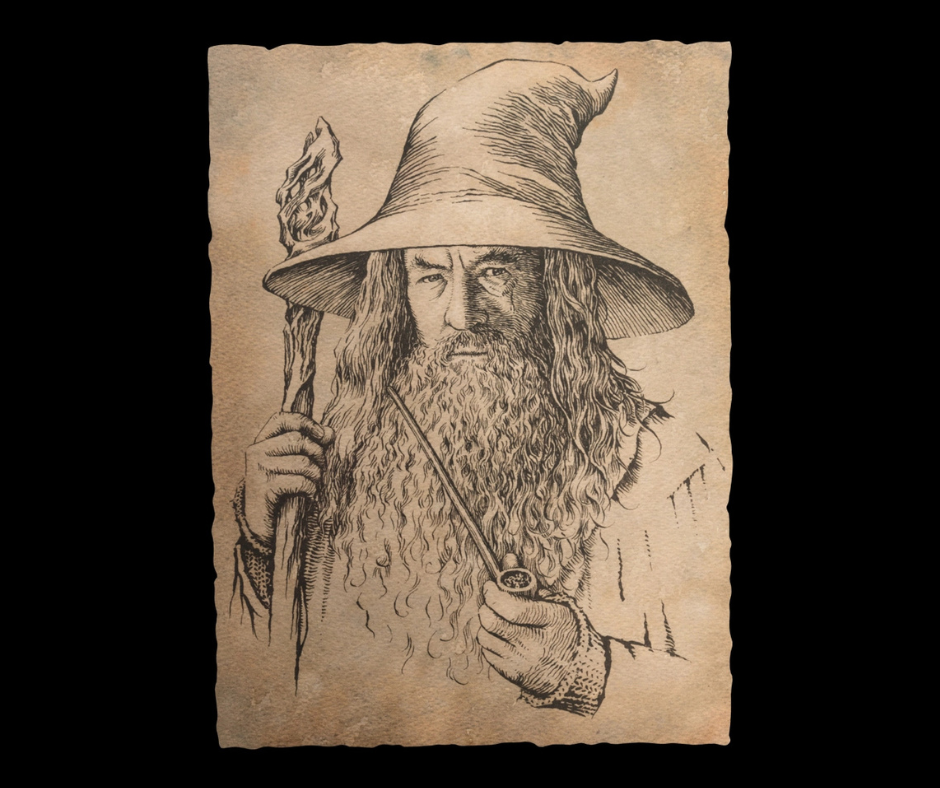
Gandalf, with his iconic flowing grey beard, his pointed hat that speaks of ancient lore, and the staff that serves as both a tool and a symbol of his authority, inhabits a world of magic and mythical creatures. Yet, beneath this fantastical veneer lies a core of qualities, a fundamental essence, that aligns remarkably with the defining principles of a modern elder. By delving deeper into Gandalf’s actions and his counsel throughout LOTR (and the Hobbit), we uncover a timeless model for those seeking to embrace the profound and evolving role of elderhood in our own world.

A Deep Wellspring of Hard-Earned Experience

One of the foundational tenets of the modern elder is not simply the accumulation of years, but the depth and breadth of life experiences that have shaped their understanding of the world. They are individuals who have weathered personal and societal storms, celebrated moments of profound joy, and, most importantly, extracted invaluable lessons from both triumph and tribulation. Gandalf, as one of the Istari – angelic beings sent to Middle-earth in human form millennia prior to the events of The Lord of the Rings – possesses an almost incomprehensible reservoir of experience. He has witnessed the ebb and flow of ages, the rise and fall of civilizations both great and small, and has engaged in battles against ancient evils that predate recorded history in the Tolkien timeline. This vast tapestry of lived history profoundly informs his judgment, allowing him to offer perspectives and insights that younger, less seasoned characters within Middle-earth simply cannot grasp. Consider his strategic counsel to the Fellowship of the Ring, advice drawn not just from tactical acumen but from centuries of understanding the insidious nature of darkness and the enduring power of hope, even in the face of overwhelming despair. His knowledge of ancient lore, forgotten languages, and the intricate web of Middle-earth’s history provides a crucial foundation for the Fellowship’s perilous quest.

The Transformative Power of Intentional Mentorship

A central and defining role of the modern elder is that of a mentor – an individual who consciously and compassionately guides, supports, and empowers others to discover their own potential and navigate their unique paths. Gandalf stands as the quintessential mentor figure throughout The Lord of the Rings. He recognizes the inherent courage within Frodo Baggins, nurturing his nascent bravery and guiding him through the daunting responsibility of bearing the One Ring. He patiently steers Aragorn towards embracing his rightful destiny as the king, offering both encouragement and challenging him to rise to the occasion. His interactions with the entire Fellowship are marked by timely and insightful advice, often delivered in cryptic yet ultimately illuminating ways. Crucially, Gandalf does not dictate or impose his will; instead, he illuminates possibilities, encourages critical thinking, and fosters self-reliance. His famous and oft-quoted line, “All we have to decide is what to do with the time that is given us,” perfectly encapsulates this empowering approach, emphasizing individual agency and the importance of choice rather than blind obedience to authority. He sees the potential in each member of the Fellowship, even the seemingly insignificant hobbits, and helps them recognize their own strengths.

Navigating the Inevitable Currents of Change with Grace and Adaptability

The modern world is characterized by a relentless and often disorienting pace of change. Modern elders, having witnessed numerous societal and personal transformations throughout their lives, possess a unique ability to navigate these shifting currents with a sense of perspective, resilience, and adaptability. Gandalf, despite his ancient origins and deep understanding of tradition, remains remarkably relevant and influential in a rapidly evolving Middle-earth. He recognizes the shifting tides of power, the emergence of new threats, and the need for unconventional alliances. His dramatic return as Gandalf the White after his battle with the Balrog in the Mines of Moria signifies not a nostalgic clinging to the past, but a powerful evolution. He embraces new responsibilities and wields a greater authority, demonstrating an ability to adapt and grow in the face of profound personal and external challenges. This transformation underscores the idea that true elderhood is not about stagnation, but about continued growth and relevance.

An Unwavering Anchor of Enduring Values

In a world often swayed by fleeting trends and shifting moral landscapes, modern elders often serve as vital anchors of enduring values. They embody principles such as integrity, compassion, resilience, and a deep-seated commitment to ethical conduct. Gandalf consistently demonstrates these fundamental qualities throughout his interactions. He exhibits unwavering loyalty to his friends and allies, remains steadfast in his commitment to the forces of good, and possesses a profound empathy for the struggles and vulnerabilities of others, especially the seemingly small and unassuming hobbits. His moral compass remains true and unwavering, providing a vital ethical framework for the other characters as they navigate the treacherous path towards Mordor and confront the seductive power of the Ring. His wisdom is not merely intellectual; it is deeply intertwined with a strong sense of justice and a profound understanding of the importance of compassion.

Influence Beyond Brute Force – The Power of Wisdom and Connection

While Gandalf undoubtedly possesses considerable magical power, his true and lasting strength lies not solely in his ability to wield spells and command the elements, but in his wisdom, his profound understanding of people and their motivations, and his remarkable ability to inspire hope and foster unity. Modern elders understand that true influence transcends physical capabilities or material wealth. Their power resides in their accumulated insights, their extensive networks of connections, and their capacity to see the larger, interconnected picture. Gandalf’s impact on the War of the Ring is not solely through his direct magical interventions, but perhaps more significantly through his strategic guidance, his ability to forge alliances between disparate factions (Elves, Men, Dwarves, and Hobbits), and his unwavering belief in the inherent capacity for good to triumph over evil, even when all seems lost. He understands the power of collaboration and the importance of recognizing the unique strengths that each individual and group brings to a common cause.

While Gandalf is undeniably a figure of fantasy, a powerful wizard inhabiting a richly imagined world, his essence resonates deeply with the core principles of the modern elder. He embodies the profound wisdom gained through millennia of experience, the transformative power of intentional mentorship, the crucial ability to navigate change with grace and adaptability, and the steadfastness of enduring core values. By thoughtfully examining his character, his actions, and his interactions with the world around him, we gain a richer and more nuanced understanding of the vital role that elders – both fictional and real – play in guiding, inspiring, and ultimately shaping the course of our journeys through life. Gandalf serves as a timeless reminder that true strength lies not just in overt power, but in the enduring wisdom of a life lived with purpose, integrity, and a generous spirit of guidance. His legacy extends far beyond the realm of fantasy, offering profound insights into the enduring value of elderhood in our own modern world.


For another model of modern eldership, see the series on Nehemiah here.


Day One: Cultivating a Meaningful Rule of Life

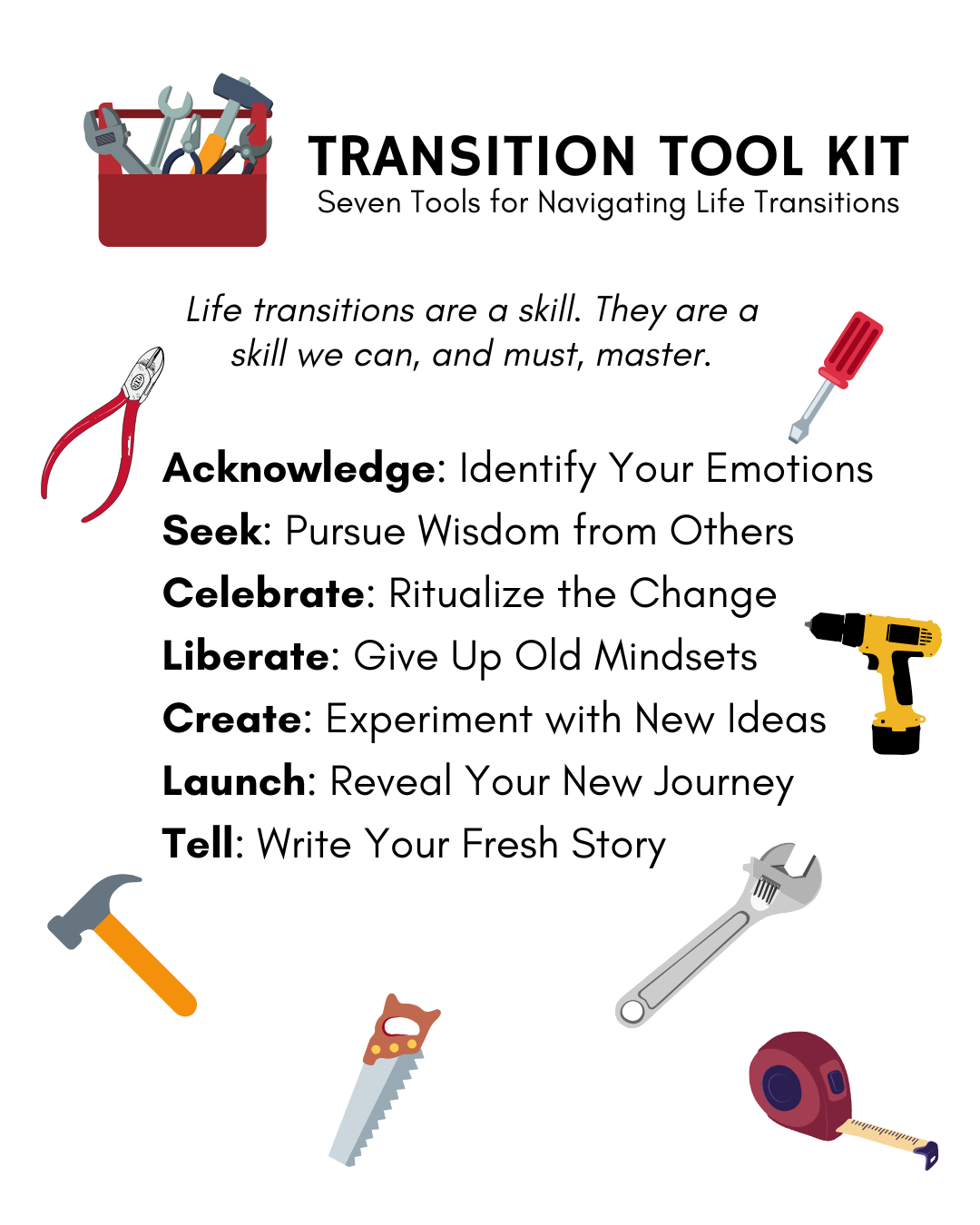
As I began my job transition several months ago, and as it continues today, I am guided by a Transition Tool Kit. Consisting of 7 “tools” that were developed from the work of Bruce Feiler’s Life is in the Transitions and other noted transition guides, the Tool Kit contains concepts and action plans that I have been working through.

Here are first three:

  • Acknowledge: Identify Your Emotions
  • Seek: Pursue Wisdom from Others
  • Celebrate: Ritualize the Change

While the tools are not designed to be linear and can be picked up at any time, I’ve been comfortable with moving through the sequence of the three above to this date.

Now, it’s on to Liberate: Give Up Old Mindsets.

The mindsets that served me in my previous stage may no longer be useful – or even hinder me – in this next phase. Shedding outdated beliefs and self-limiting narratives requires courage, but it opens doors to growth. 

What assumptions am I carrying that no longer align with who I are or who I want to become? Moving through transition often means letting go of familiar but outdated notions of success, identity, or purpose.

The deleting of my work calendar and schedules was the first part of using this tool. But having a blank calendar is not a plan for transition – it will only lead to listless drifting. Along with this tool, it’s also time to pick up another one – Create: Experiment with New Ideas.

With old mindsets cleared, I’m giving myself permission to explore new ways of thinking and doing. I’m going to try activities, roles, or ideas that resonate with where I’m headed. This stage is about experimenting without the fear of failure. As I explore, I will stay open to discovering passions, skills, or career paths that I may not have previously considered.

And that brings me to a mindset that’s been dropping into my life in increasing measures over the last few months. It began with reading and study I had been doing related to following Jesus. It continued with the passages of Matthew we are studying in our church’s current sermon series and community group that deal with rest and the Sabbath.

So picture this: on the one hand, I’m at Day One of a new chapter in my life – one with a literal blank calendar. On the other hand, I’ve got the tools of Liberate and Create ready to use.

What’s next?

Finding Purpose Through Pattern: The Modern Rule of Life

In our fast-paced world of constant activity, many people are rediscovering an ancient wisdom practice: the rule of life. This concept, far from being a rigid set of regulations, offers a framework for intentional living that modern seekers find increasingly relevant.

Origins in Spiritual Tradition

The “rule of life” traces its origins to early spiritual leaders like St. Augustine and St. Benedict. These church fathers developed communal patterns that spiritual communities have utilized for thousands of years as formation tools. Despite the constraining connotations of the word “rule,” these frameworks were never about blind obedience but rather about establishing communal purpose.

Both Augustine and Benedict shared a singular focus: love. They meticulously designed daily patterns with the explicit goal of orienting life toward loving God and neighbor. Augustine began his rule declaring, “Before all things, most dear brothers, we must love God and after Him our neighbor; for these are the principal commands which have been given to us.” Similarly, Benedict aimed to create nothing “harsh” or “burdensome,” but instead sought to guide followers toward the “ineffable sweetness of love.”

The Latin root of “rule” – regula – reveals its true intent. Rather than restriction, it refers to a trellis or supporting structure that guides growth. Like plants that thrive with proper support, human growth benefits from thoughtful direction to prevent twisted, chaotic development.

The Scaffolding of Our Days

Our lives take shape through the cumulative effect of small, repeated actions. As Annie Dillard insightfully noted, “How we spend our days is, of course, how we spend our lives.” Our schedules serve as “scaffolding” that allow us to intentionally engage with time itself.

This scaffolding concept perfectly illustrates the rule of life’s purpose. Habits are how we interact with time, and since time is the currency of purpose, habits become the means through which we access and fulfill our deeper callings. If knowledge requires the right words, character formation requires the right habits. The rule of life provides the framework for cultivating these transformative patterns.

For centuries, monastic communities have understood this profound connection between daily practice and spiritual development. Their insight reveals that meaningful formation begins with a framework of habits – a truth that deserves wider recognition in our contemporary context.

Integrating Belief and Practice

While understanding theological truths about God and neighbor is essential, equally important is putting those truths into practice through a deliberate rule of life. Belief without practice remains incomplete, just as education without formation falls short. Knowing Jesus without following Jesus creates a dissonance that diminishes our humanity.

Only when our habits align with our worldview do we become people who truly love rather than merely understand concepts of love. This integration transforms abstract knowledge into embodied wisdom.

The Challenge of Default Formation

Many of us have unknowingly adopted what might be called “the American rule of life” – an unconscious program of habits that shapes us toward anxiety, depression, consumerism, and self-absorption. These default patterns form us in ways contrary to our stated values.

The urgency of developing an intentional, gospel-based rule of life becomes clear when we recognize how powerfully these cultural currents influence us. We need counter-formative practices to become the loving people we aspire to be.

This issue extends beyond personal well-being to our public witness. American Christianity often emphasizes the message of Jesus while neglecting his practices, creating a troubling disconnect between proclaimed faith and lived reality. How else can we explain professed followers of a radical gospel who conform so seamlessly to prevailing cultural norms?

Embracing the Trellis

The path forward requires acknowledging how habits shape the heart. Rather than viewing limitations as threats to freedom, we must recognize that thoughtful boundaries create space for meaningful growth. The trellis doesn’t restrict the vine – it enables it to flourish in its intended direction.

By crafting a common rule of life suited to our time, we can unite our intellectual understanding with our daily practices. This integration allows us to grow into the lovers of God and neighbor we were created to be, following not just the teachings but the way of Jesus.

In rediscovering this ancient wisdom, we find a surprisingly relevant answer to modern challenges – not through more information or stronger willpower, but through the patient cultivation of life-giving habits that transform us from the inside out.


Up Next: Exploring The Common Rule


Final Approach: Reframing Life’s Unexpected Transitions

In late October 2024, as dawn broke through dark skies on my daily morning walk, I listened to the night sounds turning into day. I was walking the familiar path with a mixture of nostalgia, fear, and anticipation

For over 44 years, I had served in a variety of roles with a common focus: the church, the body of Christ. As a staff member or a strategic outsider, my goal had always been as a guiding light for the organization. Independent, logical, and determined, I am known for my relentless pursuit of learning through exploration, researching, and by asking searching questions.  Outwardly quiet, reserved, and detached, inwardly I am constantly absorbed in analyzing problems or situations. Work, for me, is the process of striving towards something that matters deeply to me and is consistent with my values. It was more than just a job.

Yet here I was on the morning after the fateful call in which I had been informed that my job was being eliminated in four months’ time, at the end of February. 

On that morning, the walk was more habit than conscious decision, but not for long.

As I walked with the shock still fresh, my mind turned to the skies at the sound of a plane overhead. With the wind blowing in my face, airplanes approaching Charlotte Douglas airport were landing from the north. That meant flight after flight was lining up like a set of twinkling cafe lights from the south, flying directly overhead, and then turning to the west before one more turn to make their final approach.

In a flash, I knew that the term final approach was a perfect metaphor for what I was facing. Long enamored of airplanes and flight, and with a father who served in WWII in the Army Air Corps and a son currently a captain in the Air Force, the phrase was perfect for the situation I was facing.

The news of my job elimination had come like turbulence on a clear day, unexpected yet undeniable. While my colleagues and friends may have thought “retirement,” I felt  down to my core that I hadn’t yet reached my “final destination” (to use another flight metaphor). There was still a journey ahead – uncharted skies and yet-to-be-discovered places. And I intended to approach this moment as I had every challenge in my career: with conviction, gratitude, and the desire to finish well.

During the four months left, I set out to use each day purposefully. Reframing this period, I chose to see this as a final approach of my current job before moving into new territory with another destination in the future, rather than an ending. 

As I spent my days on the various parts of my job at hand, each task took on a new meaning as I did my daily tasks but also prepared to share not only insights about the technical aspects but also wisdom gleaned from my years in the role. Each call, every report or spreadsheet prepared, and even casual conversations in digital spaces became opportunities to create the equivalent of a pilot’s “flight bag” – aeronautical and navigation charts, route manuals, and flight checklists. Necessary for ongoing “flights,” my intention was that all the activity over the next four months would provide direction and guidance for the team, allowing them to flourish after I was gone.

My evenings and weekends became devoted to planning the next part of my adventure. I am charting out ideas that have simmered in the back of my mind for years: more writing, maybe, or mentoring/coaching opportunities where I could invest in people beyond my field. I’m even envisioning a “modern elder” initiative – a place where seasoned professionals can support rising generations, sharing both practical skills and timeless principles. 

To me, this isn’t about staying relevant or proving something; it was about answering a call I have long felt deep within, one that echoed louder than any retirement clock ticking in my ear.

Anita, always my closest source of inspiration and encouragement, has stepped up big time. Her own personal journey and recent medical battles over the past three years have provided immense support and a calm sense of peace in stormy weather.

Many more conversations followed, and continue, with my children, friends, and other individuals being sought out to provide a sound word of counsel.

After two months of the above, some unforeseen medical issues brought unexpected “interruptions” into my plans. With just enough energy to fulfill my daily role, I set aside looking to the future for a time.

As I closed out each night, I felt a growing sense of peace. I embraced this final approach with the steady focus of a seasoned pilot bringing in a plane through the night – aware of the passengers and cargo, mindful of all the external factors affecting the final approach, but confident in the landing and the subsequent journey ahead. 

My final destination? This period isn’t an exit but an opening, a new horizon where my years of experience have become a compass guiding me toward purpose and fulfillment beyond what I could have dreamed about before.

When the time comes to step away and power down my laptop for the final time in a few hours, I won’t look back with regret. Instead, I am moving toward the future with a smile, heart full of hope for the landing yet to come. 

My journey is far from over; in fact, it has just begun.


Becoming a Beginner Again: Finding New Purpose in Life’s Second Act

The journey through midlife (ages 45-65) often brings us to an unexpected crossroads – one where we’re invited to transform our relationship with success, purpose, and personal growth. While our earlier years might have been dominated by external measures of achievement (what we do, what others think, what we own, and what we control), midlife presents an opportunity for a profound shift in perspective.

Developmental psychologist Erik Erikson suggests a powerful alternative mindset: “I am what survives me.” This simple yet profound reframing encourages us to consider our legacy and impact on future generations, moving beyond immediate gratification to focus on lasting contribution.

Think of yourself as a plant that occasionally needs repotting to flourish. Throughout our careers, we accumulate valuable seeds of knowledge and wisdom. Midlife offers the perfect opportunity to transplant these seeds into new soil, allowing us to grow in different directions. With decades of experience, we’re better equipped to recognize the environments where our talents will thrive.

The modern workplace increasingly supports this evolution. The pandemic accelerated the trend toward flexible work arrangements, with more companies offering phased retirement options. This shift acknowledges that stepping back from full-time work doesn’t mean retiring completely – instead, it’s an invitation to reimagine how we can apply our skills and knowledge in new ways.

One of the most valuable contributions older professionals can make is teaching and mentoring. As Arthur C. Brooks notes, the best synthesizers and explainers of complex ideas tend to be in their mid-60s or older. This makes intuitive sense – wisdom accumulated over decades creates natural teachers. Beyond technical expertise, older professionals offer “invisible productivity” – the ability to elevate the performance of entire teams through their well-developed social skills and emotional intelligence.

The key to thriving in this new chapter lies in becoming a beginner again. While it might seem counterintuitive to start fresh when you’ve mastered certain skills, introducing novelty into your life creates distinct memories and actually slows down your perception of time. When we engage in new activities that put us in a state of flow, we temporarily lose track of time, creating a psychological pause in aging.

Curiosity plays a crucial role in this reinvention process. Like hunger or thirst, curiosity creates a dopamine-fueled motivation to seek information and learn. Particularly valuable is what author Jeff Wetzler calls “connective curiosity” – the desire to understand others’ thoughts, experiences, and feelings. This form of curiosity, rooted in the Latin word for “care,” becomes an act of genuine interest in others that deepens relationships and learning opportunities.

To maintain your curiosity, practice what Simon T. Bailey calls “vujá dé” – the opposite of déjà vu. This means seeing familiar situations with fresh eyes and understanding common experiences in new ways. It’s about finding extraordinary insights in ordinary moments through careful observation and openness to new perspectives.

I’m reminded of a quote by Alexandra Horowitz: In childhood, then, attention is brightened by two features: children’s neophilia (love of new things) and the fact that, as young people, they simply haven’t seen it all before.

Can you learn to have the curiosity of a child again?

Having rediscovered this curiosity, what does that mean for our legacy?

Most of us want to leave a legacy, even in the smallest ways. Here are five questions that could help define your legacy:

  1. Who will benefit most from what you leave behind?
  2. What invisible but valuable gifts can you offer?
  3. How will you prepare and deliver your legacy?
  4. When is the most meaningful time to share your wisdom?
  5. Why does this matter to you personally?

Here’s some wisdom from David Viscott: “The purpose of life is to discover your gift. The work of life is to develop it. The meaning of life is to give your gift away.” Midlife isn’t about retiring from life – it’s about transitioning from “human doing” to “human being.” It’s an opportunity to move beyond the pursuit of happiness to the practice of joy, finding fulfillment in sharing your accumulated wisdom and experience with others.

My journey of becoming a Modern Elder involves embracing both the wisdom I’ve gained and the beginner’s mind that keeps me growing. By maintaining my curiosity, seeking new challenges, and focusing on meaningful contribution, I am creating a second half of life that’s as rich and rewarding as the first – perhaps even more so.

This transformation doesn’t happen automatically – it requires intentional effort to see familiar situations with new eyes and remain open to learning from others. Surrounding yourself with people who challenge your thinking and illuminate your blind spots helps maintain this growth mindset. As I continue to navigate this transition, I am reminded that my greatest contribution might not be in what I do, but in how I help others grow and develop through my accumulated wisdom and experience.


Attunement in Leadership: Converting Resistance into Collective Commitment

One of the most challenging aspects of leadership isn’t dealing with external obstacles – it’s managing internal resistance from your own team. While leaders generally prepare themselves for external challenges, the emotional toll of facing opposition from within can be particularly devastating, often leaving them feeling betrayed and discouraged.

 Every leader knows the stormy seas of resistance. When faced with change, even the most dedicated teams can push back, especially when there’s something to lose. How do you guide your team through these turbulent times without losing sight of the mission? Leading Through Resistance by Tod Bolsinger is a beacon for leaders navigating the choppy waters of organizational change.

Leading Through Resistance offers more than just strategies; it delivers a mindset shift. With wisdom woven through every page, Tod Bolsinger teaches you unexpected skills to not only face resistance but to transform it into a mission-driving force.

Leading Through Resistance is a roadmap to resilient leadership. Equip yourself with the tools to lead with confidence, adapt with grace, and inspire transformation. Whether you’re a seasoned leader or just starting your leadership journey, Leading Through Resistance is your essential guide to turning resistance into resilience.


Understanding Internal Resistance

Internal resistance emerges when we introduce new ideas or attempt to implement significant organizational changes. As leaders, we often take this resistance personally, allowing our egos to become overinvolved until any disagreement feels like a direct challenge to our professional identity. This emotional response can lead to either passive avoidance or counterproductive pushback.

However, it’s crucial to understand that resistance to change isn’t malicious – it’s natural. As Edwin Friedman noted, sabotage isn’t “the bad things that evil people do,” but rather “the human things that anxious people do.” In fact, resistance is so inherently linked to the leadership process that it should be expected whenever significant change is initiated.

The Path Forward: From Pushback to Pull-Together

Instead of trying to eliminate resistance, successful leaders learn to lead through it. The key is to implement an emotionally intelligent process that transforms pushback into buy-in. Rather than meeting resistance with force, invite your team to lock arms and channel their energy toward collective progress.

Core Principles for Managing Resistance

Start with Dual Convictions

  • The Preservation Conviction: Ensure all changes protect and maintain the organization’s core purpose and values
  • The Change Conviction: Acknowledge that adaptation is necessary to preserve and advance the organization’s mission

Stay Calm, Curious, and Connected

  • Maintain emotional equilibrium without becoming detached
  • Create psychologically safe spaces for honest dialogue
  • Move closer to resistance rather than away from it
  • Transform heated emails into personal conversations
  • Convert formal complaints into opportunities for coffee meetings

Practice Attunement

Research shows that nearly 90% of what distinguishes outstanding leaders comes down to emotional intelligence rather than cognitive abilities. This emotional intelligence manifests through four core competencies:

  • Self-awareness
  • Self-management
  • Social awareness
  • Relationship management

Practical Strategies for Implementation

Slow Down the Process – While crisis often provides the urgency needed for change, resist the temptation to rush. Frenetic action rarely leads to sustainable transformation.

Give the Work Back – Engage key stakeholders early in the process. As Patrick Lencioni wisely noted, “If people don’t weigh in, they can’t buy in.” Create a guiding coalition that includes even those likely to push back— – heir perspective is valuable.

Conduct an Accusation Audit – Begin by acknowledging potential objections and fears. People are typically twice as motivated by fear of loss as they are by potential gains. Creating this psychological safety helps lower defensive barriers.

Practice Active Mirroring – Listen intently enough to repeat key phrases and emotions expressed by others. The goal isn’t to get them to say “You’re right,” but rather to hear them say “That’s right” when you reflect their concerns back to them.

Embrace the Power of “No” – Counter-intuitively, a genuine “no” is more valuable than a “counterfeit yes.” When people feel safe expressing disagreement, it builds trust and opens the door to authentic commitment later.

For those of us trained in the old “command and control” mindset,  it is natural to assume that we have to stand our ground for things to go our way. Don’t eliminate resistance – lead through it.

Tod Bolsinger

The Adaptive Reset

The traditional leadership model of meeting resistance with resistance is outdated. Today’s effective leaders understand that attunement accelerates change. When clarity and empathy combine, they become powerful tools for reducing resistance and fostering genuine buy-in.

Remember that emotional connection precedes rational agreement. In the words of moral psychologist Jonathan Haidt, “Intuitions come first, strategic reasoning second.” By focusing on building trust and lowering defensiveness through genuine connection, leaders can create the conditions for meaningful transformation.

The path forward isn’t about domination or control – it’s about the art of persuading people to work toward a common goal. When leaders make the conscious choice to resist pushing back against pushback and instead attune with those who resist, they create the possibility for collective movement forward.

This approach isn’t manipulation; it’s a process of genuine mutual transformation rooted in deep values and full engagement. By combining clear purpose with emotional intelligence, leaders can turn opponents into allies and resistance into momentum for positive change.


Clarity in Chaos: How Mission-Focused Leadership Drives Organizational Success

In a world where change is the only constant, leadership demands courage and clarity.

Every organization faces pivotal moments that can either blur their vision or strengthen their resolve. Through insightful storytelling, engaging illustrations, and practical exercises, Bolsinger helps you cut through the noise to hone in on what truly matters―your mission. 

The Mission Always Wins isn’t just about theory; it’s packed with real-life case studies and actionable advice, so you can foster alignment and purpose within your team. The Mission Always Wins is your go-to guide for learning to navigate the choppy waters of organizational change with precision and purpose.

Are you ready to align your team with a mission that matters? The Mission Always Wins will help you to lead with clarity and conviction in times of change.


In today’s rapidly evolving business landscape, organizations face unprecedented challenges that demand more than traditional problem-solving approaches. These challenges require adaptive change, a transformational process that goes beyond surface-level solutions. As Tod Bolsinger, an expert in leadership and organizational change, emphasizes in his book The Mission Always Wins, adaptive leadership is crucial for guiding organizations through complex, evolving landscapes.

Understanding Adaptive Change

Adaptive change is not about a great leader solving a hard problem with resolve and a clear plan. Instead, it’s a process where a group takes responsibility for their own transformation, altering behaviors, attitudes, and sometimes even cherished values. As leadership experts Ronald Heifetz and Marty Linsky observe, “To meet adaptive challenges, people must change their hearts as well as their behaviors.”

The goal of an adaptive change leader is not to please stakeholders by solving their problems. Rather, it’s to guide the organization through personal and shared transformation to accomplish its mission in a changing and often disruptive world. The leader’s primary task is to help the organization make necessary adaptations that bring about transformation for the sake of the mission.

The Mission Always Wins

In the face of adaptive challenges, leaders often find themselves negotiating multiple, sometimes competing, values. One of the most painful realities is that they can no longer rely on win-win solutions. In fact, when facing adaptive challenges, win-win often becomes lose-lose.

So, how do we lead a team through this disappointing leadership challenge? The answer lies in a simple yet difficult-to-implement mantra: The mission always wins. Always. Every time. In every conflict. This means that the focused, shared, missional purpose of the organization takes precedence over every other competing value. It’s more important than personal preferences, leadership styles, or past successes.

Building a First Team

To ensure that the mission always wins, leaders must develop a “first team” as described by Patrick Lencioni in his book “The Advantage.” This concept refers to an executive leadership team that considers each other the most important team, sharing one common mission. For many executive team members, this requires a difficult shift in mindset. They may have to prioritize their loyalty to the mission over their loyalty to their departments or personal interests.

Crafting a Clear Mission Statement

A clear, concise mission statement is crucial for adaptive leadership. Drawing inspiration from the military concept of “commander’s intent,” a good mission statement should provide clarity on the purpose, goal, and desired end state of the organization. An effective approach is to craft an 8-word mission statement. This brevity forces leaders to distill the essence of their organization’s purpose, making it easily communicable and actionable for all team members.

Facing the Reality of Casualties

When organizations prioritize their mission in the face of adaptive challenges, there will inevitably be casualties. These can manifest as changes in roles, reworking of budgets and resources, or even people leaving the organization. As a leader, it’s crucial to acknowledge these losses and pay extra attention to those who will experience the changes most personally and dramatically.

Naming and Navigating Competing Values

Adaptive leadership requires the ability to name and navigate competing values with missional clarity. This process involves:

  1. Putting all organizational values on the table
  2. Naming them explicitly
  3. Identifying which values are in competition
  4. Prioritizing values based on the organization’s mission

By going through this process, leaders can make tough decisions that align with the organization’s core purpose, even when it means disappointing some stakeholders.

The Importance of Adaptation

While preserving core values is crucial, healthy adaptation of these values is equally important for organizational thriving in a changing environment. As Jerry Porras and Jim Collins suggest, “Once you have determined what will never change, then you must be prepared to change everything else.” This delicate balance between preservation and adaptation is at the heart of effective adaptive leadership.

Leading with Missional Clarity

Remember, in the face of adaptive challenges, the mission always wins. This principle should be the north star guiding all decisions and actions. It may lead to difficult choices and disappointments in the short term, but it ensures the long-term health and success of the organization.

As we navigate an increasingly complex and rapidly changing world, the ability to lead adaptive change will become ever more crucial. By embracing these principles and practices, leaders can transform their organizations, enabling them to not just survive, but thrive in the face of unprecedented challenges.

The path of adaptive leadership may be difficult, but for organizations committed to making a lasting impact, it’s the only way forward. In the end, it’s not about winning every battle or pleasing every stakeholder – it’s about fulfilling the mission that drives your organization’s very existence.

As Bolsinger reminds us, “There are always stakeholders who are deeply committed to keeping things the way they have always been. Every time, in every decision, the key question is: Does it further our missions? The mission always wins. Always. Every. Time.”

The Mission Always Wins isn’t just a catchy phrase; it’s a powerful guiding principle for leaders navigating the choppy waters of organizational change. By focusing on the mission, building a strong first team, crafting a clear mission statement, and courageously facing the challenges of adaptive change, leaders can guide their organizations toward a future of purpose, resilience, and lasting impact.


The Human Element: Framing in a Digital World

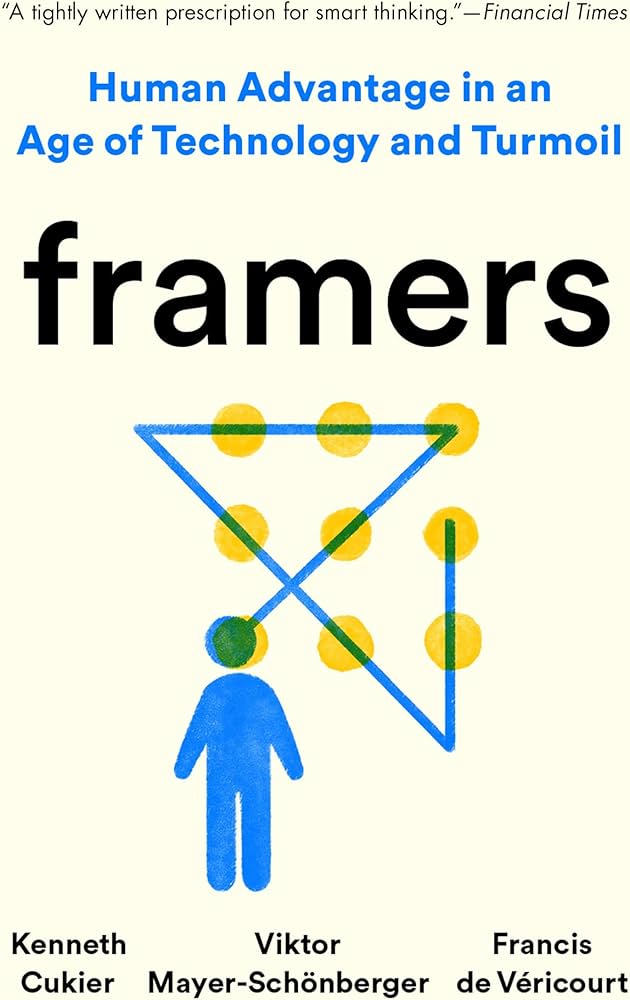
From pandemics to populism, AI to ISIS, wealth inequity to climate change, humanity faces unprecedented challenges that threaten our very existence. The essential tool that will enable humanity to find the best way forward is defined in Framers by internationally renowned authors Kenneth Cukier, Viktor Mayer-Schönberger, and Francis de Véricourt. 

To frame is to make a mental model that enables us to make sense of new situations. Frames guide the decisions we make and the results we attain. People have long focused on traits like memory and reasoning, leaving framing all but ignored. But with computers becoming better at some of those cognitive tasks, framing stands out as a critical function—and only humans can do it. This book is the first guide to mastering this human ability.

Illustrating their case with compelling examples and the latest research, authors Cukier, Mayer-Schönberger, and de Véricourt examine:

– Why advice to “think outside the box” is useless

– How Spotify beat Apple by reframing music as an experience

– How the #MeToo twitter hashtag reframed the perception of sexual assault

– The disaster of framing Covid-19 as equivalent to seasonal flu, and how framing it akin to SARS delivered New Zealand from the pandemic

Framers shows how framing is not just a way to improve how we make decisions in the era of algorithms—but why it will be a matter of survival for humanity in a time of societal upheaval and machine prosperity


KEY LEARNINGS

Concept 1: Framing Effects

Framing effects demonstrate how the way information is presented can significantly influence people’s decisions and perceptions. This concept teaches non-profits to strategically choose the language and context they use to frame their mission, projects, and messages. By emphasizing certain aspects and downplaying others, non-profits can shape how their audiences interpret and respond to their initiatives.

Application: Non-profits can tailor their communication to align with the values and emotions of their target audience. For instance, when discussing a social issue, the application suggests using positive and empathetic language to evoke support and engagement.

Concept 2: Cognitive Biases

Cognitive biases are inherent mental shortcuts that affect how individuals perceive and process information. Non-profits can leverage an understanding of these biases to optimize their messaging and campaigns. By recognizing biases such as confirmation bias and availability heuristic, organizations can craft messages that resonate with audiences more effectively.

Application: The application provides guidance on crafting messages that counteract common cognitive biases. For instance, non-profits can present balanced and evidence-based information to counter confirmation bias and employ vivid stories to overcome the availability heuristic.

Concept 3: Narrative Power

The power of narrative lies in its ability to connect emotionally with audiences and make information memorable. Non-profits can harness the impact of storytelling to convey complex issues in relatable ways, making their cause more compelling and accessible. Effective storytelling can create a sense of empathy and urgency, encouraging individuals to take action.

Application: Non-profits can learn to incorporate personal stories of individuals affected by their initiatives. The application offers strategies for weaving narratives into campaigns, emphasizing the human impact of their work to inspire empathy and drive support.

Concept 4: Perception Management

Perception management involves shaping how people perceive certain information, often by influencing the context in which it is presented. Non-profits can apply this concept to reframe challenges as opportunities and emphasize the progress made, fostering a positive outlook among supporters.

Application: The application suggests strategies for positioning setbacks as learning experiences and highlighting successes in measurable terms. By guiding non-profits to manage perceptions effectively, the application helps maintain stakeholder confidence and support.

Concept 5: Contextual Communication

Contextual communication recognizes the importance of adapting messages to different cultural, social, and economic contexts. Non-profits can enhance their impact by tailoring their communication strategies to resonate with diverse audiences. This approach demonstrates respect for the unique perspectives of various communities.

Application: To facilitate contextual communication, the application provides guidelines for researching and understanding the values and norms of different target audiences. By demonstrating cultural sensitivity, non-profits can establish deeper connections and foster inclusive engagement.

Kenneth Cukier, Viktor Mayer-Schönberger, and Francis de Véricourt’s Framers offers a thought-provoking exploration of the uniquely human ability to frame problems and solutions. The authors argue that in a world increasingly dominated by technology, this ability remains indispensable.

The Power of Framing

Framing, as the authors define it, is the process of creating mental models that allow us to see patterns, predict outcomes, and make sense of new situations. These mental models, or frames, guide our decisions, shape our perceptions, and ultimately determine our success.

The Human Edge

While machines excel at certain tasks, such as data analysis and pattern recognition, they lack the ability to frame problems in the same way that humans do. Humans possess a unique ability to synthesize information, draw connections, and create narratives that give meaning to complex situations. This ability, the authors argue, is essential for effective problem-solving, innovation, and leadership.

Examples of Framing in Action

The book is rich with examples that illustrate the power of framing. One particularly striking example is the story of the Wright brothers. The Wright brothers were not the first to experiment with flight, but they were the first to succeed. Their success can be attributed, in part, to their ability to frame the problem of flight in a new way. By focusing on the challenge of controlling an aircraft in flight, rather than simply building a heavier-than-air machine, the Wright brothers were able to develop a revolutionary new approach to aviation.

The Dangers of Poor Framing

The authors also explore the negative consequences of poor framing. For example, the initial framing of COVID-19 as equivalent to a seasonal flu contributed to the mishandling of the pandemic. By downplaying the seriousness of the virus, policymakers and the public were unprepared for the challenges that lay ahead.

Practical Implications

Framers offers practical advice on how individuals and organizations can improve their framing skills. The authors emphasize the importance of cultivating curiosity, seeking diverse perspectives, and practicing empathy. They also argue that it is essential to be aware of the biases that can influence our framing.

Limitations and Ethical Considerations

While Framers offers a compelling argument for the importance of human framing, it is not without its limitations. Some readers may find the book’s focus on individual agency somewhat narrow. While the authors acknowledge the role of societal factors and systemic biases in shaping our frames, they primarily emphasize the power of individual choice and action.

Additionally, the book could have benefited from a more in-depth discussion of the potential ethical implications of framing. In particular, the authors could have explored the ways in which framing can be used to manipulate public opinion and promote harmful ideologies.


Framers is a valuable contribution to our understanding of the human mind and its place in the technological age. By highlighting the unique ability of humans to frame problems and solutions, the authors offer a hopeful message about our potential to thrive in a world increasingly dominated by machines.

Framers explores the power of framing, perception, and communication in influencing decision-making. By integrating these concepts, leaders can enhance their messaging, outreach, and impact.