Tears, Triumphs, and Taste: Unpeeling “The Core of An Onion”

As Julia Child once said, “It is hard to imagine a civilization without onions.”

Historically, she’s been right – and not just in the kitchen. Flourishing in just about every climate and culture around the world, onions have provided the essential basis not only for sautés, stews, and sauces, but for medicines, metaphors, and folklore. Now they’re Mark Kurlansky’s most flavorful infatuation yet as he sets out to explore how and why the crop reigns from Italy to India and everywhere in between.
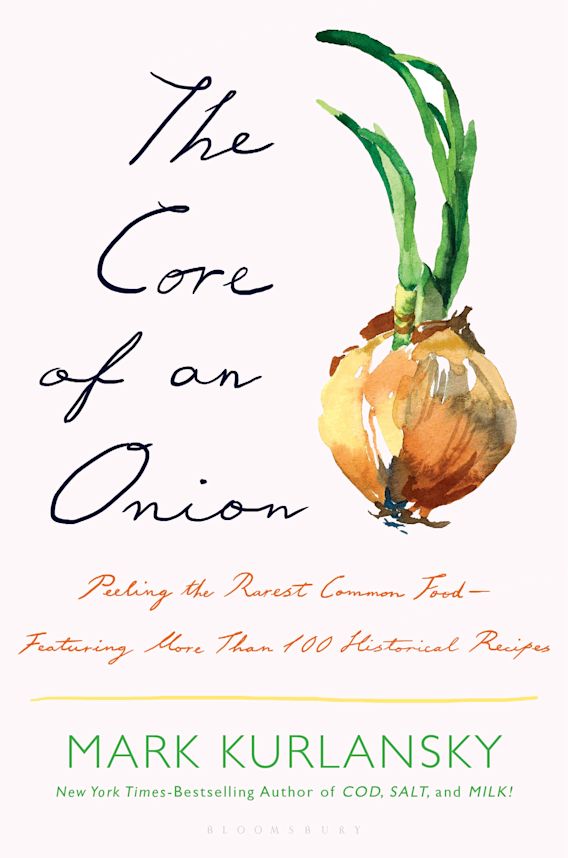
Featuring historical images and his own pen-and-ink drawings, Kurlansky begins with the science and history of the only sulfuric acid–spewing plant, then digs through its twenty varieties and the cultures built around them. Entering the kitchen, Kurlansky celebrates the raw, roasted, creamed, marinated, and pickled. 

Including a recipe section featuring more than one hundred dishes from around the world, The Core of an Onion shares the secrets to celebrated Parisian chef Alain Senderens’s onion soup eaten to cure late-night drunkenness; Hemingway’s raw onion and peanut butter sandwich; and the Gibson, a debonair gin martini garnished with a pickled onion.

Just as the scent of sautéed onions will lure anyone to the kitchen, The Core of an Onion is sure to draw readers into their savory stories at first taste.


In his latest culinary exploration, renowned food historian Mark Kurlansky takes readers on a journey through the pungent world of onions in The Core of An Onion. Known for his deep dives into singular food subjects like frozen food, salt, and milk, Kurlansky now turns his attention to this ubiquitous allium that has shaped cuisines and cultures around the globe for millennia.

Kurlansky peels back the layers of the onion’s history, tracing its origins and spread across continents. He reveals that onions were likely first cultivated in Central Asia over 5,000 years ago, quickly becoming a staple in diets from China to Egypt. The book explores how onions played a crucial role in sustaining ancient civilizations, providing essential nutrients and flavors to often bland diets.

One of the most intriguing aspects of The Core of An Onion is Kurlansky’s examination of the vegetable’s cultural significance. He uncovers how onions have been revered, feared, and even worshipped throughout history. In ancient Egypt, for instance, onions were considered symbols of eternity due to their concentric ring structure, and were often buried with pharaohs to ensure their passage to the afterlife.

The author doesn’t shy away from the onion’s notorious tear-inducing properties. He delves into the chemistry behind this phenomenon, explaining how cutting an onion releases sulfur compounds that react with the moisture in our eyes to form sulfuric acid. Kurlansky also highlights some lesser-known facts about this chemical reaction. For example, chilling onions before cutting can reduce tear production, as the volatile compounds are less active at lower temperatures.

Kurlansky’s research unearths fascinating tidbits about onions that even culinary enthusiasts might not know. For instance, the book reveals that onions were once used as currency in the Middle Ages. In 12th-century Europe, onions were sometimes accepted as rent payments and even as wedding gifts. Another surprising fact is that onions have been used in traditional medicine for centuries. Ancient Greek athletes consumed large quantities of onions, believing they would lighten the balance of their blood.

The book also explores the onion’s role in modern agriculture and cuisine. Kurlansky examines how the development of sweeter onion varieties, like the Vidalia onion from the southwest region of Georgia, has changed consumer preferences and agricultural practices. He discusses the ongoing debate among chefs and food scientists about whether cooking destroys the health benefits of onions, presenting evidence from both sides.

Equally intriguing is the focus on the genetic diversity of onions. Kurlansky reveals that there are over 700 species in the Allium genus, which includes onions, garlic, and chives. He explores how this diversity has led to a wide array of flavors and uses across different cultures, from the mild shallots favored in French cuisine to the pungent red onions commonly used in Indian dishes.

Throughout The Core of An Onion, Kurlansky weaves in recipes and cooking techniques from various cultures, demonstrating the onion’s versatility in the kitchen. He challenges readers to reconsider their relationship with this often-under appreciated ingredient, encouraging them to explore its full potential beyond mere aromatic base.

In typical Kurlansky style, the book is meticulously researched and engagingly written, making it accessible to both food history buffs and casual readers. By the end of The Core of An Onion, readers will have gained a newfound appreciation for this humble yet influential vegetable that has shaped human history and continues to play a crucial role in global cuisine and culture.


Part of a regular series on 27gen, entitled Wednesday Weekly Reader.

During my elementary school years one of the things I looked forward to the most was the delivery of “My Weekly Reader,” a weekly educational magazine designed for children and containing news-based current events.

It became a regular part of my love for reading, and helped develop my curiosity about the world around us.

Got History? The Whole Truth About a Childhood Favorite

According to the Greek creation myth, we are so much spilt milk; a splatter of the goddess Hera’s breast milk became our galaxy, the Milky Way. But while mother’s milk may be the essence of nourishment, it is the milk of other mammals that humans have cultivated ever since the domestication of animals more than 10,000 years ago, originally as a source of cheese, yogurt, kefir, and all manner of edible innovations that rendered lactose digestible, and then, when genetic mutation made some of us lactose-tolerant, milk itself.

Before the industrial revolution, it was common for families to keep dairy cows and produce their own milk. But during the nineteenth century mass production and urbanization made milk safety a leading issue of the day, with milk-borne illnesses a common cause of death. Pasteurization slowly became a legislative matter. And today milk is a test case in the most pressing issues in food politics, from industrial farming and animal rights to GMOs, the locavore movement, and advocates for raw milk, who controversially reject pasteurization.

Profoundly intertwined with human civilization, milk has a compelling and a surprisingly global story to tell, and historian Mark Kurlansky is the perfect person to tell it. Tracing the liquid’s diverse history from antiquity to the present, he details its curious and crucial role in cultural evolution, religion, nutrition, politics, and economics.


Mark Kurlansky – renowned for his deep dives into singular subjects like cod, salt, and frozen foods – turns his keen eye to another ubiquitous food item in “Milk!: A 10,000 Year Food Fracas. This comprehensive exploration takes readers on a fascinating journey through the cultural, economic, and nutritional impacts of milk throughout human history.

Kurlansky begins by challenging our assumptions about milk, reminding us that for most of human existence, the consumption of animal milk was far from universal. He traces the origins of dairying back to around 10,000 years ago, coinciding with the advent of agriculture and animal domestication. This revolutionary change in human lifestyle set the stage for milk to become a significant part of our diet and culture.

The book delves into the biological aspects of milk production and consumption, explaining how humans developed the ability to digest lactose into adulthood – a trait not shared by all populations. This genetic adaptation played a crucial role in shaping migration patterns and cultural practices around the world.

Kurlansky doesn’t shy away from controversy, addressing the ongoing debates surrounding milk consumption. He presents various perspectives on milk’s nutritional value, its role in modern diets, and the ethical concerns surrounding industrial dairy farming. By doing so, he invites readers to think critically about their own relationship with this common food.

The global scope of Milk! is impressive. Kurlansky takes readers on a world tour spanning thousands of years, exploring how different cultures have incorporated milk into their culinary traditions. From the nomadic Mongolians and their fermented mare’s milk to the cheese-loving Europeans, the book showcases the diversity of dairy products and their cultural significance.

One of the book’s strengths is its examination of milk’s economic impact throughout history. Kurlansky details how milk and its derivatives became valuable commodities, influencing trade routes, economic policies, and even warfare. The rise of industrial dairy farming and its effects on traditional agricultural practices are also scrutinized.

The author doesn’t limit his focus to cow’s milk. He explores the use of milk from various animals, including goats, sheep, camels, yaks, and even reindeer, highlighting how different environments and cultures have shaped dairy consumption patterns.

Kurlansky’s narrative is enriched with anecdotes, historical recipes, and cultural tidbits that bring the story of milk to life. He discusses milk’s role in religion, literature, and art, demonstrating its pervasive influence on human culture.

The book also addresses contemporary issues surrounding milk production and consumption. Kurlansky examines the environmental impact of large-scale dairy farming, the rise of plant-based milk alternatives, and the ongoing debate about raw milk consumption.

Milk! is not just a history book; it’s a thought-provoking exploration of a food that has been both revered and controversial. Kurlansky’s engaging writing style makes complex scientific and historical concepts accessible to a general audience.

Milk!: A 10,000 Year Food Fracas offers readers a comprehensive and entertaining look at a food that many of us consume daily without much thought. By tracing milk’s journey from a revolutionary nutritional discovery to a global industry, Kurlansky invites us to reconsider our relationship with this seemingly simple food. Whether you’re a dairy enthusiast or a skeptic, this book provides valuable insights into the complex role milk has played in shaping human society.

I read it over breakfast with half and half in my tea and late at night with a cold glass of whole milk and a chocolate chip cookie – but that’s me!


Part of a regular series on 27gen, entitled Wednesday Weekly Reader.

During my elementary school years one of the things I looked forward to the most was the delivery of “My Weekly Reader,” a weekly educational magazine designed for children and containing news-based current events.

It became a regular part of my love for reading, and helped develop my curiosity about the world around us.

The Man Who Chilled America: Clarence Birdseye’s Frozen Revolution

Birdseye: The Adventures of a Curious Man by Mark Kurlansky is a captivating biography that explores the life and innovations of Clarence Birdseye, the man who revolutionized the frozen food industry. This engaging work delves into the story of an unlikely inventor whose curiosity and determination led to groundbreaking advancements in food preservation and distribution.

Kurlansky’s book traces Birdseye’s journey from his early years as a naturalist and fur trapper in the American West and Labrador to his later career as an inventor and businessman. The author paints a vivid picture of Birdseye’s insatiable curiosity and his knack for observing and learning from the natural world around him.

One of the central focuses of the biography is Birdseye’s development of the quick-freezing process for food. Inspired by his experiences in Labrador, where he observed how fish frozen quickly in the extreme cold remained fresh when thawed, Birdseye set out to replicate this process artificially. His invention, which involved freezing food at extremely low temperatures while under pressure, would go on to transform the food industry and the way people eat.

The book not only details Birdseye’s most famous invention but also explores his numerous other patents and innovations. From paper-making machines to light bulbs, Birdseye’s creative mind seemed to know no bounds. Kurlansky presents these inventions within the context of early 20th-century America, a time of rapid technological advancement and changing consumer habits.

Throughout the biography, Kurlansky weaves in historical context, exploring how Birdseye’s innovations intersected with broader societal changes. The rise of suburban living, the increasing prevalence of home refrigerators, and changing attitudes towards convenience all played a role in the success of Birdseye’s frozen food empire.

The author also delves into Birdseye’s personal life, including his marriage, family relationships, and business partnerships. These elements help to humanize the inventor, presenting him as a complex individual rather than simply a historical figure.

Birdseye: The Adventures of a Curious Man offers readers more than just a biography of an inventor. It presents a snapshot of American innovation, entrepreneurship, and the profound impact that one individual’s curiosity can have on society. Through Birdseye’s story, Kurlansky explores themes of perseverance, the importance of observation in scientific discovery, and the sometimes-serendipitous nature of invention.

The book also raises interesting questions about the nature of progress and its unintended consequences. While Birdseye’s frozen food revolution brought convenience and variety to millions of dinner tables, it also contributed to changes in agricultural practices and food distribution systems that continue to be debated today.

Birdseye: The Adventures of a Curious Man is a fascinating exploration of an often-overlooked figure in American history. Mark Kurlansky’s engaging narrative brings Clarence Birdseye and his era to life, offering readers insight into the mind of an inventor and the societal forces that shaped and were shaped by his innovations. This biography serves as both an entertaining read and a thought-provoking examination of the relationship between individual ingenuity and broader cultural and technological change.

Mark Kurlansky’s writing style in Birdseye is characterized by its accessibility and engaging narrative approach. Known for his ability to bring historical subjects to life, Kurlansky combines meticulous research with a storyteller’s flair. His prose is clear and informative, yet he maintains a sense of wonder and excitement about his subject matter. This style, evident in Birdseye, is also a hallmark of Kurlansky’s other notable works, including Salt: A World History, Cod: A Biography of the Fish That Changed the World, and The Big Oyster: History on the Half Shell.


Part of a regular series on 27gen, entitled Wednesday Weekly Reader.

During my elementary school years one of the things I looked forward to the most was the delivery of “My Weekly Reader,” a weekly educational magazine designed for children and containing news-based current events.

It became a regular part of my love for reading, and helped develop my curiosity about the world around us.