Love’s Deeper Meaning: Revealing Divine Presence in Marriage

I have long admired the writings of Henri Nouwen. I became acquainted with his work during seminary in the early 1980s; his powerful and simple words have spoken to me deeply over the years. During the past month I have been reading old favorites along with some new-to-me works.

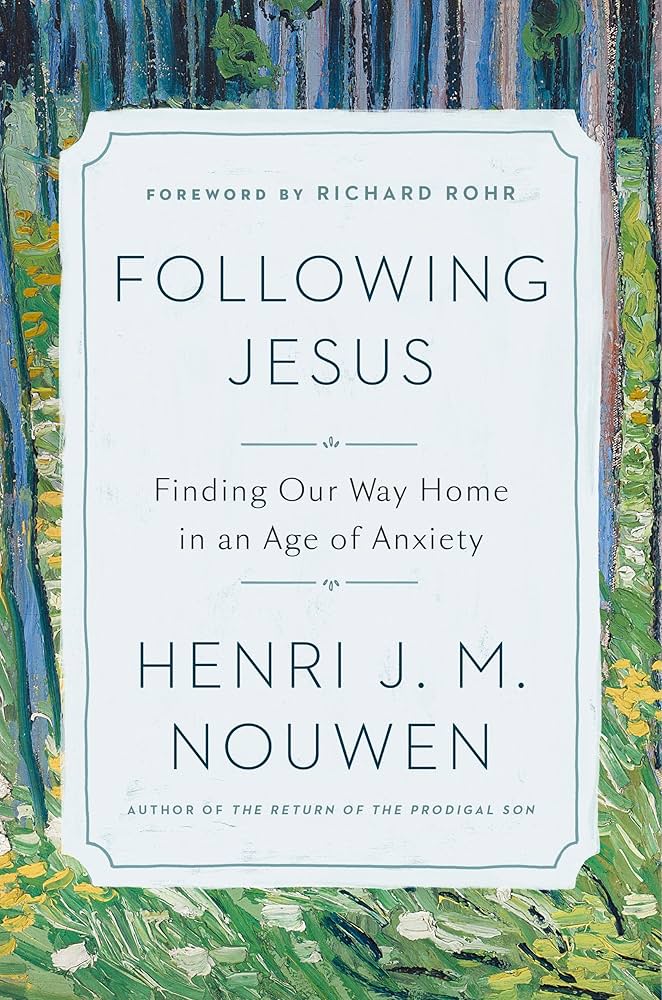
As Anita and I celebrate our 45th wedding anniversary this weekend, Nouwen’s words on marriage from Following Jesus: Finding Our Way Home in an Age of Anxiety have brought me to deep reflection.


Marriage is not that two people love each other so much that they can find God in each other, but that God loves them so much that they can discover each other as living reminders of God’s presence.

Henri Nouwen

The essence of love extends far beyond personal relationships. According to spiritual understanding, love fundamentally begins with our connection to God. We are capable of loving others because we have first experienced God’s unconditional and limitless love within ourselves.

In human relationships – especially through marriage – people discover a love that transcends individual capabilities. These connections are not primarily about personal compatibility or shared goals, but about revealing a greater divine love. Each nuance of the relationship becomes a window through which we can glimpse the infinite love of God.

The concept of a “person” is particularly meaningful in this context. Derived from Latin words meaning “to sound through,” a person is essentially a conduit for expressing a love larger than themselves. When we tell someone “I love you,” we are essentially saying, “You are a pathway through which I can perceive God’s infinite love.”

Intimate relationships are not about finding complete fulfillment in another person, but about recognizing the divine presence in each other. In marriage, for instance, the bond is not created because two people love each other perfectly, but because God’s love holds them together. The relationship becomes a living testament to God’s presence, creating a space of hospitality and connection.

When we have discovered God within ourselves – in our solitude and inner depths – we can then recognize the divine presence in others. It’s a profound mutual recognition where “love speaks to love, and God speaks to God.”

This perspective transforms how we understand human connections. Marriage is not just personal interactions, but sacred opportunities to manifest God’s love. Each part of the relationship becomes a collaborative effort to make divine love visible in the world.

The key insight is that love is fundamentally relational and transcendent. We are not complete in ourselves nor do we complete each other, but are interconnected through a greater love. Our limitations become opportunities for divine love to shine through. Each person becomes a “window” through which the infinite can be glimpsed.

This understanding reframes human relationships as spiritual experiences. They are not just about personal satisfaction or meeting individual needs, but about participating in a broader, more expansive love. Our connections become acts of revelation, showing how God’s unconditional love can be experienced and shared.

The Christian life is essentially a journey of making God’s presence tangible through love. It’s about recognizing the divine in ourselves and in others, and creating spaces where that love can be celebrated and experienced.

Ultimately, we need to see relationships not as ends in themselves, but as sacred pathways to understanding a love that is infinite, unconditional, and transformative. Each interaction becomes an opportunity to reflect and experience the profound, all-embracing love of God.


Marriage is not a lifelong attraction of two individuals to each other, but a call for two people to witness together to God’s love. . . . [The] intimacy of marriage itself is an intimacy that is based on the common participation in a love greater than the love two people can offer each other. They are brought together, indeed, as two prayerful hands extended toward God and forming in this way a home for God in this world.
Henri Nouwen

Breaking Free from Aimless Wandering: The Call to Follow


It is into this deeply tired world of ours that God sends Jesus to speak the voice of love. Jesus says, “Follow me. Don’t keep running around. Follow me. Don’t just sit there. Follow me.”

Henri Nouwen

Following Jesus explores the spiritual concept of truly following Jesus, addressing a common human tendency to either be constantly busy or completely inactive. The author observes that many people live life in two extreme modes: perpetual restlessness or complete disengagement.

In the first mode, individuals are constantly moving, doing numerous activities, attending events, and meeting people, yet feeling a profound sense of meaninglessness. They’re exhausted by their own busyness, often unable to articulate what they’re actually accomplishing. This restless wandering leads to deep fatigue and a sense of being lived, rather than living purposefully.

The alternative state is total passivity, where people give up on their pursuits and sink into a state of apathy. They lose interest in life, spending time watching television, sleeping, or engaging in mindless activities. Some might seek escape through substances or other distractions, but fundamentally, they feel empty and unmotivated.

The core message is that Jesus offers a transformative alternative to these states through a gentle, loving call to “follow me.” This invitation isn’t forceful but is a sensitive, quiet voice that can reshape one’s entire existence. When people hear and respond to this call, their lives gain focus, purpose, and meaning. The wandering and listlessness are replaced by a clear direction and renewed excitement.

Author Henri Nouwen encourages readers to quiet themselves and listen for this voice of love, which speaks personally and intimately, calling each individual by name and offering a path out of spiritual exhaustion into a meaningful, directed life.


Henri Nouwen’s Following Jesus is a tender meditation on Christian discipleship that invites readers into a deeply personal and transformative journey of faith. At its core, the book is less a theological treatise and more a compassionate invitation to experience Christ’s love in the most intimate ways possible.

Nouwen begins by challenging the conventional understanding of following Jesus. It’s not about rigid adherence to rules or performing grand religious gestures, but about cultivating a profound, personal relationship with Christ. He emphasizes that discipleship is fundamentally about love – a love that transforms, heals, and provides radical hope.

Throughout the book, Nouwen explores several key themes of Christian discipleship. He speaks eloquently about vulnerability, suggesting that true following of Jesus means embracing our own brokenness and weakness. Instead of seeing our limitations as obstacles, Nouwen encourages readers to view them as sacred spaces where God’s grace can most powerfully manifest.

The spiritual journey, as Nouwen describes it, is not a linear path but a continuous process of surrender and discovery. He draws beautiful parallels between Jesus’s own life and the challenges believers face, highlighting that following Christ means walking a path of both profound joy and deep suffering. This isn’t a journey of achievement, but of continuous becoming – allowing oneself to be shaped by divine love.

Nouwen also delves into the importance of community and compassion. Following Jesus, he argues, isn’t a solitary endeavor but a collective experience of transformation. We grow closer to Christ not by isolating ourselves, but by opening our hearts to others, especially those who are marginalized or suffering. He challenges readers to see Christ in every person, particularly those society often overlooks.

Prayer and contemplation are central to Nouwen’s understanding of discipleship. He doesn’t present them as dutiful practices, but as intimate conversations with a loving God. These moments of stillness, he suggests, are where we truly learn to listen and align our hearts with divine purpose.

Another profound aspect of the book is Nouwen’s exploration of spiritual poverty. He suggests that truly following Jesus means letting go of our need for control, status, and self-sufficiency. It’s about creating space within ourselves for God’s grace to work – a radical act of trust and surrender.

Nouwen’s writing is characteristically gentle and deeply personal. He doesn’t lecture but invites readers into a reflective journey, sharing his own struggles and insights with remarkable honesty. His words feel like a compassionate conversation with a wise, loving spiritual mentor who understands the complexities of human faith.

The book ultimately presents following Jesus as a dynamic, living relationship rather than a static set of beliefs. It’s an ongoing dialogue of love, transformation, and grace. Nouwen reminds us that discipleship isn’t about perfection, but about persistent, humble openness to God’s transformative power.

For anyone seeking a more intimate, authentic understanding of Christian faith, Following Jesus offers a profoundly moving roadmap. It’s an invitation to experience divine love not as a distant concept, but as a lived, breathed reality that can reshape our entire existence.


Part of a regular series on 27gen, entitled Wednesday Weekly Reader.

During my elementary school years one of the things I looked forward to the most was the delivery of “My Weekly Reader,” a weekly educational magazine designed for children and containing news-based current events.

It became a regular part of my love for reading, and helped develop my curiosity about the world around us.