Breaking Busyness: A Guide to Intentional Habits for a Distracted World

Habits form us more than we form them.

The modern world is a machine of a thousand invisible habits, forming us into anxious, busy, and depressed people. We yearn for the freedom and peace of the gospel, but remain addicted to our technology, shackled by our screens, and exhausted by our routines. But because our habits are the water we swim in, they are almost invisible to us. What can we do about it?

The answer to our contemporary chaos is to practice a rule of life that aligns our habits to our beliefs. The Common Rule offers four daily and four weekly habits, designed to help us create new routines and transform frazzled days into lives of love for God and neighbor. Justin Earley provides concrete, doable practices, such as a daily hour of phone-less presence or a weekly conversation with a friend.

These habits are “common” not only because they are ordinary, but also because they can be practiced in community. They have been lived out by people across all walks of life – businesspeople, professionals, parents, students, retirees – who have discovered new hope and purpose. As you embark on these life-giving practices, you will find the freedom and rest for your soul that comes from aligning belief in Jesus with the practices of Jesus.


The Common Rule: Habits of Purpose for an Age of Distraction by Justin Whitmel Earley is a compelling exploration of how intentional, life-giving habits can counteract the chaos and distraction of modern life. Earley, a lawyer and former missionary, shares his personal journey of achieving career success while experiencing profound personal collapse. His anxiety attacks and insomnia led him to recognize that despite his intentions to live a meaningful life, his actual habits were creating the opposite result. This crisis prompted him to study monastic traditions and develop his own “common rule” of practices to realign his daily life with his deeper values.

Overview

The book is built around the idea that habits shape our loves, and our loves shape our lives. Modern technology and culture have created default habits that pull us toward distraction, isolation, and shallow engagement with the world. The book proposes that by adopting intentional “common rules” of daily living, we can reshape our lives toward purpose, community, and spiritual depth.

In an era where distraction, busyness, and digital overwhelm dominate, Earley argues that forming intentional habits or “common rules” can reorient our focus toward God, community, and holistic well-being. In The Common Rule, he introduces a set of four daily and four weekly habits designed to create a framework for a more meaningful, God-centered life.

The Need for a Rule of Life

Drawing inspiration from monastic traditions, particularly St. Benedict’s Rule, Earley contends that modern people need their own structured rule of life – not to burden themselves but to provide a path toward freedom. Without deliberate habits, he argues, people unintentionally fall into harmful routines dictated by technology, consumerism, and workaholism.
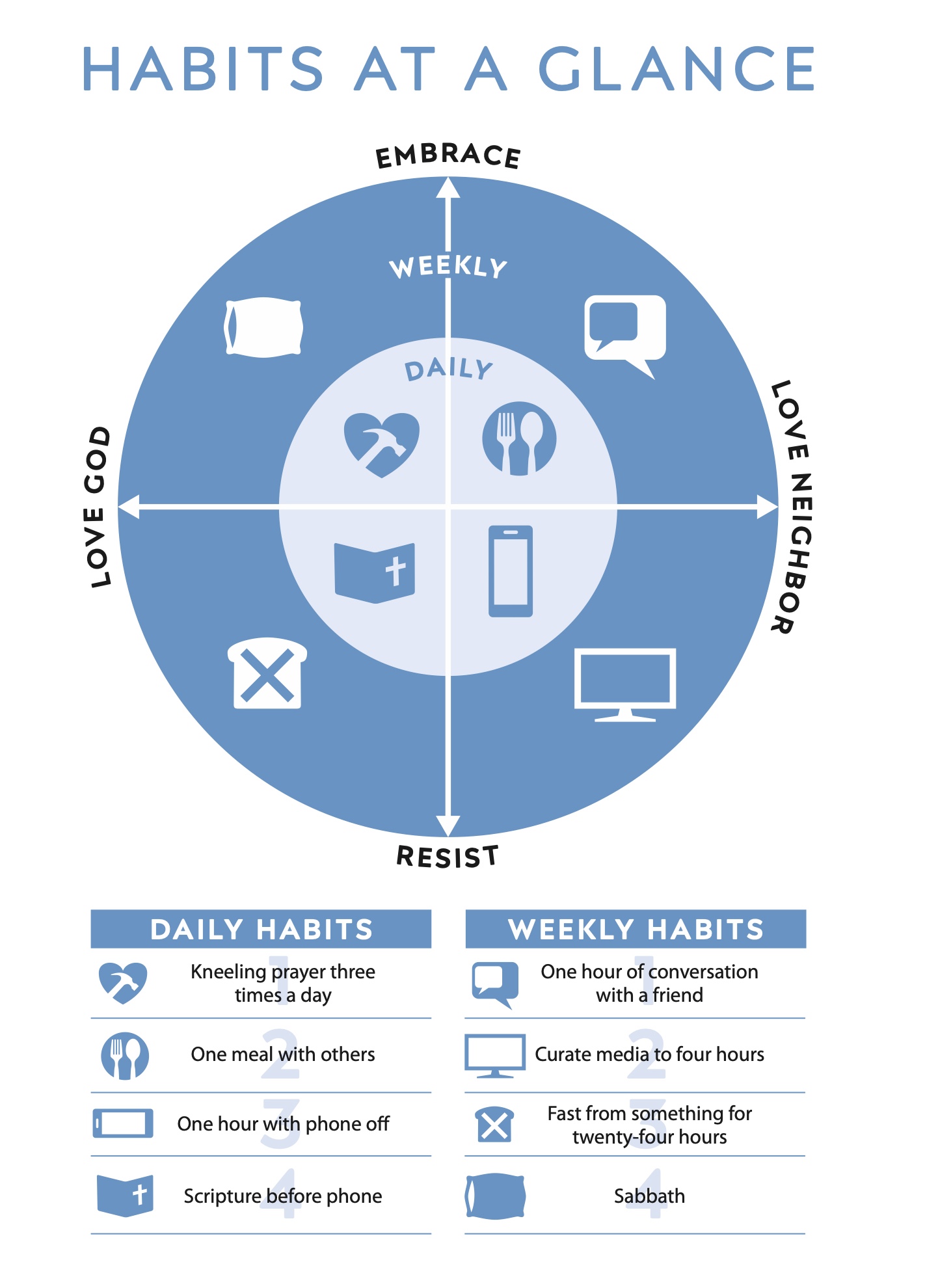
The Four Daily Habits

Kneeling Prayer (Three Times a Day) – This practice anchors the day in prayer, helping individuals start, pause, and end their day with God. It reorients priorities and builds reliance on divine wisdom rather than self-sufficiency.

One Meal with Others – In a culture that values productivity over relationships, sharing a meal fosters community and meaningful conversation, reminding individuals that they are not meant to live in isolation.

One Hour with Phone Off – Constant connectivity breeds anxiety and distraction. By intentionally turning off devices for at least one hour a day, people reclaim their attention and presence for God, loved ones, and personal reflection.

Scripture Before Phone – Instead of starting the day with emails, news, or social media, prioritizing Scripture ensures that the first words absorbed each day come from God, shaping one’s heart and mind.

The Four Weekly Habits

One Hour of Conversation with a Friend – Deep friendships require time and intentionality. Prioritizing a dedicated hour for conversation fosters relationships that provide encouragement and accountability.

Curate Media to Four Hours – Media consumption, if unchecked, can shape desires in unhealthy ways. Limiting intake to four hours per week encourages mindful engagement rather than passive consumption.

Fast from Something for Twenty-Four Hours – Whether fasting from food, social media, or entertainment, this practice cultivates discipline and reminds individuals of their dependence on God rather than worldly comforts.

Sabbath Rest – Setting aside one day for true rest, worship, and delight counteracts the relentless demands of productivity culture and restores a sense of peace and trust in God’s provision.

Impacts and Takeaways

Earley weaves biblical wisdom and practical application throughout the book, illustrating how habits serve as a form of spiritual formation. He emphasizes that these disciplines are not about legalism but about cultivating a life ordered around love for God and others. He also acknowledges the challenges of habit formation and encourages grace and flexibility in the journey.

The Common Rule has resonated with readers seeking practical ways to live more intentionally in a distracted age. The book is a timely guide for those feeling overwhelmed by the pace of modern life. By establishing small but intentional habits, individuals can cultivate a more grounded, relational, and spiritually rich existence. Earley’s personal testimony of transformation underscores the book’s core message: meaningful change is possible when we surrender our routines to God’s greater purpose.

Earley’s book is a practical and deeply encouraging resource for anyone seeking to live with greater intention and purpose. The Common Rule offers a tangible way to resist the drift of busyness and distraction, instead building a life of love, presence, and faithfulness. For those longing to reclaim their time, attention, and relationships, these habits provide a simple yet profound roadmap to a flourishing life.


Part of a regular series on 27gen, entitled Wednesday Weekly Reader.

During my elementary school years one of the things I looked forward to the most was the delivery of “My Weekly Reader,” a weekly educational magazine designed for children and containing news-based current events.

It became a regular part of my love for reading, and helped develop my curiosity about the world around us.

Busy is Not Better: Finding Peace in a Culture of Speed

In a world that increasingly celebrates busyness and equates worth with productivity, John Mark Comer’s The Ruthless Elimination of Hurry is a timely and profound counterargument. This spiritual formation book, published in 2019, challenges the modern obsession with speed and efficiency by proposing a radical yet simple solution: slow down.

Through personal anecdotes, theological insights, and practical wisdom, Comer explores how the contemporary culture of hurry is not just exhausting us physically but impoverishing us spiritually. His work serves as both a cultural critique and a practical guide for those seeking to escape the crushing weight of an overcommitted, overscheduled life.

Is it possible that our productivity could actually be increased by first slowing down?

The Quick SummaryThe Ruthless Elimination of Hurry by John Mark Comer

 “Who am I becoming?”

That was the question nagging pastor and author John Mark Comer. Outwardly, he appeared successful. But inwardly, things weren’t pretty. So he turned to a trusted mentor for guidance and heard these words:

“Ruthlessly eliminate hurry from your life. Hurry is the great enemy of the spiritual life.”

It wasn’t the response he expected, but it was – and continues to be – the answer he needs. Too often we treat the symptoms of toxicity in our modern world instead of trying to pinpoint the cause. A growing number of voices are pointing at hurry, or busyness, as a root of much evil.

Within the pages of this book, you’ll find a fascinating roadmap to staying emotionally healthy and spiritually alive in the chaos of the modern world.

A SIMPLE SOLUTION

According to author John Mark Comer, the new normal of hurried digital distraction is robbing us of the ability to be present:

  • Present to God.
  • Present to other people.
  • Present to all that is good, beautiful, and true in our world.
  • Even present to our own souls.

The noise of the modern world makes us deaf to the voice of God, drowning out the one input we most need.

Whatever you call them: habits, practices, or spiritual disciplines are how we follow Jesus. How we adopt His lifestyle. How we create space for emotional health and spiritual life.

John Mark Comer

And like all habits, they are a means to an end. The end is life to the full with Jesus. The end is to spend every waking moment in the conscious enjoyment of Jesus’ company, to spend our entire lives with the most loving, joyful, peaceful person to ever live.

Silence and solitude

Here’s to tomorrow morning, six o’clock. Coffee, the chair by the window, the window by the tree. Time to breathe. A psalm and story from the Gospels. Hearing the Father’s voice. Pouring out my own. Or just sitting, resting. Maybe I’ll hear a word from God that will alter my destiny; maybe I’ll just process my anger over something that’s bothering me. Maybe I’ll feel my mind settle like untouched water; maybe my mind will ricochet from thought to thought, and never come to rest. If so, that’s fine. I’ll be back, same time tomorrow. Starting my day in the quiet place.

Sabbath

If your story is anything like mine, Sabbath will take you a little while to master. After all, Shabbat is a verb. It’s something you do. A practice, a skill you hone. To begin, just set aside a day. Clear your schedule. Turn off your phone! Say a prayer to invite the Holy Spirit to pastor you into His presence. And then? Rest and worship. In whatever way is life giving for your soul. And something happens about halfway through the day, something hard to put language to. It’s like my should catches up to my body. Like some deep part of me that got beat up and drowned out by meetings and email and Twitter and relational conflict and the difficulty of life comes back to the surface of my heat. I feel free. And at the end of the day when I turn my phone back on and reenter the modern world, I do so slowly. And, wow, does that ever feel good.

Simplicity

The goal isn’t just to declutter your closet or garage but to declutter your life. To clear away the myriad of distractions that ratchet up our anxiety, feed us an endless stream of mind-numbing drivel, and anesthetize us to what really matters. To follow Jesus, especially in the Western world, is to live in that same tension between grateful, happy enjoyment of nice, beautiful things, and simplicity. And when to err on the side of generous, simple living. The truth is you can be happy right here, right now, “through Christ who strengthens me,” meaning through investing your resources in ongoing relational connections to Jesus. Right now you have everything you need to live a happy, content life; you have access to the Father. To His loving attention.

Slowing

The basic idea behind the practice of slowing is this: slow down your body, slow down your life. If we can slow down both our minds and bodies – the pace at which we think and the pace at which we move our bodies through the world – maybe we can slow down our souls to a pace at which they can “taste and see the the Lord is good.” John Ortberg and Richard Foster both label this emerging practice the spiritual discipline of “slowing.” Ortberg defined it as “cultivating patience by deliberately choosing to place ourselves in positions where we have to wait. There’s more to life than an increase in speed. Life is right under our noses, waiting to be enjoyed.

John Mark Comer, The Ruthless Elimination of Hurry

Comer’s writing style is engaging and relatable, blending historical Christian wisdom with contemporary cultural analysis. He draws from diverse sources, including the Desert Fathers, Eugene Peterson, and modern psychology, while maintaining an accessible tone that feels like a conversation with a wise friend.

The book’s strengths lie in its practical applications and Comer’s vulnerability about his own struggles. He doesn’t just theorize about slowing down; he provides concrete steps and real-world examples. His insights about how technology and social media contribute to our collective hurry sickness are particularly astute.

What makes this book stand out is its timing and relevance. In an era where burnout is endemic and anxiety levels are soaring, Comer’s message feels prophetic. He’s not just addressing individual wellness but diagnosing a broader cultural malady.

The book succeeds in making a compelling case that hurry is not just a scheduling problem but a spiritual one. It challenges readers to consider how their pace of life affects their spiritual and emotional wellbeing, relationships, and overall quality of life.

For those feeling overwhelmed by the pace of modern life, “The Ruthless Elimination of Hurry” offers both a theoretical framework for understanding their condition and practical tools for making changes. While the solutions Comer proposes are radical by modern standards, he makes a convincing argument that such radical measures are exactly what we need.

The book is ultimately a call to countercultural living, suggesting that the path to a meaningful life might not be found in doing more faster, but in doing less slower.

A NEXT STEP

John Mark Comer believes that unlike other types of habits, the practices of Jesus aren’t just exercises for your mind and body to grow their willpower muscle and cultivate character. They are far more: they are how we open our minds and bodies to a power far beyond our own and effect change.

The four disciplines listed above may seem like a strange way to become more productive, but in the sugar-rush of the busy lives we are leading, slowing down will actually help you become better at what you do.

For excellent guidance on these disciplines, be sure to download the author’s workbook to accompany his book.

Toward which of the four disciplines are you feeling led by the Holy Spirit? What is one step to take today?


Part of a regular series on 27gen, entitled Wednesday Weekly Reader

During my elementary school years one of the things I looked forward to the most was the delivery of “My Weekly Reader,” a weekly educational magazine designed for children and containing news-based, current events.

It became a regular part of my love for reading, and helped develop my curiosity about the world around us.

Along with early and ongoing encouragement from my parents – especially my father – reading was established as a passion in my life that I was happy to continually learn from, share with my children, and watch them share with their children.

Reading keeps our minds alive and growing.