What I Did On My Christmas Vacation


A Tale of Two Experiences

There’s something undeniably nostalgic about the phrase, What I Did on My Christmas Vacation. For many of us, it immediately conjures up memories of childhood – returning to school in January, bundled up in our winter coats, and being handed the inevitable post-holiday writing assignment. The topic was always the same: share your holiday experience in the form of a story, complete with a beginning, middle, and end. Back then, it was an exercise in creativity, structure, and self-expression. Now, as adults, we’re still asked the same question – though the audience has changed. Instead of teachers grading our grammar and imagination, we find ourselves recounting our holiday stories to work colleagues, catching up with friends, or even reflecting on it for ourselves.

This simple question has endured because it’s more than just small talk; it’s a way to connect, to share a piece of ourselves with others. Whether we’re reminiscing about the holidays of childhood, giving a polished version to coworkers, or swapping heartfelt moments with close friends, the answer allows us to revisit our experiences and build connections. With this throwback memory to those early school days, let me tell you about my Christmas vacation…

The #AdamsFamilyExperience at Christmas

As you can read here, this was to be no ordinary Christmas holiday at our house – for the first time in several years, everyone was coming home. 

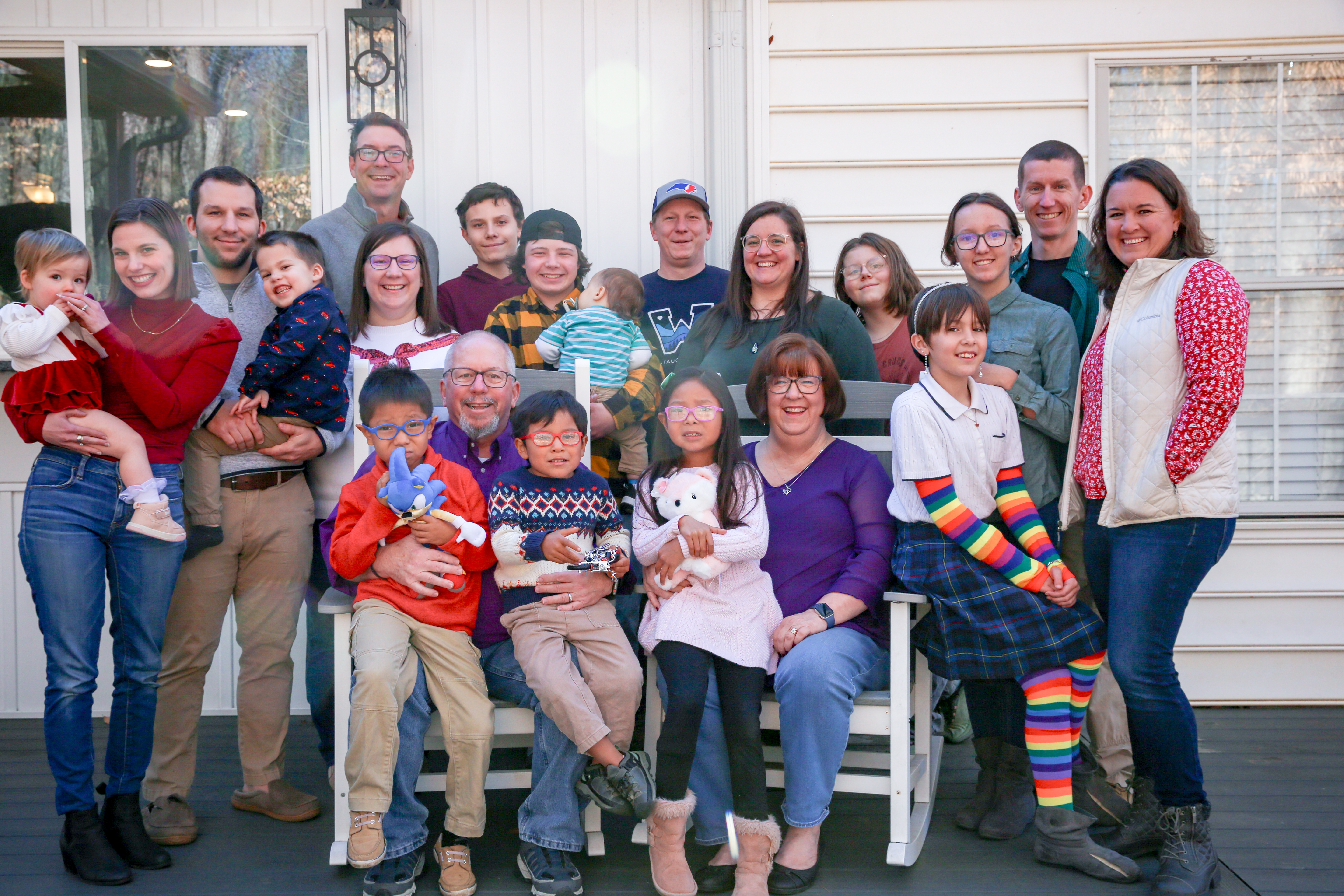
All 21 of us!

Things unfolded as planned – everyone arrived pretty much on time, everyone was healthy, and everyone was happy to see siblings and cousins.

We had already designated Monday 12/23 as our “Christmas” – and on the night of the 22nd, all four of our kids and their spouses dove in after their kids, nieces, and nephews were in bed to create the first ever #AdamsFamilyExperience Christmas train:

It actually took less time that I anticipated; in some of Anita and my past experiences, I remember Christmas Eve assembly and wrapping sessions that lasted until the early hours of the morning! Of course, ten sets of hands helped!

The result speaks for itself – an engine with 11 cars, one for each grandchild!

The next fews days were mostly a blur as we unwrapped gifts, ate wonderful meals, played with new toys (grandkids) and games (adults), and just generally enjoyed the wonderful chaos called family.

We even had time to gather for a family photo:
When Christmas Day rolled around, it was time to begin saying goodbye as three of the families headed back home to continue their own Christmas traditions. Our NM tribe had planned to stay with us until the 30th.

…and then some other stuff happened.

The day after Christmas I was not feeling well, and took it easy most of the day. By 12/27 I was in quite a bit of pain, so Dr. Mom, AKA Anita, took me to urgent care where they promptly sent me off the the Emergency Department – where I spent the day into the next morning waiting for a hospital room so I could be transferred.

The diagnosis leaving the ED was surgery for a perforated ulcer, and the surgical team at Atrium Cabarrus was anticipating that as well. However, that’s not what God had planned.

Because of the delay in getting a room, then a delay in having an imaging test that would pinpoint the problem, it was actually Sunday 12/29 when the surgical team took a conservative approach – no surgery at the moment, but complete rest and IV fluids only for up to a week.

It seems my body had encapsulated the ulcer, and was in the process of healing itself. A fews days later I was able to observe first-hand the amazing view of swallowing a radioactive dye going down my throat and into and through the various organs – with no signs of a leak this time.

With vitals where they wanted them, I was discharged on Thursday 1/2 – only to be readmitted 12 hours later with intense pain in my chest. Focused on signs of cardiac distress, the triage team was not as fast as getting me in a room as I would have liked – but at least I got an ED room instead of the dozen or so patients who were lined up in the hallways (including the sheriff’s deputies and a patient in handcuffs)! Imaging revealed an inflamed gallbladder, likely as a result of what was going on next door with my ulcer.
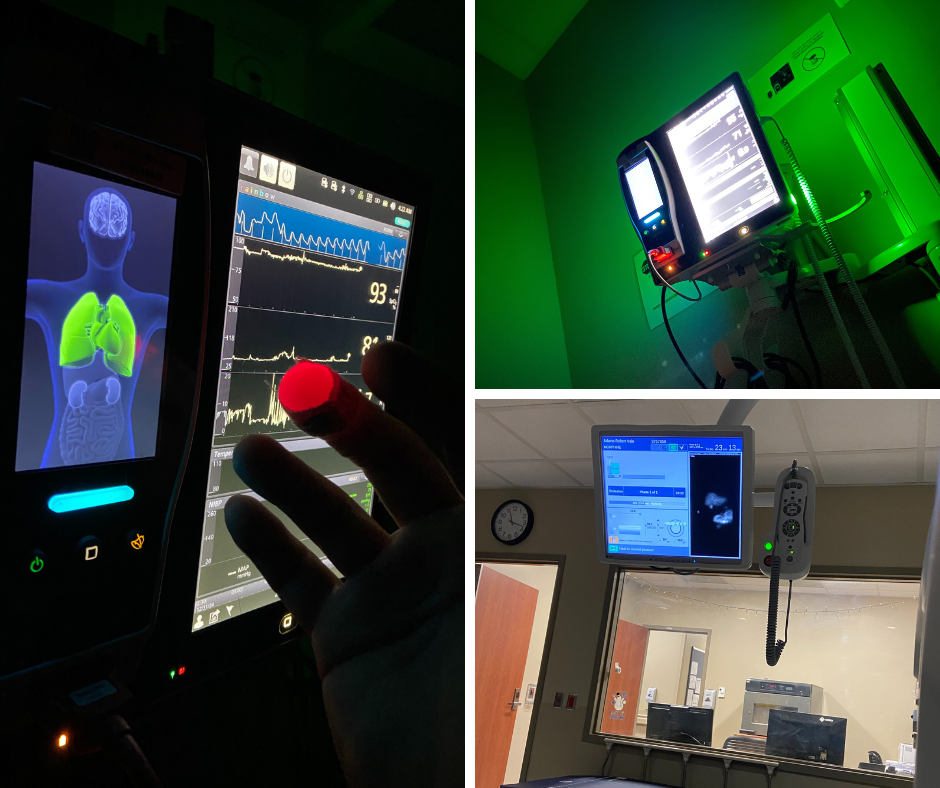
After a few hours in the ED, I was transferred back to PSC-3 – the same post surgical wing with the same nursing staff I had just spent a week with. This group of dedicated nurses were simply the best in caregiving I have ever experienced. To a person they were gentle and efficient as they went beyond fulfilling what they had to do to actually caring about me as a person. Over my 10-day stay, they were amazing in looking out for me in every way imaginable. We even got to laugh over “losing” me during one of the procedures!

On Sunday 1/12 I heard the words from my surgical team I was anticipating: “Do you want to go home today?” With a genuinely fond farewell from the nursing team, Anita brought me home that evening, where I crashed for the next 14 hours.

My prognosis is good, with additional tests and imaging scheduled in about a month to see where my body is at in the healing process.

The boyhood me, receiving a post-holiday assignment, would have quite a tale to tell.

The adult me, reflecting on what happened over the past couple of weeks, has no less of a tale to tell.

Whether it’s an essay for a teacher, small talk with coworkers, or a heartfelt chat with friends, What I Did on My Christmas Vacation is a question that evolves with us. It’s a chance to reflect, share, and connect in ways that go beyond the surface. So the next time you hear it, embrace the opportunity to tell your story – and to learn a little more about the people asking the question. After all, the magic of the holidays lives on in the stories we share.

What did you do on your Christmas vacation?

My 5-Generational Cohort Family is a Microcosm of Society

The legions of ancient Rome were composed of ten cohorts each: cohesive units of 300-600 men who trained, ate, slept, fought, won, lost, lived, and died together. The strength was their ability to think, act, and react as a unit. Though composed of individuals, training and socialization equipped them to behave as if of a single mind when called to battle. Social demographers, students of the effects of population on society, use the term cohort to refer to people born in the same general time span who share key life experiences – from setting out for school for the first time together through reaching puberty at the same time, to entering the workforce or university or marriage or middle age or their dotage at the same time.

The six primary generations of today’s American lifestyle span a remarkable slice of American and world history. Three major wars, countless minor (?) ones, economic booms and busts, social upheavals, rocketing technological achievement, and even stepping beyond our planet are among the milestones that have directly and indirectly shaped the times.

I count myself fortunate to have a direct connection to all six generations. To me, understanding more about how each of them think, feel, and act is not just a mental exercise – it’s a necessary part of life.

  • Builder Generation (1922-1945) My father and mother were born into the early part of this cohort. He entered military service just as WWII was ending; she was in college and then taught school; they were part of what some call “The Greatest Generation”. Think “American values” and you’ve got their number: civic pride, loyalty, respect for authority, and apple pie. My father passed away in 2012, and my mother in 2018. They may not be physically present with me, but who I am was shaped by their influence, and they impact me every day. Additionally, this cohort, as their generation moves into their twilight years, still controls a significant part of the economy and will continue to be influential in the years ahead outside of their numbers.
  • Baby Boomers (1946-1964) My wife and I are late Baby Boomers. Born in the latter 50s, we are a part of what was until recently the largest cohort in US history. For over thirty years, the sheer size of the Boomer generation defined the organization’s social landscape in a majority-rules cultural takeover. We were the civil rights, empowerment, and diversity generation. Never content with the status quo, we are always redefining what it means to be old and cool and important and successful.
  • Generation X (1965-1982) My oldest son and one of my daughters-in-law are Xers, even though they sometimes exhibit characteristics of the next cohort as well. Technologically adept, clever, and resourceful, the Xers are a deeply segmented, fragmented cohort. Their need for feed back and flexibility, coupled with the dislike of close supervision is but one of the many complex nuances of this generation. They are all about change- they’ve changed cities, homes, and even parents all their lives. Often seen as pessimistic with an edgy skepticism, many Xers are more positive about their personal future than the group as a whole.
  • Millennials (1983-2000) My other three children, two daughters-in-law, and a son-in-law all fall into this cohort. They are the children of the soccer moms and little League dads, and endless rounds of swim meets, karate classes, dancing lessons, computer camp and … you get the picture. They consider themselves the smartest, cleverest, healthiest and most-wanted group to have ever lived. Born into the technology boom times, barriers of time and space have little absolute meaning to them. They are willing to work and learn. By sheer numbers (their total births eclipsed the Boomers by several million) they are going to dominate history in new ways. They are the hyper-connected: constantly connected to multiple devices in order to know what and whom they need to know.
  • Generation Z (2001-2015) As the generation of the first six of my grandchildren, it is important to me to try to fully understand them. Technology is the hallmark of this group, which is the first generation to be raised in the era of smartphones and social media as a daily part of life. They’re growing up amid the promise of technological innovation – but also in the environment of economic uncertainty, a sharp decrease in well-defined and reliable career paths, increasing political divides, and the effect of decades of repressed racial tensions. The preeminent event of this cohort is the 9/11 attacks and the rise of terrorism around the world (and the U.S. response to it). Consequently, when compared to their predecessors, this group is both more cautious and more anxious.
  • Alpha Generation (2016-TBD) I have two grandchildren in this cohort, and there is one more on the way! While it is too early to define the characteristics of this cohort in any meaningful way, consider the early memories of children born since 2016: They will assuredly recall adult populations that were divided, diseased, and depressed. Their early years were launched alongside the large differences of the Trump and Biden administrations; their memories will be forever marked by the pandemic, ongoing political polarization, and increasing international unrest on a scale not seen since WWII.

There are some indications that generational cohorts repeat every four generations, so we’ll just have to see. Led by the thoughts of William Strauss and Neil Howe published in the late 1990s, this idea of “cycles” is getting more attention now that their predictions of today’s Millennial cohort are proving to be on target more often than not. That will definitely be my radar in the future!

An interesting fact, and the origin of the title of this website: there are 27 years between each of the first born in the above first three generations of my family, thus 27gen.

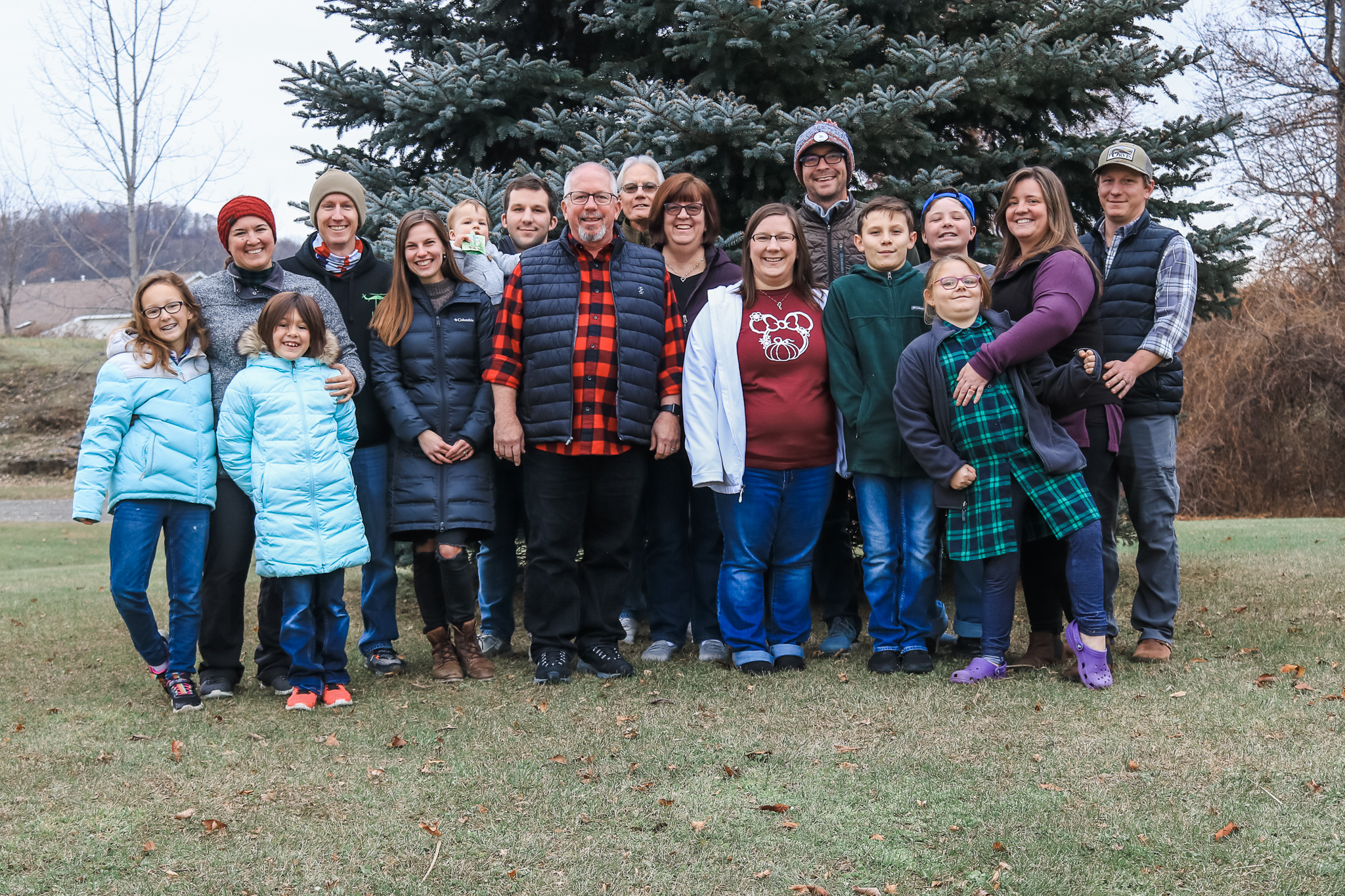
Here’s the last time all of #TheAdamsFamilyExperience was together in one place: Thanksgiving 2021, in Greenwich, NY.

The next five years are going to be very interesting as each of these five generations exert influence on each other. I will be actively watching my own microcosm of society.


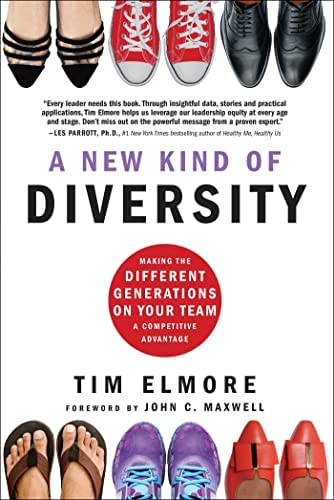
My latest reading on generations: The release of A New Kind of Diversity by Tim Elmore was much-anticipated. Elmore brings his decades of research and leadership experience to bear on what might be the biggest, most dramatic, and most disruptive shift the American workforce has ever seen: the vast diversity of several generations living—and working—together. 

For the first time in history, up to five generations find themselves working alongside each other in a typical company. The result? There can be division. Interactions between people from different generations can resemble a cross-cultural relationship. Both usually possess different values and customs. At times, each generation is literally speaking a different language!

The Ongoing Journey of Fatherhood

You become a father in a few short seconds…

…fatherhood takes the rest of your life.

On Father’s Day 2021 I find myself in a unique place in time:

  • My father has been gone for 9 years, but I still see and feel his influence in my life daily.
  • All three of my sons celebrate Father’s Day as fathers in their own right: Between them, they have a 13-year old, a nine-year old, an 8-year old, a 10-year old, an 8 year old, a 2-year old, a 16-month old, and a 10-month old.
  • My oldest son left for college in 1999; the youngest graduated from college six years ago, but the flip side of being empty nesters:
  • My oldest son and wife welcomed the teenage years with our oldest grandson this year; along with his sister and brother, they are definitely always on the go. The mountains, streams, and lakes beckon, and they are a fishing family much of their free time.
  • My middle son and wife continue their adventures as an Air Force family, along with providing foster care for 2 siblings (the 16th and 17th children they’ve had in their care over the last five years). With their two daughters, their household is always in motion – but it’s filled with love, overflowing.
  • My daughter is moving to a new and exciting work adventure this week. It will require commuting, work from anywhere, and living “here and there” for a few months, but she and her husband have done that before. I am so proud of her recognition of excellence at her workplace of the last 6 1/2 years which led to this new opportunity.
  • My youngest son and his wife have weathered the work hardships of 2020 while welcoming their son, and remain committed to their work while keeping family first. They are both loving, generous, and absolutely infatuated parents of the youngest grandchild.
  • Of course, without my wife none of this would have been possible. Through 41+ years of marriage we’ve had laughter, tears, adventures, and accumulated thousands of life stories of our family’s experiences. The journey continues each day, and becomes sweeter.

Fatherhood is a journey, and each step along the way brings a new opportunity to grow and learn just how to be a father. I’m 40+ years in, and sometimes I feel like it has just begun.

At other times, I look back and wonder where the time has gone.

It Doesn’t Take a Magic Mirror to See the Past in Your Face

courtesy Paulin'a CC

courtesy Paulin’a CC

Whose face do you see when you look in the mirror?

Recently I went on a business trip that’s took me through 4 airports, 3 rental cars, a subway ride, 3 hotels, and more lines than I care to recall. While I was waiting in those lines, I looked in a lot of faces, and heard lots of conversations. One conversation in particular stands out – two young women in their early 20s were behind me talking about another person. I wasn’t eavesdropping, but voices in a jet way are quite clear. The comment that stopped me? “Yeah, he’s 35 you know, and that’s like, you know, old.”

I’m over two decades past the age of 35, and I obviously have a different outlook on life than those two young women. Or do I?

I’m not normally the type that looks at myself in a mirror. But this comment, along with comments from my colleagues I had not seen in several months made me look in the mirror in the hotel that night. Just who was that looking back at me?

The face I saw was that of my father. Even though he passed away four years ago, I still have vivid memories of him. Going places he’d been, seeing things he had talked about, reading about things he was interested in – my memories are constant, and good.

This morning, I looked long in the mirror and the vision I saw was that of my father, coming into focus like a picture being developed right in front of my eyes.

Thought of another way, however, that familiar face embedded in my mind morphed into my son’s and then into his son’s – my grandson. Like a modern day mashup, those collections of lives lived, and yet to live, offer a considerable span of history. A long life lived, a life at halftime, a life in early adulthood, and a life just beginning – that’s quite a few faces in the mirror.

It doesn’t take a magic mirror to see the past in your own face, or wonder about the future in the face of your children and grandchildren.

Who knows when you will glance into a mirror and meet a past you hadn’t expected and weren’t ready for, or a future that is yet to come.

Look in the mirror – what do you see?