The Drama of Daily Bread: How Food Performances Reveal Who We Are


Every day, across countless dining rooms, coffee shops, and kitchen tables, we’re all performing.

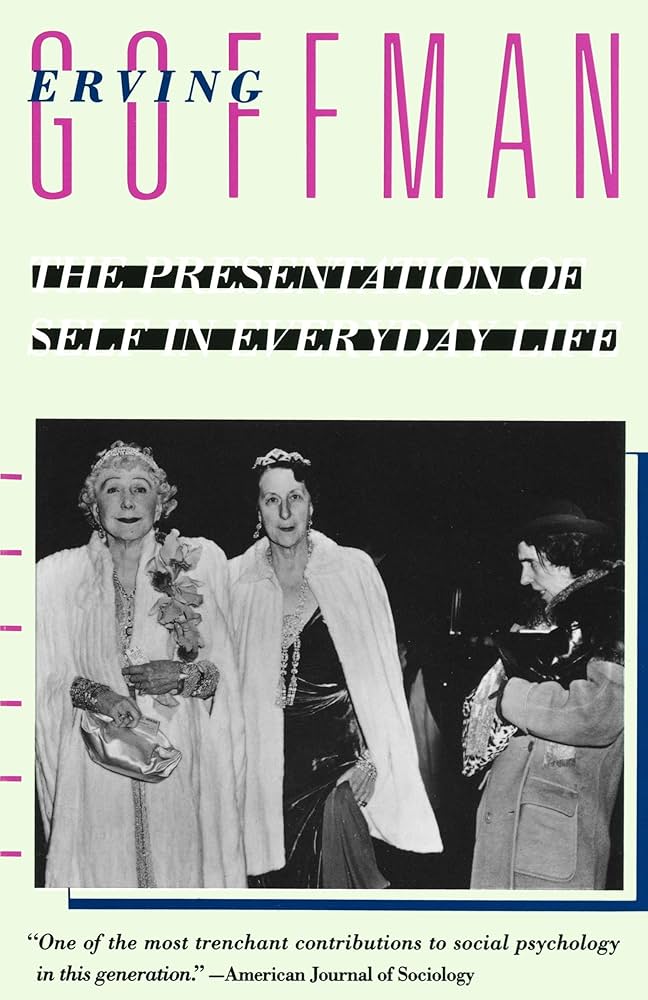
Not in the sense of putting on a fake show, but in the sociological sense that Erving Goffman described in his landmark 1959 work The Presentation of Self in Everyday Life: we’re managing impressions, playing roles, and collaborating with others to create shared meanings. And nowhere is this performance more revealing – or more universal – than in our relationship with food and drink.

Over the past month, a four-part series has explored how food experiences illuminate fundamental truths about social interaction, identity, and community through Goffman’s dramaturgical lens. From the café regular earning their place among neighbors, to the historical meanings embedded in beverage choices, to the choreographed care of professional hospitality, to the autobiographical recipes we cook into our identities – these articles revealed that our daily food rituals are elaborate performances that construct who we are and how we belong.

Let’s wrap the series with a quick look back and a challenge going forward.
Third Places: Where We Rehearse Belonging

The series opens in the informal gathering spots that sociologist Ray Oldenburg calls “third places” – those cafés, diners, and neighborhood haunts that exist between the demands of home and work. These spaces serve as crucial stages where we perform a different kind of self, one that’s neither purely professional nor entirely domestic.

At Big Bite’z Grill in Cornelius, North Carolina, as a weekly regular I get to experience what countless others do in their own third places: the satisfaction of being known. The cooks start preparing my buffalo chicken pita when they see him crossing the parking lot. The owner brings it to his favorite table in the back. It’s a small drama of recognition that repeats thousands of times across America’s remaining community gathering spots.

But this recognition isn’t automatic – it’s earned through performance. The progression from stranger to regular represents a fascinating arc: initially hyper-aware of where to stand and how to order, gradually dropping certain masks as you return again and again. You achieve what Goffman calls “team membership” – you’re now part of the café’s ongoing social drama, granted backstage access that new customers don’t enjoy.

The core thesis: Third places create unique “regions” where social masks can be partially lowered, yet new performances emerge around being a “regular” or “local.” These spaces teach us to perform the casual, egalitarian sociability that democracy requires – practicing being the kind of people who belong somewhere, who participate in the daily drama of shared public life.

The tragedy, as both Oldenburg and personal experience reveal, is the systematic destruction of these rehearsal spaces. Suburbanization, chain standardization, and remote work have eliminated the informal gathering spots previous generations took for granted. Without them, we lose practice in the weak ties and casual interactions that create social cohesion.
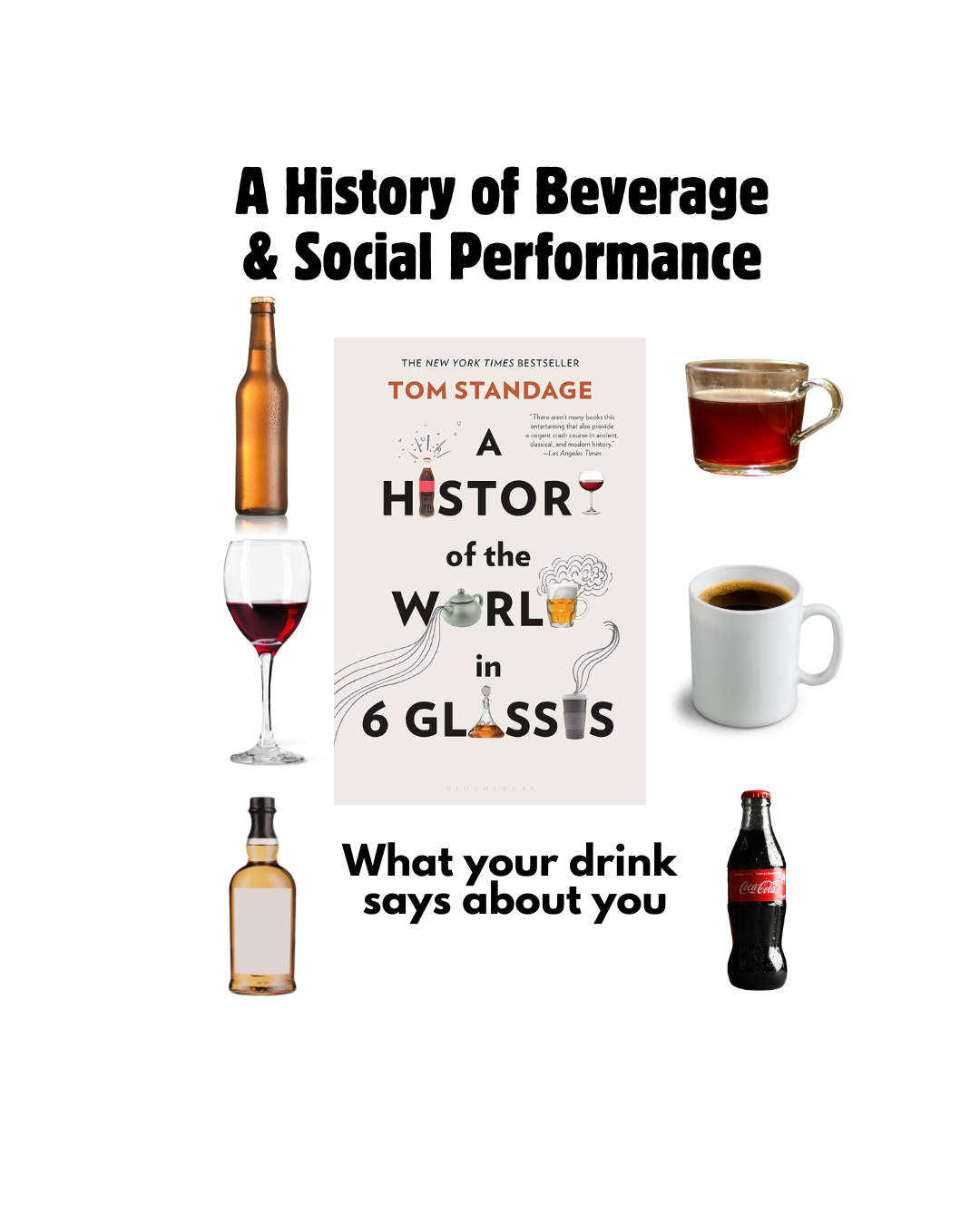
Beverages: Centuries of Signaling Status

If third places are the stages, beverages are the props – but props that carry centuries of accumulated meaning. The second article traces how beer, wine, spirits, coffee, tea, and cola became tools for signaling status, allegiance, and belonging throughout human history.

Consider the remarkably rapid incorporation of each new beverage into systems of social performance. Ancient Sumerians had multiple words for different beer qualities within generations of fermentation’s discovery. Greek symposiums developed elaborate protocols around wine – the type, dilution, even the angle of reclining all signaled education and status. When distillation made spirits accessible to the lower classes, moral panic ensued: gin became “mother’s ruin” while brandy retained elite respectability, despite being chemically identical.

The coffeehouse revolution of 17th-century England created what Standage calls “penny universities” – radical spaces where titled nobility and common merchants could sit together, performing enlightened citizenship over stimulating rather than intoxicating beverages. But this democratic potential was always contested. Tea became the drink of British imperialism, with rituals that enforced class and gender boundaries so strictly that myths persist today about proper pinkie extension. Coca-Cola’s rise represents American capitalism’s ability to bottle and commodify social performance itself.

The core thesis: Throughout history, beverages have shaped and signaled social performances. What we drink performs power, identity, and belonging – marking us as insiders or outsiders, sophisticated or gauche, traditional or progressive. Every sip is a statement, every toast a small drama of affiliation and distinction.

Today’s landscape amplifies these performances exponentially. The craft cocktail revival, specialty coffee culture, wine connoisseurship, the latest cola flavor fad, even bottled water selection – all become stages for performing knowledge, taste, and class status. Social media transforms private consumption into public identity construction, as latte art and cocktail garnishes become evidence of the kind of people we want others to believe we are.

The question isn’t whether we perform through our drink choices – we inevitably do. The question is whether we’re conscious of the centuries-old scripts we’re following.
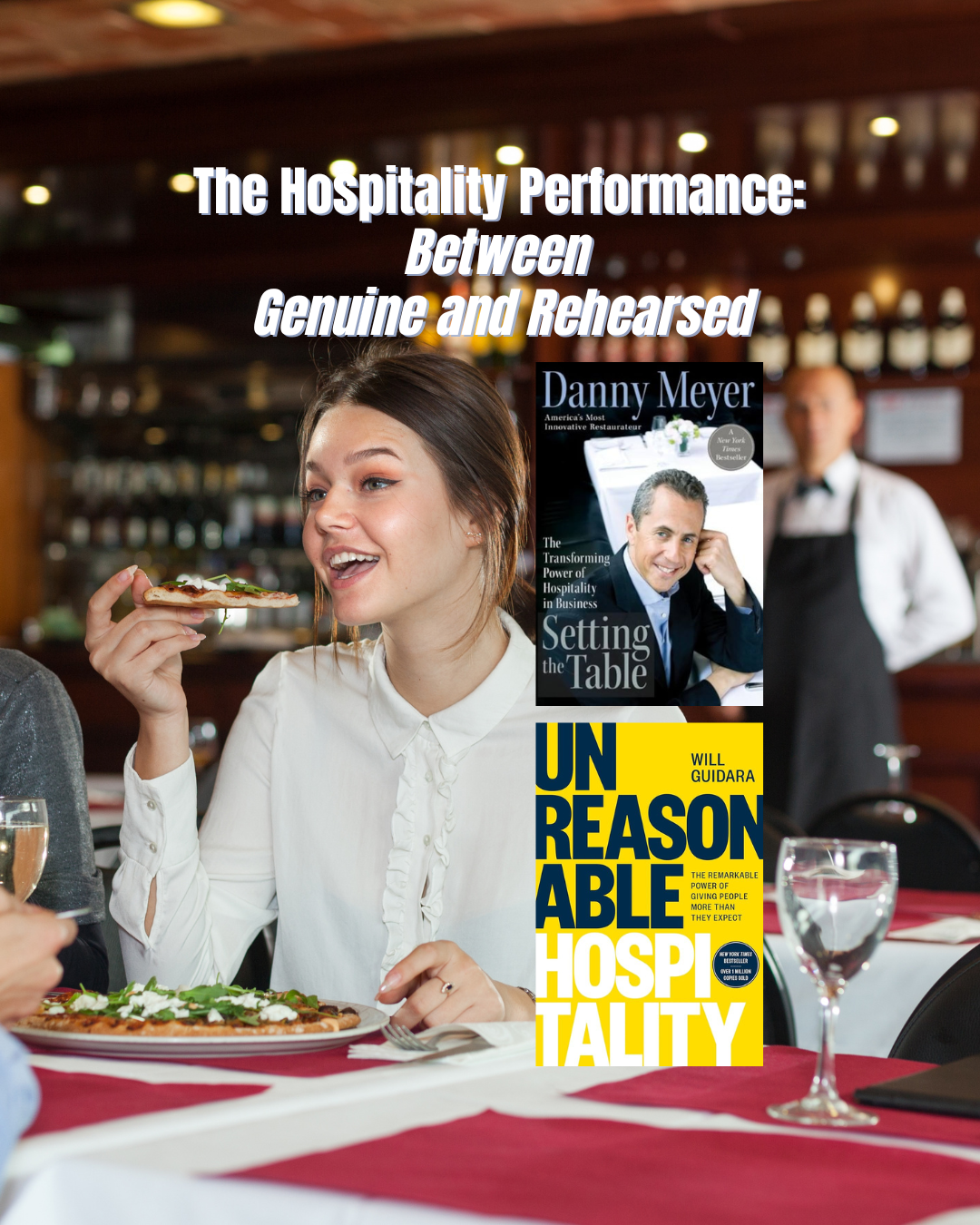
Restaurant Hospitality: Choreographing Authentic Care

The third article examines perhaps the most sophisticated performance of all: professional hospitality. At my favorite restaurant, 131 Main, I always play a game with my family, counting how many servers stop by their table throughout the meal. My personal record? Seven different staff members, each contributing to an experience that feels effortless but requires elaborate choreography.

Danny Meyer built his empire on “enlightened hospitality”-systematizing the supposedly spontaneous qualities of warmth, empathy, and care. Will Guidara pushed further at Eleven Madison Park with “unreasonable hospitality”- empowering staff to break scripts entirely. When his team overheard guests mention they’d never had a New York hot dog, they sent a runner to a street cart and served it on fine china. For a Spanish family, they built a beach in the dining room, complete with sand.

These restaurateurs navigate a fascinating paradox: How do you engineer authentic connection? How do you perform genuine care?

Meyer distinguishes sharply between service (technical delivery) and hospitality (emotional care). But both require what Goffman calls “dramaturgical discipline” – maintaining character under pressure, never letting the mask slip. Servers must read each table in real time, adjusting their performance: warm with one group, briskly efficient with another, invisible to a couple in deep conversation.

The core thesis: Professional hospitality reveals how performing care, when executed with enough skill and genuine investment, creates real connection. The restaurant operates as complex team performance, with front-of-house and kitchen staff collaborating to sustain the illusion of effortless grace. When one member breaks character, the entire performance suffers.

The digital age adds new complexity. Staff must now perform for two audiences simultaneously: the guests in the room and the potential thousands who might see photos or read reviews. But Meyer and Guidara navigate this by focusing on immediate human connection, letting digital performance emerge organically rather than engineering it for likes and shares.

The profound question both books raise is whether performing care can become real care. Meyer believes consistently acting with hospitality transforms who you are. Guidara argues unreasonable hospitality isn’t performance at all, but a mindset. Perhaps the truth lies between: we perform care until we internalize the script, and the line between authentic and performed dissolves entirely.
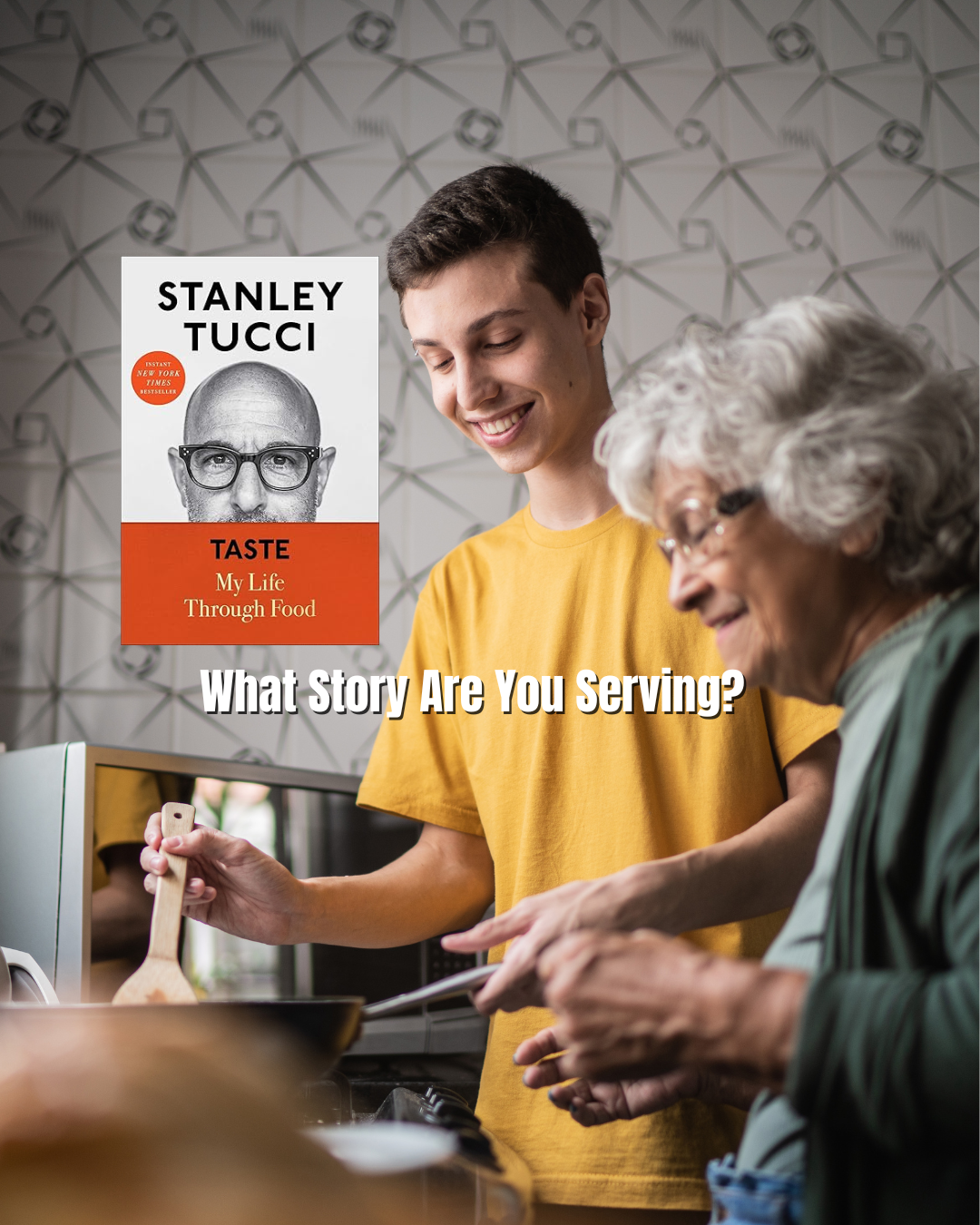
Food as Autobiography: Cooking Our Life Stories

The final article examines how we use food to write our autobiographies. Stanley Tucci’s memoir Taste: My Life Through Food weaves his life story through recipes and meals – from Italian-American childhood to grief to cancer to renewal. His signature dishes aren’t just food; they’re identity markers that perform heritage, sophistication, resilience, and joy.

Your grandmother’s biscuit recipe isn’t just instructions for combining flour and butter. It’s a ritual connecting you to her, to your childhood, to a particular vision of home. When you make those biscuits for your own family, you’re performing continuity across generations, claiming heritage, saying “this is where I come from.”

But food autobiography is never just preservation – it’s also curation and invention. We want our cooking to prove we’re connected to something larger (family, culture, tradition) while demonstrating our unique taste and creativity. We’re simultaneously claiming membership and asserting distinction.

The core thesis: We write our autobiographies not just in words but in meals. The food we prepare, share, and remember becomes the narrative structure of our lives. We organize time through food rituals – birthday cakes, holiday feasts, anniversary dinners. We mark transitions through food – the first meal in a new home, the last dinner before someone leaves, the foods we can’t eat anymore.

Tucci’s memoir reveals food’s role in performing continuity during disruption. After his first wife’s death, cooking became both refuge and challenge. The meals he made weren’t just sustenance – they were performances of normalcy, of continued life, of love persisting beyond loss. When everything else changes, familiar meals ground us.

The immigrant experience intensifies this dynamic. Do you cook heritage foods to maintain connection? Adopt local cuisines to perform assimilation? Some combination demonstrating bicultural fluency? Each choice performs a different relationship to identity and belonging.

Contemporary dietary choices – vegan, paleo, gluten-free, locavore – function as identity categories complete with values and communities. Declaring your diet performs beliefs about health, environment, animal welfare, or counter-cultural positioning.

Living Goffman’s Insights: A Challenge

These four articles reveal a consistent truth: food experiences are never just about sustenance. They are performances through which we construct identity, signal belonging, navigate power, and create meaning. Understanding this doesn’t diminish the authenticity of our food lives – it deepens our appreciation for the work involved in maintaining social connection.

Here’s your challenge: For the next week, observe your own food performances with new awareness.

Notice your third place behaviors. When you enter your regular café or restaurant, pay attention to the small rituals of recognition. How do you signal you’re a regular? How does being known there make you feel? If you don’t have a third place, consider what you’re missing and where you might find one.

Examine your beverage choices. What are you signaling when you order that craft cocktail, specialty coffee, or particular wine? Are you performing knowledge, sophistication, or belonging to a particular community? There’s no judgment here – just awareness of the centuries-old scripts we’re following.

Observe service interactions. Next time you dine out, watch the performance unfold. Count how many staff members contribute to your experience. Notice when servers read the room correctly and adjust their approach. Appreciate the emotional labor involved in making care seem effortless. And consider: what performance are you giving as a guest?

Reflect on your signature dishes. What do you cook that feels like “you”? Where did you learn it? What story does making it tell about your identity, heritage, or values? When you feed others, what version of yourself are you presenting?

The goal isn’t to become cynical about social performances or to stop performing. That would be impossible – as Goffman showed, all social interaction involves performance. The goal is conscious participation in the dramas we’re already enacting.

When you understand that the café regular isn’t born but made through repeated performances, you can be more intentional about creating community. When you recognize that beverage choices signal identity, you can make more deliberate decisions about what you’re communicating. When you appreciate that hospitality requires choreographed care, you can value the work involved – whether you’re giving or receiving it. When you see that food is autobiography, you can be more thoughtful about the stories you’re cooking into existence.

Goffman taught us that social life is theatrical, but theater reveals truth. The performances we give around food – the daily dramas of drinking coffee with neighbors, choosing what to order, serving guests graciously, cooking family recipes – these aren’t fake. They’re how we construct authentic connection in a world that often leaves us isolated.

The swinging kitchen door separates front stage from backstage, performance from preparation, the polished from the raw. But we’re all standing on one side or the other, constantly. Understanding the performance doesn’t diminish the magic. It deepens our appreciation for the work involved in making each other feel human, valued, and connected.

That’s the real lesson from this series: performing care, again and again, with discipline and creativity and unreasonable generosity, is one of the most authentic things we can do. The care is real. The performance makes it possible. And that’s not a contradiction – that’s just life, lived with intention and grace.

So go to your third place. Choose your drink consciously. Appreciate the performance of hospitality. Cook your story. And recognize that in these daily food dramas, you’re not just eating – you’re rehearsing what it means to be human together.


Part of a regular series on 27gen, entitled Wednesday Weekly Reader.

During my elementary school years one of the things I looked forward to the most was the delivery of “My Weekly Reader,” a weekly educational magazine designed for children and containing news-based current events.

It became a regular part of my love for reading, and helped develop my curiosity about the world around us.
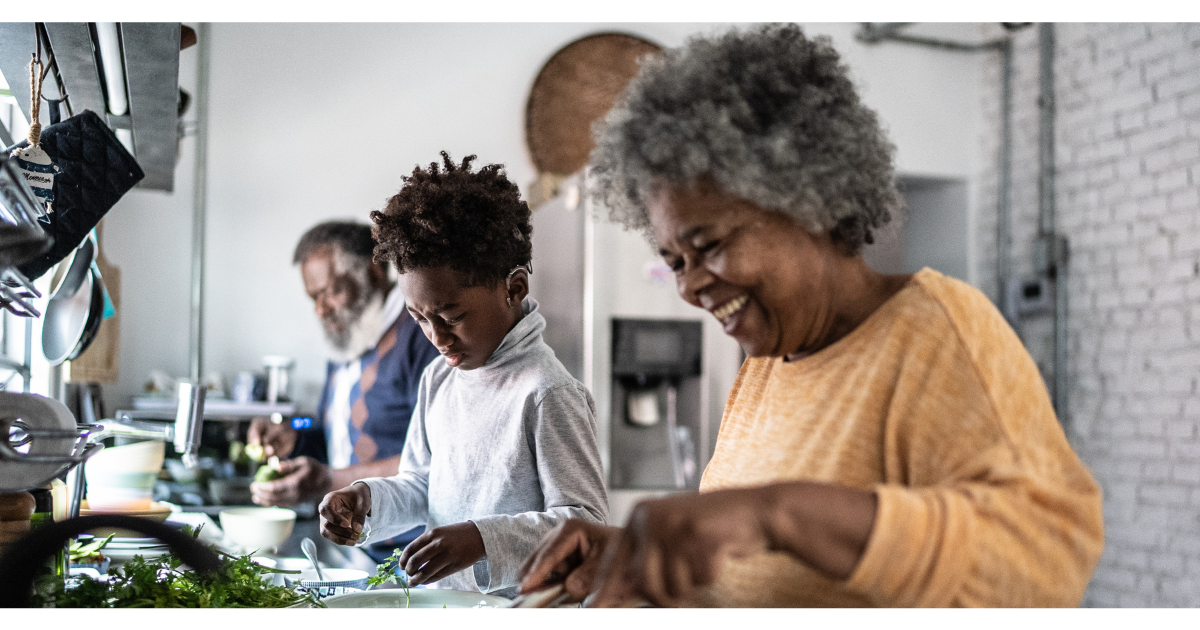
What Story Are You Serving?


The food we prepare, share, and remember becomes the material through which we construct and perform our life narratives and identities.


I love food.

Eating it, sure, but also knowing how it’s grown; where it came from (not just what I’m eating for supper, but how it came to be, over time, supper); what goes with what; how all the ethnic cuisines came to America and how they’re changing our culture. Oh, and how it’s made; what’s the history of some our favorite (and not so favorite) foods; what’s healthy for me; what’s not so healthy; why I like it anyway…

I could go on and on, but you get the picture.

My mother was a transplanted native of Missouri who adapted to Southern cooking in the mid 1950s and honed the craft with family and church over the next 60 years. I have great memories of childhood meals – simple, but oh-so-good. 

My oldest son’s second job in high school, and every one for the next 25 years revolved around food. From pizza baker to coffee-house barista to small restaurant cook to line cook to pastry chef to kitchen manager and training chef to food services manager, his young adult life was immersed in all things food. Even though he is now doing other work, his family and all our family recognize his talent: they all like his food and request it when he gets a chance to cook.

My youngest son, through a scheduling error, took a year-long culinary class as a junior in high school. He loved it so much he took another one as a senior, cooking for the faculty every day. He brought home recipes and tried them out on Anita and me (which we really liked). He went on to get a double degree at Johnson & Wales University, along the way cooking in one of Charlotte’s top-rated restaurants, managing the food service programs at three different conference centers, and now is events manager for a university in Virginia. His culinary skills are much in demand by family and friends.

And of course, I practice cooking all the time: old standby recipes that have become family favorites, new ones pulled from magazines or off the Web.  One look at me and you see I don’t miss too many meals!

There is the learning part: I read food magazines, culinary books, first person narratives about life in the industry, and so on. When I eat out, I focus on the food – and the people preparing and delivering it. It’s always instructive.

It would seem that every time I am around food, I’m performing a version of myself. The dishes I make or eat aren’t just food; they are evidence of where I’ve been, who raised me, what I’ve lost and found. When I cook for others, or choose a restaurant to visit with friends, or recommend a culinary book, I’m offering more than food in its various forms. I’m presenting a carefully curated chapter of my life story, plated and garnished.

This is the fourth and final article in a series exploring how food experiences reveal fundamental truths about social interaction, identity, and community through the lens of Erving Goffman’s dramaturgical sociology. Read the series here; continue with Part Four below.


In Taste: My Life Through Food, Stanley Tucci weaves his autobiography through recipes and meals, from his Italian-American childhood to the grief of losing his first wife to cancer to his own experience with cancer. The book reveals something profound about how we use food to construct and perform our identities. We’re not just what we eat – we’re what we cook, what we remember eating, what we choose to share, and the stories we tell about all of it.

If Erving Goffman taught us that social life is theatrical performance, then the kitchen is where we write our scripts. The meals we prepare, the ingredients we choose, the techniques we master or reject – these become the material through which we perform our life narratives. Food is autobiography made edible.

Tucci understands this intuitively. His signature dishes aren’t just recipes; they’re identity markers. The pasta his grandmother made becomes a touchstone for his Italian heritage. The risotto he perfected is evidence of his sophistication and patience. The simple roast chicken he turned to during grief demonstrates resilience. Each dish is a prop in the ongoing performance of being Stanley Tucci – actor, gourmand, Italian-American, widower, survivor, lover of life.

This is how food functions as autobiography: through accumulated memories that we perform and re-perform with every meal. Your grandmother’s biscuit recipe isn’t just instructions for combining flour and butter. It’s a ritual that connects you to her, to your childhood, to a particular vision of home and comfort. When you make those biscuits for your own family, you’re performing continuity across generations. You’re claiming a heritage, asserting an identity, saying “this is where I come from.”

But food autobiography is never just about preservation. It’s also about curation and invention. Tucci writes about adapting family recipes, discovering new cuisines, developing his own style. He performs authenticity to his roots while also performing cosmopolitanism, growth, evolution. His food story isn’t static nostalgia – it’s an ongoing narrative of becoming.

This dual performance – honoring tradition while asserting individuality – defines modern food identity. We want our cooking to prove we’re connected to something larger than ourselves (family, culture, tradition) while also demonstrating our unique taste, creativity, and discernment. We’re simultaneously claiming membership and asserting distinction.

Consider the rise of food memoir as a genre. From Ruth Reichl to Anthony Bourdain to Samin Nosrat, writers increasingly use food as the organizing principle for life stories. Why? Because food memories are vivid, sensory, universal yet specific. Everyone eats, but the particular foods that mark our lives – the birthday cakes, the holiday meals, the comfort foods during hard times – these are uniquely ours.

Tucci’s memoir becomes especially poignant when he writes about grief. After his first wife’s death from cancer, cooking became both refuge and challenge. Simple tasks felt impossible; elaborate projects provided distraction. Food remained a way to care for his children when other forms of care felt inadequate. The meals he made during this period weren’t just sustenance – they were performances of normalcy, of continued life, of love that persists beyond loss.

This reveals food’s role in performing continuity during disruption. When everything else changes, familiar meals ground us. They’re rituals that say: some things endure. Making breakfast for your kids the morning after trauma, preparing holiday dishes despite absence, cooking through grief – these are performances of resilience, small dramas of survival enacted daily in kitchens everywhere.

But Tucci also shows how food enables performance of joy and renewal. His courtship of his second wife involved elaborate meals, careful wine pairings, the sharing of favorite dishes. Through food, he performed being alive again, capable of pleasure, worthy of love. Each meal was an offering, a promise, a demonstration that he could still create beauty and warmth.

The digital age has amplified food’s role in autobiographical performance exponentially. Instagram and food blogs transform private cooking into public identity construction. We don’t just make dinner; we photograph it, hashtag it, broadcast it. The meal becomes evidence of the kind of person we are – or want others to believe we are.

This isn’t necessarily shallow. Social media simply makes explicit what was always true: food choices are identity performances. Posting your homemade sourdough performs patience, craft, trendiness. Sharing your grandmother’s tamale recipe performs cultural authenticity and family connection. Documenting your farm-to-table dinner performs environmental consciousness and class status.

We curate our food narratives as carefully as we curate our meals. We emphasize certain stories (the romantic dinner in Rome) while omitting others (the takeout eaten alone over the sink). We craft origin stories for our favorite dishes, perform discovery of new ingredients, document our culinary evolution. All autobiography is selective performance, and food autobiography is no exception.

Tucci is remarkably honest about this curation. He acknowledges performing Italian-ness perhaps more consciously because he’s an American of Italian descent, not Italian-born. His food identity required more active construction, more deliberate performance. This self-awareness doesn’t diminish the authenticity of his connection to Italian food – it reveals how all cultural identity involves conscious performance alongside lived experience.

The immigrant experience intensifies food’s role in identity performance. For those navigating between cultures, food becomes crucial terrain for negotiating belonging. Do you cook the foods of your heritage to maintain connection? Adopt local cuisines to perform assimilation? Some combination that demonstrates bicultural fluency? Each choice performs a different relationship to identity and belonging.

Tucci writes about his parents’ generation navigating this tension – Italian enough to feel authentic, American enough to belong. Food was the primary stage for this performance: Sunday sauce made from the old recipe, but Thanksgiving turkey fully embraced. The menu itself became a statement about who they were, who they were becoming.

This reveals Goffman’s concept of “personal front” – the expressive equipment we use to perform identity. For Tucci’s family, personal front included not just appearance and manner, but also ingredients in the pantry, dishes on the table, aromas in the kitchen. The performance extended to sensory experience, to the materiality of daily life.

In contemporary life, dietary choices have become even more loaded as identity performances. Vegan, paleo, gluten-free, locavore – these aren’t just eating patterns but identity categories, complete with values, communities, and social meanings. Declaring your diet performs beliefs about health, environment, animal welfare, self-discipline, or counter-cultural positioning.

What Tucci and Goffman together reveal is that we write our autobiographies not just in words but in meals. The food we prepare, share, and remember becomes the narrative structure of our lives. We organize time through food rituals – birthday cakes, holiday feasts, anniversary dinners. We mark transitions through food – the first meal in a new home, the last dinner before someone leaves, the foods we can’t eat anymore.

These aren’t just memories; they’re performances of continuity and meaning. When you recreate your mother’s recipe, you’re performing connection across time and death. When you cook something new, you’re performing growth and adventure. When you feed others, you’re performing care, competence, generosity.

The kitchen is a stage, but it’s also a writer’s desk. We’re simultaneously cooking and composing, feeding and narrating, making meals and making meaning. The self we cook is the self we perform is the self we become.

Taste includes recipes – dozens of them, detailed and personal. This isn’t just helpful; it’s essential to Tucci’s autobiographical project. The recipes are the evidence, the material proof of the life he’s narrated. They’re scripts future performers can follow, ways to taste his story, to perform a version of his identity in their own kitchens.

In a world increasingly mediated by screens and algorithms, where so much identity is virtual, food remains stubbornly material. You can’t fake a meal you’ve actually cooked. The skills are real, the failures evident, the successes tangible. This materiality makes food particularly powerful for autobiographical performance – it is identity you can taste, touch, smell, share.

We’re all writing our life stories in kitchens and dining rooms, constructing identities one meal at a time. The question isn’t whether we’re performing through our food choices – we inevitably are. The question is whether we’re conscious of the story we’re telling, intentional about the self we’re cooking into existence.

Tucci shows us that this consciousness doesn’t diminish authenticity. Instead, it deepens our appreciation for the work involved in maintaining identity, in honoring the past while remaining open to the future, in feeding ourselves and others with both skill and love. The performance is the point. The autobiography is always being written. And every meal is another chapter in the ongoing story of who we are.


Part of a regular series on 27gen, entitled Wednesday Weekly Reader.

During my elementary school years one of the things I looked forward to the most was the delivery of “My Weekly Reader,” a weekly educational magazine designed for children and containing news-based current events.

It became a regular part of my love for reading, and helped develop my curiosity about the world around us.
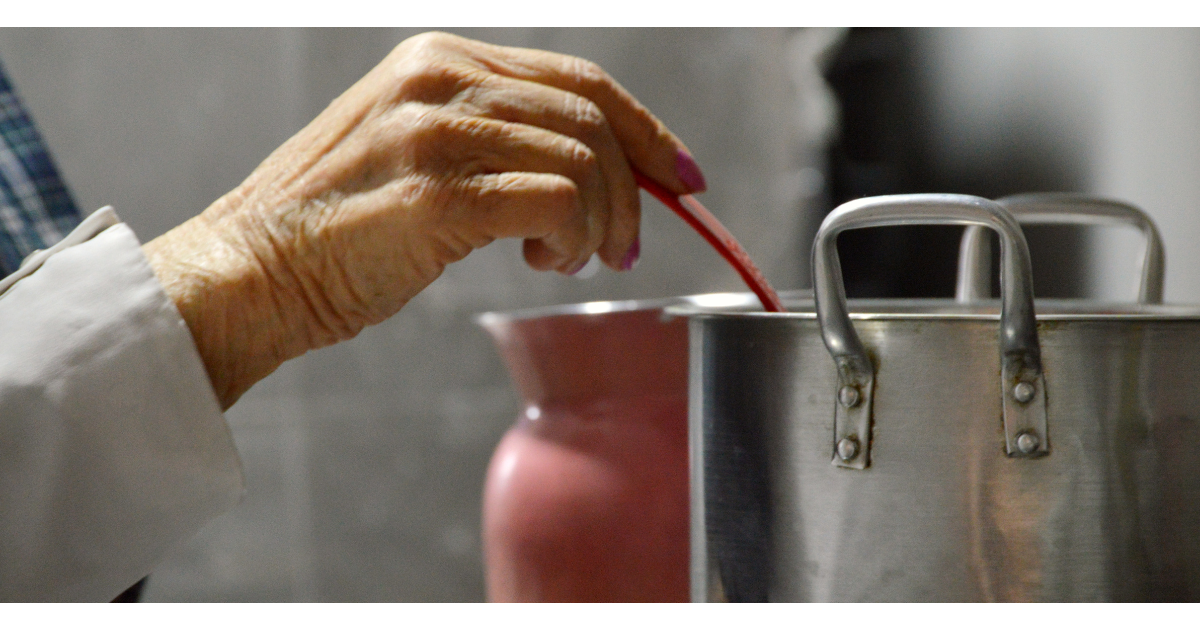
The Regular’s Performance: How Informal Gathering Places Teach Us to Belong

Part One of a Four-Part Series


We often perform our lives over food and drink. Every meal shared, every café visited, every toast raised involves a carefully choreographed social dance that most of us execute without conscious thought. We know instinctively how to behave at a business lunch versus a family dinner, when to linger over coffee and when to order and leave, how to signal sophistication or casualness through our beverage choices. These aren’t merely habits or etiquette – they’re performances, in the truest sociological sense.

In 1959, sociologist Erving Goffman published The Presentation of Self in Everyday Life, arguing that all social interaction operates like theatrical performance. We manage impressions, maintain character, distinguish between front stage and backstage behavior, and collaborate with others to sustain shared definitions of reality. His framework transformed how we understand the seemingly mundane encounters that fill our days.

Television history serves as a sprawling archive of our collective social choreography, mirroring the very “performances” described by Erving Goffman. Since the 1980s, the sitcom has functioned as a primary stage for these observations, transitioning from the blue-collar sanctuary of the diner to the aspirational urbanity of the coffee house. From the gold standard of the “workplace as family” from Cheers, or the curated wit shared over a booth in Seinfeld at Monk’s Café or the practiced intimacy of the orange velvet couch from Friends at Central Perk, these televised spaces have documented how we manage impressions and signal belonging

As we trace the evolution of the “third place” on screen – from the neighborhood haunts of the past to the high-stress kitchens of the modern era – we see a reflection of our own instinctive social dances.

This four-part series applies Goffman’s dramaturgical lens to food experiences, exploring how what we eat, drink, and share reveals the fundamental performances that structure social life. From the neighborhood café to the professional dining room, from historical taverns to personal kitchens, food spaces serve as stages where we rehearse belonging, signal identity, navigate power dynamics, and write our autobiographies.

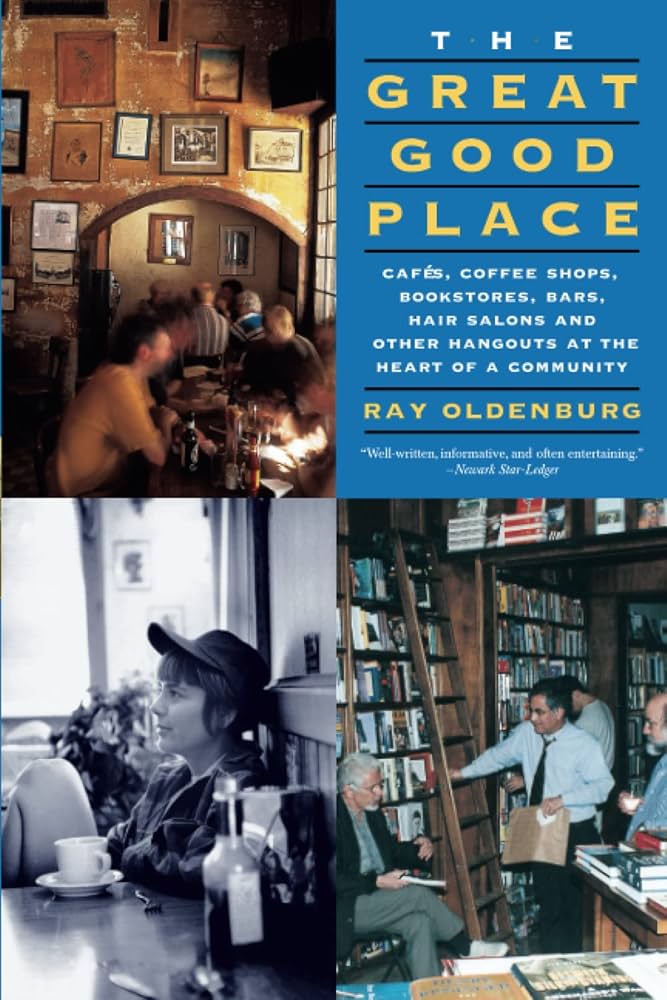
Our first article examines the “third place” – those informal gathering spots between home and work where we perform a uniquely accessible version of community. Ray Oldenburg’s classic study The Great Good Place provides our roadmap for understanding why these spaces matter, while Goffman helps us see the intricate performances that transform casual coffee drinkers into recognized regulars, and strangers into neighbors. The result is a deeper appreciation for the small social dramas that unfold daily over espresso and conversation – performances that teach us how to belong.

Note: I will use the term “café” most of the time, but you can substitute diner, restaurant, coffee shop, library, etc.


For years I have been a regular, weekly customer of Big Bite’z Grill in Cornelius, NC. I call it my “Lunch and Learn” and it usually occurs on Tuesdays. The first stop is at the library to drop off and pick up books, then a short drive to the restaurant. I try to arrive early, both to avoid the lunch rush and to claim my table – it’s the two-top all the way in the back, next to the kitchen door. While there, I not only have a great lunch, but make connections with the staff and a chance to skim a new book just picked up.

My food order on these visits is always the same: buffalo chicken pita, onion rings, and sweet tea. Everyone, from the owner John, to his son Demetri, to the cooks in the kitchen know my order. Most days, the cooks have already started the order when they see me walking across the parking lot. When I walk in the front door, it’s already being rung up. If John is busy, he will bring me the food when it’s ready and I’ll pay before leaving.

I’m one of the hundreds of “regulars” that frequent Big Bite’z throughout the week. One or two of the regular vendors are finishing up John’s orders for the week. There’s the construction crews that rotate in and out to the patio seating. Over there are Cornelius policemen, regular customers like me. Increasingly, there is a constant stream of delivery drivers who come in to pick up a carryout.

If he’s not too busy, I will always have an ongoing conversation with John about the current state of the world. Demetri keeps me up to date on his family. Even when it is busy, one or both of them makes it a point to stop by my table, just to chat even if just for a short while.

My story above delivers a particular kind of satisfaction that comes from being known at your local restaurant. Not famous, not important -just known. The cooks start making your usual before you order. Another regular nods as you walk in. You may or may not have learned their name, but you’ve shared this space . This seemingly trivial social dance reveals something profound about how we perform belonging in our everyday lives.

Ray Oldenburg’s 1989 book The Great Good Place champions what he calls “third places” – those informal public gathering spots that exist outside the demands of home (our first place) and work (our second place). Cafés, diners, barbershops, pubs, and corner stores have historically served this function, providing what Oldenburg describes as “the heart of a community’s social vitality.” But these spaces do more than simply exist between our other obligations. They serve as crucial stages where we rehearse a different kind of social performance, one that reveals the intricate ways we signal belonging and construct community.

Oldenburg identifies several characteristics that define genuine third places: they’re on neutral ground, they level social distinctions, conversation is the main activity, they’re accessible and accommodating, they host regulars, they maintain a low profile, the mood is playful, and they feel like a home away from home. What makes this framework so compelling is how it maps onto sociologist Erving Goffman’s dramaturgical theory of social life. If all the world’s a stage, as Goffman famously argued, then third places represent a unique theatrical space – one where we can experiment with performances that neither our domestic nor professional roles typically allow.

At work, we perform professional competence, managing impressions to maintain credibility and advance our careers. At home, we navigate familial roles and intimate relationships, often dropping some of our more public masks. But in our favorite coffee shop? We’re performing a subtly different self – one that Oldenburg suggests is somehow more authentic, or at least more freely chosen. We’re the person who knows good coffee, who has time to linger, who’s part of this micro-community of regulars. We’re sophisticated enough to appreciate the space but unpretentious enough to be approachable.

Goffman would recognize this immediately as “front stage” behavior – we’re still managing impressions – but it’s a front stage with different stakes and different rules. The regular at a café performs casualness, performs being the kind of person who belongs to a community of peers rather than subordinates or superiors. Oldenburg calls this “leveling,” the way third places neutralize social hierarchies. The lawyer and the freelance writer sit at adjacent tables, both just neighbors in this shared space. But achieving this egalitarian atmosphere requires its own subtle performances: dressing down just enough, not dominating conversations, respecting unspoken territorial claims over favorite seats.

At Big Bite’z, even the owner moves from my favorite table when I come in and beckons me to sit there. If that’s not “leveling”, I don’t know what is!

Yet even in these supposedly egalitarian spaces, new hierarchies emerge. There’s social capital in being recognized, in having earned your place among the regulars. Watch a true regular enter their space and you’ll see Goffman’s theory in action. They’re greeted by name, they know where things are, they understand the unwritten rules. They’ve been granted backstage access – they might walk behind the counter to grab a napkin, or stay past closing time finishing a conversation. New customers, meanwhile, perform a different role: the uncertain stranger, carefully observing protocols, hoping to graduate someday to regular status.

This progression from stranger to regular represents a fascinating performance arc. Initially, we’re hyper-aware of our presentation: where to stand, how to order, whether we’re taking up too much space. We’re all front stage, all impression management. But as we return again and again, something shifts. We begin to drop certain masks. The barista learns we’re going through illness, or that we’re writing a novel, or that last Tuesday was hard. We’ve achieved what Goffman might call “team membership” – we’re now part of the café’s ongoing social drama, not just audience members.

The tragedy of contemporary American life, as Oldenburg documents, is the systematic destruction of these third places. Suburbanization, car culture, chain standardization, and now remote work have all conspired to eliminate the informal gathering spots that previous generations took for granted. When every café looks identical, when there’s nowhere to walk to, when we’re encouraged to order ahead and leave quickly, we lose these rehearsal spaces for community performance.

The implications extend beyond nostalgia for neighborhood hangouts. Without third places, we lose practice in performing the casual, egalitarian sociability that democracy requires. We lose spaces where we can be seen as something other than our job title or our family role. We lose the “weak ties” – those acquaintances who aren’t quite friends but aren’t quite strangers – that sociologists increasingly recognize as crucial for social cohesion and personal well-being.

Though most of this story revolves around a food place, “third places” exist outside of that realm. For instance, my first stop before the weekly trip to Big Bite’z is to my local library. On my regular visit, I can count on the library being filled with moms and their kids for the weekly reading event. There are always adults and kids around the tables, with tutoring or homework help happening. There are weekly book clubs, maker spaces, game nights – I could go on, but you get the picture: community is taking place across and among all ages.

What Oldenburg and Goffman together reveal is that belonging isn’t passive – it’s something we perform into existence through repeated social rituals. The café regular isn’t born; they’re made through countless small performances of presence, recognition, and reciprocity. Every nod to a fellow regular, every moment of comfortable silence over a newspaper, every time we choose this place over the identical chain store down the street – these are performances of community, small dramas that accumulate into something larger than ourselves.

In an age of increasing isolation and digital connection, perhaps we need these performance spaces more than ever. Not just for the coffee, but for the chance to rehearse being the kind of people who belong somewhere, who are known and know others, who participate in the daily drama of shared public life. The third place, it turns out, isn’t just good for community. It’s where we practice being human together.


Part of a regular series on 27gen, entitled Wednesday Weekly Reader.

During my elementary school years one of the things I looked forward to the most was the delivery of “My Weekly Reader,” a weekly educational magazine designed for children and containing news-based current events.

It became a regular part of my love for reading, and helped develop my curiosity about the world around us.