
My brother Walt and I first went into business together almost a half-century ago. And he was really, in my opinion, truly a genius – creative, with great determination, singleness of purpose and drive; and through his entire life he was never pushed off his course or diverted to other things.
Roy Disney, at the Dedication of Walt Disney World, October, 1971

The year 2023 marks a momentous occasion for Disney enthusiasts and fans of the magical world of animation and entertainment. It’s the 100th anniversary of the Disney Company, a celebration that invites us to take a journey through time and rediscover the remarkable story of two brothers who forever changed the landscape of the entertainment industry: Walt Disney and Roy Disney.
As we explore the extraordinary partnership of Walt and Roy Disney, we’ll look at highlights of their shared vision, unwavering dedication, and the remarkable accomplishments that define their legacy.
From the earliest days of their lives in the bustling city of Chicago, Illinois, to the groundbreaking achievements that revolutionized animation and theme parks, the story of Walt and Roy Disney is a tale of creativity, innovation, and the power of collaboration. Together, they laid the foundation for a global entertainment empire that continues to enchant and inspire generations of dreamers and believers.
Join me on this journey as we unravel the tale of the Disney brothers whose partnership laid the foundation for a magical world where dreams come true. Through the highs and lows, triumphs and challenges, their story is a testament to the enduring spirit of innovation and the belief that anything is possible when you have a dream and someone to share it with.
Childhood and Early Years
In the heart of the bustling city of Chicago, Illinois, in the early years of the 20th century, two brothers were born who would go on to change the face of entertainment forever. Walter Elias Disney, known to the world as Walt, and his younger sibling Roy Oliver Disney, came into the world with an innate curiosity and a shared passion for art and animation.
Shared Upbringing
The Disney brothers grew up in a modest household, where their father, Elias Disney, worked as a carpenter, and their mother, Flora Disney, nurtured their creative spirits. It was within the confines of this supportive and nurturing family that the seeds of their future dreams were sown.
From an early age, it was clear that Walt and Roy possessed a unique bond. Being eight years older, he would often push the infant Walt in a carriage along the streets of their home. Even after a move from Chicago to a farm in Marceline, MO in 1906, the brothers remained close. Having three older brothers, Walt was mature for a seven-year old, and Roy treated him as an equal, rather than a pesky little brother.
When the two older brothers left the family farm to strike out on their own, and with their father Elias weakened by illness, the responsibility of keeping up the farm fell to Roy. It was too much for a boy who was also attending high school, so the Disney family sold the farm and moved into a small house in Marceline, primarily so the three children (Roy, Walt, and sister Ruth) could finish school.
In 1910, the family moved to Kansas City, with Elias becoming a newspaper distributor – and drafting his sons Roy and Walt to make deliveries in the early hours before school began and late afternoon, after school had been dismissed. These long hours of shared work were an foreshadowing of the partnership that continued throughout the remainder of their lives.
Separate Paths
After graduation from high school and working a few odd jobs, Roy settled into the world of banking as a teller. Walt’s love of drawing since boyhood deepened throughout his school years. Walt often came to see Roy because he wanted a quarter or half-dollar for paper to draw on. That pattern became the story of their lives: Roy providing the money for Walt’s artistic endeavors.
As the U.S. began its involvement in WWI, Roy enlisted in the Navy, serving for two years. Back in Kansas City, Elias Disney grew dissatisfied with the newspaper business, and moved his family back to Chicago. Walt finished high school in Kansas City, then moved to Chicago for a brief time, before convincing his reluctant parents to allow him to volunteer for the Red Cross and go the the battlegrounds of Europe.
When the war ended in 1919, Roy returned to Kansas City and his job as a bank teller. Walt, drawn innately by the bond he had with Roy, also settled in Kansas City. He announced he had decided to make a career out of his passion: he would become an artist.
The Birth of the Disney Brothers’ Animation Ventures
In the years that followed, the Walt began to experiment with animation techniques, driven by his insatiable curiosity and an eagerness to bring drawings to life. He embarked on a series of jobs that helped him hone his craft. After a few setbacks, he borrowed money from friends and family and launched “Laugh-O-Gram Films.” After some initial success, Walt had overextended Laugh-O-Gram, and it went bankrupt. Desperate, he reached out to his older brother for advice through a series of letters and telegrams.
Roy had not been well since his return from the Navy; he was diagnosed with tuberculosis, and sent to a series of veterans’ hospitals in New Mexico and Arizona to recuperate. After some recovery, he moved to California and began a hunt for a job. After a few small jobs, he suffered a relapse from TB and entered the VA hospital in Los Angeles. Receiving disability payments, he would often reply to Walt’s letters with a $20 bill enclosed – because he knew Walt needed the money.
Upon the failure of Laugh-O-Gram, Walt received a letter from Roy encouraging Walt to leave Kansas City. The next day, Walt boarded a train to join his older brother Roy in California.
Founding of Disney Brothers Studio
In the early 1920s, as the world was on the brink of a new era, Walt and Roy Disney were about to embark on an adventure that would forever change the course of entertainment history. It was a time of boundless creativity and innovation, and the Disney brothers were poised to be at the forefront of it all.
From Humble Beginnings to Ambitious Dreams
The Disney brothers had come a long way from their modest upbringing in Chicago. In 1923, with a few sketches from the Kansas City days, an old camera, and an unyielding determination to succeed, they founded Disney Brothers Studio in Hollywood, California. Staring in their uncle’s garage, they soon moved to rented rooms behind an realtor.
The inception of Disney Brothers Studio marked the birth of what would eventually become The Walt Disney Company. At this early stage, the company was a small animation studio with big dreams. Walt Disney, the visionary and creative force behind the operation, had a clear vision for what he wanted to achieve: to create innovative and captivating animated content that would transport audiences to magical worlds.
The Complementary Roles of Walt and Roy
One of the hallmarks of the Disney brothers’ partnership was the way in which they complemented each other’s strengths. Walt was the dreamer, the artist, and the storyteller. He had a knack for creating beloved characters like Mickey Mouse and crafting unforgettable narratives. Meanwhile, Roy was the pragmatist, the financial wizard, and the one who kept the studio afloat during challenging times.

Roy’s role in the early days of Disney Brothers Studio cannot be overstated. While Walt poured his heart and soul into the creative process, Roy handled the business side of things. He secured contracts, managed budgets, and ensured that the studio had the financial stability to continue its groundbreaking work. Roy forsook banking work and a hospital bed, where he was recuperating from tuberculosis contracted during wartime, to start as the cameraman, bookkeeper, and even cel washer for a time at the little animation studio. Without Roy’s steady hand guiding the company, Walt’s creative visions might never have seen the light of day.
Alice Comedies
Walt’s experimentation of putting a live person into an animated cartoon was a success, and soon the brothers had a contract to move forward. Eventually, they produces a series of 56 Alice shorts over the next three and a half years, each one becoming more popular than the previous one. With the success of the Alice comedies, the brothers moved into an all new and larger studio in 1926.
Oswald
In 1927, the debut of Walt and Roy’s first true cartoon star, Oswald the Lucky Rabbit, furthered their creative accolades and reputation. Oswald appeared in a series of 26 silent cartoons, but the Disney Brothers Studio lost the rights to Oswald through a contract dispute with the distributor.
The Debut of Mickey Mouse and a Turning Point
In 1928, Disney Brothers Studio faced a critical turning point. The studio had experienced some success with its Oswald series, but in the same dispute in which they lost Oswald, they lost almost all their animators. Returning to California from New York City with the bitter news, Walt telegraphed Roy:
LEAVING TONIGHT STOPPING OVER KC ARRIVE HOME SUNDAY MORNING SEVEN THIRTY DON’T WORRY EVERYTHING OK WILL GIVE DETAILS WHEN ARRIVE—WALT
Walt later told the story of coming up with the character of Mickey Mouse on that long and painful ride from NYC. It was the creation of Mickey Mouse in the groundbreaking short film Steamboat Willie that catapulted them to fame. There were actually two earlier Mickey Mouse cartoons – Plane Crazy and The Gallopin’ Gaucho – but Steamboat Willie was the first cartoon with sound. Mickey Mouse quickly became a cultural phenomenon, capturing the hearts of audiences around the world.
Steamboat Willie was not only the first synchronized sound cartoon but also the birth of a global icon. It showcased Walt’s innovative spirit and Roy’s ability to navigate the evolving landscape of the film industry. Together, they had struck gold.
A World of Imagination Unveiled
By the late 1920s into the 1930s, Disney Brothers Studio had firmly established itself as a leader in animation. With beloved characters like Mickey Mouse capturing the hearts of audiences, the studio was poised for growth. Walt Disney’s unceasing creativity gave birth to a world of imagination, as he introduced a cavalcade of new characters and storytelling techniques.

The Silly Symphonies series allowed for experimentation in animation, paving the way for innovations like the multiplane camera, which added depth and dimension to their films. Each new release was a testament to Walt’s artistic vision, while Roy, always the financial steward, ensured the studio’s continued financial success.
Snow White
Buoyed by the success of his animation projects, Walt brought to life a dream he had held onto since 1917 – a full-length animated feature film, Snow White. Taking three years to produce, requiring great financial sacrifice, and despite the derision of Hollywood, it opened to tremendous acclaim on December 21, 1937.
Because of the long development process, there was time to contract licensees during production (Roy’s idea) and Snow White marked the first time a complete licensed merchandise campaign was in place upon a film’s release. Additionally, a 3-record set of recordings from the film became the first feature-film soundtrack release – before the word “soundtrack” was used.
The success of Snow White provided resources for the construction of a new, state-of-the art studio in Burbank, and by October 1940 the Disneys’s new studio was ready to usher in a new generation of filmmaking advancements.
The Disney Magic Expands to Television
In 1950 the Disney brothers expanded their reach into television. While other Hollywood studios ignored the rise of television, Walt and Roy embraced it. They saw the medium as a new platform for storytelling – one which allowed him to communicate directly to audiences.
Over the years, shows like The Mickey Mouse Club and Walt Disney’s Wonderful World of Color brought Disney’s magic into living rooms across America. Once again, Walt’s storytelling prowess and Roy’s financial management were the perfect recipe for success.
These television programs not only showcased beloved Disney characters but also provided a platform for Walt to share his insatiable curiosity and passion for education and innovation. This commitment to learning and growth would become a cornerstone of the Disney legacy.
In addition, it was the partnership with the fledgling ABC network that allowed the seed money and loan backing for a project that had been on Walt Disney’s heart since boyhood – an amusement park.
Challenges and the Birth of Disneyland
As the Disney brothers reached the 1950s, they faced a monumental challenge that would test their partnership like never before: the construction of Disneyland. The idea of a theme park where families could step into the enchanting world of Disney was a bold one, but it also came with enormous financial risk.
Walt’s boundless creativity and Roy’s financial acumen were never more critical. Roy’s relentless pursuit of funding secured the necessary resources for Disneyland to become a reality. On July 17, 1955, Disneyland opened its gates, and the world was forever changed. The Disney brothers had created a place where dreams came true, and it was an immediate success.
Walt Disney World
By the mid-1960s, with the critical and commercial success of Disneyland, and bolstered by Disney’s expanding innovation in attractions, Walt and Roy know that the Disney entertainment empire was ready to leave the comfort of sunny California and head east. Beginning with secret research and land acquisition, their eventual target was central Florida near Orlando, and the “Florida Project” was formally announced in 1965.
The Disney brothers’ decision to begin on an entertainment destination the likes of which the world had never seen would change the faces of themed entertainment and international tourism forever.
With a blank canvas of over 27,000 acres, by 1971 Walt Disney World had become the largest private construction project in U.S. history, with more than 8,000 workers onsite at the peak of activity.
But first it had to cross a tragic hurdle: the death of Walt Disney in December 1966. This would be the ultimate – and final – test of the siblings’ bond, and Rory charged on in deference to his late brother’s wishes. Adhering to Walt’s guiding principles, Roy postponed his own retirement and devoted all his energy to what he insisted should be call Walt Disney World.
The Lasting Legacy of Walt and Roy Disney
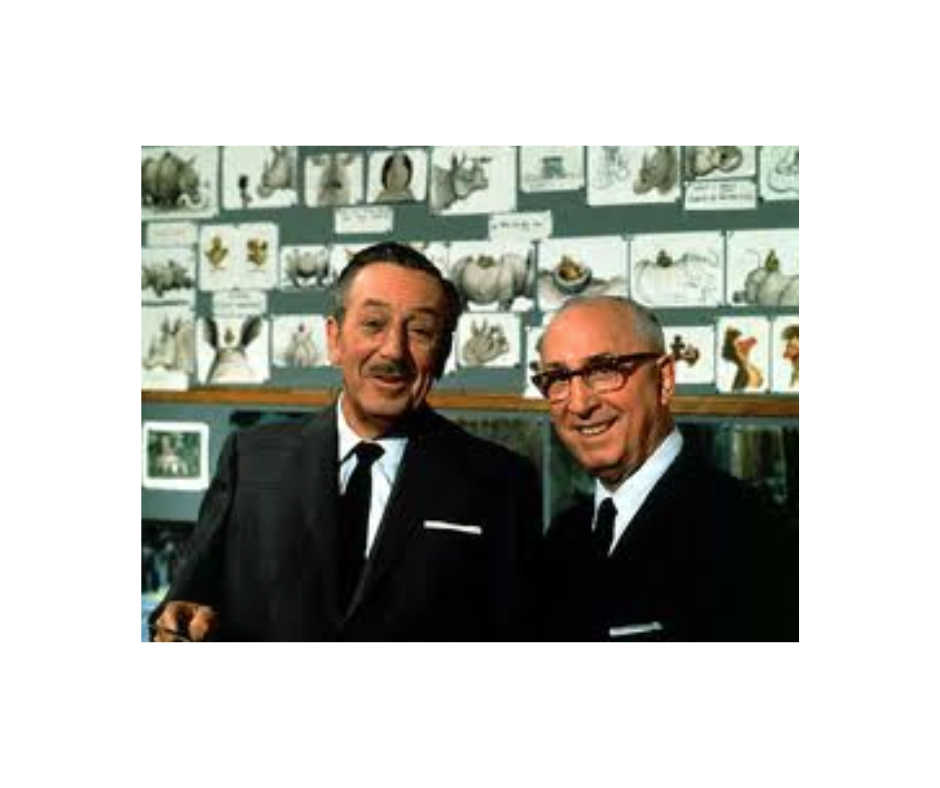
The story of Walt and Roy Disney is a tale of two brothers whose dreams transcended generations. As we venture into the final chapter of our exploration, we pay homage to their enduring legacy—a legacy that continues to enchant, inspire, and unite people from all corners of the globe.
The End of an Era and the Beginning of a New Chapter
The passing of Walt Disney in 1966 marked the end of an era. Walt’s creative genius had been the driving force behind Disney Brothers Studio, and his absence left a void that seemed impossible to fill. However, Roy Disney, ever the steadfast partner, stepped into the spotlight once more to ensure that Walt’s vision would live on.
Roy took on the role of CEO of The Walt Disney Company, guiding it through the completion of projects Walt had initiated, including the opening of Walt Disney World in Florida in October 1971. His dedication to his brother’s dreams never wavered, and his leadership was instrumental in preserving Walt’s legacy.
Roy’s Final Act
In December 1971, just months after Walt Disney World opened its gates in Florida, Roy Disney passed away. His departure marked the end of an era for Disney, but it also signaled the beginning of a new chapter. The magic that Walt and Roy had conjured together continued to shine brightly, enchanting visitors and fans alike.
Walt Disney World, with its vast array of attractions and immersive experiences, became a testament to the enduring spirit of the Disney brothers. It was a place where dreams could come true, where imagination had no limits, and where the legacy of Walt and Roy Disney thrived.
A World of Imagination Lives On
In the grand tapestry of entertainment history, the names Walt and Roy Disney occupy a place of honor and reverence. Their extraordinary partnership leaves a legacy that spans a century of creativity and innovation and has shaped the way we experience and imagine the world. As we conclude the journey through their remarkable story, we celebrate the enduring influence of the Disney brothers.
The Boundless Creativity of Walt Disney
Walt Disney, the visionary, was a relentless dreamer. His imagination knew no limits, and he had the remarkable ability to turn the ordinary into the extraordinary. From the creation of Mickey Mouse to the development of groundbreaking animation techniques, Walt was a true pioneer.
His passion for storytelling, artistry, and innovation not only defined Disney’s early years but also set a standard that continues to drive the company’s creative endeavors. Walt’s words, “It’s kind of fun to do the impossible,” still resonate as a call to dream big and never give up on the pursuit of one’s vision.
The Stewardship of Roy Disney
Roy Disney, the steady hand, was the unsung hero behind the scenes. His financial acumen and unwavering support allowed Walt’s dreams to become a reality. Time and again, Roy ensured that the company had the resources it needed to grow and flourish.
Roy’s commitment to preserving his brother’s vision, even after Walt’s passing, exemplifies the strength of their partnership. His leadership and dedication during challenging times underscore the importance of resilience and the power of believing in a shared dream.
A Century of Dreams Realized
In commemorating the 100th anniversary of the Disney Company, we pay tribute to the Disney brothers’ everlasting influence. Their legacy continues to inspire generations, ignite the flames of creativity, and remind us that, with courage and imagination, all our dreams can come true.
The Disney brothers’ story is a testament to the power of dreams, the magic of storytelling, and the enduring spirit of partnership. It is a legacy that will continue to enchant, inspire, and unite people around the world for generations to come.
From the early days of animation to the creation of theme parks and a global brand that bears their name, their story is a example of the enduring magic of imagination and the belief that, in the words of Walt Disney himself, “All our dreams can come true if we have the courage to pursue them.”
Walt used to say that Disneyland would never be finished, and it never will. I like to think, too, that Walt Disney’s influence will never be finished; that through his creations, future generations will continue to celebrate what he once described as “that precious, ageless something to every human being which makes us play with children’s toys and laugh at silly things and sing in the bathtub and dream.”
Roy Disney
I always go and check with my brother. Always. But I don’t always agree with him. Roy had faith in me. I think that Roy has done a lot of things against his better judgment because he felt that I wanted to do it. Most of our arguments and disagreements I think have been because Roy has felt that he had to protect me.
Walt Disney
References
- Walt Disney: An American Original
- Walt Disney’s Missouri: The Roots of a Creative Genius
- Building A Company: Roy O. Disney and the Creation of an Entertainment Empire
- The Sorcerer’s Brother: How Roy O. Disney Made Walt’s Magic Possible
- Disney twenty three Magazine special commemorative issue
- Disney A to Z: The Official Encyclopedia, Sixth Edition
- and my 475+ volume Disney library!



 27gen.com