Delivering a Great Guest Experience is a Balance of Art and Science

Trying to keep an operation like Disneyland going you have to pour it [money] in there. It’s not just new attractions, but keeping it staffed properly, you know…never letting your personnel get sloppy. Never letting them be unfriendly.

– Walt Disney

Backstory: The Jungle Cruise was one of the most eagerly awaited attractions when Disneyland opened in 1955. Walt Disney had given the ride extensive publicity on pre-opening television shows. Very little else was far enough along for him to show, but the channel was dug, trees were being planted, and Walt was able to talk his viewers through a typical ride. The art of the sight gag was perfected by Disney Imagineer Marc Davis for the Jungle Cruise. Davis had an impeccable sense of timing that allowed his creations to be read instantly – an important consideration in light of the limited time and dialogue available as the audience moves through a scene. His gag sketches for the Jungle Cruise were often translated practically verbatim into the attraction. While the current version and most previous instances have made use of a comedic spiel, filled with intentionally bad puns, the original intent of the ride was to provide a realistic, believable voyage through the world’s jungles.

The visual imagery set the scene, but the dialogue of the boat’s skipper had to complete the adventure.

courtesy disneybymark.com

courtesy disneybymark.com

Understanding the backstory above sets the scene for this real-life event:

Walt Disney got off the Jungle Cruise boat and wasn’t happy. In fact, something was terribly wrong. The problem was with the skipper of the boat Walt had observed. The skipper hadn’t done his job properly, and that simply wasn’t acceptable to Walt. Yes, the skipper ran the boat safely, so that wasn’t the problem. Yes, he had recited his script line for line, so that wasn’t the problem. It was something else: It was in his delivery. He hadn’t acted his part with as much enthusiasm as Walt wanted. He lacked energy and showmanship. – Ron Dominguez, Executive Vice President, Walt Disney Attractions (retired)

Word got back to the director of operations, Dick Nunis, about how upset Disney was. Dominguez, who was area supervisor at the time, recalls “Walt told Dick, ‘I want the skippers to act as if every trip on the Jungle Cruise is their first trip. I want them to act surprised when the hippos suddenly rise up out of the water. The skippers need to be as surprised as the guests.” Nunis and Dominguez and the whole Jungle Cruise team started a marathon training session at the end of the day to ensure that all the cast members knew the script and performed their roles with the appropriate enthusiasm.

Disneyland was (and along with all the other Disney parks) and remains a balance of science and art.

Building and maintaining Disneyland – the attractions, restaurants, shops, and arcades – was just the starting point: the science. Maintaining the feel of Disneyland and cast member morale is the art. Combined, they create a powerful differentiator from the competition: the stores, restaurants, theaters, resorts, and amusement parks vying for the same customers and employees. Walt’s ride on the Jungle Cruise, along with his scathing comment, is a clear example of his focus on the upkeep of the park and the importance of maintaining both the art and science of the show. Cast members and leaders at Disney properties today refer to this process as keeping the property and show fresh.

At the tenth anniversary of Disneyland, Walt’s remarks to the Imagineers whose creativity and genius brought the Jungle Cruise to life set the stage for what continues today – the never-ending pursuit of perfection:

I just want to leave you with this thought, that it’s just been sort of a dress rehearsal and we’re just getting started. So, if any of you start to rest on your laurels, just forget it.

– Walt Disney

Applying Van France’s Four Circumstances to ChurchWorld Guest Experience Teams

Innovate – Support – Educate – Entertain

How would you apply Van France’s Four Circumstances in your organization? How do you apply them to balancing art and science? Which of the Four is strongest? Which is the weakest? Is there an equivalent to an unenthusiastic Jungle Cruise skipper in your organization?

  • If so, why is this tolerated?
  • What needs to be done to change this environment?
  • What are the barriers?
  • Who in your organization can lead the way?

Inspired by and adapted from Disney U by Doug Lipp

Get the book TODAY to learn invaluable lessons for your Guest Experience Teams

Disney U

Book     Kindle

Continue the Disney U experience Tuesday 4/1/14 with Gather Facts and Feelings: Walk the Park for a Fresh Perspective

Disney U is one of the most significant resources related to the Disney organization, leadership, team development, and Guest Experiences available. In honor of the one year anniversary of the release of Disney U, this is a look back at a series from the book that originally ran last year.

Capturing the Hearts and Minds of Your Team is the Foundation for Excellence

A maxim of the movie industry is that it takes a happy crew to produce a happy show.
Van France

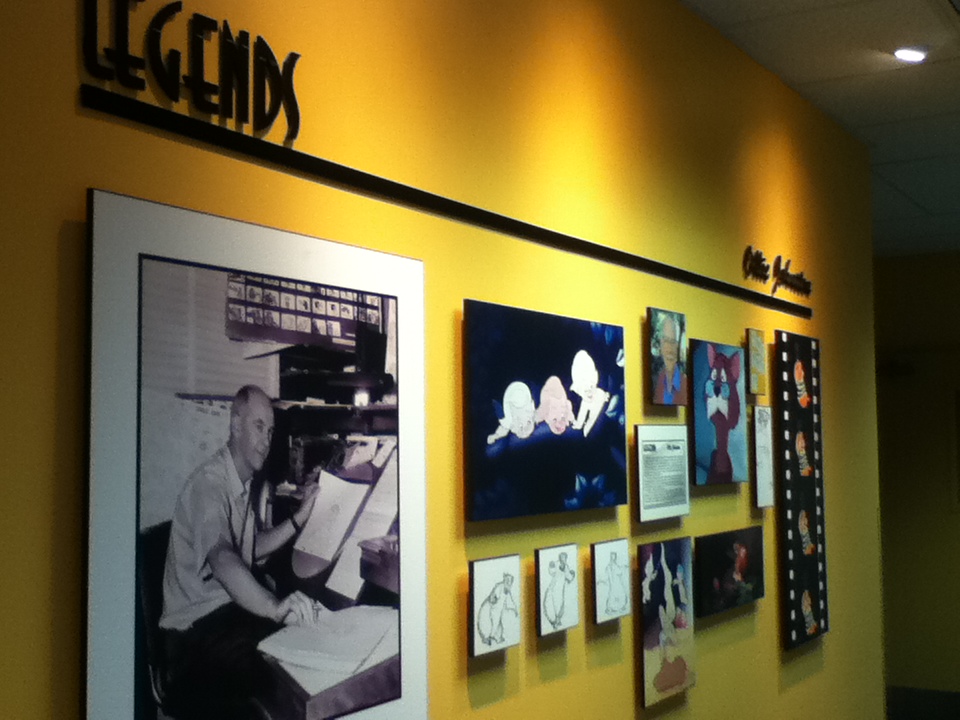
A constant reminder of the Disney organization’s legacy and success are the posters, pictures, and artwork from Academy Award-winning movies and Tony Award-winning Broadway plays lining the walls of the hallways and training rooms.

courtesy of drawntobebad.tumblr.com

courtesy of drawntobebad.tumblr.com

Creating the Happiest Place on Earth is a fine balance of values and things, along with a lot of hard work.

The Disney University has a set of crystal-clear values that are aligned with and fiercely supported by the company leadership.

Disney’s organizational values drive the strategies, which in turn drive Disney’s success.

The Disney University makes certain that every employee is properly introduced to the company and understands the importance of the brand: Disney values, Disney history, and Disney traditions. This context further enriches the specific on-the-job training sessions conducted by the operations team that employees must attend immediately after orientation.

Everyone at Disney knows his or her role in keeping the parks friendly, well maintained, and efficiently operating. This way of business – also known as the Disney Philosophy and the Disney Way – involves a huge investment of time, training, and money that not many others are willing to make.

The Disney Philosophy is not just a nice thing to do, but a must do.

Even the lowest-tech, bare-bones, and budget-challenged training program will get the job done as long as hearts and minds are captured. Training programs reflect organizational values and health.

The content of training programs, the individuals who teach, the team members who attend, and the way the team members are supported outside the classroom reveal much about organizational culture.

The Disney University’s success is due to its uncanny ability to capture the hearts and minds of the thousands of cast members it serves.

You can dream, create, design, and build the most wonderful place in the world but it requires people to make it a reality.
– Walt Disney

It may have all started with a mouse, but Disney has come a long way since then.

Applying Van France’s Four Circumstances to ChurchWorld Guest Experience Teams

Innovate – Support – Educate – Entertain

Capture Hearts and Minds

Can you identify the equivalent of Van France’s Four Circumstances (components) that support highly trained, well-prepared and motivated team members? How do you apply those “circumstances” to capture team members’ hearts and minds?

How Does your Organization Balance Values and Things?
• What is your equivalent of Mickey Mouse, your claim to fame?
• How do you balance these things with values?

Pulling Back the Curtain
• Are your training goals aligned with your organizational goals?
• Are all your different departments engaged in your training efforts?

It’s Everyone’s Job (Starting at the Top)
• Does your Leadership Team demonstrate unwavering support of team member development and training efforts?
• Is there a culture of learning and training?
• Who promotes your organizational culture? Who is your equivalent of Walt Disney or Van France (i.e. role models of excellence for aspiring chief cultural officers)?

Inspired by and adapted from Disney U by Doug Lipp
Get the book TODAY to learn invaluable lessons for your Guest Experience Teams

Disney U
Book     Kindle

Continue the Disney U experience on Thursday 3/27/14 with Delivering a Great Guest Experience is a Balance of Art and Science

Disney U is one of the most significant resources related to the Disney organization, leadership, team development, and Guest Experiences available. In honor of the one year anniversary of the release of Disney U, this is a look back at a series from the book that originally ran last year.
Setting the Stage for Success

The Disney University is a name that carries clout and evokes images of excellence.

How does Disney develop the world’s most engaged, loyal, and Guest-centric employees, year after year?

photo by glassslipperconcierge.com

photo by glassslipperconcierge.com

The simple explanation for the Disney University’s success can be attributed to the levels of support and clarity of purpose found in the Four Circumstances, the organizational values Van France identified as vital to the success of the Disney University.

Training cannot be limited to ‘Here’s what you need to do, now go do it.’ That’s not good enough. Training needs to instill a spirit, a feeling, an emotional connection. Training means creating an environment of thinking and feeling.

– Van France, founder of Disney University

 > Van’s Circumstance #1: Innovation

Backstory: Van France’s background included experience as a trainer in manufacturing and the military. He disliked the idea of a “training department,” but felt that the idea of a university was exciting. Historically, a university was ahead of the times, leading people into exciting adventures.

Van’s focus on being innovative created an ever-evolving learning culture.

> Van’s Circumstance #2: Organizational Support

Backstory: Dick Nunis, Director of Operations at Disneyland when Disney University was founded, had an education degree from USC. Nunis saw the advantages of branching out from a simple orientation program, and backed the concept of Disney University from the start.

Van knew that unless someone from the highest ranks of management backs an idea, it won’t happen. Leadership must be intimately involved and has to set the tone.

> Van’s Circumstance #3: Education

Backstory: Walt Disney established his own unique school for training the Disney animators when traditional art schools couldn’t provide the quality he was looking for. In 1932, Disney began required evening classes, eventually adding ½ day classes as well.

This is the foundation of Disney University: Walt’s long-standing value of providing employees with a tailored, relevant training and educational experience.  Van France built on that foundation, creating a unique school with a different type of artist. These “Disneylanders” would major in the fine art of creating happiness and receive a special curriculum in human relations and Disney philosophy.

> Van’s Circumstance #4: Entertain

Backstory: France had many friends in the Art Department at Disney. As a result, the handbooks and training aids were always creative and interesting, rather than the opposite – dull and academic.

On this point, Van France and Walt Disney were in strong agreement: it was possible – no, required – that Disney University both entertain and educate. Entertainment used as a training strategy is a powerful tool that increases engagement and ensures the retention of new concepts.

Secrets of the Disney University

The message from Van France and the many who worked with him is unwavering. Success is predicated on the following:

  • Having a seat at the leadership table
  • Being a valued part of the organizational culture
  • Moving well beyond providing merely short-lived programs
  • Being incessantly creative and willing to try new approaches to keep the message relevant, fresh, and engaging

The Four Circumstances also greatly influenced Van’s leadership lessons, which are applicable to all organizations and are as relevant today as they were back then.

Applying Van France’s Four Circumstances to ChurchWorld Guest Experience Teams

Innovate – Support – Educate – Entertain

 What Are Your Circumstances?

Identify: How do you set the stage for success to ensure sustained enthusiasm for team development? What values in your organization are nonnegotiable? Identify them.

  • Why are those values in place?
  • What benefits do the values provide your organization and team members?
  • Which values are the strongest? Which are the weakest?

Apply: How are the values of your organization brought to life?

  • How are they communicated to team members? How often? By whom?
  • Does everyone know the values?
  • What happens when these values aren’t upheld? Are there consequences? Exceptions?
  • How can the values be more effectively conveyed throughout your organization?


Inspired by and adapted from Disney U by Doug Lipp

Get the book TODAY to learn invaluable lessons for your Guest Experience Teams

Disney U

Book     Kindle

Continue the Disney U experience on Tuesday 3/25/14 with Capture Hearts and Minds

Disney U is one of the most significant resources related to the Disney organization, leadership, team development, and Guest Experiences available. In honor of the one year anniversary of the release of Disney U, this is a look back at a series from the book that originally ran last year.

Always Remember Your Guest Gets to Make the Call

When it comes to measuring the success of your Guest’s experience, you don’t get to make the call – your Guest does.

No matter how hard you prepare, no matter how well you execute, and no matter how extraordinary the experience, in the end, it’s your Guest who decides if the experience was a success.

What do you do, then?

The best, the only thing you can do, is set the stage for success.

And that is accomplished through people – your Guest Experience Teams.

Are you looking for help in developing friendly, knowledgeable, passionate Guest Teams that deliver a WOW Guest Experience every time?

Maybe it’s time for you to go back to the university – but not just any university…

One year ago today, one of the most significant books related to the Disney organization and Guest Experiences was released. Entitled Disney U, it’s a very powerful and personal story by Doug Lipp, former team leader of the acclaimed Disney University. Lipp mentored under a number of Disney University visionaries, most notably Disney U founder Van France.

In honor of the one year anniversary of the release of Disney U, I will be revisiting a series from the book that originally ran last year.

Disneyland will never be completed. We’ve certainly lived up to that promise. But what about the people who operate it? Are we growing with the show or just getting older? The trouble with people is that we get hardening of the mental arteries, cirrhosis of the enthusiasm, and arthritis of the imagination, along with chronic and sometimes acute allergies to supervision, subordinates, and the whole darned system. 

Is it possible that what we have gained through experience we have lost through habit, and that what we have gained through organization, we have lost in enthusiasm?

Van France, Introduction to his “Proposed Program of the University of Disneyland, 1962-1963

Your Guest Experience Teams are the foundation of the measure of success of your Guest’s experience.

Disney U will give you that foundation.

Next: Begin the Disney U experience with Setting the Stage for Success


Disney U

I’m Going to Need a Bigger Whiteboard

Over the recent holidays I managed to fill up a whiteboard with notes and ideas for a project I’m working on. Now the pace of imagination is picking up, and I need to add another whiteboard to my office.

By the way, when I say whiteboard, I am talking about a 4’ x 8’ whiteboard.

I’ve gone vertical, so now I have a whiteboard surface that is 8’ wide and 8’ tall. After I capture the original content that is now sideways, I will erase it. Borrowing the concept of the library ladder, I can write all the way to the top of both boards.

2014 whiteboards

Let the ideas continue…

The goal is not to speculate on what might happen, but to imagine what you can actually make happen.   – Gary Hamel

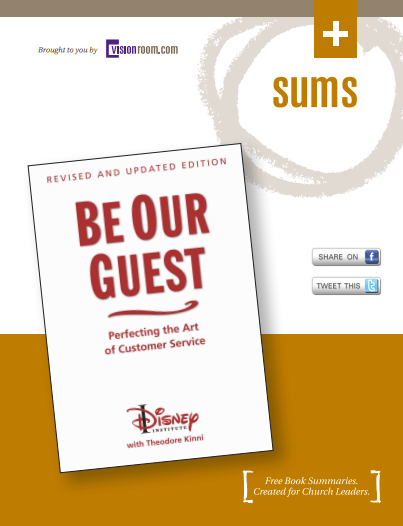
Be Our Guest – How Disney Exceeds Guest Expectations

Exceeding Guests’ expectations is Disney’s service strategy, and paying attention to every detail is the tactic by which it is accomplished.         – Be Our Guest

All week long my focus has been on books and reading:

What better way to close the week than to combine reading with another passion of mine – Guest Experience – with a summary of Disney’s Be Our Guest.

All organizations are driving toward the same goal – serving the people who purchase or use their products and/or services. Whether they are called clients, customers, constituents, or in Disney-speak, Guests – organizations must satisfy them or risk losing them.

Be Our Guest outlines proven Disney best practices and processes for generating customer loyalty and sound financial results. These principles can help your organization focus its vision and align its people and infrastructure into a cohesive strategy that delivers on the promise of exceptional customer satisfaction.

Want to get a glimpse of the Disney magic? You can download a free book summary of Be Our Guest here.

SUMS_BeOurGuest

Reading this Sums will only whet your appetite, so I encourage you to pick up Be Our Guest at your earliest opportunity – it will make a great New Year’s gift to your organizations’ leadership team!


Starbucks: A Significant & Purposeful Business Anchored in Engaging & Compassionate Leadership Practices

It is important to remember that Starbucks started as a single store and that anything is possible if we take the lessons learned from Starbucks as a nudge to think about how we can innovate and expand our products, services, social media tools, technologies, and channels. The leaders at Starbucks also demonstrate what is possible when you foster product passion, teach your people the importance of human connections, seek operational excellence and efficiency, and engage in a never-ending pursuit of relevance.     – Joseph Michelli, Leading the Starbucks Way

The first session of the Fall Term of the 2013 GsD is wrapping up with today’s post. Organizational consultant Joseph Michelli’s latest book Leading the Starbucks Way has been the primary resource for this session.

Michelli uses over two years of research with dozens of leaders in the Starbucks organization to develop five actionable principles that forge emotional connections that drive innovation, grow new business product lines, and foster employee and customer loyalty. These principles are “brief and clear, and put the customers, products, and experiences at the purposeful center of Starbucks.” Here are the five principles:

  1. Savor and elevate
  2. Love to be loved
  3. Reach for common ground
  4. Mobilize the connection
  5. Cherish and challenge your legacy

In order to help you evaluate mastery of the material as well as apply independent thinking skills to your own setting, here are a few summary thoughts based on the five principles above.

  • When frontline team members are passionate about your Guest Experience, they build interest and excitement on the part of your Guests.
  • Evaluate every strategy to ensure that it aligns with your core values, reinforces your purpose, and stimulates continued progress toward your aspirations.
  • Well-designed experiences involve a willingness to see the environment and process from your Guests’ perspective.
  • If your Guests view your organization as being competent and having integrity, you have created the environment for trust. Trust is a gateway emotion on a journey to greater levels of emotional engagement.
  • Listening is not a passive pursuit; listening is synonymous with connecting discovering, understanding, empathizing, and responding.
  • Good leaders provide uplifting moments for those who uplift Guests.
  •  One of the most powerful opportunities for building a relationship occurs after your Guests’ visit, with your team members offering a warm farewell, and inviting Guests into future opportunities to connect.
  • Observe your Guests, then adopt, adapt, and extrapolate new ideas that will connect both locally and globally.
  • Technology should support the mission, not the reverse.
  • Complacency and inertia are challenges to innovation for your organization.
  • There is typically a strong interdependence among a organization’s performance, its values, and the impact it has on the communities it serves.
  • Passionate team members have a magnetically positive impact when it comes to turning Guests into attenders and future team members.

It is important to remember that, at its heart, Starbucks is in the people business serving coffee. Place, Process, and Product are all important, but the foundation and core of Starbucks success is its People.

Take a look at this brief video and you will have a better understanding of what I mean:

SBPartner1

The M.U.G. Award referred to in the video allows partners to recognize co-workers for “Moves of Uncommon Greatness” that help them achieve their goals. It’s a way of saying, “Thanks for helping me out. I couldn’t have done it without you!”

Can your team members say the same thing?

Part 9 of a series in the 2013 GsD Fall Term

Leading the Starbucks Way: Information, Insights, and Analysis Needed to Create a High-Performance Guest-Oriented Organization

inspired by and adapted from Leading The Starbucks Way, by Joseph Michelli

Print

Leaders Honor the Past – But Aren’t Trapped There

In late 2007, Starbucks was not doing well, and the future looked bleak. To address the emerging problems, former CEO Howard Schultz, who had stepped aside almost eight years earlier to become chairman of the board, did something unexpected: he returned as CEO to oversee day-to-day operations.

Schultz came back to Starbucks with a passion and a plan, and over the next two years, Starbucks returned to sustainable, profitable growth.

Here’s what Schultz had to say in looking back to early 2008: 

If not checked, success has a way of covering up small failures, and when many of us at Starbucks became swept up in the company’s success, it had unintended effects. We ignored, or maybe we just failed to notice, shortcomings.

We were so intent upon building more stores fast to meet each quarter’s projected sales growth that, too often, we picked bad locations or didn’t adequately train newly hired baristas. Sometimes we transferred a good store manager to oversee a new store, but filled the old post by promoting a barista before he or she was properly trained. 

courtesy nbcnews.com

courtesy nbcnews.com

As the years passed, enthusiasm morphed into a sense of entitlement, at least from my perspective. Confidence became arrogance and, at some point, confusion as some of our people stepped back and began to scratch their heads, wondering what Starbucks stood for. 

In the early years at Starbucks, I liked to say that a partner’s job at Starbucks was to “deliver on the unexpected” for customers. Now, many partners’ energies seemed to be focused on trying to deliver the expected – mostly for Wall Street. 

Great organizations foster a productive tension between continuity and change. On the one hand, they adhere to the principles that produce success in the first place, yet on the other hand, they continually evolve, modifying their approach with creative improvements and intelligent adaptation.

When organizations fail to distinguish between current practices and the enduring principles of their success, and mistakenly fossilize around their practices, they’ve set themselves up for decline.

By confusing what and why, Starbucks found itself at a dangerous crossroads. Which direction would they go?

In Leading the Starbucks Way, organizational consultant Joseph Michelli uses two years of research with dozens of leaders in the Starbucks organization to develop five actionable principles that forge emotional connections that drive innovation, grow new business product lines, and foster employee and customer loyalty. These principles are “brief and clear, and put the customers, products, and experiences at the purposeful center of Starbucks.”

Leadership Principle #5: Cherish and Challenge Your Legacy

“Cherish and challenge your legacy” is all about encouraging you to define the legacy you wish to leave and evaluate your leadership performance, in part, based on your progress toward that legacy.     – Joseph Michelli, Leading the Starbucks Way

A key element in the success of the Starbucks transformation results from an alignment between leaders who are charged with driving change and those who are responsible for ensuring consistent operations.

Our challenge has been to produce innovations that improve operations, drive growth, enhance the partner and customer experience, and increase profitability. That’s a tall order, but it often occurs in the most subtle ways.     – Craig Russell, Starbucks senior vice president, Global Coffee

Ultimate success in driving innovation hinges on the alignment of those who foster change and those who maintain stability.

ChurchWorld Application

  1. What are the strengths of your organization that have been most instrumental to the success you have achieved?
  2. How might those success drivers inadvertently become traps that could constrain future growth?
  3. How aligned are the “operators” and the “innovators” in your organization? Would you say that both groups share an “operational innovation” mindset?

Any organization, small or large, consumer or otherwise, that is going to embrace the status quo as an operating principle is just going to be dead…The need for constant innovation and pushing forward has never been greater than it is today.    – Howard Schultz, CEO, Starbucks

Leaders must honor the past but not be trapped in it.


Part 8 of a series in the 2013 GsD Fall Term

Leading the Starbucks Way: Information, Insights, and Analysis Needed to Create a High-Performance Guest-Oriented Organization

inspired by and adapted from Leading The Starbucks Way, by Joseph Michelli

Print


Growing Connections Through Technology

I’m writing this post sitting in an airport, waiting on my flight. I drove to the airport from my client’s location, navigating via my smart phone. Along the way, I was updated by the airline with a flight time change. Arriving at the airport, I checked in with a boarding pass on my phone. Waiting for the flight, I checked email, websites, and participated in a conference call – all on my mobile phone.

Mobile technology has changed the world, and that includes ChurchWorld.

courtesy mobilecommercedaily.com

courtesy mobilecommercedaily.com

In Leading the Starbucks Way, organizational consultant Joseph Michelli uses two years of research with dozens of leaders in the Starbucks organization to develop five actionable principles that forge emotional connections that drive innovation, grow new business product lines, and foster employee and customer loyalty. These principles are “brief and clear, and put the customers, products, and experiences at the purposeful center of Starbucks.”

Leadership Principle #4: Mobilize the Connection

This principle looks at how Starbucks strengthens the relationships formed in Starbucks stores and extends them into the home, office, and supermarket experiences of customers. It also examines how Starbucks leaders leverage technology to integrate a multichannel relationship with their customer base.

Great leaders continually seek to leverage the options that are emerging through technology and to position their businesses on social platforms more effectively and strategically.     – Joseph Michelli, Leading the Starbucks Way

ChurchWorld Application

  1. How would you assess your success in forging a digital connection of trust and relevance?
  2. Do you have a multi-pronged and integrated strategy concerning digital and mobile solutions?

Two key elements in the Starbucks social media strategy are authenticity and interesting content. Starbucks is committed to making friends, not offers. They feel that Twitter and Facebook are about connecting – there are more appropriate settings for selling and closing.

ChurchWorld Application

  1. How strategic are your decisions concerning the social media platforms through which your brand will engage?
  2. Have you dedicated resources to commit time to thinking about the platform that fits your organization and guest and member interfaces?

Technology will serve our mission, and we will deploy our strategies to engage our partners and customers wherever they spend their time. We will seek to stay relevant to them and uplift them through human connection.     – Alex Wheeler, vice president, Starbucks Global Digital Marketing

SBFacebookpage

A few of the highlights of this principle:

  • Twitter and Facebook approaches should focus on consistent but not overwhelming levels of communication, delivered for the purpose of connecting.
  • No matter the size of the organization, its leaders should designate someone to be in charge of social media strategy.
  • Technology is powerful when you view it as a way to enhance the human connection rather than seeing it as inevitably leading to impersonalization.
  • Technology should not be provided for “users,” but instead should be seen as a tool for serving and connecting with your “people” and your “Guests.”


Part 7 of a series in the 2013 GsD Fall Term

Leading the Starbucks Way: Information, Insights, and Analysis Needed to Create a High-Performance Guest-Oriented Organization

inspired by and adapted from Leading The Starbucks Way, by Joseph Michelli

Print


Applying the Power of AND: Understanding the Universal Needs of the People You Serve AND Innovating to Meet the Unique Needs of Your Local Environment

There is an ongoing debate among cultural anthropologists between the two conflicting perspectives of universalism and cultural relativism. Universalism suggests that the underlying similarities among all people are greater than their cultural differences, while cultural relativism asserts that cultural differences have a profound effect on people, making it difficult for “outsiders” to fully understand the relevant context of behavior.

As a church leader, you may not consider yourself a cultural anthropologist, but go back and read that last phrase and you will probably change your mind.

To put it a different way, how easy is it for “outsiders” to become connected to your organization?

In Leading the Starbucks Way, organizational consultant Joseph Michelli uses two years of research with dozens of leaders in the Starbucks organization to develop five actionable principles that forge emotional connections that drive innovation, grow new business product lines, and foster employee and customer loyalty. These principles are “brief and clear, and put the customers, products, and experiences at the purposeful center of Starbucks.”

Leadership Principle #3: Reach for Common Ground

Starbucks leaders have made their share of mistakes in attempting to strike a balance between the universal and the cultural. In the process of their setbacks and victories, Starbucks serves as a helpful guide on how to make powerful and respectful connections in new opportunities.     – Joseph Michelli, Leading the Starbucks Way

The goal of leadership is to create the right environment for human connections to occur and to help staff members manage the inevitable issues that surface.

ChurchWorld Application

  1. Are you paying attention to your Guests’ needs to be seen and heard?
  2. Would you go so far as to say your Guests feel understood and known?
  3. Do your team members say thank you, offer a fond farewell, and invite guests into future opportunities to connect?
  4. When it comes to seeing, hearing, and knowing your Guests, what are the strengths and opportunities for your organization?
  5. Are you connecting with each Guest verbally and nonverbally upon first contact?
  6. Do you go from listening to Guests to Guest knowledge on which you can act?

Your community has all kinds of specific challenges. Do you know what they are?

Understanding your local predicament is about having an intimate grasp of the soil where God has called you to minister. It’s about walking firsthand your contours of locality.

Starbucks leadership has deployed a series of key approaches and adjustments to maximize the local relevance of products, services, and physical environment. They include decentralization and revitalization of their corporate structure, developing relationships with local allies, and understanding the physical properties of history of the community they serve.

 Considering local cultural influences is an important layer of our design process to ensure market relevance. For us, it starts with listening and observing the needs of our partners and customers. It’s about communicating up front, talking to customers, listening to partners, and it’s seeing through the lens of that collective experience.     – Thom Breslin, Director, Design, Starbucks UK

ChurchWorld Application

  1. Are you seeking to provide the same thing to everyone, or do you understand the needs of unique needs of different people?
  2. How far can and do you go to achieve local relevance?
  3. Have you completed a “sense of place” in your new markets such that you can blend your brand with local needs?

Leaders understand that maximized choice is essential to today’s consumer, but with choice comes a responsibility to ensure that you can execute the new product offerings at a level commensurate with your existing levels of excellence.

 If you don’t innovate, renovate, and constantly seek relevance – you die.     – Thom Breslin

ChurchWorld Application

  1. What are the product rituals and daily use patterns of prospective customers in new markets?
  2. How are you positioning your product (define or give examples) to capture customers in the context of their lifestyles?
  3. What are you doing to stay alive and thrive in new opportunities?

Starbucks leaders actively seek local relevance and adjust their product and service offerings accordingly. When leaders find the right business partners and make conscious and concerted efforts to give customers what they love, their business achieve lasting connections and maximal success.

What are the unique needs and opportunities where God has placed your church?

Part 6 of a series in the 2013 GsD Fall Term

Leading the Starbucks Way: Information, Insights, and Analysis Needed to Create a High-Performance Guest-Oriented Organization

inspired by and adapted from Leading The Starbucks Way, by Joseph Michelli