Delivering a Great Guest Experience is a Balance of Art and Science

Trying to keep an operation like Disneyland going you have to pour it [money] in there. It’s not just new attractions, but keeping it staffed properly, you know…never letting your personnel get sloppy. Never letting them be unfriendly.

– Walt Disney

Backstory: The Jungle Cruise was one of the most eagerly awaited attractions when Disneyland opened in 1955. Walt Disney had given the ride extensive publicity on pre-opening television shows. Very little else was far enough along for him to show, but the channel was dug, trees were being planted, and Walt was able to talk his viewers through a typical ride. The art of the sight gag was perfected by Disney Imagineer Marc Davis for the Jungle Cruise. Davis had an impeccable sense of timing that allowed his creations to be read instantly – an important consideration in light of the limited time and dialogue available as the audience moves through a scene. His gag sketches for the Jungle Cruise were often translated practically verbatim into the attraction. While the current version and most previous instances have made use of a comedic spiel, filled with intentionally bad puns, the original intent of the ride was to provide a realistic, believable voyage through the world’s jungles.

The visual imagery set the scene, but the dialogue of the boat’s skipper had to complete the adventure.

courtesy disneybymark.com

courtesy disneybymark.com

Understanding the backstory above sets the scene for this real-life event:

Walt Disney got off the Jungle Cruise boat and wasn’t happy. In fact, something was terribly wrong. The problem was with the skipper of the boat Walt had observed. The skipper hadn’t done his job properly, and that simply wasn’t acceptable to Walt. Yes, the skipper ran the boat safely, so that wasn’t the problem. Yes, he had recited his script line for line, so that wasn’t the problem. It was something else: It was in his delivery. He hadn’t acted his part with as much enthusiasm as Walt wanted. He lacked energy and showmanship. – Ron Dominguez, Executive Vice President, Walt Disney Attractions (retired)

Word got back to the director of operations, Dick Nunis, about how upset Disney was. Dominguez, who was area supervisor at the time, recalls “Walt told Dick, ‘I want the skippers to act as if every trip on the Jungle Cruise is their first trip. I want them to act surprised when the hippos suddenly rise up out of the water. The skippers need to be as surprised as the guests.” Nunis and Dominguez and the whole Jungle Cruise team started a marathon training session at the end of the day to ensure that all the cast members knew the script and performed their roles with the appropriate enthusiasm.

Disneyland was (and along with all the other Disney parks) and remains a balance of science and art.

Building and maintaining Disneyland – the attractions, restaurants, shops, and arcades – was just the starting point: the science. Maintaining the feel of Disneyland and cast member morale is the art. Combined, they create a powerful differentiator from the competition: the stores, restaurants, theaters, resorts, and amusement parks vying for the same customers and employees. Walt’s ride on the Jungle Cruise, along with his scathing comment, is a clear example of his focus on the upkeep of the park and the importance of maintaining both the art and science of the show. Cast members and leaders at Disney properties today refer to this process as keeping the property and show fresh.

At the tenth anniversary of Disneyland, Walt’s remarks to the Imagineers whose creativity and genius brought the Jungle Cruise to life set the stage for what continues today – the never-ending pursuit of perfection:

I just want to leave you with this thought, that it’s just been sort of a dress rehearsal and we’re just getting started. So, if any of you start to rest on your laurels, just forget it.

– Walt Disney

Applying Van France’s Four Circumstances to ChurchWorld Guest Experience Teams

Innovate – Support – Educate – Entertain

How would you apply Van France’s Four Circumstances in your organization? How do you apply them to balancing art and science? Which of the Four is strongest? Which is the weakest? Is there an equivalent to an unenthusiastic Jungle Cruise skipper in your organization?

  • If so, why is this tolerated?
  • What needs to be done to change this environment?
  • What are the barriers?
  • Who in your organization can lead the way?

Inspired by and adapted from Disney U by Doug Lipp

Get the book TODAY to learn invaluable lessons for your Guest Experience Teams

Disney U

Book     Kindle

Continue the Disney U experience Tuesday 4/1/14 with Gather Facts and Feelings: Walk the Park for a Fresh Perspective

Disney U is one of the most significant resources related to the Disney organization, leadership, team development, and Guest Experiences available. In honor of the one year anniversary of the release of Disney U, this is a look back at a series from the book that originally ran last year.

Capturing the Hearts and Minds of Your Team is the Foundation for Excellence

A maxim of the movie industry is that it takes a happy crew to produce a happy show.
Van France

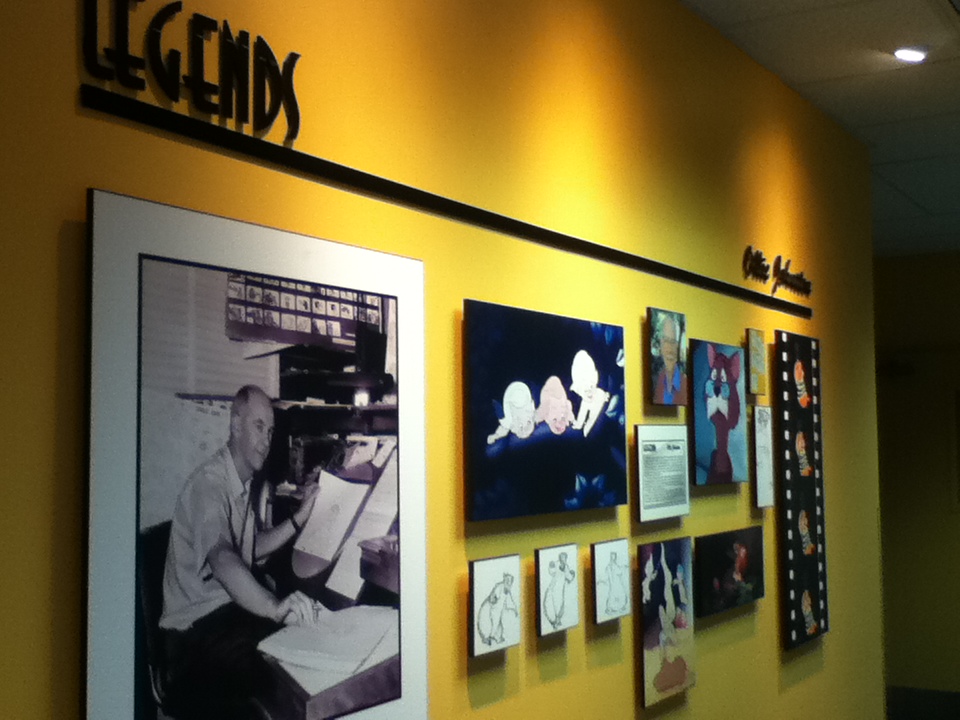
A constant reminder of the Disney organization’s legacy and success are the posters, pictures, and artwork from Academy Award-winning movies and Tony Award-winning Broadway plays lining the walls of the hallways and training rooms.

courtesy of drawntobebad.tumblr.com

courtesy of drawntobebad.tumblr.com

Creating the Happiest Place on Earth is a fine balance of values and things, along with a lot of hard work.

The Disney University has a set of crystal-clear values that are aligned with and fiercely supported by the company leadership.

Disney’s organizational values drive the strategies, which in turn drive Disney’s success.

The Disney University makes certain that every employee is properly introduced to the company and understands the importance of the brand: Disney values, Disney history, and Disney traditions. This context further enriches the specific on-the-job training sessions conducted by the operations team that employees must attend immediately after orientation.

Everyone at Disney knows his or her role in keeping the parks friendly, well maintained, and efficiently operating. This way of business – also known as the Disney Philosophy and the Disney Way – involves a huge investment of time, training, and money that not many others are willing to make.

The Disney Philosophy is not just a nice thing to do, but a must do.

Even the lowest-tech, bare-bones, and budget-challenged training program will get the job done as long as hearts and minds are captured. Training programs reflect organizational values and health.

The content of training programs, the individuals who teach, the team members who attend, and the way the team members are supported outside the classroom reveal much about organizational culture.

The Disney University’s success is due to its uncanny ability to capture the hearts and minds of the thousands of cast members it serves.

You can dream, create, design, and build the most wonderful place in the world but it requires people to make it a reality.
– Walt Disney

It may have all started with a mouse, but Disney has come a long way since then.

Applying Van France’s Four Circumstances to ChurchWorld Guest Experience Teams

Innovate – Support – Educate – Entertain

Capture Hearts and Minds

Can you identify the equivalent of Van France’s Four Circumstances (components) that support highly trained, well-prepared and motivated team members? How do you apply those “circumstances” to capture team members’ hearts and minds?

How Does your Organization Balance Values and Things?
• What is your equivalent of Mickey Mouse, your claim to fame?
• How do you balance these things with values?

Pulling Back the Curtain
• Are your training goals aligned with your organizational goals?
• Are all your different departments engaged in your training efforts?

It’s Everyone’s Job (Starting at the Top)
• Does your Leadership Team demonstrate unwavering support of team member development and training efforts?
• Is there a culture of learning and training?
• Who promotes your organizational culture? Who is your equivalent of Walt Disney or Van France (i.e. role models of excellence for aspiring chief cultural officers)?

Inspired by and adapted from Disney U by Doug Lipp
Get the book TODAY to learn invaluable lessons for your Guest Experience Teams

Disney U
Book     Kindle

Continue the Disney U experience on Thursday 3/27/14 with Delivering a Great Guest Experience is a Balance of Art and Science

Disney U is one of the most significant resources related to the Disney organization, leadership, team development, and Guest Experiences available. In honor of the one year anniversary of the release of Disney U, this is a look back at a series from the book that originally ran last year.
Setting the Stage for Success

The Disney University is a name that carries clout and evokes images of excellence.

How does Disney develop the world’s most engaged, loyal, and Guest-centric employees, year after year?

photo by glassslipperconcierge.com

photo by glassslipperconcierge.com

The simple explanation for the Disney University’s success can be attributed to the levels of support and clarity of purpose found in the Four Circumstances, the organizational values Van France identified as vital to the success of the Disney University.

Training cannot be limited to ‘Here’s what you need to do, now go do it.’ That’s not good enough. Training needs to instill a spirit, a feeling, an emotional connection. Training means creating an environment of thinking and feeling.

– Van France, founder of Disney University

 > Van’s Circumstance #1: Innovation

Backstory: Van France’s background included experience as a trainer in manufacturing and the military. He disliked the idea of a “training department,” but felt that the idea of a university was exciting. Historically, a university was ahead of the times, leading people into exciting adventures.

Van’s focus on being innovative created an ever-evolving learning culture.

> Van’s Circumstance #2: Organizational Support

Backstory: Dick Nunis, Director of Operations at Disneyland when Disney University was founded, had an education degree from USC. Nunis saw the advantages of branching out from a simple orientation program, and backed the concept of Disney University from the start.

Van knew that unless someone from the highest ranks of management backs an idea, it won’t happen. Leadership must be intimately involved and has to set the tone.

> Van’s Circumstance #3: Education

Backstory: Walt Disney established his own unique school for training the Disney animators when traditional art schools couldn’t provide the quality he was looking for. In 1932, Disney began required evening classes, eventually adding ½ day classes as well.

This is the foundation of Disney University: Walt’s long-standing value of providing employees with a tailored, relevant training and educational experience.  Van France built on that foundation, creating a unique school with a different type of artist. These “Disneylanders” would major in the fine art of creating happiness and receive a special curriculum in human relations and Disney philosophy.

> Van’s Circumstance #4: Entertain

Backstory: France had many friends in the Art Department at Disney. As a result, the handbooks and training aids were always creative and interesting, rather than the opposite – dull and academic.

On this point, Van France and Walt Disney were in strong agreement: it was possible – no, required – that Disney University both entertain and educate. Entertainment used as a training strategy is a powerful tool that increases engagement and ensures the retention of new concepts.

Secrets of the Disney University

The message from Van France and the many who worked with him is unwavering. Success is predicated on the following:

  • Having a seat at the leadership table
  • Being a valued part of the organizational culture
  • Moving well beyond providing merely short-lived programs
  • Being incessantly creative and willing to try new approaches to keep the message relevant, fresh, and engaging

The Four Circumstances also greatly influenced Van’s leadership lessons, which are applicable to all organizations and are as relevant today as they were back then.

Applying Van France’s Four Circumstances to ChurchWorld Guest Experience Teams

Innovate – Support – Educate – Entertain

 What Are Your Circumstances?

Identify: How do you set the stage for success to ensure sustained enthusiasm for team development? What values in your organization are nonnegotiable? Identify them.

  • Why are those values in place?
  • What benefits do the values provide your organization and team members?
  • Which values are the strongest? Which are the weakest?

Apply: How are the values of your organization brought to life?

  • How are they communicated to team members? How often? By whom?
  • Does everyone know the values?
  • What happens when these values aren’t upheld? Are there consequences? Exceptions?
  • How can the values be more effectively conveyed throughout your organization?


Inspired by and adapted from Disney U by Doug Lipp

Get the book TODAY to learn invaluable lessons for your Guest Experience Teams

Disney U

Book     Kindle

Continue the Disney U experience on Tuesday 3/25/14 with Capture Hearts and Minds

Disney U is one of the most significant resources related to the Disney organization, leadership, team development, and Guest Experiences available. In honor of the one year anniversary of the release of Disney U, this is a look back at a series from the book that originally ran last year.

Always Remember Your Guest Gets to Make the Call

When it comes to measuring the success of your Guest’s experience, you don’t get to make the call – your Guest does.

No matter how hard you prepare, no matter how well you execute, and no matter how extraordinary the experience, in the end, it’s your Guest who decides if the experience was a success.

What do you do, then?

The best, the only thing you can do, is set the stage for success.

And that is accomplished through people – your Guest Experience Teams.

Are you looking for help in developing friendly, knowledgeable, passionate Guest Teams that deliver a WOW Guest Experience every time?

Maybe it’s time for you to go back to the university – but not just any university…

One year ago today, one of the most significant books related to the Disney organization and Guest Experiences was released. Entitled Disney U, it’s a very powerful and personal story by Doug Lipp, former team leader of the acclaimed Disney University. Lipp mentored under a number of Disney University visionaries, most notably Disney U founder Van France.

In honor of the one year anniversary of the release of Disney U, I will be revisiting a series from the book that originally ran last year.

Disneyland will never be completed. We’ve certainly lived up to that promise. But what about the people who operate it? Are we growing with the show or just getting older? The trouble with people is that we get hardening of the mental arteries, cirrhosis of the enthusiasm, and arthritis of the imagination, along with chronic and sometimes acute allergies to supervision, subordinates, and the whole darned system. 

Is it possible that what we have gained through experience we have lost through habit, and that what we have gained through organization, we have lost in enthusiasm?

Van France, Introduction to his “Proposed Program of the University of Disneyland, 1962-1963

Your Guest Experience Teams are the foundation of the measure of success of your Guest’s experience.

Disney U will give you that foundation.

Next: Begin the Disney U experience with Setting the Stage for Success


Disney U

Is Your Church Practicing the 4 Habits Behind a Successful Guest Experience?

I have no talents. I am only passionately curious.   – Albert Einstein

One of the joys of my work at Auxano is that I get to serve in multiple roles. My primary role of Vision Room Curator allows me to thrive in my giftedness of research and curiosity, as I am constantly looking for content that creates break-thru clarity with church teams to realize their vision.

In addition, our value of Carnivorous Learning is demonstrated daily in my research, reading, and curation of the cloud of information available for church leaders.

But when my primary role of Vision Room Curator intersects with my secondary role of Guest Experience Navigator, it’s a really good day.

Today’s Vision Room post “4 Habits Behind a Successful Guest Experience” is a great example of the mashup of my two roles. The post speaks to the idea that a primary factor in creating a great Guest Experience comes down to having great people on your front line teams and training them well.

7-Guest Experience

The post itself stands alone, but I was also able to connect it to our most recent SUMSa free book summary – on Judgment on the Front Line by Chris DeRose and Noel Tichy. The book is essential reading for any church leader whose role involves leading Guest Services, Hospitality, or First Impressions teams. The SUMS is a good introduction, but I encourage you to pick up the book as well.

What makes it a great day is that I get to live out the ideas and thoughts above in a couple of ways: this weekend, I will be conducting a Guest Perspective Evaluation for one of our client churches. Front line interaction is a key indicator of the success of a church’s Guest services. During my evaluation, I will take over 400 images and 3-7 minutes of video, which will be edited into a 2-hour presentation for the senior leadership team the following Monday.

In that presentation, I don’t really have to say much – if “a picture is worth a thousand words,” the several hundred images and a few minutes of video have to be worth a book!

On any given weekend, Auxano Navigators are at a church somewhere across the country making the same kind of evaluations for our clients. It’s a powerful service that we love providing.

Beyond the occasional onsite consultation, I also get to live out my role mashup by serving on a Guest Services team at my church, Elevation Church’s Lake Norman campus. After 4 years as a Guest Services Coordinator at our Uptown campus, I stepped over to the launch of our newest campus in the Lake Norman area to serve on the parking team. (I serve an additional role on the Leadership Development team for the church as a whole, but that’s a story for another day).

My Team Coordinator Skyler and Team Leader Jason have demonstrated an excellent grasp of the 4 activities mentioned in the Vision Room post above:

  1. In spite of intentional preplanning for the launch, they listened to our team’s suggestions each of the following 3 weekends to improve traffic flow, increase pedestrian safety, and make sure our Guests felt welcome at all times.
  2. As Coordinator, Skyler is working with our Boot Camp Team (Elevation’s volunteer enlistment strategy) to make sure Parking Team members have a great attitude.
  3. Our Parking Team – like all Elevation teams – is crystal clear on our purpose, because it’s the same as our church purpose: To reach people far from God so that they might be raised to life in Christ.
  4. Our Team Leader Jason encourages creativity and autonomy – from Ryan who “hooks and lands” VIP (first-time Guests) cars into special parking to Christiana who leads the Lake Norman Taxi Team (golf carts to get our Volunteers from their designated lot 1/3 mile away from the church) to Lindsay whose smile contest makes us all laugh – and smile even bigger.

If you lead or serve on a Guest Services, Hospitality, First Impressions or similarly functioning team, I hope you will click on the links above to read more.

Want to know more? Leave a comment below or use the contact tab above to get in touch with me.

Remember…

How your front line teams represent themselves – what they do (or don’t do), what they say (or don’t say) – that’s the powerful human “first impression” your Guest is experiencing – and will remember.

I’m Going to Need a Bigger Whiteboard

Over the recent holidays I managed to fill up a whiteboard with notes and ideas for a project I’m working on. Now the pace of imagination is picking up, and I need to add another whiteboard to my office.

By the way, when I say whiteboard, I am talking about a 4’ x 8’ whiteboard.

I’ve gone vertical, so now I have a whiteboard surface that is 8’ wide and 8’ tall. After I capture the original content that is now sideways, I will erase it. Borrowing the concept of the library ladder, I can write all the way to the top of both boards.

2014 whiteboards

Let the ideas continue…

The goal is not to speculate on what might happen, but to imagine what you can actually make happen.   – Gary Hamel

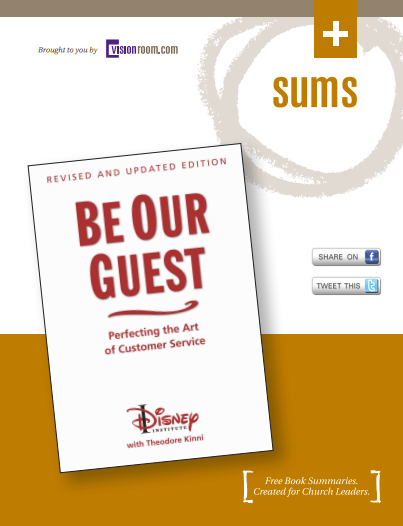
Be Our Guest – How Disney Exceeds Guest Expectations

Exceeding Guests’ expectations is Disney’s service strategy, and paying attention to every detail is the tactic by which it is accomplished.         – Be Our Guest

All week long my focus has been on books and reading:

What better way to close the week than to combine reading with another passion of mine – Guest Experience – with a summary of Disney’s Be Our Guest.

All organizations are driving toward the same goal – serving the people who purchase or use their products and/or services. Whether they are called clients, customers, constituents, or in Disney-speak, Guests – organizations must satisfy them or risk losing them.

Be Our Guest outlines proven Disney best practices and processes for generating customer loyalty and sound financial results. These principles can help your organization focus its vision and align its people and infrastructure into a cohesive strategy that delivers on the promise of exceptional customer satisfaction.

Want to get a glimpse of the Disney magic? You can download a free book summary of Be Our Guest here.

SUMS_BeOurGuest

Reading this Sums will only whet your appetite, so I encourage you to pick up Be Our Guest at your earliest opportunity – it will make a great New Year’s gift to your organizations’ leadership team!


The Guiding Principles of Guest Experience, Part 3: Design

How do you build great Guest Experiences?

Great [Guest] Experiences are consistent, captivating, and memorable by design. To achieve this, organizations must seize and retain their Guests’ complete attention by deliberately planning a defined Guest Experience that stimulates Guest senses and deeply engages them emotionally. – Colin Shaw, Revolutionize Your Customer Experience  (modified)

It is relatively easy for a church to provide a great Guest Experience occasionally.  But in order to create a WOW! Guest Experience, it is vital that you do this every time.

The only way to achieve a consistently great Guest Experience is if the experiences are designed.

To design something means that it is deliberate, not an accident or luck. Deliberate is a strong, proactive word. Stop and ask yourself these questions:

  • Is my Guest Experience process deliberate?
  • Did I deliberately set out to create and deliver a WOW! Guest Experience?
  • Is the outcome of the Guest Experience one that I have proactively designed?

From my observation and research in churches of all sizes across the country, in most cases the Guest Experience is not deliberate – it is something that just happens.

If you will reread Colin Shaw’s definition above, you should be able to answer the following questions about your church’s Guest Experiences.

What is the Guest Experience I am trying to deliver? Do you know? Does your team know? If I came onto your campus and asked your team “What is the Guest Experience you are trying to deliver every weekend?” would they be able to tell me? Would I get a consistent answer? Since emotions account for over half of a Guest Experience, a necessary follow-up questions is:

What are the emotions you are trying to evoke? Without considering what emotions you are trying to evoke, your Guest Experience can’t be deliberate.  According to a study done by an Australian consumer psychologist, emotions range from the top end (people are appreciated, happy, contented, delighted, and valued) to a middle range (people are indifferent or emotionless) to the bottom (people are disappointed, frustrated, neglected, annoyed, or insulted). If you are going to evoke top-level emotions, then a third question comes next:

What senses are you going to use to evoke these emotions and how are your going to do this? Human beings take in information through their 5 senses: sight, sound, taste, touch, and smell. In our daily lives we use our senses to gather data about he world around us. If a Guest Experience is about the senses that are being stimulated, creating a Great Guest Experience means we define how and when to engage these senses and create a deliberate sensory impact and memory.

Creating a Guest Experience that is defined, deliberate, and designed is a key to delivering a WOW! Guest Experience every time.


This post is part of a journey translating Customer Experience learnings in the corporate world to Guest Experience in ChurchWorld. Material in today’s post was inspired by and adapted from Revolutionize Your Customer Experience by Colin Shaw, founder of Beyond Philosophy.

Revolutionize Your Customer Experience

The Guiding Principles of Guest Experiences, Part 2: Purpose

What is the purpose of Guest Experiences?

While researching Customer Experience best practices a few months ago, I came across Beyond Philosophy, a company that helps organizations create deliberate, emotionally engaging customer experiences that drive value, reduce costs, and build competitive advantage. Based in London with an office in Atlanta, Beyond Philosophy specializes in strategic consultancy services, custom research, training and education.

Steven Walden, Senior Head of Research and Consulting, was kind enough to engage me in a conversation via email and phone when I contacted the firm about my work in translating corporate Customer Experiences to ChurchWorld Guest Services.

According to Beyond Philosophy, there are 3 guiding principles of Customer Experience. I looked at the first one yesterday; today it’s time to look at the purpose of Customer Experience:

  1. Create an interaction between an organization and an individual.
  2. Conduct a transaction between an organization and an individual.
  3. Create a desire for future interactions and transactions.
  4. Create value.
  5. Create advocates.

Translation for ChurchWorld

As referenced in yesterday’s post and the Guest Experience definition, the first purpose of Guest Experience is to create an interaction. This means there is communication between the organization and the individual. Ideally, this interaction moves on to conducting a transaction. In the case of ChurchWorld, this is not a transaction involving money, but one of time and potential life change. At the same time, the organization should be looking to create a desire within Guests for future interactions and transactions. Guests will only come back if they perceive value in the interaction. Also, the organization has to see value in this interaction for it to continue to offer it. Finally, the Guest Experience should be such that the individual wants to tell others how great it was. This can happen over a few hours, days, or possibly weeks.

Putting this all together, ideally, this is what you want Guests to say when they are talking with their friends:

It was awesome! The church was easy to find following the directions on their website. Everyone made me feel welcome without being in my face, my children loved their time in their group, and the worship experience was amazing. There’s something special happening there, and I’ve got to go back again! Would you want to come with me?

In a nutshell, this is the purpose of a Guest Experience as translated from the ideas and concepts of Beyond Philosophy’s work in the arena of Customer Experience.

The first Guiding Principle deconstructed Guest Experiences by looking at a definition in detail. The second principle examined the purposes of Guest Experiences. Tomorrow, it’s time to reconstruct your Guest Experience.


This post is part of a journey translating Customer Experience learnings in the corporate world to Guest Experience in ChurchWorld. Material in today’s post was inspired by and adapted from Revolutionize Your Customer Experience by Colin Shaw.

Revolutionize Your Customer Experience

The Guiding Principles of Guest Experiences, Part 1: Definition

What is a Guest Experience?

A Guest Experience is an interaction between an organization and a Guest. It is a blend of an organization’s physical performance, the senses stimulated, and emotions evoked, each intuitively measured against Guest expectations across all memorable moments of contact.    – Beyond Philosophy (modified)

Let’s break this definition down:

Interaction – when an interaction takes place, you are communicating. The interaction can be a split second, as when a Guest is looking at your website or print materials. It can also span a period of weeks, as the Guest continues to explore your organization at increasingly deeper levels. In an interaction, you are trying to attract attention and convey a message, hoping to receive a message in return and process it. The longer you hold your Guest’s attention, the more likely your message will get across.

Guest – an individual who is experiencing your organization for the first time, or at least is still very uncertain about moving any deeper with you. Taken to the next level, a Guest can also be an existing individual who is in your circle of influence, but not committed to become a part of the organization.

Blend – a Guest Experience is not just the physical, or just the emotional, or just the senses; it is all of these blended together.

Physical Performance – factors such as location, facilities, phone calls, digital experiences, quality of services provided, etc. While a business might consider this the end of their experience, for the church this is just the beginning; emotions and senses play a huge part in delivering Guest Experiences

Senses – human beings take in information by or senses: sight, sound, taste, touch, and smell.  In our day-to-day existence we use our senses to gather data about the world around us. Therefore, a Guest Experience is about the senses that are being stimulated. Organizations, to a large extent, can control what senses to stimulate, and this is the goal: to define how and when to deploy senses in your Guest Experience.

Emotions – the combination of physical aspects, the data received by your senses, and your expectations all contribute to evoke emotions.  Forward-thinking organizations understand more than half the Guest Experience is about evoking emotions, and then plan how to evoke specific emotions.

Expectations – when you wrap all the preceding together, your Guest develops expectations. Their perception is reality, framed by the past and hoped for the future. Everything feeds our expectations, which are constantly being updated or confirmed.

Intuitively – these expectations are measured intuitively; they are within your Guest. One person’s shyness is another person’s exuberance.  My definition of “loud” is probably different from yours. We all have personal measurement yardsticks within us.

Across all moments of contact – your guest can (and will ) touch your organization in many ways before they physically present themselves at your place. Through the web, direct mail or other print information, talking to a neighbor, etc. All of these are moments of contact that are Guest Experiences in their own right while together making up a complete Guest Experience.

As you see, there is a great deal behind the simple question, “What is a Guest Experience?”

Understanding more about what a Guest Experience is begs the next question:

Why bother?

I thought you’d never ask…

Tomorrow: Purpose

This post is part of a journey translating Customer Experience learnings in the corporate world to Guest Experience in ChurchWorld. Material in today’s post was inspired by and adapted from Revolutionize Your Customer Experience by Colin Shaw.

Revolutionize Your Customer Experience