The Apple Store: Informed, Empowered, and Motivated to Deliver an Unbeatable Customer Experience

The most important component to the Apple experience is that the staff isn’t focused on selling stuff. It’s focused on building relationships and trying to make people’s lives better.

– Ron Johnson (Apple’s former head of retail)

When the Apple Store celebrated its 10 year anniversary in May 2011, the media attention was on the growth: one billion visitors, 325 stores, $10 billion in sales, and so on. The numbers were and continue to be astonishing: $6 billion in quarterly revenue, $4,700 in sales per square foot, and 22,000 weekly visitors in a typical store. But numbers alone won’t teach you anything. It’s the story behind the numbers where you’ll learn how to turn your business into an experience so thrilling that your customers will become true advocates for your brand.

Today is the sixth session of Summer Term II of the 2013 GsD program with Applied Guestology 201, a review of some of the leading organizations who deliver exemplary Guest Experiences with application to ChurchWorld.

The Apple Experience, by Carmine Gallo, tells the story of Apple’s retail stores. Gallo, a communications coach, speaker, and journalist, is no stranger to Apple. He has written two other books about Apple’s founder and late CEO Steve Jobs: The Presentation Secrets of Steve Jobs and The Innovation Secrets of Steve Jobs. The Apple Experience rounds out the trilogy and will help readers understand what it means to deliver an Apple-like experience in any organization that deals with people.

Apple Genius Bar

The core of Apple’s success and intense customer loyalty isn’t just insanely great products but great people who are informed, empowered, and motivated to deliver an unbeatable customer experience. In The Apple Experience, Gallo breaks down Apple’s customer-centric model to provide an action plan with three distinct areas of focus:

1. Inspire Your Inner Customer with training, support, and communications that create a feedback loop” for improving performance at every level

Apple touches the lives of its customers only after touching its employees.

If your team members are not trained, personable, and passionate about the brand, you’ll have no chance of building an organization that delivers an Apple quality experience. Unfortunately, many organizations rank low on the customer satisfaction index because their teams are discouraged, disillusioned, and uninspired.

Apple intentionally has a “first focus” on its team members by taking these actions:

  • Dream Bigger – an innovative customer experience cannot happen in the absence of a loftier goal, an inspiring vision that attracts evangelists and reveals every ounce of your creativity and potential
  • Hire for Smiles – Apple hires for attitude and not aptitude
  • Cultivate Fearless Employees – team members believe in something and they are willing to “fight” for it
  • Build Trust – integrity and trust are a basic threshold requirement to be a part of the team
  • Foster a Feedback Loop – employees feel comfortable and empowered to make comments and suggestions
  • Develop Multitaskers – true multitasking is accommodating three customers and making them all feel special
  • Empower Your Employees – give your team more autonomy, authority, and flexibility when it comes to serving the customer

2. Serve Your External Customer with irresistible brand stores and dedicated salespeople who embody the APPLE five steps of service – Approach, Prove, Present, Listen, End with a fond farewell

People don’t just want to buy personal computers anymore. They want to know what they can do with them, and we’re going to show people exactly that.

– Steve Jobs

The first secret to offering insanely great customer service is to make sure your team is happy, motivated, and passionate. But passion and energy take you only so far. Step Two is to master the skills required to make your customers feel special.

Follow Apple’s Five Steps of Service

Walk into an Apple Retail Store, and you’ll be greeted with warm, friendly, cheery welcome within seconds of stepping inside. It’s the first of five steps employees are instructed to take to create an enriching and memorable experience for all Apple Store customers. The steps are known to employees by the acronym APPLE:

  • Approach customers with a personalized, warm welcome
  • Probe politely to understand all the customer’s needs
  • Present a solution for the customer to take home today
  • Listen for and resolve any issues or concerns
  • End with a fond farewell and an invitation to return

Apple, like other customer service champs (Disney, Ritz-Carlton, Starbucks, Nordstrom’s, and Zappos) are successful because they make customer feel special. They approach with a warm welcome, they ask questions, they listen, they enhance the conversation, and they give you a feeling of empowerment. If you can make your customers feel appreciated, confident, and admired, they’ll reward you with their loyalty.

3. Set the Stage by ensuring that no element is overlooked in creating an immersive retail environment where customers can see, touch, and learn about your products

Get rid of the crappy stuff and focus on the good stuff.

– Steve Jobs

But even if you have the people and the communication right, poor packaging will actually detract from the experience you worked so hard to achieve. “Poor packaging” in this case can refer to your digital presence (or lack thereof), your branding efforts, and your physical spaces. Here’s how Apple fights against “poor packaging”:

  • Eliminate the clutter – According to Apple designer Jonathan Ive, “We are absolutely consumed by trying to develop a solution that is very simple because as physical beings we understand clarity.” Though he was speaking about product design, this philosophy extends to the design of the Apple Store experience as well. In Apple’s world, anything that detracts from the user’s experience is eliminated.

Apple cares about things other organizations don’t. It cares about elegance, space, and simplicity. It cares about smudges. Most people don’t care about this as much as Apple, and that’s the difference.

  • Pay Attention to Design Details – Steve Jobs once said “Design is the fundamental soul of a human-made creation that ends up expressing itself in successive outer layers of the product or service.” Design matters.
  • Design Multisensory Experiences – When you walk into an Apple Store, the screens on MacBook computers are set at ninety degree angles, forcing you to touch the computer and move the screen to your ideal viewing angle. In One to One workshops, Creatives don’t touch the computer without permission – instead, they guide customers to find the solutions themselves. Everything in the Apple Store is connected for the purpose of encouraging customers to touch, play, and interact with the devices.

Steve Jobs intuitively understood that there’s power in touch.

By giving Apple’s customers the ability to manipulate the devices for themselves and to play, learn, and have fun, customers would be able to immerse themselves in the ownership experience.

Apple store Northlake Mall

Application for ChurchWorld

Here are some lessons learned from Apple’s retail stores that you can put into practice at your church:

  • Know the Why – the vision of your church is the foundation of your team. Make sure it is bold, specific, concise, and consistently communicated.
  • Design the culture – build a team whose attitudes reflect the culture you’re trying to build.
  • Listen first – encourage open dialogue with your team to share ideas.
  • Solicit feedback – everyone on your team must feel comfortable and confident giving and taking feedback.
  • Learn to multitask – address your guest, assess their needs, and assign a team member to your guest
  • Foster empowerment – even small measures of empowerment will lead to huge returns when it comes to serving your guests.
  • Study the five steps of service – review Apple’s five steps of service and evaluate how you can incorporate each step in your organization
  • Review all of your customer’s touchpoints – are you and your team greeting Guests warmly? Are you making them feel as though they have entered a special environment prepared just for them?
  • Communicate consistently – digital, print, and spoken communication needs to be consistent – with your vision and your actions
  • Create culture-focused team descriptions – design a Guest-focused culture starting with your team descriptions
  • Follow the ten-minute rule – provide a memorable WOW in the first 10 minutes of your Guest coming on campus
  • Script your story – make sure that every part of your weekend experience has a story that has been scripted so that everything flows together, is repeatable, and memorable
  • Hold regular meetings to reinforce your vision – providing superior Guest services requires constant reinforcement and modeling
  • Unclutter your space – ten years of research have confirmed that open spaces and uncluttered environments make customers more relaxed and receptive to connecting with your message
  • Open space applies to your digital world – eliminate clutter on your web site; be sparing in the use of content
  • Take a field trip – visit Apple stores and AT&T retails stores for design inspiration
  • Review every detail of your Guest experience – consider it from their point of view: website, marketing materials, physical spaces. Are all the design elements telling the brand story you want to convey?
  • Develop a consistent experience – train yourself and your team to make every experience memorable from one event to the next by minding the details and not slacking off
  • Start from scratch – use a mental exercise by asking the question “How do we want our Guests to feel when they experience our church?” New questions will usually give you new answers.
  • Create multisensory experiences – using all five senses in your environments are at the heart of breathtaking, memorable experiences
  • Bombard your brain with new experiences – Steve Jobs said that “creativity is connecting things.” He meant that creativity comes from seeking out new experiences, which in turn can help develop creative, groundbreaking ideas.

Recommended Reading for this session:

The Apple Experience, Carmine Gallo

(for a complete reading list, see The Essential Guest Experience Library)

Guestology – the art and science of knowing and understanding your guests – is a term originated by Bruce Laval of the Walt Disney Company. The use of GsD is a tongue-in-cheek acknowledgment that organizations that really want to understand and deliver a WOW Guest Experience need to study the best practices and principles in use today, and then adapt them to the context of their own environment.

the GsD (Doctor of Guestology) journey: 2nd Term Summer 2013


Zappos: Where Customer Service Means Action and People

Customers will say “wow” in response to service in two basic circumstances:

  1. When you exceed their expectations
  2. When you make a personal emotional connections with them

Zappos excels at exceeding expectations.

Today is the fifth session of Summer Term II of the 2013 GsD program with Applied Guestology 201, a review of some of the leading organizations who deliver exemplary Guest Experiences with application to ChurchWorld.

Zappos

Zappos. The name has come to stand for a new standard of customer service, and amazing online shopping experience, a great place to work, and one of the most amazing transformational business success stories you will ever hear.

And it all started in 1999 when founder Nick Swinmurn could not find a specific pair of shoes at his local mall. That same year, Swinmurn approached friends Tony Hsieh and Alfred Lin with the idea of selling shoes online. Hsieh was initially skeptical, and almost deleted Swinmurn’s voice mail. Fortunately he didn’t, and his venture capital firm invested $2 million in the idea. Soon Hsieh was having so much fun he bought out the other partners and became CEO of the company.

In the beginning, Zappos struggled, but their intense focus on culture soon paid dividends as the company reached the $1 billion gross sales annual mark in 2008. In 2009 Zappos was acquired by Amazon, but allowed to remain operating as an independent company.

How important is customer service to Hsieh?

We want to be the best in customer service. We are a customer service company that sells shoes.

And that is achieved by exceeding expectations.

The double-edged sword of exceeding customer expectations is that once you deliver extraordinary service, extraordinary can become ordinary and expected. Zappos has created a legion of raving fans that use social media to talk incessantly to their families, friends, colleagues, and neighbors about the service excellence of the brand. That, coupled with significant media attention about service speed at Zappos as well as free upgrades, has produced high expectations for service delivery.

Some leaders might see the ever-escalating nature of customer expectations as an exercise in futility. What’s the point of delivering great service if it will soon just become good service? The immediate answer is that if you don’t keep reaching, your average service will soon become poor.

Truthfully, providing great service is never-ending and, at times, frustrating. Whether you compare yourself to world-class service providers, constantly adjust to customers’ increasing expectations, or simply try to be better than you were the day before, service excellence is a dynamic, challenging, and rewarding journey.

When your service delivery becomes predictable, it is probably time to recalibrate and look for additional ways to exceed customer expectation. Zappos is always looking for avenues to positively surprise customers and meet the “predictability challenge.”

Zappos diligently looks for effective ways to improve its operational excellence, increase personal service delivery, and go beyond the predictability challenge to exceed expectations and surprise customers.

Here is how CEO Tony Hsieh encourages organizations in the area of customer service:

10 Ways to Instill Customer Service Into Your Company

  1. Make customer service a priority for the whole company, not just a department. A customer service attitude needs to come from the top.
  2. Make WOW a verb that is part of your company’s everyday vocabulary.
  3. Empower and trust your customer service reps. Trust that they want to provide great service…because they actually do. Escalations to a supervisor should be rare.
  4. Realize that it’s okay to fire customers who are insatiable or abuse your employees.
  5. Don’t measure call times, don’t force employees to upsell, and don’t use scripts.
  6. Don’t hide your 1-800 number. It’s a message not just to your customers, but to your employees as well.
  7. View each call as an investment in building a customer service brand, not as an expense you’re seeking to minimize.
  8. Have the entire company celebrate great service. Tell stories of WOW experiences to everyone in the company.
  9. Find and hire people who are already passionate about customer service.
  10. Give great service to everyone: customers, employees, and vendors.

Application for ChurchWorld

Could you apply some of the same principles that Zappos does in the Guest Services Team at your church?

  • How much do you know about your Guests’ wants, needs, and desires?
  • What have you done to design a Guest experience that not only responds to Guest needs but also anticipates them?
  • Have you mapped your Guest journey across all contact points?
  • What are the small and epic acts that make up your Guest service story?
  • What do people remember about the way contact with your organization made them feel?
  • What are the stories circulating about your organization’s Guest services practices?
  • How are you capturing and retelling large and small WOWS delivered by your team?

It works for Zappos; it can work at your church, too.

Recommended Reading for this session:

Delivering Happiness, Tony Hsieh

The Zappos Experience, Joseph A. Michelli

(for a complete reading list, see The Essential Guest Experience Library)

Guestology – the art and science of knowing and understanding your guests – is a term originated by Bruce Laval of the Walt Disney Company. The use of GsD is a tongue-in-cheek acknowledgment that organizations that really want to understand and deliver a WOW Guest Experience need to study the best practices and principles in use today, and then adapt them to the context of their own environment.

 the GsD (Doctor of Guestology) journey: 2nd Term Summer 2013

Starbucks: Where the Ordinary Becomes Extraordinary

The lesson of the coffee bean…

Commoditized. No organization wants that word applied to its goods or services. Merely mentioning commoditization sends shivers down the spines of executives and entrepreneurs alike. Differentiation disappears, margins fall through the floor, and customers buy solely on the basis of price.

Consider, however, a true commodity: the coffee bean. Companies that harvest coffee or trade it on the futures market receive (at the time of this writing) a little more than 75 cents per pound, which translates into 1 or 2 cents a cup. When a manufacture roasts, grinds, packages, and sells those beans in a grocery store, turning them into a good, the price to a consumer jumps to between 5 and 25 cents a cup (depending on brand and package size). Brew the ground beans in a run-of-the-mill diner, quick-serve restaurant, and that coffee-making service now sells for 50 cents to a $1.50 per cup.

But wait: serve that same coffee in a cafe such as Starbucks – where the ordering, creation, and consumption of the cup embody a heightened ambience or sense of theatre – and consumers gladly pay $2 to $5 a cup. Businesses that ascend to this fourth level of value establish a distinctive experience that envelops the purchase of coffee, increasing its value by two orders of magnitude over the original commodity.

The preceding paragraphs come from The Experience Economy, Updated Edition, written by Joseph Pine and James Gilmore in 2011. The book (an excellent one, by the way) establishes the concept of the experience, and why it is so important to organizations of all types today – ChurchWorld included.

After reading the first release of The Experience Economy in 2002, I became fascinated at the lesson of the coffee bean and how it could be applied to ChurchWorld. In particular, how Starbucks was creating an experience.

At Starbucks, an ordinary commodity – coffee – is transformed into an EXTRAORDINARY experience.

ChurchWorld can learn a lesson or two – or three or four – from Starbucks.

You can turn an ordinary process – welcoming Guests – into an Extraordinary Experience.

Today is the fourth session of Summer Term II of the 2013 GsD program with Applied Guestology 201, a review of some of the leading organizations who deliver exemplary Guest Experiences with application to ChurchWorld.

To learn more about the secrets to EXTRAORDINARY customer experiences at Starbucks, I began investigating Starbucks (now that’s research I have really gotten into!) to see what ChurchWorld leaders can learn.

My quest for learning the Guest Services secrets of Starbucks began with a hot White Chocolate Mocha on a cold January day several years ago. I settled into a comfortable seat, observing the friendly, welcoming interactions between the baristas behind the counter and their customers as they walked in. I didn’t know I was in for Guest Experience 101.

The single episode that sticks in my mind to this day was the following: While I was observing the barista’s interactions with customers, a young mother and her 3 year-old daughter walked into the store. As they were walking in the door, the barista came out from behind the counter, said hello to the mom, then knelt down in front of the daughter, calling her by name and engaging in a conversation for several minutes – all while other customers continued to come into the store. The store was well-staffed, so no one was held up by the barista’s actions. A seemingly small gesture? Maybe so, but it spoke volumes to me.

Later I asked the barista what prompted her actions. She replied, “It’s in the basic training all partners take when they start working at Starbucks. It’s called the ‘Starbucks Experience,’ and it’s all in this.” With that, she handed me The Green Apron Book.

SB Green Apron BookContaining no less than the core philosophies and values of Starbucks, the Green Apron book is a small package with a large impact. Its simple but powerful structure contains guiding principles of the environments Starbucks baristas hope to create and legendary service they strive to provide.

But it’s really leadership at its best: simple instruction provided in an appealing way, with a spirit that encourages baristas to make each Starbucks Experience uniquely their own.

The central theme is called “The Five Ways of Being”. Here’s a sample:

Be Welcoming – Offer everyone a sense of belonging

  • Provide uplifting experiences that enrich your customers’ daily lives
  • Greet customers when they walk through the door
  • Make eye contact with your customers
  • Start a conversation
  • Get to know your customers by drink or name
  • Anticipate and respond to your customers’ needs
  • Ensure your customer is your number one priority

Be Genuine – Connect, discover, respond

  • Always be aware that customer service is communicated verbally and nonverbally
  • Remember that basic service meets customers’ expectations; legendary service exceeds customers’ expectations
  • Focus on the positive, on what you can do, and not on what you can’t do
  • Be enthusiastic about your customers’ experience, and invite them back for another visit
  • Exceed expectations. Look for ways, both big and small, to let customers know they’re valued
  • Use your good judgment and common sense when making things right

Be Knowledgeable – Love what you do. Share it with others

  • Know what is special about the ways Starbucks selects, roasts, and packages our coffee
  • Familiarize yourself with the different coffee growing regions
  • Learn how to describe coffee – your customers expect you to be a coffee expert
  • It’s okay to not always know the answer. When you don’t know, find out
  • Remember that learning about coffee is an everyday adventure
  • Share your coffee knowledge, passion and excitement with partners and customers through coffee tastings. Enthusiasm is contagious

Be Considerate – Take care of yourself, each other and our environment

  • View the store from a customer’s perspective. How does it look and feel?
  • Take the initiative; when you see something that needs to be done, do it
  • Recognize partners for the effort and quality of work
  • Always be punctual – it affects customers, partners and store business
  • Contribute to a safe, secure and accident-free environment for everyone
  • Communicate to partners with openness and sincerity

Be Involved – In the store, in the company, in the community

  • Ensure our Purpose and Values are reflected in everything you do at work
  • Apply our Guiding Principles to the way you do business
  • Consider ways to become involved in your community
  • Be aware of the tone, spirit and energy of the store
  • Be a model of positivism
  • Enjoy taking on new challenges with your store team

Along with the core purpose, values, and mission statement, the book provides partners with concrete ideas on how to personalize relationships with customers by giving to, connecting with, and elevating customer interactions.

It closes with three simple sentences:

Creating the experience that keeps people coming back relies on the magical combination of three things: our products, our places, and our people.

They come for coffee, stay for the inviting warmth, and return for the very human connection.

Now go ahead, welcome your next new regular!

Don’t you wish you could say the same things about your Guest Experience process?

I was hooked! From that day on, I have been in and out of dozens of Starbucks all across the country, I have read all the books about Starbucks, I have talked with many baristas, and I even have the basic training materials used by Starbucks for new team members.

Starbucks gets it when it comes to Guest Experiences – why shouldn’t the Church?

You don’t need to copy the Green Apron Book for your Guest Experience team, but you do need to understand the principles behind it, develop concepts that will encourage your team to be fully engaged with the people they are welcoming to your campus, and apply them to your context.

How are you serving the guests at your church?

For all the promise of digital media to bring people together, I still believe that the most sincere, lasting powers of human connection come from looking directly into someone else’s eyes, with no screen in between.
Howard Schultz, Starbucks CEO

Love it or hate it (and it seems there’s not much middle ground) Starbucks began a revolution of “the third place,” creating an experience (with a price to match!) that consumers flocked to in droves. Even over the past few years with rising prices, store closings, and increased competition, Starbucks has some great lessons on Guest Experience that the church can learn.

Central to the experience at Starbucks is the barista, the smiling face that greets you when you come into the store and takes your order. I frequent Starbucks across the country (it’s a favorite meeting place for church leaders), and I am amazed at the knowledge, uniformity of service, and general attitude displayed by the baristas.

Starbucks understands the importance of the front-line interaction its baristas have with their customers. They realize that customers can go almost anywhere to get a cup of coffee, but the experience that Starbucks delivers is not commonplace. As a matter of fact, Starbucks will even cut into its efficiency (and the risks that entails) to make sure the experience being delivered is extraordinary.

Application to ChurchWorld

Recently I was speaking with a group of church leaders about the importance of guest services and creating great experiences that leave a WOW! First Impression. During the Q&A time, one leader asked me the following: “All this is well and good, but my church has limited resources – we can’t possibly do all these things at once. Where do we start?”

My quick answer: always default to people.

In the equation Creating Experiences = Product + Process + Place + People, the most important part, the starting place, the foundation which all is built on – it’s people.

Starbucks may have a good product lineup; it may have its service processes down to a science, and it may offer the most comfortable, friendly place to hang out alone or with friends. But neither product nor process nor place have any traction without the people greeting you with a smile, asking what you would like (maybe suggesting something new), and then servicing you with speed, excellence, and always a smile. You have to have a great team in place first before you can begin to deliver excellent experiences.

The same is true in ChurchWorld: the experiences that you are attempting to create, the places and spaces in which they are housed – both literally and figuratively – are important.

 But you don’t get anywhere without the people.

SBbarista1

When an organization helps its team members bring pride, excellence, and playfulness to every aspect of their task, those team members literally have the chance to change the lives of those around them.
People want to be a part of something bigger than themselves. They want to be a part of something that touches their hearts.

Everything matters – but everyone matters more.

Recommended Reading for this session:

The Starbucks Experience, Joseph A. Michelli

Pour Your Heart Into It, Howard Schultz

Onward, Howard Schultz

(for a complete reading list, see The Essential Guest Experience Library)

Guestology – the art and science of knowing and understanding your guests – is a term originated by Bruce Laval of the Walt Disney Company. The use of GsD is a tongue-in-cheek acknowledgment that organizations that really want to understand and deliver a WOW Guest Experience need to study the best practices and principles in use today, and then adapt them to the context of their own environment.

the GsD (Doctor of Guestology) journey: 2nd Term Summer 2013

The Ritz Carlton: Ladies and Gentlemen, Serving Ladies and Gentlemen

Today is the third session of Summer Term II of the 2013 GsD program with Applied Guestology 201, a review of some of the leading organizations who deliver exemplary Guest Experiences with application to ChurchWorld.

When it comes to refined service and exquisite hospitality, one name stands high above the rest: The Ritz-Carlton Hotel Company. With ceaseless attention to every luxurious detail, the company has set the bar for creating memorable customer experiences in world-class settings.

The Ritz Carlton: Ladies and Gentlemen, Serving Ladies and Gentlemen

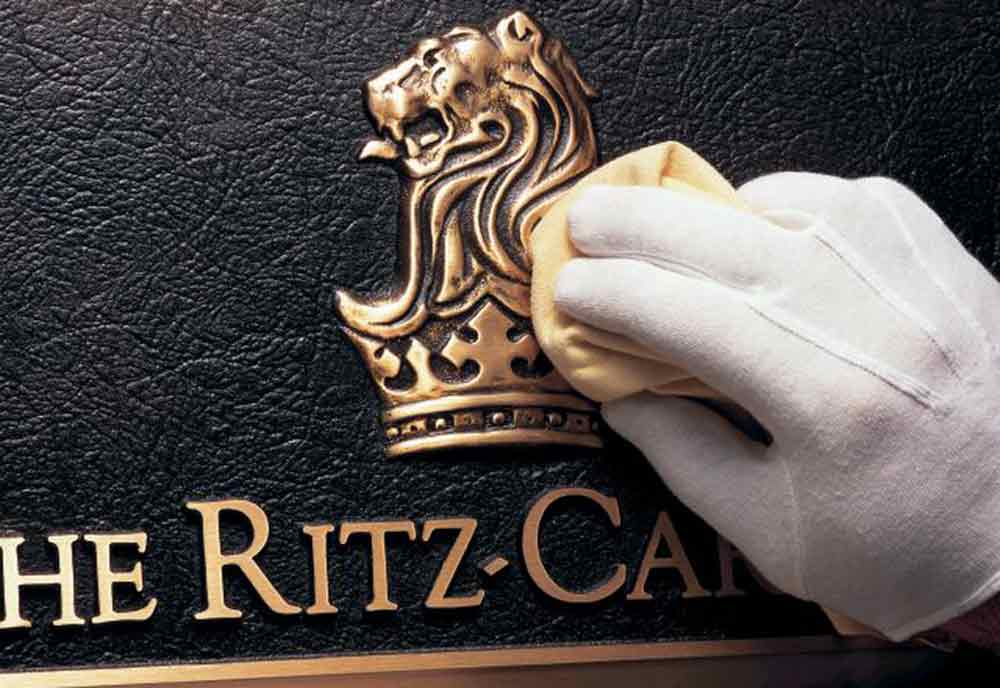
Ritz Carlton logo polished

The brass lion at Ritz Carlton symbolizes excellence. Here’s a quick look at values statements – their Gold Standards – that are used to develop that excellence.

The Credo

  • The Ritz-Carlton is a place where the genuine care and comfort of our guests is our highest mission
  • We pledge to provide the finest personal service and facilities for our guest who will always enjoy a warm, relaxed, yet refined ambiance
  • The Ritz-Carlton experience enlivens the senses, instills well-being, and fulfills even the unexpressed wished and needs of our guests

The Motto

At the Ritz Carlton, “We are Ladies and Gentlemen serving Ladies and Gentlemen.” This motto exemplifies the anticipatory service provided by all staff members.

The Three Steps of Service

  • A warm and sincere greeting, using the guest’s name
  • Anticipation and fulfillment of each guest’s needs
  • A fond farewell, giving a warm goodbye, and using the guest’s name

12 Service Values 

  • I build strong relationships and create Ritz-Carlton guests for life
  • I am always responsive the expressed and unexpressed wishes and needs of our guests
  • I am empowered to create unique, memorable, and personal experiences for our guests
  • I understand my role in achieving the Key Success Factors, embracing community footprints, and creating the Ritz-Carlton mystique
  • I continually seek opportunities to innovate and improve the Ritz-Carlton experience
  • I own and immediately resolve guest problems
  • I create a work environment of teamwork and lateral service so that the needs of our guests and each other are met
  • I have to opportunity to continuously learn and grow
  • I am involved in the planning of the work that affects me
  • I am proud of my professional appearance, language, and behavior
  • I protect the privacy and security of our guests, my fellow employees, and the company’s confidential information and assets
  • I am responsible for uncompromising levels of cleanliness and creating a safe and accident-free environment

As the Ritz Carlton staff lives out these values every day, it’s easy to understand the following comment:

My name is Herve Humler and I am the president of Ritz-Carlton… and I am a very important person. But you are more important than I am. You are the heart and soul of this building.

Herve Humler, addressing hotel staff shortly before the grand opening of Ritz-Carlton’s Hong Kong property

Diana Oreck, the vice president for Ritz Carlton’s executive training facility, was recently interviewed by Ashley Verrill from Customer Service Investigator. The entire interview is a must read, but one question in particular stands out.

Q. Ritz-Carlton puts a lot of emphasis on successful new hire orientation. Why is this important?

A lot of companies have a notion that employee orientation really needs to be a data dump of the company, and statistics and who’s doing what. It really isn’t. You are making a very big decision in your life to either start a job or change a job. So, we feel orientation needs to be a significant emotional experience. And the reason we do that is we know that this creates passionate advocates of our employees. We don’t think that it’s realistic to ask that your customer be a passionate, raving fan if your employees aren’t first.

The results from this passion and culture are very evident.

Ritz-Carlton Hotel has once again ranked highest in the luxury brand segment, for an impressive fourth year in a row by J.D. Power and Associates.

“We could not be prouder of our ladies and gentlemen all over the world for their commitment to excellence every single day,” said Herve Humler, President and CEO for The Ritz-Carlton. He continued,

The results speak for themselves. At a time when hotel guest satisfaction scores have increased to a seven-year high, The Ritz-Carlton plays a commanding role. It is an honor to be recognized by J.D. Power and Associates in their 2013 Hotel Guest Satisfaction Index Study with such outstanding results, leading our competitors in the luxury set, consecutively for the past four years. To achieve the highest ranking in Customer Satisfaction is a commitment of our service promise – to exceed our guest’s needs and expectations.

Application to ChurchWorld

It’s one thing to have a Credo, a Motto, Three Steps of Service, and 12 Service Values like the Ritz-Carlton. Many businesses go through the exercise of defining key values or composing mission statements. They might even display them in their literature, or in imposing art displays on the corporate walls.

How many organizational leaders understand the importance of regular and repetitive presentation of the core aspects of their business – not only to management, but also to their front-line staff?

Enter the “lineup” at Ritz-Carlton.

To truly appreciate the Ritz-Carlton leadership approach to repeated dissemination of their service culture, you would have to drop in on a section of the housekeeping staff as they prepare for their days work – or at the corporate headquarters – or in the kitchen of the fine restaurants that serve the hotel chain – or anywhere, and everywhere, throughout the entire organization.

You would observe that a meeting is taking place at the beginning of each shift. Not just any meeting, though: the leader in each group starts by sharing the Credo and talking about the importance of creating a unique guest experience. Another team member might share a guest story from a Ritz-Carlton hotel in another country. Another team member shares how what they do in their department helps create memorable guest experiences. Then a few quick announcements, special recognitions are given, and another team member closes the meeting with a motivational quote.

All in about 20 minutes.

Every day.

On every shift.

In every Ritz-Carlton hotel and office around the world.

The magic of the lineup involves the following:

  • Repetition of values – the core belief that values need to be discussed daily, and that values can’t be discussed enough
  • Common language – shared phrases across all tasks binds the team together
  • Visual symbols – The Credo is printed on a card that all team members carry at all times
  • Oral traditions – Personal, direct, and face-to-face communication makes a huge impact in a world increasingly dominated by e-mail, text, and voice messages
  • Positive storytelling – stories communicate life in a powerful and memorable way
  • Modeling by leaders – the active, daily presence of the leaders communicates the importance of the time together

What would a “lineup” for each of your teams do to preserve the core values, communicate the importance of everyone on the team, and provide momentum for the day’s activities?

Recommended Reading for this session:

The New Gold Standard, Joseph A. Michelli

(for a complete reading list, see The Essential Guest Experience Library)

Guestology – the art and science of knowing and understanding your guests – is a term originated by Bruce Laval of the Walt Disney Company. The use of GsD is a tongue-in-cheek acknowledgment that organizations that really want to understand and deliver a WOW Guest Experience need to study the best practices and principles in use today, and then adapt them to the context of their own environment.

the GsD (Doctor of Guestology) journey: 2nd Term Summer 2013

For more great information on Guest Experiences, be sure to check out Guest Experience Design.

Nordstrom’s: Where Service is a Culture, Not a Department

Today is the second session of Summer Term II of the 2013 GsD program with Applied Guestology 201, a quick review of some of the leading organizations who deliver exemplary Guest Experiences with application to ChurchWorld.

Nordstrom’s: Where Service is a Culture, Not a Department

Nordstroomhistory

What started as a small shoe store in Seattle in 1901 now numbers over 250 stores and ships to 44 countries from its website. And while pleasing customers in 1901 was much different from pleasing customers in 2013, the cornerstone of the business has always been the people.

To paraphrase CEO Blake Nordstrom,

It’s not about us being ranked on top or ‘best in class.’ It’s about doing what’s best for the customer. In fact, forget ‘best in class,’ the consumer is constantly raising the bar, and since they are setting the standard, we’re continually resetting ours upward.

For some companies, Customer Service is the name of a department where people answer the phone to respond to customer inquiries and complaints. What companies like Nordstrom’s understand is that for them, customer service is embedded in all aspects of their company culture and seen as a vital means of achieving strategic competitive advantage. As such, these companies screen, hire, train and reward based on people who understand and act in accordance with their deeply held customer service philosophy. For these companies, service is more an “act of faith” than a response to a set of carefully crafted company policies or procedures.

Speaking of policies and procedures, you might be interested in these statistics:

  • One five by seven index card.
  • A few dozen words.
  • One paragraph.
  • One rule.

We’re glad to have you with our Company. Our number-one goal is to provide outstanding customer service. Set both your personal and professional goals high. We have great confidence in your ability to achieve them.

Nordstrom Rules: Rule #1: Use your good judgment in all situations. There will be no additional rules.

For many years, the words above were Nordstrom’s Employee Handbook – period. Even though they’ve added more HR type language in the last few years, Rule #1 above still guides their day-to-day, face-to-face operations and connections to customers.

What about your organization?

Do your values so permeate your organization that rules are minimized?

In a recent speech to an industry gathering, Jamie Nordstrom (president of Nordstrom Direct) stressed the importance of company culture.

Keeping the focus on the customer made it easier to set aside silos and work together on creating the best experiences possible, whether they’re in a store or on the web. It’s a valuable lesson in staying true to your company’s mission.

Improving customer service is Nordstrom’s No. 1 goal, always.

“How people define customer service — that is where the battle will continue to be won and lost,” said Nordstrom.

One secret to its team’s success is it’s renowned relative absence of rules and guidebooks. According to Nordstrom, “We don’t like to make decisions about customer service in the board room. We leave it to the people closest to the customers. Our #1 Rule is Use Good Judgment. By not having a lot of rules, you empower associates to innovate and come up with solutions for customers.”

So what is customer service? “Customer service is things that customers value over and above the product they’re buying.”
To keep customers coming, retailers need to do a better job of creating experiences that customers value, evolving with the customer, so that those experiences always match — and exceed — expectations.

“Customers will buy more when they’re happy,” says Nordstrom. And while this has always been the case, the challenge is that “what has made them happy has changed,” says Nordstrom.

In order to keep up with changing customer expectations, Nordstrom’s is continually updating its training processes. Here are three key techniques from Nordstrom Training Manuals, as reported by Bob Mirman of Eliant:

  1. View every customer interaction as a STORY OPPORTUNITY. There are any number of stories about legendary customer service at Nordstrom’s. These “service stories” communicate more about a company’s culture and values than any single act. Train each of your employees that every customer interaction is a story opportunity, the first step in creating a legend about your company. These stories, repeated over and over, eventually become legends and serve to form the image of your company. Your team has the power to create positive legends by serving their customer in an exemplary fashion.
  2. Define service from the customer’s POINT OF VIEW. There is often a wide difference between management’s perception of exemplary performance and the customer’s viewpoint. When evaluating the quality of your product and the performance of your staff, ask your customers! No one is in a better position to judge. This means you need to continuously talk with your customers. Be proactive: ask questions right after a transaction; talk to them again in 10 months.
  3. Exceed your customers’ EXPECTATIONS. If you are meeting your customers’ expectations, you are already ahead of the game. You’ll have satisfied customers who will recommend you to their friends. But you cannot create Legends by simply meeting customers’ expectations. Legends are the result of an event that goes beyond the expected.

It’s training reflected by the above activities that produces an exceptional culture. Check out what Nordstrom spokeswoman Tara Darrow had to say about the culture at Nordstrom:

We do not have a thick manual telling our employees what they can and cannot do to accomplish that goal, we just ask them to follow one rule: Use good judgment in all situations. We hope this philosophy not only empowers employees to provide the highest level of service to our customers but also inspires them and helps build a great workplace.

Customers at the top: Our organizational chart is an inverted pyramid, with our customers at the top and our executive team at the bottom. It reminds us that our customers are the most important and our frontline employees, those who take care of the customer, are the most important people in the company.

What kind of professional would thrive at Nordstrom?

Our people set us apart — that’s why we hire the best talent at every level of our organization. Our best people:

Have persistence and tenacity

Challenge themselves to better serve customers

Have a strong entrepreneurial spirit, treating the business as their own

Create excitement and passion around their business and fashion

Build strong relationships, both with the customer and other team members.

It’s easy to see why Nordstrom’s has been regarded as one of the top organizations delivering exemplary customer service for decades.

Application to ChurchWorld

Last fall, I was privileged to speak at the Worship Facility Expo and Conference on the topic of “Servant Leadership.” I had been doing research on Nordstrom’s customer service principles for several months, and found that those principles – reflected in what you read above – were easy to translate into the volunteer culture of churches. As a Guest Services Coordinator at Elevation Church’s Uptown Campus, it was easy for me to make some applications.

Taking the same 3-tier approach used at Nordstrom’s, here’s a quick outline summary of how the culture of service might be used in your church:

What Team Coordinators Can Do to Create a Culture of Service

  • What’s Your Story?
  • Spreading the Servant’s Culture: Publicly Celebrate Your Heroes; Promote from Within the Team
  • Line Up and Cheer for Your Team: Create an Inviting Place to Serve
  • How Can I Help You? Provide Lots of Choice

What Team Leaders Can Do to Create a Culture of Service

  • #1 Strategy: Recruit the Smile
  • That’s My Job: Empower Teams to Act Like Entrepreneurs
  • Dump the Rules: Tear Down the Barriers to Exceptional Service
  • This is How We Do It: Manage, Mentor, and Maintain Great Teams
  • Recognition, Competition, & Praise: Create a Sustainable, Emotional Bond with Your Team

What Team Members Can Do to Create a Culture of Service

  • Create the Relationship: How Frontline Team Members Create Return Guests
  • The Experience Never Ends: There are 168 Hours in Your Week
  • Play to Win: Encourage Teamwork at Every Level of Your Organization

For a more complete understanding of this approach, take a look at a 3-part series that begins here.

Recommended Reading:

The Nordstrom Way to Customer Service Excellence, 2nd Edition, Robert Spector and Patrick McCarthy

(for a complete reading list, see The Essential Guest Experience Library)

Guestology – the art and science of knowing and understanding your guests – is a term originated by Bruce Laval of the Walt Disney Company. The use of GsD is a tongue-in-cheek acknowledgment that organizations that really want to understand and deliver a WOW Guest Experience need to study the best practices and principles in use today, and then adapt them to the context of their own environment.

 the GsD (Doctor of Guestology) journey: 2nd Term Summer 2013


For more great information related to Guest Experiences, be sure to check out Guest Experience Design

Walt Disney – the Father of Guestology

Walt Disney was the originator of the practices that came to be called Guestology. The Disney organization remains the world’s foremost practitioner of the Art & Science of serving their Guests.

Because of that, I’m starting Summer Term II of the 2013 GsD program with Applied Guestology 201, a quick review of some of the leading organizations who deliver exemplary Guest Experiences with application to ChurchWorld. We begin with Walt Disney and move from there to several well-known organizations, wrapping this course up by returning back to the Magic Kingdom.

Walt Disney – the Father of Guestology

courtesy 9hdw.com

courtesy 9hdw.com

In order to understand the magic of Disney’s Guestology, you need to know a little about Walt Disney, and why he cared so much about customer service. When he threw his energies into the creation of Disneyland in the early 1950s, he was totally concentrated on the guest experience. The very idea for Disneyland was born in Saturday trips to amusement parks that Walt Disney made with his two daughters. In those days, amusement parks were disreputable, dirty, and often in poor condition. While watching and waiting on his daughters to finish their rides, he began to watch the other customers and how they reacted to the parks.

A single question drove Disney: How could this experience be improved for the entire family?

Walt’s answer was to create a new kind of amusement park, a “theme” park with an intense focus on the guest experience. With his successful background in animation and movies, and with a studio of brilliant, creative minds to work with, Disney created a “living show.”

With a little bit of the same magic, your organization can do the same.

Be Our Guest” has been the invitation to Disney visitors long before the song from Beauty and the Beast became a box office hit. It underscores an important element in the Disney vocabulary, that customers are not referred to as such, but rather as Guests. In the Disney nomenclature, the word “Guest” is capitalized and treated as a formal noun.

What’s the difference between treating someone like a customer, and treating someone like a Guest?

The obvious analogy is that we do things differently when we bring Guests into our home. We clean up the house. We dress up. We prepare something special to eat. We host them. We take care of their real needs.

Disney expects Guests

This principle has to be the starting point, the foundation on which all else is built. Everything – and I mean everything – is done with the Guest in mind. At Walt Disney World, exceeding Guest expectations is the standard call to duty for all cast members, both those “onstage” and “backstage”.

Quality Service is Disney’s behind-the-scenes name for its customer service processes, and is simply defined as follows:

Quality Service means exceeding your Guests’ expectations by paying attention to every detail of the delivery of your products and services.

That’s it. The magic of Disney’s customer service is paying attention to details. But as you might expect, the simplicity of those few words is lived out daily by tens of thousands of Cast Members performing and interacting with hundreds of thousands of Guests, all delivered with a magical smile.

The WOW! Factor of Exceeding Guest Expectations

  • Superlative face-to-face service
  • Paying close attention to every aspect of the Guest Experience
  • Analyzing that experience from the Guest’s perspective
  • Understanding the needs and wants of the Guest
  • Committing every element of the organization – from the design of the infrastructure to the interaction between Guest and Cast – to the creation of an exceptional experience

Be Our Guest, The Disney Institute

Exceeding Guests’ expectations is Disney’s service strategy, and paying attention to every detail is the tactic by which it is accomplished.

That’s how Disney does customer service. A common purpose generates quality standards. The standards are defined and delivered using three basic systems that every organization shares: its people, its physical assets, and its processes. All three are integrated and aligned to produce the Disney brand of magic.

At Walt Disney World, they expect Guests – and plan to exceed their Guests’ expectations every time. What about you?

Are you expecting Guests?

Application to ChurchWorld

When it comes to ChurchWorld, more often than not we have visitors.

It may be a little thing to you, just a word, but I think it’s actually a powerful first impression that needs to change.

Do you have Visitor parking? Visitor packets? A Visitor’s Center? Do you welcome your visitors during the worship experience? And on and on…

The first step in creating a WOW! Guest experience is to remove the word visitor from your vocabulary, never to be used again.

It’s a little thing to be sure. But it’s a mindset change that will really impact how you create the rest of the experience at your church.

You are expecting Guests this weekend.

Guests come to your place, looking for a warm greeting, a smiling face, and an experience designed to make them feel like, well, Guests. Nothing phony, manipulative, or in-your-face; just welcome them as guests with the most sincere, energizing, and loving experiences you can.

Start with this simple change that conveys a powerful image, one that will be reflected through your church – and you have taken a HUGE step in understanding what Guestology is all about.

Recommended Reading:

(For a complete reading list, see The Essential Guest Experience Library)

Guestology – the art and science of knowing and understanding your guests – is a term originated by Bruce Laval of the Walt Disney Company. The use of GsD is a tongue-in-cheek acknowledgment that organizations that really want to understand and deliver a WOW Guest Experience need to study the best practices and principles in use today, and then adapt them to the context of their own environment.

the GsD (Doctor of Guestology) journey: 2013 Summer Term II


Sign Language

A wayfinding system links different people together, even if they do not share a common language or destination, by guiding all of them through the same spaces with a single system of communication. The unifying language of a wayfinding system creates a public narrative of how people witness, read, and experience a space. Each sign in a system, each separate voice, serves a particular function and displays a specific kind of content called a message, which might include nonverbal graphic symbols, images, or words.

– David Gibson, The Wayfinding Handbook

Most wayfinding systems can be broken down into several categories of signs: identification, directional, orientation, and regulatory.

EXTERIOR

Identification – the building blocks of wayfinding

  • Site monument identification
  • Site entry identification
  • Building mounted identification
  • Entrance identification
  • Parking area identification
  • Accessible parking identification

Directional – the circulatory system of wayfinding

  • Off-site trailblazers
  • On-site vehicular directional signs
  • Pedestrian directional signs

Regulatory – describes the do’s and don’ts of a place

  • Parking regulations
  • Entrance information

INTERIOR

Identification

  • Store identification
  • Area/level identification
  • Public amenity identification
  • Service and maintenance identification
  • Office identification
  • Elevator and stair identification

Directional

  • Directional signs

Orientation – provides an overview of surroundings

  • Building directory
  • Elevator/floor directory

Regulatory

  • Fire egress maps
  • Life safety signs

The sign narrative is the voice of the building and its owner, revealing the pathways and destinations of the building or space, the rules that govern how to use it, and essential information about activities happening within. It is the job of the wayfinding designer to weave these voices together into a single eloquent statement as people navigate the space.

Wayfinding systems serve living environments where functions for areas change, spaces are renovated, and new facilities are constructed. Wayfinding systems must be flexible and adapt to the evolution of a place.

Information from this series of post this week has come from The Wayfinding Handbook by David Gibson. A concise and engaging work, it is an excellent resource for leaders wanting to apply the art and science of wayfinding to their organization. The extensive illustrations, using real-life examples, provide a visual analysis of the fundamentals that lead to great wayfinding design.

You may not think of yourself as a designer; you would be wrong.

Wayfinding design is an intuitive process we use all the time, one that helps us navigate the places and spaces we encounter every day. Leaders may not design a wayfinding system, but it is a process that they need to have a firm grasp on.


part of the 2013 GsD (Doctor of Guestology) journey

Where is your Red X?

In this case, literally.

The one that says “You Are Here.”

red x

Exciting the subway in the middle of a city or stepping off the elevator onto a strange floor is momentarily disorienting: you scan the space to figure out where you are and find clues that will lead you where you want to go. This scanning is similar to searching for an article in a magazine or perusing the home page of a website to figure out how it is organized and how to read a specific section.

All these reflex actions are about wayfinding.

 – Christopher Pullman, design consultant and senior critic at Yale University School of Art

Wayfinding pays a very important part in ChurchWorld – from the design of your website to the design of your graphic pieces to the design of your building (notice the common word – design.) If you are a ChurchWorld leader and don’t think you are or need to be a designer, I invite you to join me in a conversation that started here.

People will always need to know where they are, how to reach their destination, what is happening there, and how to exit.

Yesterday, I enjoyed spending some time with Zach and Benjamin from The Avenue Church in Waxahachie, TX – they were visiting Elevation Church’s Uptown campus. Zach is the Associate Connections Minister there, and he and I had some great conversations about Guest Experiences, specifically wayfinding.

Increasingly, my discussions with church leaders about Guest Experiences include the issue of wayfinding – most of the time in a physical sense of the spaces they are using, renovating, or preparing to build. Sometimes, it’s just a dreaming conversation, but even that is a great place to start!

For the next few days, I want to dive into the topic of wayfinding in ChurchWorld – I hope you will enjoy the journey!


part of the 2013 GsD (Doctor of Guestology) journey

Walt Disney’s Vision for Guest Experience

Cinderella’s Castle is beautiful from every angle…

Cinderella Castle2013

…but the most interesting view is underneath.

Deep underneath Cinderella’s castle in the middle of the Magic Kingdom is a utility corridor running from Main Street Square to Fantasyland. There is also a circular corridor running around the circumference of the Magic Kingdom. Though it gives the appearance of a tunnel, and many Cast Members call it a tunnel, these long passageways are really corridors, built on ground level and then covered over with 5 million square yards of dirt and sand dredged to create all the beautiful water features you see around the park. The visible park you see is really the second story of the park – but that’s really another story.

I recently spent 2 days in Walt Disney World, one of them being part of a Backstage Magic tour – behind the scenes, if you will, of all four theme parks in Walt Disney World. I will be recounting many stories from my time there in the days ahead, but there is no better way to start them than this:

Imagine, if you will, a long central corridor where almost all Magic Kingdom Cast Members pass through in their work at the park. To one side of that corridor, beginning a long wall of photos, sayings, and displays of the history of Walt Disney World, is a simple poster with a picture of Walt Disney and these words:

Walt Disney’s vision for a great guest experience:

Safety, Courtesy, Show, Efficiency

In a line past that poster, you will see 4 more large posters, with a smiling Cast Member’s picture on each, with these words below:

  • I practice safe behaviors in everything I do
  • I am courteous and respectful to Guests of all ages
  • I stay in character and perform my role in every story
  • I use my time and resources wisely

Known by various terms but most often called the 4 Keys, they were literally Walt Disney’s vision for Guest Experiences – first at Disneyland when it opened in 1955, then at the Magic Kingdom in 1971, and at every other theme park, cruise ship, and Disney organization since then.

These 4 keys are simple service standards, and they can be powerful tools in any organization – but especially ChurchWorld.

There is power in establishing a framework of values from which everyone in your organization operates. Within that framework, you can empower team members in a way that gives them a sense of ownership and purpose. You create a consistent image across the entire organization.

Disney’s standards have stood the test of time for over 50 years – shouldn’t you consider creating standards for your organization that will stand the test of time as well?

Today begins a 14-part series on Guest Experience applications from my recent 2-day immersion at Disney World. It’s time for Disney Lab!


2013 GsD (Doctor of Guestology) journey

What Retailers Don’t Know – But Churches Can Learn

For the final post on my return review of Paco Underhill’s classic book Why We Buy, it’s time to dive into the brains of retailers and take a look at what they don’t know – and what churches can learn from them.

  • How many of the people who walk into stores buy something? The quick, and wrong, answer is almost 100%. The conversion, or closure rate – the percentage of shoppers who become buyers – is almost always thought to be much higher than it actually is. Conversion rates measure what you make of what you have – it shows how well (or how poorly) the entire enterprise is functioning where it counts the most: in the store. It’s all about what happens within the four walls of the store.

ChurchWorld Lesson: How effective are you with what you’ve got in terms of ministry? Marketing, advertising, promotion and a great location can help bring guests to your church – but it’s the job of your leadership team, the ministries you’re attempting, and the entire church body to make sure the Guests not only leave fulfilled, but return. Maybe as second timers, maybe eventually as participants and then members. The lesson: How are your assimilation systems working? Sure, you’ve got a great front door, and maybe even a few effective side doors – but how big is your back door?

  • How long does a shopper spend in the store? Assuming that he or she is shopping and not standing in line, this may be perhaps the single most important factor in determining how much she or he will buy. Studies have shown a direct relationship between the amount of time in a store and the resulting sales volume; usually a buyer spends almost 50% more time than a non-buyer.

ChurchWorld Lesson: There are certainly differences of opinion in the church world as to how long you want Guests and members to linger before or after worship services. Churches with multiple services often need to have a smooth transition from one service to another. This is an area where design or renovation can play a critical role: make adequate space for a foyer, café, other gathering place so that those who choose to do so can fellowship with others. Another opportunity for evaluation in this area might be the pace of services – does the timing/scheduling need to be altered?

  • What is the store’s interception rate? Interception rate is the percentage of customers who have some contact with an employee. This is an especially important measurement in a time when stores use fewer full-time employees and more minimum-wage employees. Research has established a direct relationship: the more shopper-employee contacts that take place, the greater the average sale. Talking with an employee has a way of drawing a customer in closer.’

ChurchWorld Lesson: This is a critical factor in making Guests feel welcome to your church. Well-trained and observant Guest Experience teams should make all people feel welcome to your church by extending a verbal welcome and offering a handshake or other appropriate physical touch. Guests especially need to have a verbal interaction with someone beyond a cursory “Good Morning”. The key is to engage the Guest as you are attending to their needs.

  • How long does the store make customer’s wait? Studies have shown this is the single most important factor in customer satisfaction. Few retailers realize that when shoppers are made to wait in line (or anywhere else) their impression of overall service plunges.

ChurchWorld Lesson: While church participants aren’t likely to leave like a shopper might in a long checkout line, it can happen. Most often you will find this expressed in the parking lot – in church consultations observing traffic patterns I have seen cars pull in, find no parking spots, and pull right back out onto the street. Examine all your areas where waiting might occur – can you reduce, or eliminate, wait time?

  • Who are the shoppers in the store? Take the retail store who stocks pet treats on upper shelves, unaware that the main buyers of this product were senior adults and young children. Or the family style restaurant who had too many tables for two and not enough for four or more, which caused headaches during busy times. Or the Florida-based drugstore chain’s Minneapolis branch, where a full assortment of suntan lotions was on prominent display – in October.

ChurchWorld Lesson: This is probably one of the most important areas church leaders can discover – and one that many church leaders get wrong over half of the time. Who is in your target area of ministry? Who is coming to your church? Who is not coming to your church? Grouped under the broad area of demographics, this type of information is invaluable to help you understand who your neighbors are and how they may be changing. Once you understand the who, it is much easier to begin to answer the how, where, and why questions of ministry.

As I close this brief foray into the science of shopping, I need to remind you of a couple of things: First, there is a whole lot more about this area that I think could be very beneficial to churches who want to make sure they are doing all they can to attract and retain Guests who come to their churches. My focus has been on the front end of that – hospitality – and there is a lot more. Interested? Contact me for a conversation.

Also, there are probably many who would say all this focus on the church guest and member in a consumer mindset is wrong. Certainly, everyone is entitled to their opinion. Mine is that we live in a very consumer-driven, consumer-oriented society. The competition for churches seeking to reach new people is not other churches – it’s any place and any experience that these people will compare your church to.

Shouldn’t we be doing the very best we can to reach them?

Read Part 1 of this series here.

Read Part 2 of this series here.