Of Balloons and Men…

A week ago I was at the Balloon Fiesta in Albuquerque, New Mexico. It was pretty amazing to be at the launch site and see over 200 balloons lift off in a short time. Added to that, another 100+ balloons launched away from the site and “flew” in. This was my ground view of one balloon.

While at the Balloon Fiesta, I heard about the planned “space jump” attempt that week. Weather didn’t permit it then, but it did happen.

Last Sunday, 201 miles southeast of Albuquerque and 23 miles above Roswell, New Mexico, this was the picture:

Same principle, different applications

What heights will you reach today?

It all depends on your perspective…

The Future is Always Now

Leaders create their own future.

That’s not an original thought, I just can’t recall who first said it.

I’m learning that families create their own future, too. One slice of that took place yesterday when my wife and I took our oldest son, his partner, their three-year old son, and my 18-year old son to Discovery Place KIDS in Huntersville for an afternoon’s fun – and learning. We thought that a ratio of five adults to one three-year old would be about right.

DPK is an interactive museum designed specifically for younger children. My grandson was won over the minute he walked in the door and saw a real fire truck just waiting for him to climb on board. From there it was a trip through the drive-through at the bank, the grocery store, a farm (tractor included), a rock-climbing wall, restaurant, brick factory, race car, auto shop, and on and on…

Two hours later but still going strong, he reluctantly left with Nina and GrandBob (with the promise we could come back). After our meal, it was back to full speed again, running and playing in our yard, then running down to the end of our cul-de-sac, racing his dad and kicking a ball. He got to meet a few neighbors, and a dog named Sam.

Back inside for cupcakes and ice cream (celebrating his dad’s 30th birthday) then he was ready to go again. By that time the long day was winding down, and they had a two-hour drive back home.

Reflecting on the day’s events, I thought about Jack, his mom and dad, his uncle, and at my wife and me. We weren’t looking at the future…

…the future is now.

The same thing is true in ChurchWorld. We aren’t preparing future leaders – they are among us now – and they are all ages: 18 years, 30 years, and yes, even three-year olds. My family outing at DPK was a perfect illustration of the tremendous opportunity we have at this moment for the church.

James Emery White, pastor of Mecklenburg Community Church, has a great post here. It speaks of the disconnect between 30 somethings in the church and their parents. That’s me, and that makes it personal.

The title of this blog – 27gen – comes from the 27 years separating the four generations of Adams males: my father, me, my son, and his son. That’s the lens through which I am constantly viewing the world, and one that I hope you enjoy dropping in on.

Today’s assignment: Take a look around you right now. Who is younger than you, and what can you learn from them? Who is older than you, and what can you learn from them? Now flip it: what can you do to help someone younger, and older, learn from you today?

The future is NOW!

(From a prior post on Mentoring while I’m on vacation)

Washington DC Walking Tour

I was in Washington DC for the “Greening America’s Congregations” Conference on September 13. The conference was held at the Executive Office Building next to the White House, and concluded with a reception at the National Cathedral that evening. As I am a history buff, I took advantage of being in DC by staying an extra day and taking a quick one-day walking tour of some of my favorite memorials and museums.

Here are just a few of my favorite photos:

The US Capitol


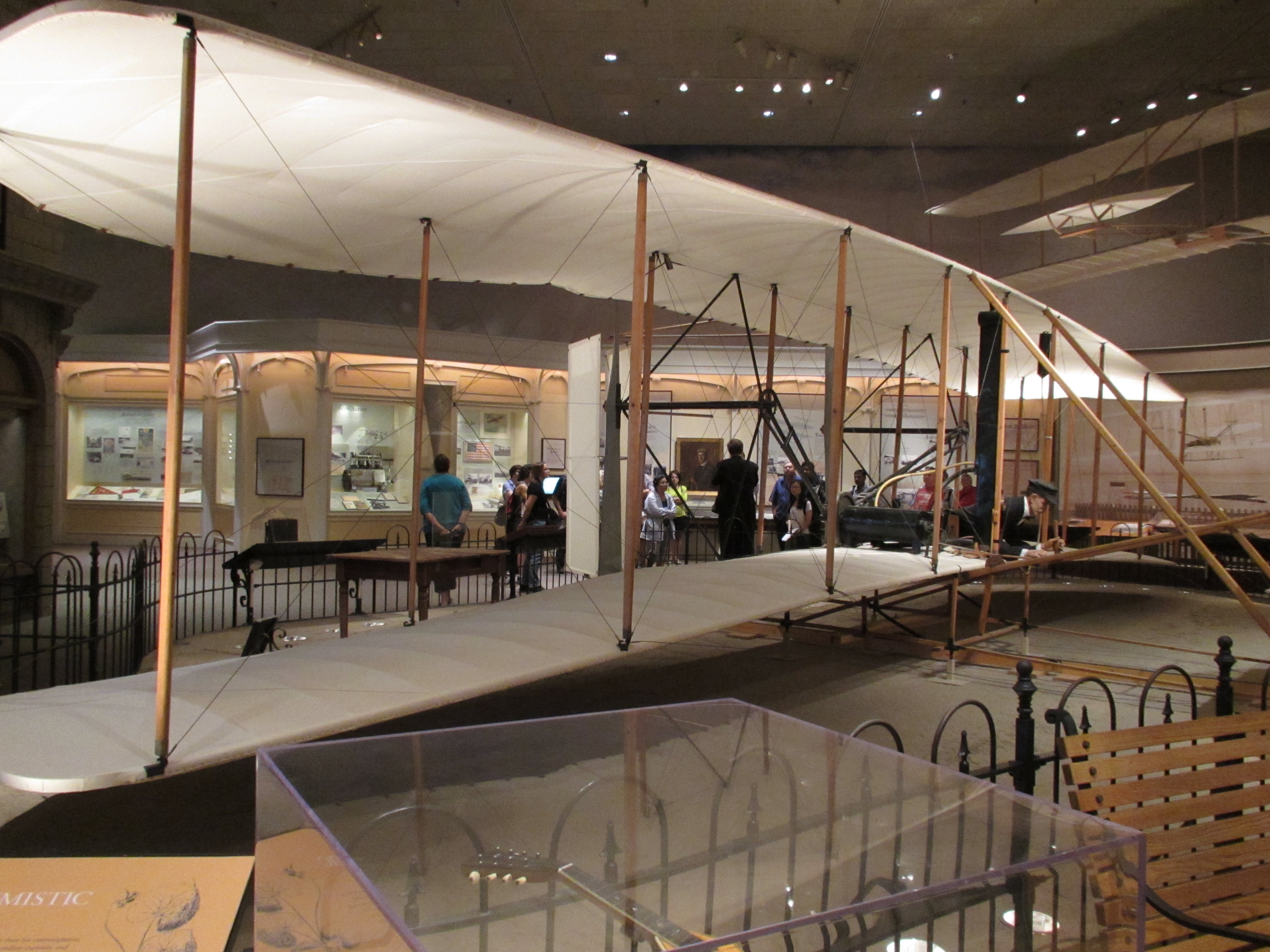
The Wright Brother’s First Airplane at the National Air & Space Museum


US Air Force Predator, Unmanned Aerial Vehicle – my son is a Sensor Operator on the updated version, the Reaper


US Capitol viewed through 2 of the 50 flags encircling the Washington Monument, being flown at half-staff in honor of the deaths of US Embassy staff


The Washington Monument and the Reflecting Pool


Wall of 4,048 gold stars at the WWII Memorial, each one representing 100 Americans who gave their lives for freedom


The Lincoln Memorial


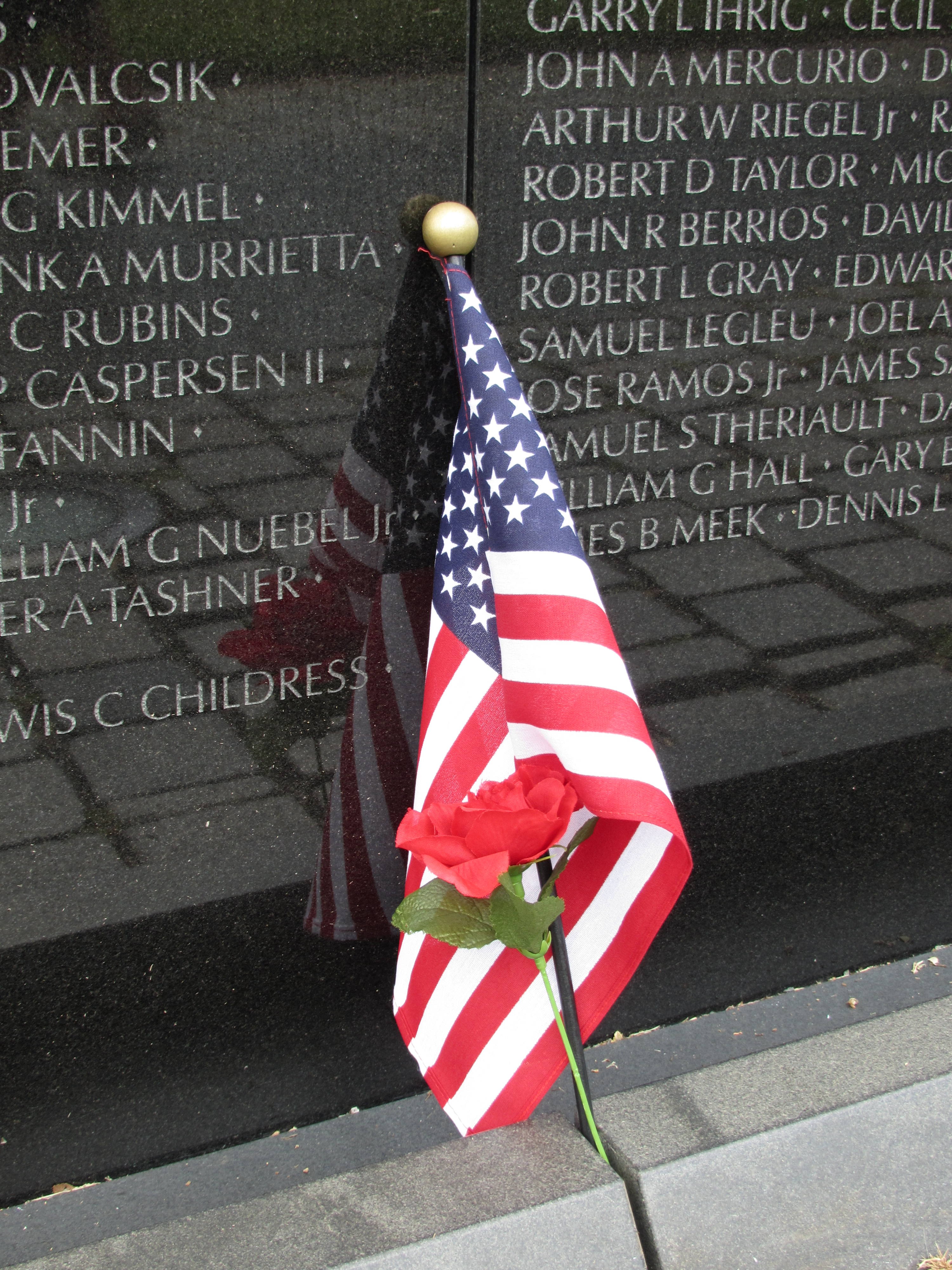
A tribute left at the Viet Nam Memorial


President Obama flying from the White House on Marine One


Vision Clarity at the White House


Social Media and the Divinity School Student

100 years ago when I was in graduate school at The Southern Baptist Theological Seminary…

Okay, it wasn’t 100 years ago, only 31. The pace of change just makes it seem like 100 years.

Anyway, my version of Facebook was a hardcopy directory of all students, printed the first few weeks of each school year (we called it the Funny Book, for obvious reasons). Mail (including tests and papers) was hand-delivered in post office boxes. Research was done in a physical place (library) using objects (books) resulting in papers (typed on a typewriter). GASP!

Today, it’s a little different.

My daughter is beginning her final year of the M Div program at Campbell University Divinity School. She also works part-time as Communications Coordinator for the North Carolina WMU. She is also beginning her second year as a Resident Chaplain for a couple of freshmen girl’s dorms. She loves her life!

Because of my past history at a divinity school and serving on a church staff, and now in a consulting role to church leaders, we often have interesting conversations.

Like the one that followed this question: “How are students at the Div School and in your circle of influence using social media?” Here is her reply:

The divinity school uses it to post pictures of what’s going on during the week at school, serious stuff and fun stuff too, like birthdays’ of professors and when the staff and students are goofing off, or there is a social event, like today, there is a div school tailgating thing after class before the football game. They use Facebook and twitter. Admissions has their own Facebook page along with the Div school itself. They also use it when they go to conferences to announce they are there and if other Campbell people are there, they use it to find them at those conferences and places and such. They post lots of pictures.

Personally, each of the dorms I work with have a Facebook group page so I am a part of that to keep up with events and announcements (keep up with issues in the dorm that the residence life staff have to address) and what official events and unofficial events are going on to go to and get to know the residents. The residents that I am friends with, I keep an eye on their statuses and stuff and if I notice something is wrong and there seems to be a hint of something not right, I make sure to check on them and see how they are doing. Sometimes, Facebook statuses are more informational than just talking with them casually in the hallways and stuff on campus!

One of my dorms LOVES Twitter. The RAs, RD, and residents tweet ALL the time and have conversations with each other. That’s another way I keep up with what’s going on and stay connected. In fact, this dorm is having a program event this semester that is a twitter scavenger hunt. They will have a list of stuff to find and instead of just taking pictures and showing everybody, they will tweet the pics with a hashtag. Whoever finishes with the most items on the list wins, and if there is a tie, then the earliest timestamp on tweet wins! I thought this was an interesting way to use social media to have a dorm event

Ironically, each dorm program has to fit into a certain category and this one is a physical event, because it’s making them get out and walk around campus even though they are using technology and  the Internet to show it!

Just a snapshot of how social media is used in my life! 🙂

Absolutely fascinating.

Okay ChurchWorld leaders, are you paying attention?


If you liked this post, you might also be interested in these:

Old Ironsides

The War of 1812 brought us together as a nation, and left us with icons that remain symbols of our unity today – among them, the Star Spangled Banner and the USS Constitution.

Authorized for construction by George Washington, Constitution was one of the first six ships in our United States Navy. The world’s oldest commissioned warship afloat, it was during the War of 1812 that she earned her famous nickname, Old Ironsides.

Constitution‘s victories proved that we could defeat the best of Britain’s Navy and protect our national interests. The war established our country as one to be recognized, reckoned with and respected.

Today is the 200th anniversary of one of those victories, that against HMS Guerriere.  Here is the report of that battle from the Naval History and Heritage Command website:

The U.S. Frigate Constitution left Boston, Massachusetts, on 2 August 1812, bound for a raiding cruise off Nova Scotia, the Gulf of St. Lawrence and Newfoundland. Her Commanding Officer, Isaac Hull, was eager to find and fight one of the several Royal Navy frigates then active off North America, and on 18 August an American privateer informed him that one might be found further south. The next afternoon, some 400 miles southeast of the British base at Halifax, a sail was sighted that turned out to be HMS Guerriere, one of the frigates that had fruitlessly pursued Constitution off New York a month earlier.

Guerriere’s Captain, James R. Dacres, was also spoiling for a fight. Despite his ship’s disadvantages in number and size of guns, and number of crewmen, the long British tradition of victory in ship-to-ship combat against European enemies provided reasonable grounds for Dacres’ aggressive optimism. As Constitution approached on this windy, cloudy day, Guerriere began firing alternating broadsides that produced few hits and little damage. After one cannon ball bounced “harmlessly” off the side of the Constitution, a crew member is said to have yelled “Huzzah! Her sides are made of iron!”

The name “Old Ironsides” stuck, creating one of the most enduring legends in the history of U.S. military.

Constitution went on to defeat Guerriere; during the remainder of the War of 1812 she defeated 4 other British warships and captured many merchantmen as well. Following the war, Constitution remained in active service through the 1820’s.

Built in an era when a wooden ship had an expected service life of ten to fifteen years, Constitution was now thirty-one years old. The Secretary of the Navy requested a routine order for surveys of ships held in storage dockside. On 14 September 1830, an article appeared in the Boston Advertiser that erroneously claimed the Navy intended to scrap Constitution. Two days later, Oliver Wendell Holmes’ poem “Old Ironsides” was published in the same paper and later all over the country, igniting public indignation and inciting efforts to save “Old Ironsides” from the scrap yard.

Over the years since the 1830’s, Constitution has been restored many times. Constitution emerged from the most recent three-year repair period in November 2010. The restoration continued the focus toward keeping her 1812 appearance by replacing her upper sides so that she now resembles what she looked like after her triumph over HMS Guerriere. Constitution‘s crew and commanding officer, Commander Matt Bonner, are preparing for bicentennial observances of the War of 1812 and again will sail Constitution under her own power.

Constitution‘s stated mission today is to promote understanding of the Navy’s role in war and peace through educational outreach, historic demonstration, and active participation in public events. As a fully commissioned US Navy ship, her crew of 60 officers and sailors participate in ceremonies, educational programs, and special events while keeping the ship open to visitors year round and providing free tours. The officers and crew are all active-duty US Navy personnel and the assignment is considered special duty in the Navy.

I have always had an unwavering support for our military, which probably can be traced back to my father’s service in the Army Air Corps at the end of WWII as well as hearing stories from a neighbor who was a veteran of WWI. As a young boy, I had a particular fascination with the US Navy, reading and studying about it. Of all that history, the long and rich heritage of the USS Constitution has captivated me the most.

Old Ironsides is setting sail once again at 11:00 today in Boston Harbor on the 200th anniversary of one of her most significant victories, a proud symbol of freedom and the United States of America.


Family Air Force History

My son, serving in the Air Force, worked with my wife to create this picture, which they gave me on my father’s birthday yesterday.


When my father entered the Army Air Corps in 1945, he was assigned to the 36th Airlift Squadron, part of the 3rd Air Force. He was not part of an air crew, but served as a mechanic. The squadron’s plane was the C-47.

The planes depicted show the succession over the years since the C-47.

I think it’s pretty cool that my son would honor the memory of his grandfather by working on this and sending it to me. I have a large print framed (thanks to my wife) hanging on my office wall.

What’s Up with Olympic Scoring?

Watching the Olympics is a biannual tradition in the Adams household. Of the two of us, my wife is hands down the biggest sports fan in the family.

I’m just trying to figure out how to keep score. 

Basketball I’ve got covered: shots from behind the free-throw line are 1 point each. Shots inside the arc are 2 points each, and shots scored outside the arc are 3 points each. At the end of regulation play, the team with the highest score wins.

There are lots of other sports in the Olympics with similar scoring rules – I’m pretty good with them. But then it starts to get complicated.

In gymnastics, scoring is a 2-tier system with technical difficulty which starts at 0 and points are added for the performance difficulty combined with execution and technique which starts at 10 and points are subtracted as mistakes are made. I would probably meet myself coming and going – it’s no wonder coaches and judges are always glaring at each other. Then there’s that visible money changing hands thing…

What about diving? A judge in a diving contest shall award from 0 to 10 points for a dive according to his or her overall impression using the following criteria:

–       10: Excellent

–       8½ – 9½: Very good

–       7 – 8: Good

–       5 – 6½: Satisfactory

–       2½ – 4½: Deficient

–       ½ – 2: Unsatisfactory

–       0: Completely Failed

If that wasn’t complicated enough, you move to synchronized diving and get two competitors diving simultaneously from the springboards or platform. The competition is judged on how the two divers individually perform their dives, and how the two divers as a team synchronize their performance. The factors to be considered when judging synchronized diving are:
- the starting position, the approach and the take-off, including the similarity of the height
- the coordinated timing of the movements during the flight
- the similarity of the angles of the entries
- the comparative distance from the springboard or platform of the entry
- the coordinated timing of the entries…(insert snoring sounds here).

How about trampolining? It’s a math formula where the score = difficulty + execution + time of flight. The difficulty is measured from 0 up and the execution is measured from 10 down. Heaven help the judge who meets in the middle! The time of flight (debuting at these Olympics) is measured by digital device. Here’s the kicker: the athlete must begin and end their routine on flat feet – with the landing being held for 3 seconds. Have you ever tried to stop on a trampoline?

With the Olympics singular nod to equality of the sexes, there is the equestrian events, where the rider who finishes the course with the fewest penalties in the fastest time gets the best score. Men and women compete together.

Finally, let’s head out to the water for Olympic Sailing. There are two races: Fleet Racing is run on a low points system; the boat at the end of the competition with the least number of points wins. Then there’s Match Racing – each match is sailed between two boats, with the first boat to cross the finish line the winner, receiving one point. The team with the highest core wins. One can only hope the captains don’t get their races mixed up.

As for me, I will continue to watch the 2012 Summer Olympics from the comfort of my recliner, occasionally participating in our family’s own competition that’s been running for over a year now: The Adams Family Pizza Quest.

There’s no scoring difficulty here: try out new pizza restaurants and rate them on a 5 slice (by half slice increments) scale:

1 – a complete failure in every way

2 – barely functional; won’t be back or recommend to friends

3 – serious flaws; the jury is still out

4 – downsides outweigh the upsides

5 – recommended with reservations

6 – a solid meal with some issues

7 – very good, but not quite great

8 – excellent, with a little room to grow

9 – nearly flawless; we’ll be back again with friends

10 – metaphysical and culinary perfection

I’m enjoying the Olympics best when I don’t worry about the score – how about you?

What Counts as an Olympic Sport?

It depends on the year.

In 1896, freestyle swimming for sailors was on the lineup. In 1920, tug-of-war. Live pigeon shooting was a new event in 1900 (like 184 other events through the years, it lasted for only one Olympiad).

For a look at how long each Olympic category has been around, take a look at a fascinating infographic from Wired magazine here.


Confessions of an Olympic Junkie

It’s time for the biannual event of bleary eyes and arcane sports again, otherwise know as the Olympics.

Summer or Winter, my wife and I have always been huge fans of the Olympic Games. While it’s very easy to get jaded because of the commercialism, nationalism, and hype of the Games, we prefer to take a simpler view – we are seeing men and women function at their peak performance, often putting years of training, hardship, and practice on the line for a few minutes in which they will be remembered (for a while) or forever forgotten.

Over the next few weeks, I will probably interrupt the usual flow of 27gen to drop in an Olympic-themed post from time to time. And to launch these posts, a fascinating story from Wired magazine with this assertion:

Olympic athletes are made, not born.

Forget about recruiting the best athletes; if you really want to build a great athletic team, it’s time to recruit the best PhDs.

Following the 1976 Summer Olympics in Montreal, in which Australia won just one silver and four bronze medals, a throughly embarrassed Australian government created an academy modeled in part on the sports factories of the Eastern Bloc. They hoped to capture the intensity and success of the Soviet academies without going to the same excesses. The idea was simple: Get the best coaches and the best athletes together on a year-round basis, without any distractions, and hope that athletic magic would result.

It worked well: Australia won 14 medals in 1988 and 27 in 1992. But in 1993 when it was announced the 2000 Summer Games would be held in Sydney, the Australians decided that a standout performance was crucial, and athletic funding was radically increased. Rather than smaller efforts based around a specific athlete, the scientists at the Australian Institute of Sport (AIS) were able to take on larger projects that had a profound impact for Australian sports as a whole.

AIS researchers:

  • set out to find new ways for wringing more performance out of every Australian athlete
  • conducted research highlighting the benefits of altitude training for aerobic athletes
  • studied techniques to help athletes recover after a workout
  • developed a tracking device that allowed for instant motion analysis of athletes during competition
  • pioneered programs to identify athletic potential
  • developed a blood test for the banned drug EPO, hoping to level the field for Australian athletes

The results were astonishing: At the Sydney Games, Australia won 58 medals, placing it third in the podium count. That performance was even more stunning on a per capita basis. Australia’s population was a little over 19 million, meaning the country received one medal for every 328,000 citizens. China, which also won 58 medals in Sydney, scored one medal for very 21.7 million citizens.

“For every swimmer in Australia, there are three swimmers in the USA and 10 in China,” says Bruce Mason, head of aquatic training and research at AIS.

Australia had used technology to close the gap. They are now a global leader in merging science with athletic talent.

You can read the entire fascinating article online from Wired here.

It will make a great warm-up for armchair athletes like my wife and me as the 2012 London Olympics begin tonight.

Go USA!