I’m Hungry

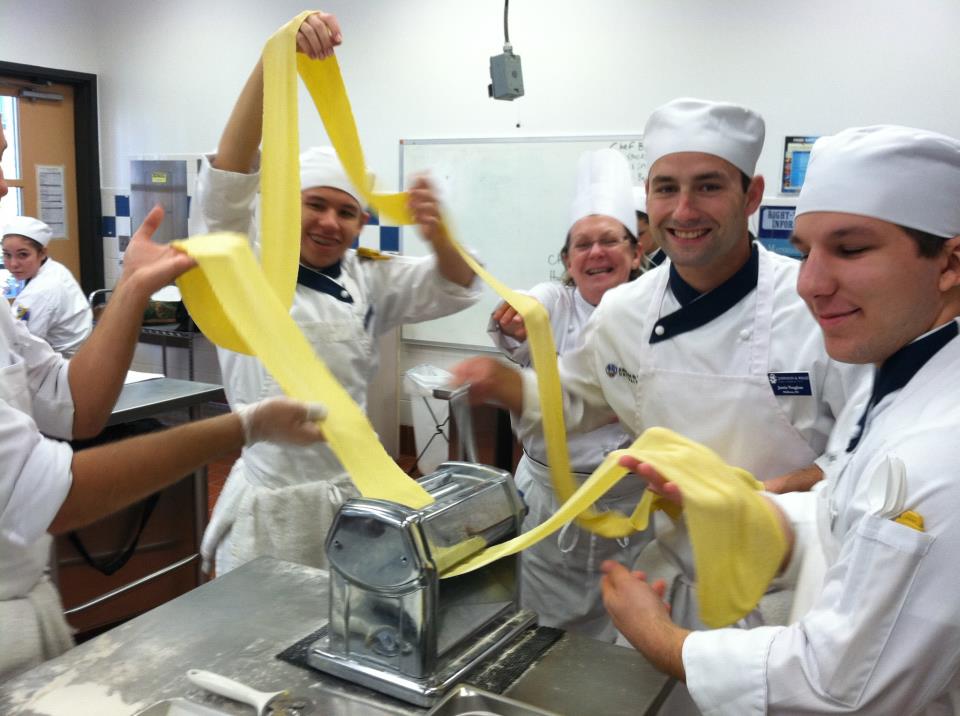
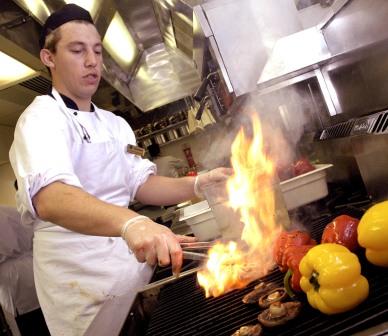
I love food. This love of food runs in, and through, my family. It began with my mother, a transplanted Midwesterner who adapted to Southern cooking in the mid 1950s and honed the craft with family and church for almost 60 years. It continues with two of my sons: the oldest, a restaurant chef and regional trainer with Outback; and the youngest, a first year student in Johnson and Wales University’s Culinary Arts/Food Service Management program.

And of course, I practice cooking when I can: old standby recipes that have become family favorites, new ones pulled from magazines or off the Web.  One look at me and you see I don’t miss too many meals!

Then there is the learning part: I read food magazines, culinary books, first person narratives about life in the industry, and so on. When I eat out, I focus on the food – and the people preparing and delivering it. It’s always instructive.

Beyond the simple love of food, I think that the food and culinary industry can be a great teacher as well. For instance, ChurchWorld leaders would be well advised to emulate chefs. They also would benefit from having a great “stock.” And of course leaders should use all their senses – just like a good chef does.

Over the next few days, I want to invite you on a food journey that focuses on leadership. I hope to uncover some new dishes, revisit some old classics, and hopefully give you some ideas that will help you create just the “menu” you need in your organization.

I suppose Bon Appetite! is too corny – but it rolls off the tongue, doesn’t it?

Good Cooking is Simply a Series of Problems Solved

The title of this post is actually a quote from one of the instructor chefs at the CIA’s cooking school. Author Michael Ruhlman, in “The Making of a Chef,” chronicles his time at the legendary cooking school, the oldest and most influential in America.

The comment came in response to a student’s unique suggestion of how to keep hollandaise sauce at just the right temperature to keep it from “breaking”. The chef had never thought of his idea, and encouraged him (and the rest of the class) to approach a problem from a unique angle (outside the box” thinking?).

This line of thought falls right into a post by Seth Godin entitled “Sell the Problem.” He noted that many business to business marketers tend to jump right into features and benefits, without taking the time to understand if the person on the other end of the conversation/call/letter believes they even have a problem.

The challenge is this: if your organization doesn’t think it has a  problem, you won’t be looking for a solution. You won’t wake up in the morning dreaming about how to solve it, or go to bed wondering how much it’s costing you to ignore it.

And so the marketing challenge is to sell the problem.

I’m passionate about helping churches thrive by turning challenges (problems) into opportunities. It’s very personal with me – I want to understand prospective clients so well that I know their situation almost as well as a leader or staff member. In fact, that statement, made a couple of years ago by a pastor, is one of the highlights of my career!

It’s my job to understand their problems.

When a prospect comes to the table and says, “we have a problem,” then you’re both on the same side of the table when it comes time to solve it.

All I have to do now is follow the recipe – a series of problems solved.

What’s On Your Plate?

I love food.

Eating it, sure, but also knowing how it’s grown; where it came from (not just what I’m eating for supper, but how it came to be, over time, supper); what goes with what; how all the ethnic cuisines came to America and how they’re changing our culture. Oh, and how it’s made; what the history of some our favorite (and not so favorite) foods; what’s healthy for me; what’s not so healthy; why I like it anyway…

I could go on and on, but you get the picture.

My mother, a transplanted native of Missouri, learned the Southern cooking thing quite well. I have great memories of childhood meals – simple, but oh-so-good. Later in life, she became a caterer for small functions at church, for family and friends. Even today, on the other side of 80, all our family looks forward to her holiday meals.

My oldest son’s second job, and every one since then, has revolved around food. From pizza baker to coffee-house barista to small restaurant cook to line cook to pastry chef to kitchen manager and training chef, he is immersed in all things food. His siblings recognize it: they all like his food and request it when he gets a chance to cook.

My youngest son, on a whim, took a year-long culinary class as a junior in high school. He loved it so much he took another one as a senior, cooking for the faculty every day. He brought home recipes and tried them out on Anita and me (which we really like).

Friday he begins his college experience at Johnson & Wales University as a Culinary Arts and Food Management major. He’s looking forward to JWU, and so in his honor as a new culinary student, I’m going to revise and repost some previous thoughts about food – and how it applies to leaders.

Where I am going with this is that food, restaurants, being a chef, and all things connected are an interesting subject. There are also a lot of lessons to be learned from these areas that can be applied to other parts of life and work.

Let’s go on a food journey…