How to See the Spectacle of the Ordinary

Recently my wife and I had the great privilege to host the 2023 version of Nina and GrandBob’s Summer Camp – that time when we are able to host our grandchildren at our house or keep grandkids at their parent’s house for an extended time.

For a period of two weeks, we had an amazing time with our nine grandchildren, in two groups as noted in the image above. We laughed, ate ice cream, played games, took walks, and much more. We’re already looking ahead to repeating the camps in 2024!

In reflecting back on those two weeks, I was reminded of the first time we attempted such a thing. It wasn’t hosting our grandkids, their parents were with us, and it wasn’t at our house. But it remains a powerful lesson years later.


A few years ago, my wife and I had the wonderful opportunity to plan and deliver The Adams Family Adventure – a week-long trip to Walt Disney World for our immediate family of fifteen at the time: six children and nine adults.

All week long I had the most fun watching the rest of the family as they experienced Walt Disney World, most for the first time. We captured that trip in over 3,000 images, to bring up stories in the future from our memory from those images.

As we departed from four different cities on the first day of our trip, we were texting and FaceTiming about our various experiences. It was the first airplane flight for four of the grandchildren (they did great). They left their homes early in the morning, took long flights, got on a big “magical” bus, and arrived at our resort.

To our grandchildren, it must have been a little strange. From the time they came running off the bus, throughout all of the fun adventures of the week, to the goodbyes at the end of the week, they were a little overwhelmed, maybe even overstimulated about the whole process – and I began to see all over again what it means to be curious.

You can, and must, regain your lost curiosity. Learn to see again with eyes undimmed by precedent.   – Gary Hamel

My grandchildren’s curiosity was brought sharply into focus when I recently read the following:

In childhood, then, attention is brightened by two features: children’s neophilia (love of new things) and the fact that, as young people, they simply haven’t seen it all before.   – Alexandra Horowitz

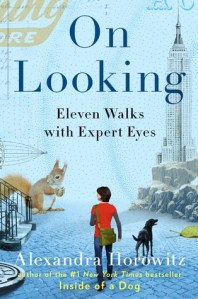
Alexandra Horowitz’s brilliant On Looking: Eleven Walks with Expert Eyes shows us how to see the spectacle of the ordinary – to practice, as Sir Arthur Conan Doyle puts it, “the observation of trifles.”

On Looking is structured around a series of eleven walks the author takes, mostly in her Manhattan neighborhood, with experts on a diverse range of subjects, including an urban sociologist, a geologist, a physician, and a sound designer. She also walks with a child and a dog to see the world as they perceive it. What they see, how they see it, and why most of us do not see the same things reveal the startling power of human attention and the cognitive aspects of what it means to be an expert observer.

Here’s an illustrative example as Horowitz walks around the block with a naturalist who informs her she has missed seeing three different groups of birds in the last few minutes of their walk:

How had I missed these birds? It had to do with how I was looking. Part of what restricts us seeing things is that we have an expectation about what we will see, and we are actually perceptually restricted by that perception. In a sense, perception is a lost cousin of attention: both serve to reduce what we need to process of the world “out there.” Attention is the more charismatic member, packaged and sold more effectively, but expectation is also a crucial part of what we see. Together they allow us to be functional, reducing the sensory chaos of the world into unbothersome and understandable units.

Attention and expectation also work together to oblige our missing things right in front of our noses. There is a term for this: inattentional blindness. It is the missing of the literal elephant in the room, despite the overturned armchairs and plate-sized footprints. 

Horowitz’s On Looking should be required reading for those wanting to become modern elders. How often do we fly past the fascinating world around us? A world, mind you, that we have been called to serve.

How can we serve others if we aren’t paying attention to the world around us?

To a surprising extent, time spent going to and fro – walking down the street, traveling to work, heading to the store or a child’s school – is unremembered. It is forgotten not because nothing of interest happens. It is forgotten because we failed to pay attention to the journey to begin with.

On Looking, Alexandra Horowitz

The consulting firm I work for uses a thought process called “The Kingdom Concept,” with references to artist Andrew Wyeth:

 Most artists look for something fresh to paint; frankly, I find that quite boring. For me it is much more exciting to find fresh meaning in something familiar.   – Andrew Wyeth

This reminds me of the concept of vujá dé.

No, that’s not a misspelling – it really is vujá déVujá Dé implies seeing everything as if for the first time or better still, seeing everything everyone else sees, but understanding it differently. (Simon T. Bailey)

You might even say the journey to being a modern elder starts with paying attention – with a healthy dose of vujá dé.

Questions to Ponder

  • How do you observe the all-too-familiar in order to discover new meaning and discern the activity of God that others miss?
  • What do you look for?
  • How can you learn to scrutinize the obvious?
  • What does it mean to look for the extraordinary in the ordinary?

A good place to start is paying attention…


How to Help Your Church See Biblical Hospitality – Specifically the “Table” – as a Way of Life

In December 2019, the motion picture, “A Beautiful Day in the Neighborhood,” staring Tom Hanks as beloved television icon Fred Rogers made its debut. Rogers was the creator, showrunner, and host of the preschool television series Mister Rogers’ Neighborhood, which ran from 1968-2001.

As a musician, puppeteer, writer, and producer, Fred Rogers’ gentle demeanor brought beautiful simplicity through nurturing interactions with young children to over 30 years of viewers. His enigmatic theme song, from which the motion picture takes its title, includes the following lines, which many adults can recall:

It’s a beautiful day in this neighborhood, 

A beautiful day for a neighbor,

Would you be mine?

Could you be mine?

Fred Rogers was also a Presbyterian minister, and it’s likely those lines were inspired by another story of a neighbor.

In the Parable of the Good Samaritan (Luke 10:25-37), Jesus asked the expert in law, in effect, “Who is your neighbor?”

It’s almost 2020, and the question remains, “Who is our neighbor?”

From the television neighborhoods of Beaver Cleaver and Andy Taylor, to Mr. Rogers, to Sam and Diane, to Jerry and Kramer, to Rachel and Monica and Phoebe and Chandler and Joey, to Phil and Claire, to Jack and Rebecca and Randall and Kate, it’s a question that mainly depicts an unfulfilled longing for a neighborhood that actually works.

It occurs to me that this is not a neighborhood;

It is only a collection of unconnected individuals.

Philip Langdon, A Better Place to Live

Long gone are the days where kids played in the yards and streets all day “till the street lights came on” and where neighbors talked across fences or on front porches.

It seems as if the people we live closest to appear only briefly when the car leaves the garage in the morning and comes back in the evening. 

It seems as if the idea of “neighborhood” has disappeared in reality if not actuality, and with it the idea of knowing for, and caring for, neighbors.

As Lance Ford and Brad Brisco write in Next Door as in Heaven:

What does all this neighborhood business have to do with the gospel? As Jesus followers – people of the Good News – we follow the one who said the most important commandment is to love God with all our heart, soul, and strength, and to love our neighbors as ourselves. We have a tremendous opportunity before us: to take notice and help resurrect rich relationship in our neighborhoods.

If anyone should “neighbor” differently, it should be us.

According to Leonard Sweet, if we really want to learn someone’s story, sitting down at the table and breaking bread together is the best way to start.

This issue of SUMS Remix looks at solutions that will help you see the importance of your “table” as a place of disciplemaking. The solutions include: 

A closing quote, by Rosaria Butterfield, author of The Gospel Comes with a House Key, seems most appropriate:

Radical, ordinary hospitality brings the gospel to our lost friends and neighbors. Such hospitality sees our homes as not our own, but as God’s tools for the furtherance of his kingdom as we welcome those who look, think believe, and act differently from us into our everyday, sometimes messy lives – helping them see what true Christian faith really looks like.  

SUMS Remix 134, released December 2019


Indulging in Burger Bliss: A Quest for Culinary Perfection

In the culinary cosmos, where taste buds reign supreme and flavors dance on the palate, there exists a realm that has captured the hearts and appetites of millions: the world of hamburgers. The humble yet iconic burger, with its savory embrace of juicy patties, harmonious toppings, and snug bun, has transcended its fast-food origins to become a canvas of culinary creativity. As a seasoned burger consumer of six decades and an aficionado of all things patty-powered, I have embarked on a delectable journey to uncover the ultimate burger experience, armed with a finely-tuned palate and a discerning eye for detail.

Right.

I just love eating hamburgers and researching and writing about them!

In this pursuit of burger nirvana, I’ve devised a comprehensive rating scale that evaluates each element of this handheld masterpiece. Every bite counts, and it is this attention to every nuance that separates a forgettable burger from a memorable masterpiece. Let’s delve into the core components that contribute to the tantalizing symphony of flavors, textures, and aromas that define a truly remarkable burger.

The Burger Patty: Where Flavor Takes Center Stage

At the heart of every great burger lies the patty, a canvas for the culinary artist’s imagination. From flavor to juiciness and texture, this element sets the tone for the entire experience. A patty can transcend mere sustenance, evoking a culinary journey with every bite. A score of 1 to 5 in each category defines the patty’s prowess: Flavor, Juiciness, and Texture.

Crafting the Perfect Bun: A Gateway to Gastronomic Bliss

A bun might seem inconspicuous, but it serves as the vessel that holds the essence of a burger together. Freshness and Texture are key players in this symphony. A bun can either elevate the experience or become a dampener, and I rate these two qualities on a scale of 1 to 4.

Cheese and Toppings: Elevating the Burger Narrative

The choice of Cheese and Toppings isn’t just a garnish; it’s an opportunity to inject personality and creativity into the burger. A masterful combination can transform a burger into a multi-sensory delight. The artistry lies in balancing the familiar with the innovative, and I evaluate these two items with a scale of 0 to 2 for cheese and 0 to 3 for toppings.

Sides: Accompanying the Star with Panache

A burger’s company matters, and the sides it’s served with can make or break the overall experience. Be it classic fries or a more avant-garde accompaniment, sides should complement the burger’s charisma. I gauge this on a scale of 0 to 2.

The Final Verdict: An Odyssey of Senses

After meticulously scrutinizing each element, I render the overall impression of the burger – a synthesis of its parts and the magic they create together. On a scale of 1 to 5, I judge the level of satisfaction the burger imparts, encapsulating the joy, memories, and sense of fulfillment it brings.

Adding It All Up: The Numbers Don’t Lie

If you’ve been keeping score of the ratings above, you will find that they add up to a possible 35 points. With a bit of deft magic from a calculator, I’ve broken those total possible points into a scale of seven ratings.

Coincidentally, the USDA has seven ratings for it’s grading of beef. And since burgers are always beef (don’t bring me your platitudes of veggie burgers, tofu burgers, etc.), what better way to show the ratings?

I give you the BurgerQuest Rating Scale, top to bottom:

  • 7 – Exceptional, a burger masterpiece. Prime
  • 6 – Scrumptious, a flavor-filled burger. Choice
  • 5 – Delicious, a memorable burger. Select
  • 4 – Tasty, a go-to favorite. Standard
  • 3 – Satisfying, an enjoyable burger. Commercial
  • 2 – Adequate, but forgettable. Utility
  • 1 – Disappointing in so many ways. Cutter/Canner

With these scoring criteria as my compass, I’m ready to begin listing the ratings as I traverse the diverse landscapes of the burger world. From quaint diners to more refined settings, each establishment’s interpretation of the quintessential burger offers a unique chapter in the ongoing story of culinary evolution. Through this gastronomic odyssey, I’ll unearth the exceptional, the innovative, and the unforgettable, sharing my discoveries with you in pursuit of the ultimate burger bliss.

So, fasten your seatbelts and ready your appetites, for we’re about to embark on a quest that will redefine the way you experience the humble yet extraordinary world of hamburgers. Get ready to savor each moment, one bite at a time, and discover the places where burger dreams become reality.

My ratings of burgers will primarily appear on my Facebook and Instagram accounts. I may, from time to time, post some unique burger ratings or summaries here.

The literary aspects of BurgerQuest will continue here, as I dive deeper into the literature of the world of burgers. Eventually, I will also begin to document my culinary adventures in replicating (or at least trying) some burger adventures in my home kitchen and deck.


Disclaimer: As I stated in the opening post of this series, this quest is being undertaken through the lens of a literary, culinary, and arbitrary journey. For the purposes of ratings, there will be an emphasis on arbitrary. Even the most disappointing burger – if there is such a thing – provides sustenance, dubious nutrition, and satisfies if only for a little while the basic needs of hunger. I am grateful that I am able to undertake such a quest, knowing that millions of people around the world would be grateful for even a bite of one of the burgers I’ve consumed.


Still hungry?

White Castle: The Trailblazing Pioneer of Fast Food

Bite Into Tradition: The Best Loved Regional Burger Chains in the Country

Burger Beast Unleashed: The Ultimate Tribute to Burgers in Sef Gonzalez’ Book

Sink Your Teeth into “The Hamburger”: A Culinary Journey by Josh Ozersky

Burger Magic: Exploring the Universal Fascination Behind America’s Favorite Dish

My Quest for the Perfect Hamburger: A Literary, Culinary, and Arbitrary Journey in Pursuit of America’s Iconic Delight

A Tantalizing Top of the Stack, Made to Order

Before Burger Quest

White Castle: The Pioneering Trailblazer of American Fast Food

In the wake of World War I, the hamburger was still considered a disreputable and undesirable food. Yet by 1930 Americans in every corner of the country accepted the hamburger as a mainstream meal and eventually made it a staple of their diet. The quintessential “American” food, hamburgers have by now spread to almost every country and culture in the world. But how did this fast food icon come to occupy so quickly such a singular role in American mass culture?

In Selling ‘em By the Sack, David Gerard Hogan traces the history of the hamburger’s rise as a distinctive American culinary and ethnic symbol through the prism of one of its earliest promoters. The first to market both the hamburger and the “to go” carry-out style to American consumers, White Castle quickly established itself as a cornerstone of the fast food industry. Its founder, Billy Ingram, shrewdly marketed his hamburgers in large quantities at five cents a piece, telling his customers to “Buy’em by the Sack.”

The years following World War II saw the rise of great franchised chains such as McDonald’s, which challenged and ultimately overshadowed the company that Billy Ingram founded. Yet White Castle stands as a charismatic pioneer in one of America’s most formidable industries, a company that drastically changed American eating patterns, and hence, American life. It could be argued that what Henry Ford did for the car and transportation, Billy Ingram did for the hamburger and eating.

As a food researcher and enthusiast, I am always on the lookout for captivating literature that delves into the intriguing world of the origins and history of food. With the advent of Burger Quest, even more so! Selling ’em by the Sack by David Gerard Hogan is one such remarkable piece of work that left a lasting impression on me.

In this thought-provoking book, Hogan takes readers on an enlightening journey through the fascinating history and evolution of the fast-food industry, focusing primarily on the iconic American chain, White Castle. The author skillfully unravels the secrets behind the success of this pioneering fast-food establishment, offering profound insights into the art of selling and consumer behavior.

Hogan’s narrative style is engaging and well-paced, making the book an easy and enjoyable read for both industry insiders and casual enthusiasts alike. He effortlessly weaves together historical anecdotes, cultural influences, and the innovative marketing strategies that have made White Castle a household name since its inception in 1921. The depth of research presented in “Selling ’em by the Sack” demonstrates Hogan’s dedication to understanding the industry’s past and its implications for the present.

One of the standout features of this book is Hogan’s ability to explore the often overlooked socio-cultural impact of fast food on society. He astutely examines how White Castle’s success shaped America’s eating habits, urban development, and consumer expectations. Moreover, he delves into the company’s pioneering techniques in food preparation, supply chain management, and brand building, setting the stage for the fast-food giants that followed in its footsteps.

I appreciate Hogan’s skillful use of language and storytelling techniques. He artfully captures the essence of White Castle’s brand identity and its role in shaping the larger fast-food culture. Throughout the book, Hogan demonstrates a keen understanding of how powerful marketing and advertising campaigns can influence consumer behavior and drive business success.

Selling ’em by the Sack is not just a book about White Castle; it is a story of entrepreneurship, innovation, and adaptability. Hogan masterfully paints the picture of how this modest hamburger stand evolved into a global fast-food phenomenon. The book imparts valuable lessons for aspiring entrepreneurs, marketers, and food industry professionals, emphasizing the importance of staying true to one’s vision while continually adapting to meet the changing needs and desires of customers.

While Hogan celebrates the successes of White Castle, he also confronts the controversies surrounding the fast-food industry, including issues related to health, labor practices, and sustainability. This balanced approach adds depth to the book and encourages readers to think critically about the broader implications of the fast-food culture in modern society.

In conclusion, Selling ’em by the Sack is a captivating and insightful exploration of the fast-food industry, with a focus on White Castle’s significant contributions to the field. David Gerard Hogan’s expertise as a food researcher shines through in every chapter, making this book a must-read for anyone interested in the intersection of food, marketing, and culture. Whether you are a food enthusiast, a history buff, or a business professional, this book offers a satisfying and enlightening experience that will leave you hungry for more.


Still hungry?

Bite Into Tradition: The Best Loved Regional Burger Chains in the Country

Burger Beast Unleashed: The Ultimate Tribute to Burgers in Sef Gonzalez’ Book

Sink Your Teeth into “The Hamburger”: A Culinary Journey by Josh Ozersky

Burger Magic: Exploring the Universal Fascination Behind America’s Favorite Dish

My Quest for the Perfect Hamburger: A Literary, Culinary, and Arbitrary Journey in Pursuit of America’s Iconic Delight

A Tantalizing Top of the Stack, Made to Order

Before Burger Quest

Exploring Curiosity: The Socratic Method vs. a Three-Year-Old’s “Why?”

In the latest version of “Nina and GrandBob’s Summer Camp,” Anita and I recently spent a week in VA keeping our 3-year old grandson and 3-month old granddaughter while their daycare was closed for a couple of weeks. Our kids had planned one of the weeks as a vacation, but needed help for the other week – and of course we were very happy to do it!

Among many observations we made that week, one stands out:

Socrates and his method of questioning has nothing on a three-year old’s ability to ask “why.”

Each day began with me taking my grandson on a wagon ride/walk of about a mile or so, looping through all the streets in their neighborhood. The birds were out and about, pets greeted us with tail wags, cars and trucks needed explaining, and other neighbors out walking greeted us warmly.

All of the above, and much more, demonstrated the curiosity capacity of a three-year old. At the same time, it was a reminder that we’re never to old to ask “why” and learn more about what is going on around us.

Curiosity is a fundamental aspect of human nature, driving our pursuit of knowledge and understanding. Two notable expressions of curiosity are the Socratic Method and a three-year-old’s incessant questioning of “why.” While seemingly distinct, these two forms of inquiry share surprising similarities in their ability to ignite intellectual exploration and enhance learning. This article delves into the world of curiosity, comparing and contrasting the Socratic Method with a three-year-old’s relentless pursuit of “why.”

The Socratic Method: An Ancient Art of Inquiry

The Socratic Method, dating back to ancient Greece, is a philosophical approach that seeks to uncover truth through questioning. Inspired by the famous philosopher Socrates, this method involves a skilled interlocutor leading a discussion by asking thought-provoking questions. Through these inquiries, participants are encouraged to critically examine their beliefs, assumptions, and reasoning, arriving at deeper insights and understanding.

A Three-Year-Old’s “Why”: Unfiltered Curiosity

If you’ve ever spent time with a three-year-old, you’re likely familiar with their unyielding tendency to ask “why” about nearly everything they encounter. From mundane tasks to complex concepts, this simple question serves as their gateway to understanding the world around them. For a child at this age, “why” represents their innate curiosity and thirst for knowledge as they seek explanations and connections.

Comparing Curiosity in the Socratic Method and a Three-Year-Old

The Power of Inquiry

Both the Socratic Method and a three-year-old’s “why” share a profound reliance on inquiry to stimulate intellectual exploration. Both approaches aim to unearth deeper truths and insights, either within oneself (in the case of the Socratic Method) or about the external world (in the case of a child’s “why”). They demonstrate the inherent human desire to seek answers and understand the reasons behind various phenomena.

Cultivating Critical Thinking

Both the Socratic Method and a three-year-old’s “why” contribute to the development of critical thinking skills. The Socratic Method encourages individuals to question their assumptions, consider various perspectives, and evaluate the logic of their beliefs. Similarly, when a child asks “why,” they engage in basic critical thinking by seeking explanations and connections, fostering their cognitive development.

Contrasting Curiosity in the Socratic Method and a Three-Year-Old

Guided vs. Unstructured Inquiry

The Socratic Method involves a guided and intentional approach to questioning, with an interlocutor leading the dialogue strategically. On the other hand, a three-year-old’s “why” is often unstructured and free-flowing, following their natural inquisitiveness without any predefined agenda. This distinction highlights the difference in purpose between adult-led and child-driven curiosity.

Complexity of Questions

The Socratic Method typically involves complex and profound questions designed to provoke thoughtful responses and insights. In contrast, a three-year-old’s “why” often involves simple and straightforward questions driven by their immediate curiosity about their environment and experiences.

Social Context

The Socratic Method usually occurs in formal settings like educational institutions or philosophical discussions, involving adults or intellectually developed peers. In contrast, a three-year-old’s “why” is predominantly a social interaction between the child and their caregivers, teachers, or peers, occurring in informal daily settings.

Harnessing the Power of Curiosity

The Socratic Method and a three-year-old’s “why” demonstrate the inherent human drive to seek understanding and knowledge. While they differ in structure and complexity, both approaches showcase the power of curiosity as a catalyst for learning and growth.

For educators and leaders, understanding the significance of curiosity is essential in fostering a culture of inquiry and intellectual development. Encouraging critical thinking and open dialogue, inspired by the principles of the Socratic Method, can lead to profound insights and transformative learning experiences, not just for adults but also for the young minds who constantly ask “why.”


Curiosity is a timeless force that transcends age and time. The Socratic Method, with its guided approach to questioning, and a three-year-old’s relentless “why,” exemplify the power of inquiry in stimulating intellectual exploration and fostering critical thinking. By embracing curiosity and promoting thoughtful questioning, we can create a culture that values learning, encourages open dialogue, and nurtures intellectual curiosity in both adults and children alike. As we harness the potential of curiosity, we unlock the door to a world of knowledge and understanding, propelling us on an endless journey of discovery and growth.


Remembering My Father, Celebrating Book Lover’s Day

August 9 is birthdate of my father, H.D. “Doc” Adams, who was born in 1927.

It’s also Book Lover’s Day.

Those two seemingly incongruent circumstances actually have a powerful connection for me.


After suffering a major stroke on February 10, 2012, my father passed away on February 25. By the time I was able to get back to Tennessee to see him, he had lost motor functions and speech capacity. Over the few days I was there, the slow but steady decline continued.

I had last seen him during the previous Christmas holidays. While there, I spent some time alone at home with him. After suffering a series of strokes over the past several years, he could no longer read – but the legacy of his reading lined the bookshelves all over my boyhood home. In the quiet hours when everyone was asleep, I scanned the shelves and remembered hearing him talk about this book or that one. I pulled a few off the shelf, and opening them, was instantly transported back in time to a conversation about the subject, or to memories of the event itself.

I’ve been a reader of books since, well, before I can remember. My father was an avid reader, and he passed that passion along to me at an early age. Even though he worked 6 days a week, 12 hours a day as a gas station owner, he often spent several hours reading each night. A recent revelation from a book brought his actions sharply into focus:

The manual labor of the past that allowed a human being to work in an embodied way, and to contemplate in heart and mind while working with one’s hands, encouraged the desire for reading after the physical exertions were completed. One can imagine why a farmer might kick off his boots after a day of sweat and dirt to read a good book.

Reading for the Love of God, Jessica Hooten Wilson

That was my father.

He insisted my mother take my brother and me to the library in the next town and check out books – every two weeks. I would get the maximum number of books, take them home, and read them – usually in the first day or two. Then it would be an impatient wait till the next library trip.

Reading is a passion I treasure, and one that I am thankful my father instilled in me.

The library habit of my boyhood stuck with me through elementary, junior, and high school; it remained in college and graduate school and post-graduate specialized studies. Each of my vocational roles since school “ended” have included reading as a part of what I brought to the task. It continues to this day, with a weekly visit to my local library to drop off books read and pick up books on hold – usually three or four in each category.

Wednesday August 9 is Book Lover’s Day – not an official holiday but one I eagerly celebrate. Book reading is a great hobby. It’s an important one, too. Employers look for it on resumes. Reading is educational, informative, and relaxing. It makes us both smarter and happier people.

Book Lover’s Day is a great day to celebrate. Just grab an interesting book, find a quiet, cozy place, and crack open the cover. Celebrating Book Lover’s Day in August is pleasurable on the deck, under a shady tree, poolside, or in a cozy hammock. If you fall asleep while reading, that’s okay. It’s all part of the relaxing benefits of being a book lover.

I love (and practice) the 4 different levels of reading as espoused by Mortimer Adler in his great book, How to Read a Book, but I really like to latch onto a topic and practice synoptical reading. Also known as comparative reading, it is where many books are read, and placed in relation to one another and to a subject about which they all revolve.

For many years, an ongoing topic of synoptical reading has been about Walt Disney and the “kingdom” he founded. My current Disney library is over 450 books, dating from 1939 to current releases – and I’m still actively researching the subject, and discovering new authors and books regularly. Here’s a few of my latest acquisitions:

In addition to the pure enjoyment of reading on the subject, these books provide a constant reference for illustrations when I’m writing about hospitality, planning, vision, and other topics that Walt Disney lived out – and to some extent – the Disney organization still practices. With 2023 being the 100th anniversary of the founding of the company, there’s a lot to choose from!

In addition to Disney synoptical reading, I’ve always got small threads of other, diverse, synoptical reading going on, often spurred by long-running interests and subsequent book searches. Here’s a current one, entitled #BurgerQuest: a literary, culinary, and arbitrary journey in pursuit of America’s iconic delight. True to my nature, over the years I’ve built up a research library on the burger; here’s just a sampling of the texts dealing with the history of the hamburger:

As I continue to develop #BurgerQuest, I will be diving into the history of the restaurants who have brought the burger from the lunch wagons of the 1890s to today’s wide range of options.

One of the greatest contributors to my synoptical reading was an Auxano project, 8+ years in the running, that ended in 2021. It involved researching 574 books to produce 227 issues of a book excerpt project. For those of you who are curious, that’s a book stack over five stories high. You can read about it here.

Even with that big change in my reading habit, there’s always a book at hand!

There’s current reading for Auxano social media (Tweets, Instagram, LinkedIn, and Facebook posts), other internal Auxano writing projects, and believe it or not, reading just for the pleasure of readinga nightly occurrence.

Currently a few topics I’ve read for pleasure in the past few months include: ongoing research into the concepts of hospitality in the home (what I’ve termed,”First Place Hospitality”); tracking the development of hospitality in the U.S;  exploring the idea of the “modern elder”; select works about small town America, both past and present; the friendship of Thomas Edison, Henry Ford, and  Harvey Firestone and their contribution to America’s development in the early 20th century; and shepherd leadership (biblical concepts relevant for the 21st century).

Of course, there’s always some Disney history coming off the presses that I include in the mix!

So, on Book Lover’s Day, and in memory of my father, I’m trying to emulate Thomas Edison, who believed that voracious reading was the key to self-improvement. He read books on a remarkable range of subjects to address his endless queries.

As Edison noted, “I didn’t read a few books, I read the library.”


If you want to know more about my dad, here is the eulogy I gave at his funeral. After the funeral, while my sons and I were moving some things around his gas station, I discovered one reason I am so passionate about guest experiences. And read this post to find out why readers are leaders.

How are you celebrating Book Lover’s Day?


Part of a regular series on 27gen, entitled Wednesday Weekly Reader

During my elementary school years one of the things I looked forward to the most was the delivery of “My Weekly Reader,” a weekly educational magazine designed for children and containing news-based, current events.

It became a regular part of my love for reading, and helped develop my curiosity about the world around us.

How to Lead a Life of Hospitality that Draws You into the Lives of Others in Tangible Ways

The heart of God’s purpose for humankind is relationships – first, with God Himself; then, with one another. Arguably, there is no better place to build relationships than at the table with good food and great conversation.

Len Sweet, in his book From Tablet to Table states it eloquently:

Remember God’s first command in the Bible? Eat.

Remember God’s last command in the Bible? Drink.

And everything in between is a table – a life-course meal on which is served the very bread of life and cup of salvation.

It’s time to bring back the table to our homes, to our churches, and to our neighborhoods and the world.

The table is a recurring biblical theme, one that our fast-paced, drive-through, Instant Pot culture finds unfamiliar.

What would happen if we brought back the table as a sacred object of furniture in every home, church, and community?

Are we truly hungry to accept Jesus’ invitation –  “Come and follow” – and to go wherever He leads, even if it means next door?

Especially if it means following Him next door!

What would it take for the table to return to the center of our family lives – and by extension, to those God has placed in our circle and situations?

This issue of SUMS Remix looks at solutions that will help you learn how to engage with your neighbors, establishing and deepening your relationships through hospitality. The solutions include: 

SUMS Remix 103, released October 2018


Bite into Tradition: The Best Loved Regional Burger Chains in the Country!

While fast-food chains like McDonald’s and White Castle played a significant role in popularizing hamburgers, and other national chains like Burger King and Wendy’s followed their lead, the culinary landscape of America is also rich with regional icons and innovators who have added their own unique flavors and twists to this beloved dish. From coast to coast, a flavorful mosaic of regional specialties and gourmet creations has emerged, contributing to the diverse tapestry of the American burger experience.

Here are the best-known:

In-N-Out Burger, a West Coast legend, has become an icon in the world of fast food. Known for their simple yet delicious menu, In-N-Out delivers classic burgers with fresh ingredients, crisp lettuce, ripe tomatoes, and their famous secret sauce. The burgers are cooked to perfection, and the patties boast that irresistible, slightly crispy exterior. With a loyal fan base and a commitment to quality, In-N-Out Burger continues to uphold its reputation as a regional favorite, offering a taste of California’s sun-kissed flavors.

Whataburger, a beloved Texan institution, has garnered a dedicated following for its hearty and flavorful burgers. What sets Whataburger apart is their commitment to customization, offering a range of toppings and condiments to create a burger that suits every individual’s taste. From their signature Whataburger with its perfectly grilled beef patty to the famous Honey Butter Chicken Biscuit, Whataburger serves up comfort food with a Texas-sized twist. With a focus on quality ingredients and a welcoming atmosphere, Whataburger is a cherished symbol of Lone Star State pride.

Shake Shack, born in New York City, has garnered a cult-like following for its gourmet take on the classic burger. With a focus on quality and sustainability, Shake Shack sources premium ingredients, serving up burgers that are juicy, flavorful, and made to order. Their ShackBurger, topped with lettuce, tomato, cheese, and their special ShackSauce, is a crowd favorite. Beyond burgers, Shake Shack offers indulgent milkshakes, crinkle-cut fries, and a range of creative menu items. With a commitment to excellence and a modern, inviting atmosphere, Shake Shack has become a global sensation, redefining the fast-food burger experience.

Culver’s is a Midwestern gem, known for its delicious ButterBurgers and frozen custard. With a focus on quality and freshness, Culver’s crafts their burgers using Midwest-raised beef, ensuring every bite is full of flavor. The ButterBurger, with its lightly buttered bun and perfectly seasoned patty, is a testament to Culver’s commitment to a satisfying, indulgent experience. Pair that with their famous frozen custard, available in a variety of flavors and served in delectable sundaes, and you have a winning combination that has captured the hearts of Midwesterners and beyond.

Krystal, a Southern institution, has been serving up iconic square-shaped sliders since 1932. Known for their affordability and distinct flavor, Krystal’s burgers offer a unique take on the traditional hamburger. The small, steam-grilled patties are topped with diced onions and served on soft, warm buns, creating a delightful combination of textures and tastes. Krystal’s history and longevity have made it a beloved fixture in the South, where generations have enjoyed these bite-sized treasures.

Cook Out, a regional favorite mainly found in the Southeast, has gained a cult-like following for its extensive menu and affordable prices. Cook Out’s burgers are flame-grilled to perfection, offering a smoky and flavorful experience. What makes Cook Out truly special is the incredible variety of options, from classic cheeseburgers to more adventurous creations like the BBQ Bacon Ranch burger. With an abundance of sides and milkshake flavors, Cook Out ensures a complete and satisfying meal for burger enthusiasts seeking bold flavors and generous portions.

Steak n’ Shake, a classic American diner, has been delighting customers since 1934. Known for their steakburgers, which are made with a blend of sirloin and round steak, Steak n’ Shake offers a burger experience that combines quality ingredients with traditional diner charm. The burgers are cooked to order and served on a toasted bun, providing that nostalgic taste and texture that keeps customers coming back for more. With a menu that also includes hand-dipped milkshakes and a 24/7 dining experience, Steak n’ Shake remains a go-to destination for those seeking a taste of American diner nostalgia.

Freddy’s, named after co-founder Freddy Simon, has captured the hearts of burger enthusiasts with its throwback to the classic, all-American diner experience. Known for their thin, crispy-edged patties, Freddy’s burgers offer a satisfying crunch and a burst of flavor in every bite. Their signature steakburgers are complemented by a range of toppings, including onions, pickles, and Freddy’s sauce, all served on a buttery toasted bun. With a focus on quality, friendly service, and a nod to the nostalgia of the past, Freddy’s delivers a burger experience that feels timeless and comforting.


I know, just the action of making the above list will undoubtably leave someone’s favorite regional chain out! If you’ve got a favorite, give it a shout out in the comments!


Still hungry?

Burger Beast Unleashed: The Ultimate Tribute to Burgers in Sef Gonzalez’ Book

Sink Your Teeth into “The Hamburger”: A Culinary Journey by Josh Ozersky

Burger Magic: Exploring the Universal Fascination Behind America’s Favorite Dish

My Quest for the Perfect Hamburger: A Literary, Culinary, and Arbitrary Journey in Pursuit of America’s Iconic Delight

A Tantalizing Top of the Stack, Made to Order

Before Burger Quest

Burger Beast Unleashed: The Ultimate Tribute to Burgers in Sef Gonzalez’s Book

The history of America’s sandwich is filled with unbelievable journeys and larger-than-life characters. All About the Burger by the Burger Beast, Sef Gonzalez, takes you on the road as he explores the fascinating backstory behind the burger.

From White Castle to Shake Shack, to Bell’s Burger (yes, Taco Bell started as a burger joint, too) and KFC, the entire Americana food landscape has influenced the burgers you enjoy today.

All About the Burger is the definitive bible of burgers. You will learn about:

  • The contributions burgers have made to food culture
  • The evolution of the burger from carnival treat to an American staple
  • Where to go to find your next favorite burger and much more!

In All About the Burger, Sef Gonzalez takes readers on an extraordinary culinary adventure, diving headfirst into the heart and soul of burger culture. With passion and expertise, Gonzalez celebrates the iconic hamburger’s impact on society while exploring the diverse and fascinating world of burger variations.

From the moment you crack open the book, it’s evident that Gonzalez has poured his heart into this comprehensive ode to burgers. As a seasoned burger blogger and self-proclaimed “Burger Beast,” Gonzalez brings a wealth of knowledge and a contagious enthusiasm to every page. The book is an exquisite blend of historical tidbits, personal anecdotes, and tantalizing descriptions that will leave your taste buds yearning for a juicy burger.

One of the standout features of All About the Burger is its meticulous research. Gonzalez delves deep into the burger’s past, tracing its origins from humble beginnings to its widespread popularity in modern times. He unravels the evolution of burger joints, the fast-food revolution, and the rise of gourmet burgers, offering readers a fascinating glimpse into the burger’s journey through history.

Gonzalez also showcases his globe-trotting adventures in search of the perfect burger. From hidden local gems to world-renowned establishments, his mouthwatering tales of burger expeditions leave readers eager to embark on their culinary pilgrimages. The book is peppered with vivid descriptions of unique burger creations, tempting readers to try new flavors and combinations beyond the traditional beef patty.

All About the Burger is much more than just a food guide; it’s an exploration of the cultural significance of this beloved dish. Gonzalez brilliantly captures how the burger has become a symbol of community, bringing people together to bond over their shared love of this simple yet satisfying meal. He highlights how burgers transcend borders, unifying people from various backgrounds and cultures.

While All About the Burger is undoubtedly a captivating and immersive read, it does have a few minor drawbacks. Some readers may find the sheer volume of information overwhelming, as the book covers an extensive range of topics related to burgers. That being said, burger lovers will want even more!

In conclusion, All About the Burger is a delightful and informative read for anyone with a penchant for this quintessential American delicacy. Gonzalez’s infectious passion for burgers shines through in every sentence, making this book a savory delight that captures the essence of burger culture. Whether you’re a seasoned burger aficionado or a curious foodie, this book will undoubtedly whet your appetite for exploration and appreciation of the burger’s enduring legacy.


Still hungry?

Tracing the Origins and Early Development of Hamburgers in America

Sink Your Teeth into “The Hamburger”: A Culinary Journey by Josh Ozersky

Burger Magic: Exploring the Universal Fascination Behind America’s Favorite Dish

My Quest for the Perfect Hamburger: A Literary, Culinary, and Arbitrary Journey in Pursuit of America’s Iconic Delight

A Tantalizing Top of the Stack, Made to Order

Before Burger Quest

The Neighborhood Initiative – Practical Help in Identifying and Being with Our Neighbors

Simply stated, Neighborhood Initiative is the body of Christ at work in neighborhoods where God has placed us to bring about the transformation that comes through the power of His kingdom.

Lynn Cory

According to founder Lynn Cory, Neighborhood Initiative (NI) is not a program, but a work that God is introducing to bring revival in His church and transformation to our cities. It’s encouraging people to go out into their own neighborhoods to befriend neighbors, open their homes, and lend a hand.

Here are a few highlights of NI:

Jesus’ Plan for Home-Centered Ministry

  • Look for “people who welcome you”
  • Look for “a worthy person”
  • Look for people of peace
  • If they are not responsive, move on
  • Stay with the person of peace

The Five Essentials of Neighborhood Initiative

  • Loving your neighbor starts with the love of God
  • Reinhabit your neighborhood missionally and emotionally
  • Redeem the kairos
  • Have an exponential perspective
  • Recognize that you are authorized and commissioned by the Lord

Be sure to go the the NI website to review and download a wealth of resources available there, including a handbook, leader’s guide, and ideas for practical ministry in your neighborhood.

Also, check out these books by Lynn Cory:

Neighborhood Initiative and the Love of God

The Incarnational Church

The Kairos Adventure