Getting a Handle on this Leadership Thing

A church leader I was having a conversation with the other day posed this question: “How can I develop leaders in my church?”

Talk about a loaded question!

The topic of leadership development is usually one of the top three categories of questions that ChurchWorld leaders ask when I am consulting with them. It was a question I always had in the 23+ years I served on a church staff; it’s been a recurring question over the last 7+ years I have been serving as a church development consultant. I also suspect it will be around as long as we have people in our churches!

I don’t have the definitive answer, but I do have an excellent resource on all things leadership: the wisdom and writings of John Maxwell. From his foundational service as a pastor to the founding of EQUIP, Maxwell’s leadership lessons have enlightened corporate CEOs, foreign government leaders, non-profit leaders – and countless ChurchWorld leaders just like you.

Maxwell’s latest book, The 5 Levels of Leadership, contains one of the most succinct answers to the question above. The Five Levels of Leadership:

  • Provides a clear picture of leadership
  • Defines leadership as a verb, not a noun
  • Breaks down leading into understandable steps
  • Provides a clear game plan for leadership development
  • Aligns leadership practices, principles, and values
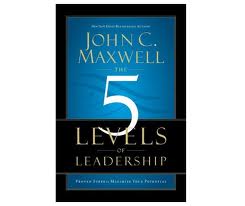
Maxwell’s book is dedicated to understanding, and developing, the 5 Levels. Each section  gives you the opportunity to learn the upside – and downside of that level; the best behaviors for that level; the beliefs that help a leader move up to the next level, and how that level ties into Maxwell’s “Laws of Leadership.” Each section then concludes with a growth guide for that level.

Beginning tomorrow and continuing for the next 5 days, I will pull out the highlights of John Maxwell’s 5 Levels of Leadership in his own words. I hope that will entice you to pick up a copy and dive into on your own!

As for me, the next time a ChurchWorld leader asks “How can I develop leaders in my church?” I will simply pull out my Kindle and invite that leader for a discussion around the 5 Levels.

Tomorrow: Level 1 – Position


Guest Services the Jesus Way…

…demonstrated so simply – and so powerfully – with a basin and a towel.

Jesus knew that the Father had put all things under his power, and that he had come from God and was returning to God; so he got up from the meal, took off his outer clothing, and wrapped a towel around his waist. After that, he poured water into a basin and began to wash his disciples’ feet, drying them with the towel that was wrapped around him.

John 13:3-5

Talk about a lasting impression! Jesus knew his time on Earth with his disciples was rapidly drawing to a close. What powerful teaching could he give them to help prepare them for the days ahead, and for a lifetime of discipleship? Only to serve them. Jesus is the most active one at the table. He is not portrayed as one who reclines and receives, but as one who stands and gives.

How will you serve your Guests this Easter Sunday?

Model Jesus.


Brainsteering

Part of the “BookNotes” series – highlights from interesting books I’ve recently read

Brainsteering: A Better Approach to Breakthrough Ideas, by Kevin Coyne and Shawn Coyne

Brainsteering – taking all the creative energy normally associated with brainstorming and steering it in a more productive direction

2 Secrets to Brainsteering:

  1. If you ask the right questions, answers and good ideas will follow
  2. The right process for generating breakthrough ideas looks very different from what you’ve been taught

4 Criteria for the Right Question

  1. Forces you to take a perspective you haven’t taken before
  2. Limits the conceptual space you can explore
  3. Must still provide lots of highly attractive possibilities
  4. Just plain succeeds

5 Patterns of Right Questions

  1. Identifying unsolved customer questions
  2. “De-averaging” users and activities
  3. Exporing unexpected successes
  4. Imagining perfection
  5. Discovering unexpected headroom

Brainsteering Workshop

  • Understand the criteria that will be used to make decisions about the workshop ideas
  • Select the right questions
  • Choose the right people
  • Separate the group into small subgroups
  • Match the question to the subgroup
  • Isolate the idea crushers into one group (the Boss, the Bigmouth, the subject matter Expert)
  • Orient the participants
  • Conduct each ideation session according to a strict formula

The Dead Horse Award

When is the last time you recognized someone who stopped doing something?

It’s a natural no-brainer to recognize and reward someone who effectively expands ministry efforts – that’s a positive and encouraging sign for others to emulate.

At the same time, it’s also a rewarding practice to acknowledge leaders who ends a program or ministry that is ineffective or not aligned with your church’s mission or strategy. Don’t get caught in “the way we’ve always done it that way” trap. Instead, encourage people to ask whether or not it’s best to continue a particular ministry or program.

Tim Stevens, Executive Pastor at Granger Community Church near South Bend, IN, lists some ministry ideas and programs they have ENDED at Granger:

  • Gen-X weekend services
  • Intensive Bible Studies for students as primary outreach
  • Building committees
  • 8 AM Sunday services
  • Classes as primary adult-discipleship programs
  • Twelve-week membership classes

He stated that some of the above programs or ideas had minimal initial success, but all of them ended up having little impact. That’s not to suggest they won’t work in a different ministry environment, because there are successful examples of all of the above. They just weren’t working for Granger, so they pulled the plug.

As with all major changes, ending an existing program or ministry requires communication, time and prayer, but can definitely pay dividends for your church in the long run.

One side benefit of rewarding people who stop dead programs is that it encourages people to take risks. Your team will soon learn that it’s okay to try out a new approach to see if it will be successful. If it doesn’t work, you can just stop doing it. This helps create a culture in which change is not only tolerated, it’s expected. People will get very creative if they know you’re going to reward their attempts to bring about positive change, whether that change is successful or not.

If you’ve got a “dead horse,” it’s time to dismount.

–          Adapted from “Simply Strategic Stuff,” by Tim Stevens and Tony Morgan

Why Design Thinking?

Because design thinking is actually a systematic approach to problem solving.

Find a leader who is innovative in any organization, and he has likely been practicing design thinking all along. It starts with the people we serve and the ability to create a better future for them. It acknowledges that we probably won’t get that right the first time. It does not require super powers.

Design Thinking’s time has come.

Design thinking can do for organic growth and innovation what TQM did for quality – take something we always have cared about and put tools and processes into the hands of leaders to make it happen.

– Jeanne Liedtka and Tim Ogilve, Designing for Growth


The Spaces of Design Thinking

Design thinkers know that there is no one “best way” to move through the process.

The continuum of innovation is best thought of as a system of overlapping spaces rather than a sequence of orderly steps. You can think of them as:

  • Inspiration – the problem or opportunity that motivates the search for solutions
  • Ideation – the process of generating, developing, and testing
  • Implementation – the path that leads from the project room to the market

Projects may loop back through these spaces more than once as the team refines its ideas and explores new directions.

The reason for the iterative, nonlinear nature of the journey is not that design thinkers are disorganized or undisciplined but that design thinking is fundamentally an exploratory process; done right it will invariably make unexpected discoveries along the way, and it would be foolish not to find out where they lead.

– Tim Brown, Change by Design

Leaders in ChurchWorld need to be design thinkers…

What spaces are you moving through today?

Generations

During the graveside service for my father, the flag honoring his military service during the end of WWII was given to my son Jason, an Airman serving in the 33rd Special Operations Squadron.

Just as the flag ceremony was over, a C-130 from the Tennessee Air National Guard flew overhead on approach to the airport. My father served in the Third Air Force, 316 Troop Carrier Group. Their primary aircraft in WWII was the C-47. Later, the C-130 was a replacement for the C-47.

It wasn’t planned, but so appropriate for the day. Jason’s father-in-law Tim is a retired Colonel; the last plane he flew was a C-130.

I am proud of the service of my father, my son’s father-in-law, and my son Jason.

Living the Dash

Hollis Donald “Doc” Adams

08/09/27 – 02/25/12

The dates above are important – they are the bookends of my father’s life. They mark a beginning and an end of his physical existence.

But it’s the dash that really tells the stories of his life.

Today and tomorrow will be filled with dozens of these stories. Family and friends are gathering from near and far to celebrate his life. 

Stories like… 

  • Born in rural Middle Tennessee on the eve of the Great Depression – becoming a part of the Greatest Generation
  • Raised on the grounds of the Hermitage, Andrew Jackson’s home outside of Nashville, where his father kept the livestock – and learning to love and care for animals early on
  • Educated in Mt. Juliet, TN – where I later attended the same schools (and had one of the same teachers)
  • Entered the Army Air Corps in the last months of WW II – and began a life-long love of military history, which he passed on to me, and I passed on to my son, who is carrying it to a new level – Airman First Class Jason Adams
  • After his Army service, he started a business with his brother – a Gulf gasoline station, which for the next 44 years was the major part of his life of service to others
  • Enjoyed a vacation in Florida in 1953, impressing a certain young school teacher from Missouri by saying he “dabbled in oil”
  • After marrying that young teacher and bringing her back to TN, they began a family of two boys
  • Educating those boys in some of his background – hunting, fishing, working with animals, helping others; but also encouraging and challenging them to find their own paths
  • Along with his wife, raising those two boys with a love for God and His Church
  • Launching those boys “out of the nest” to begin lives and families of their own

And that’s just a hint of the dash my father lived.

My father never regretted any of the dash he lived – and I hope I will be able to say the same one day.


Saying Goodbye

While visiting my son, daughter-in-law, and granddaughter in New Mexico (where my son is stationed at Cannon AFB), my father passed away.

My wife and I flew back to Charlotte today, and tomorrow morning we head to Tennessee with two of our children, while the other two join us for the memorial services later this week.

I’ll have some thoughts to share later this week…

The Lessons of Innovation

The January issue of Fast Company magazine featured articles on Generation Flux. I thoroughly enjoyed it, posting several applications to ChurchWorld:

The March issue has arrived, focusing on the world’s 50 Most Innovative Companies. Again, there are some great lessons for ChurchWorld – starting with Editor Robert Safian’s lead editorial. He linked his feature story from the Generation Flux issue to themes that emerged in the Top 50 list. Here are the top eight themes:

  1.  Growth should be a tactic, not a strategy
  2. Big companies need to be nimble as startups
  3. Tech is disruptive in unexpected places
  4. Design is a competitive advantage
  5. Social media makes products and services better
  6. Data is power
  7. Money is flowing
  8. Copycats are history

These themes emerged from business names you will recognize, but the truths behind them also have application in your organization – or they should.

Tomorrow: a closer look at these themes and how they are impacting ChurchWorld.