

Part Two of a Four-Part Series
Throughout history, beverages have shaped and signaled social performances – from who could drink what, to how drinking rituals reinforced class, power, and identity. Read the series introduction here; continue with Part Two below.
The humid Miami air was already thick at 7:00 AM, matching the heavy fog in my brain after the prior day’s long, twice-delayed flight and a marathon of late-night catch-up work. My host, glowing with an energy I couldn’t comprehend, walked me to a bustling ventanita (a walk-up coffee shop). “You’re in for a treat,” she promised, sliding a tiny cup toward me.
I’ll admit, I was skeptical. It looked like a doll-sized serving of ink. But I had a full day ahead of me, and I welcomed my host’s efforts at waking me up – as well as learning some Cuban coffee expressions.
The first sip of that Cafecito (traditional Cuban espresso shot) was a revelation. The espumita – a whipped, sugary foam – hit my tongue first, followed by a dark, viscous bolt of lightning that seemed to bypass my stomach and go straight to my soul.
The world suddenly snapped into high-definition. The rhythmic music nearby and the rapid-fire Spanish all around me grew vibrant and clear. I wasn’t just awake; I was Miami-awake. It wasn’t just caffeine – it was a warm, liquid welcome to the city.
When the sommelier asks if you’d prefer red or white, when you deliberate between the single-origin pour-over and the regular drip, when you order your whiskey neat instead of on the rocks – you’re not just selecting a beverage. You’re making a statement about who you are, or at least who you’re performing in that moment. These choices carry centuries of social meaning, compressed into a single sip.
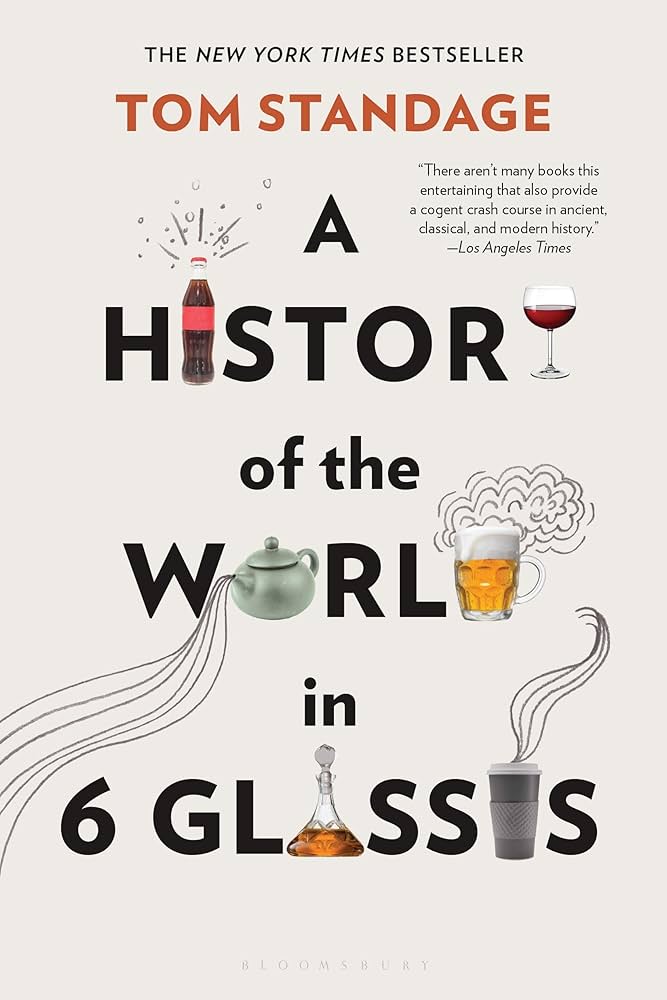
Tom Standage’s A History of the World in 6 Glasses traces how beer, wine, spirits, coffee, tea, and cola shaped civilizations from ancient Mesopotamia to modern America. But beyond their role in commerce, agriculture, and empire-building, these beverages served another crucial function: they became props in humanity’s ongoing social performances, tools for signaling status, allegiance, refinement, and belonging. Each drink carried its own social script, its own rules for proper performance, its own meaning in the intricate theater of class and culture.
Consider beer, humanity’s first beverage beyond water and milk. In ancient Mesopotamia and Egypt, beer wasn’t just sustenance – it was currency, payment for labor, and a marker of civilization itself. To drink beer was to perform being human rather than animal, settled rather than nomadic. But even this earliest of drinks quickly developed social hierarchies. The Sumerians had multiple words for different beer qualities; workers received rations of lower-grade beer while elites enjoyed premium brews. The performance of status began with the first fermented grain.
Wine elevated these social scripts to high art. In ancient Greece and Rome, wine drinking became an elaborate performance space governed by strict protocols. The symposium wasn’t merely drinking – it was theater, with prescribed roles, speeches, toasts, and rituals. The type of wine, its dilution with water, even the angle at which you reclined while drinking it all signaled your education, status, and sophistication. To drink wine improperly was to reveal yourself as barbarous, uncultured, unworthy of elite company.
Spirits introduced a democratizing force – and immediate moral panic. Distillation technology made alcohol cheaper and more potent, threatening the class boundaries that wine and beer had helped maintain. Suddenly, the lower classes could access intoxication previously reserved for the wealthy. The social performances around spirits reflected this anxiety: gin was demonized as “mother’s ruin” in 18th-century England, associated with poverty and moral degradation, while brandy and cognac retained respectability through their association with the upper classes. The same chemical compound, ethanol, carried completely different social meanings depending on its source and price point.
Then coffee and tea arrived, and the performance changed entirely. Coffeehouses in 17th-century England became radical spaces – what Standage calls “penny universities” – where, for the price of a cup, any man could sit and debate politics, science, and philosophy with his equals. Here was Erving Goffman’s theory of social performance in action: the coffeehouse deliberately leveled hierarchies. Titled nobility and common merchants sat together, both performing the role of rational, enlightened citizens. The beverage itself – stimulating rather than intoxicating – supported this new performance of sober, clear-headed discourse.
But this egalitarian potential was always contested. Tea became the beverage of British imperialism and domestic refinement, with elaborate rituals that enforced class and gender boundaries. The proper performance of teatime required specific knowledge: which leaves for which occasions, proper brewing temperatures, the correct angle for extending one’s pinkie (actually a myth, but one that reveals our anxiety about performing refinement correctly). Tea drinking became feminized in Britain while coffee remained masculine, creating gendered scripts for beverage consumption that persist today.
The temperance movement and Prohibition represent perhaps the most dramatic attempt to control social performance through beverage regulation. If drinking alcohol signaled certain social identities – worldliness, masculinity, immigrant culture – then banning it was an attempt to mandate new performances of citizenship. Prohibitionists weren’t just concerned about drunkenness; they feared the social spaces alcohol created (saloons, beer gardens) and the performances these spaces allowed. The speakeasy, in response, became a stage for performing rebellion, sophistication, and modernity, with cocktail culture emerging as an elaborate performance of insider knowledge and cultural sophistication.
Coca-Cola’s rise tells the final chapter in Standage’s history, representing American capitalism’s ability to bottle and commodify social performance itself. Coke wasn’t just refreshing – it was democratic, modern, optimistic, distinctly American. To drink Coke was to perform a certain kind of citizenship, one compatible with consumer capitalism and global empire. The company’s marketing explicitly encouraged this: drinking Coke made you part of a worldwide community, a performer in a global drama of shared taste and values.
Today’s beverage landscape has exploded into a dizzying array of performance possibilities. The craft cocktail revival demands knowledge of pre-Prohibition recipes and obscure bitters. Specialty coffee requires fluency in single-origin terminology and brewing methods. Wine culture has spawned sommeliers, certifications, and an entire vocabulary for performing connoisseurship. Even water – bottled, sparkling, alkaline, artisanal – has become a stage for class performance.
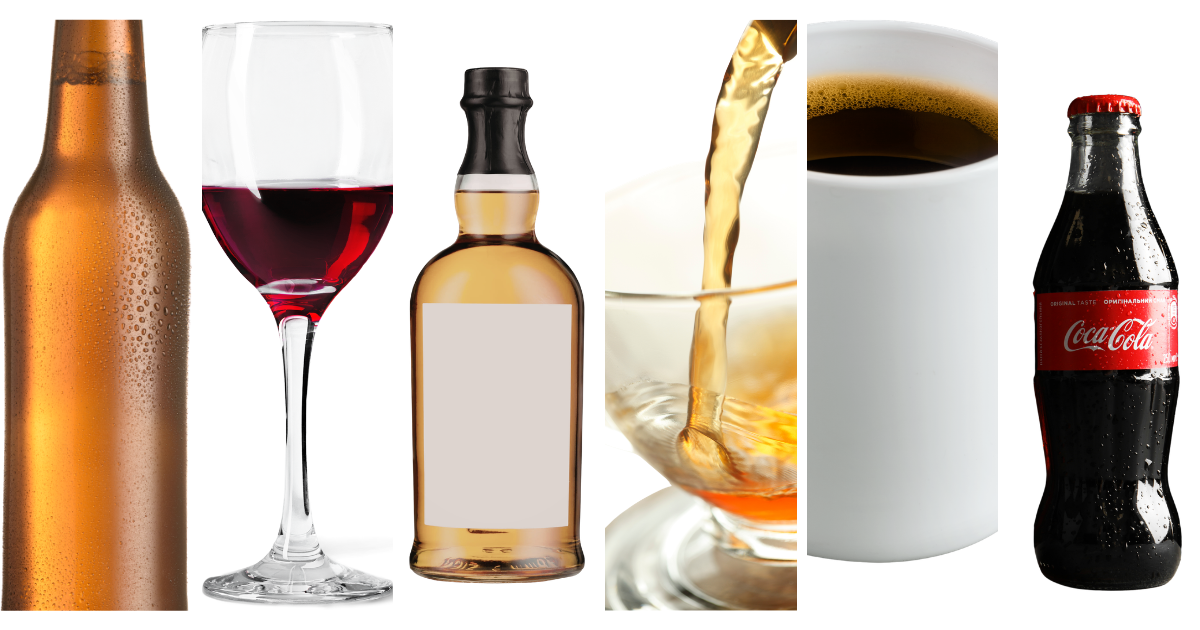
Social media has amplified these performances exponentially. The drink isn’t just consumed; it’s photographed, hashtagged, and broadcast. The latte art, the cocktail’s garnish, the wine label – all become props in our ongoing impression management. We’re not just drinking; we’re curating evidence of the kind of people we want others to believe we are.
What Goffman understood, and what Standage’s history reveals, is that these performances are never trivial. The beverages we choose and how we consume them are bound up with power, identity, and belonging. They mark us as insiders or outsiders, sophisticated or gauche, traditional or progressive. Every sip is a statement, every toast a small drama of affiliation and distinction.
The remarkable continuity across Standage’s Six Glasses is how quickly each beverage became incorporated into systems of social meaning and performance. From Sumerian beer halls to contemporary coffee shops, we’ve always used what we drink to signal who we are and where we belong. The specific drinks may change, but the underlying drama remains the same: we’re all performing our place in the social order, one carefully chosen beverage at a time.
The question isn’t whether we perform through our drink choices – we inevitably do. The question is whether we’re conscious of the scripts we’re following and the impressions we’re managing. After all, understanding the performance doesn’t free us from the stage. It just makes us more deliberate actors in the ongoing drama of social life.

Part of a regular series on 27gen, entitled Wednesday Weekly Reader.
During my elementary school years one of the things I looked forward to the most was the delivery of “My Weekly Reader,” a weekly educational magazine designed for children and containing news-based current events.
It became a regular part of my love for reading, and helped develop my curiosity about the world around us.
 27gen.com