
For avid readers, finishing a book rarely means closing the door on a subject – it’s an invitation to walk through an entirely new threshold. A compelling read ignites curiosity, leaving you hungry to explore the ideas, worlds, or authors it introduced. Like a tasty appetizer designed to whet your appetite for more, one volume becomes a portal to countless others, each building on what came before.
This phenomenon mirrors what author Mortimer Adler called “synoptical reading” – the practice of reading multiple books on the same subject to develop a richer, more nuanced understanding. Rather than treating books as isolated experiences, synoptical reading encourages us to place them in conversation with one another, discovering patterns, contradictions, and deeper truths that no single author could provide alone.
This is the power of being a lifelong reader: books connect in unexpected ways, forming constellations of knowledge across your shelves. A novel about artificial intelligence leads to philosophy texts on consciousness. A memoir sparks interest in a historical period, which branches into biographies, primary sources, and cultural criticism.
Today’s #WednesdayWeeklyReader article will launch just such a reading journey, illustrating how one book unlocks fascinating connections and paths of discovery you never anticipated.
The best readers don’t just finish books; they follow them wherever curiosity leads.
Today’s book is a great example – not only is it fascinating on its own merits, it also launched a comparison with a brand new book which in turn will become a mini-series on the “hidden” theme behind both books – entailing a re-read of four wonderful books through a new lens.
Come along for the delicious journey!
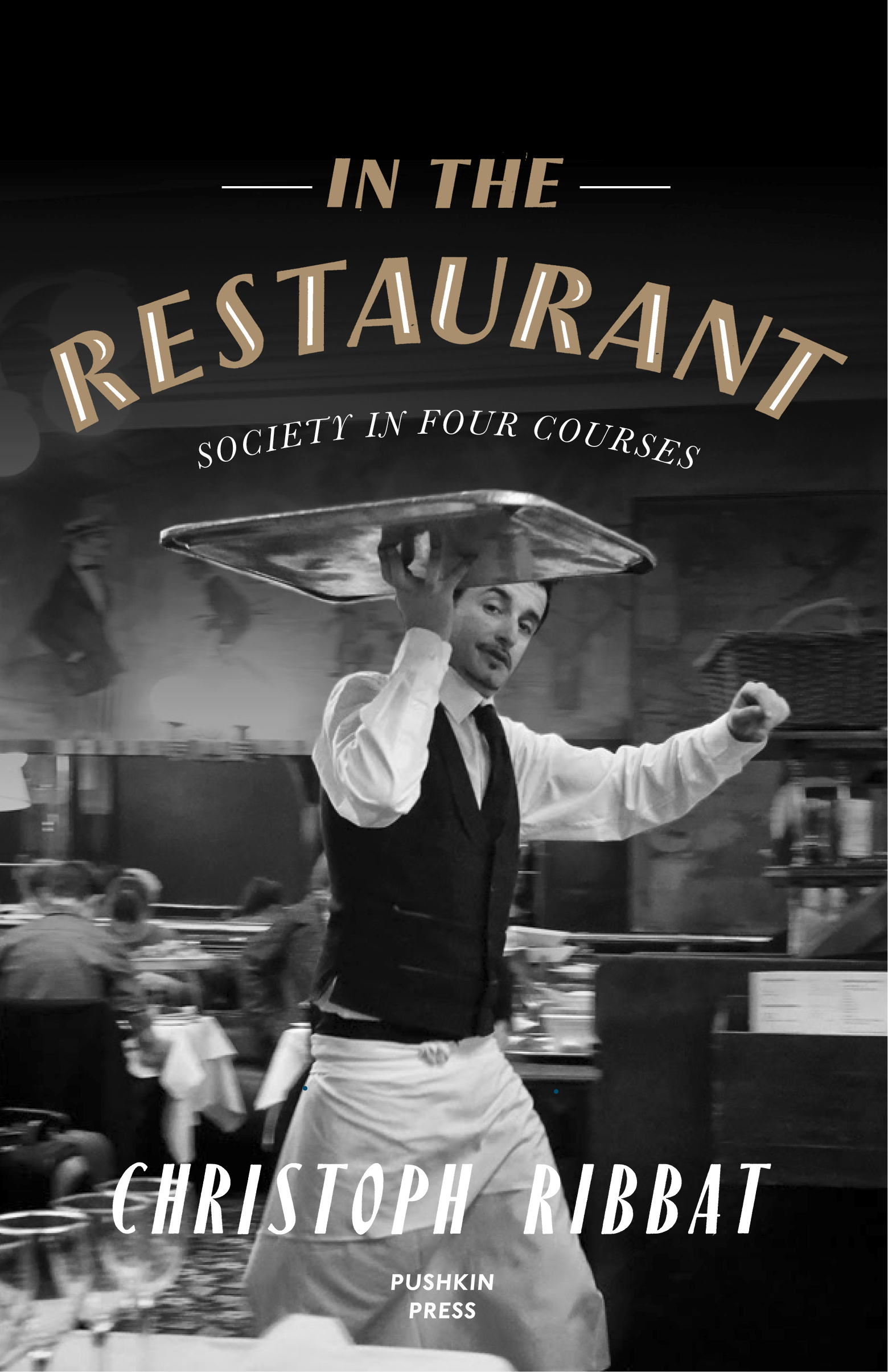
If you’ve ever sat in a dimly lit restaurant, nursing a beverage and wondering why the waiter looks frantic, or why the kitchen sounds like a war zone, Christoph Ribbat has written the book for you. In the Restaurant: Society in Four Courses isn’t just a history of dining; it’s a backstage pass to the most enduring theater in human history.
Ribbat, a professor of American Studies, doesn’t serve a dry, chronological textbook. Instead, he delivers a tasting menu of anecdotes, spanning from the birth of the “bouillon” shops in 18th-century Paris to the high-pressure, tattooed intensity of the modern celebrity kitchen.
The Concept: More Than Just Food
The core thesis of Ribbat’s work is simple yet profound: The restaurant is the laboratory of modern life. It is a place where class struggles, gender roles, immigration, and technology collide over a plate of delicious food.
He structures the book like a meal, but the “courses” are less about the food and more about the human experience. He explores:
- The Labor: The invisible hands – the dishwashers, the prep cooks, and the weary servers.
- The Atmosphere: How lighting, seating, and architecture dictate our behavior.
- The Drama: The inherent tension between the “front of house” (the performance) and the “back of house” (the chaos).
A Whirlwind Tour of Culinary History
Ribbat excels at finding the “human” in the history. He takes us through the evolution of dining with a novelist’s eye for detail.
He begins with the foundational myth of the restaurant. In the 1760s, A. Boulanger sold “restoratives” (soups) meant to heal the sickly. From these humble, medicinal beginnings, the restaurant transformed into a venue for the elite to show off and, eventually, for the masses to find a temporary escape.
One of the most engaging sections involves the psychology of service. Ribbat explores the “subservient but superior” paradox of the waiter. He touches on the works of George Orwell, who famously worked as a plongeur (dishwasher) in Paris, describing the soul-crushing filth hidden behind the swinging doors of luxury hotels.
Ribbat doesn’t ignore the seismic shift brought by industrialization. He tracks the rise of the “Automats” – those eerie, chrome-and-glass vending machine restaurants where human interaction was replaced by the clink of a coin. This leads naturally into the rise of McDonald’s and the “McDonalization” of society, where efficiency and predictability became the ultimate ingredients.
Why It’s Such an Entertaining Read
What makes this book “engaging” rather than “academic” is Ribbat’s mosaic style. He jumps from a 1920s Berlin café frequented by intellectuals to a modern-day diner in the American Rust Belt.
- Anecdotal Depth: He shares stories of famous chefs going mad and waiters writing manifestos
- Cultural Breadth: He connects fine dining to jazz, literature, and even the history of the elevator
- The “Vibe”: The writing is snappy, slightly cynical, and deeply observant.
“The restaurant is a place of longing,” Ribbat suggests. It is where we go to be someone else for an hour or two – to be served, to be seen, or to disappear.
The “Four Courses” Breakdown
While the book flows like a long conversation, it can be distilled into four thematic movements:
- The Invention of the Guest: How we transitioned from eating at communal tables in inns to the private, individualized experience of the modern table.
- The Kitchen as a Factory: The brutal reality of the “brigade system” (standardized by Escoffier), which turned cooking into a military operation.
- The Dining Room as a Stage: The sociology of where we sit, who we look at, and the “performance” of the meal.
- The Future of the Table: Reflections on how digital culture and globalism continue to reshape the way we consume.
The Verdict: A Must-Read for Foodies and People-Watchers Alike
If you are looking for a book that tells you exactly how to cook a soufflé, keep moving. But if you want to understand why we pay a premium to sit in a room with strangers and be brought things on trays, this is gold.
The Strengths: Ribbat’s greatest strength is his ability to make the mundane seem miraculous. He takes a simple object – a menu, a white tablecloth, a tip – and unravels its complex social history. His prose (here translated from the original German) is witty and sharp. He avoids the “food porn” trap, focusing instead on the grit and the glory of the industry.
The Weaknesses: At times, the “mosaic” style can feel a bit fragmented. If you prefer a linear, A-to-Z history, the jumping between centuries might give you a mild case of intellectual indigestion. However, the short, punchy chapters make it an excellent “commuter read.”

In the Restaurant is a reminder that every meal out is a tiny miracle of logistics and human endurance. It strips away the garnish to show us the bones of the industry. It’s a book about hunger – not just for food, but for status, connection, and a moment of peace in a loud world.
Next time you’re at a restaurant and the service is a little slow, you might find yourself less annoyed and more curious about the invisible drama unfolding behind the kitchen doors, thanks to Ribbat.
While this book was a great read and stands on its own, about the same time I began reading it I happened to pick up a brand new book from my weekly “Lunch and Learn” library trip. I’m always on the lookout for culinary books, and it seemed interesting. What I didn’t expect was how closely it could be compared to In the Restaurant, and how both of them together introduced a totally new direction for exploration!
Next Week: The New Rules of Dining Out

Part of a regular series on 27gen, entitled Wednesday Weekly Reader.
During my elementary school years one of the things I looked forward to the most was the delivery of “My Weekly Reader,” a weekly educational magazine designed for children and containing news-based current events.
It became a regular part of my love for reading, and helped develop my curiosity about the world around us.
 27gen.com