
There’s no better way to close out 2025 on Wednesday Weekly Reader than to take a look at the long awaited and recently released book Worlds to Conquer: The Art and Making of Walt Disney’s Fantasia by J.B. Kaufman.
Disney fandom – at least that segment fascinated by the backstories and development of Disney animated classics – eagerly awaited the book’s release as soon as it was announced.
The concept of Fantasia?: The world’s greatest music, presented according to the highest acoustic standard, and illustrated by the brilliance of the Disney studio at the height of its powers. The journey of how Fantasia came to be, beset with almost insurmountable challenges at the time, is one of the most breathtaking in movie history.
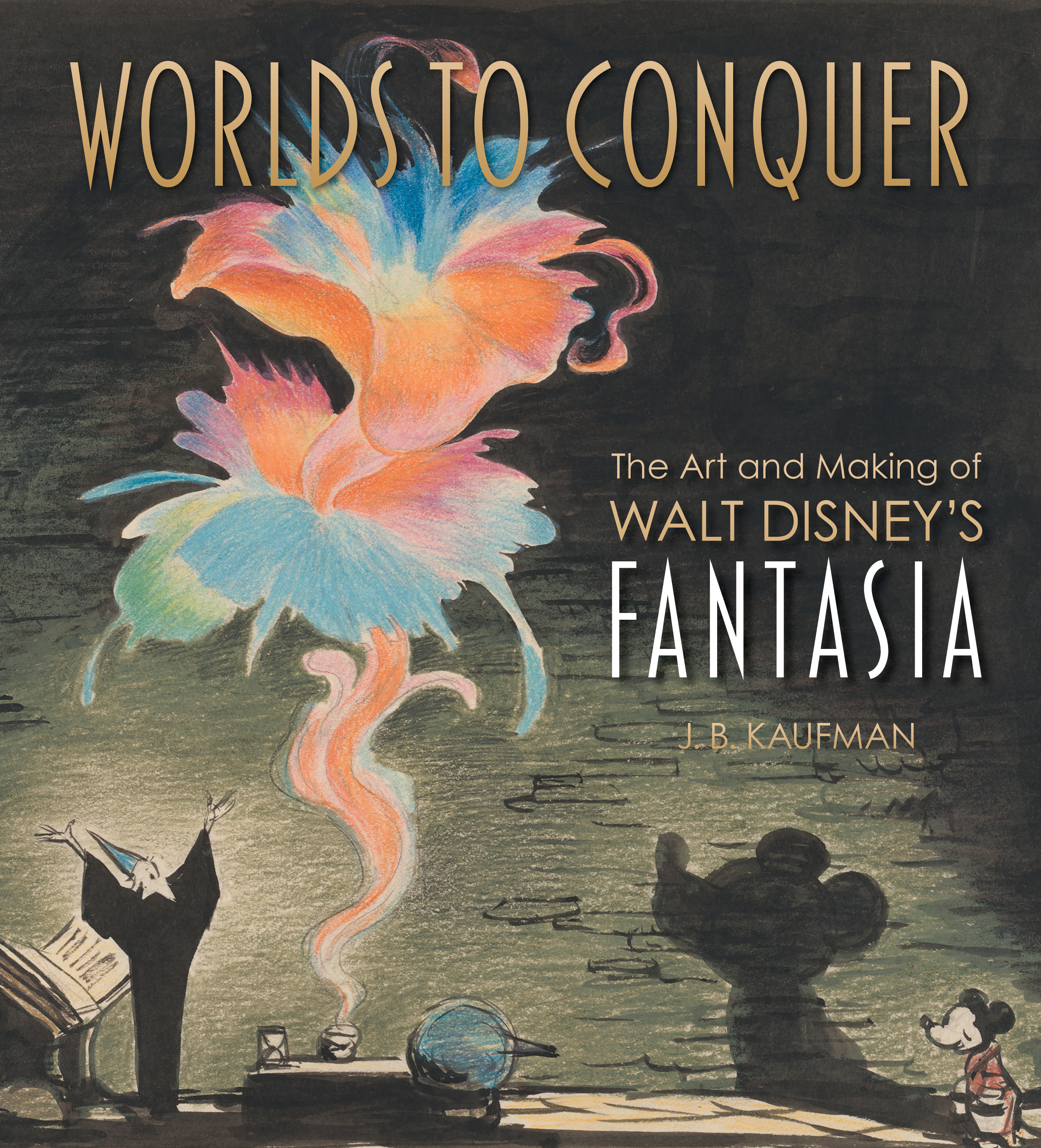
Worlds to Conquer: The Art and Making of Walt Disney’s Fantasia by esteemed film and Disney historian J.B. Kaufman is an exhaustively researched and lavishly illustrated deep dive into the creation of Walt Disney’s most ambitious and experimental animated feature, Fantasia (1940).
The book details the remarkable collaboration between Walt Disney and legendary conductor Leopold Stokowski, whose meeting led to the groundbreaking idea of illustrating the world’s greatest classical music with animation. Kaufman chronicles the entire history of the film, originally conceived as The Concert Feature, from its origins in the Sorcerer’s Apprentice short to its audacious, feature-length concept, which was intended to be continually revised and re-released with new segments.
Key elements of the book’s narrative include:
- The Genesis of the Idea: Tracing the project from a simple short starring Mickey Mouse to its expansive vision as an animated concert film.
- The Creative Process: Providing detailed, segment-by-segment breakdowns of the animation, art, and storytelling, utilizing rare archival materials, including sketches, concept art, and never-before-published production photos.
- Technical Innovation: Explaining the development of Fantasound, the pioneering stereophonic sound system created specifically for the film’s roadshow release – a crucial, though financially prohibitive, element of Walt’s original vision.
- The Aftermath: Documenting the film’s controversial initial reception, which ranged from high praise to intense criticism, its struggles at the box office due to the massive production and distribution costs (exacerbated by World War II), and its subsequent history of re-releases and edits over the decades.
A Definitive Scholarly Achievement
Kaufman, known for his meticulous research in books like The Fairest One of All (on Snow White) and Pinocchio: The Making of the Disney Epic, delivers what can easily be called the ultimate guide to Fantasia. The book is a treasure trove of historical insight, moving beyond standard production stories to offer a true scholarly examination of the film’s cultural and technical significance.
Key Strengths:
- Archival Depth: The book’s most compelling feature is its wealth of primary source material. Kaufman’s access to the Disney archives allows him to present details – like animator Art Babbitt finding inspiration for the Nutcracker Suite mushroom in Curly Howard of The Three Stooges – that even dedicated Disney fans may not know.
- Contextualization: The work excels at placing Fantasia within the context of both the Disney Studio’s golden age and the broader history of cinema and music. It highlights how the film was nothing less than a deliberate challenge to existing preconceptions of the arts.
- Visual Splendor: As with Kaufman’s previous “Making Of” books, the volume is lavishly designed and filled with high-quality reproductions of rare artwork, making it a spectacular coffee-table book as well as an academic resource. The images add crucial instructive value to the technical explanations.
An article many times this length would not do justice to Worlds to Conquer. The individual segments of the film, its lengthy development and production, and the many elements left reluctantly on the cutting room floor speak to the complexity that Kaufman has brilliantly researched and written.
It is my hope that the words above will entice Disney fans to acquire the book, and enjoy the hours of reading it will give them.
That being said, I want to take a deeper dive into what I think is the most influential and long-lasting segment of Fantasia: the section based on the music The Sorcerer’s Apprentice.
The Magic that Built the Kingdom: Bridging 1940 to Today
In 1940, Walt Disney’s Fantasia was intended to be more than just a film; it was a sensory revolution that sought to elevate animation to the status of high art. At its heart was The Sorcerer’s Apprentice, a segment that didn’t just give Mickey Mouse a new pair of pupils and a more expressive form, but a new soul. This singular moment of cinematic sorcery provided the creative DNA for what would eventually influence the creation of Walt Disney Imagineering and the resulting “kingdoms” of theme parks all around the world.
The same “magic” Mickey wielded on the big screen – the audacious ability to turn a dream into a tangible, moving reality – became the philosophical foundation for building physical worlds. That blue, star-studded hat evolved from a simple movie prop into a badge of office for the artists and engineers who realized that “imagination” required “engineering” to truly come alive. Today, whether he is conducting the mist-screens of Fantasmic! or guiding us through the 4D chaos of Mickey’s PhilharMagic, Sorcerer Mickey remains the essential bridge between Walt’s earliest artistic ambitions and the immersive, high-tech wonders of the modern Disney Parks era.
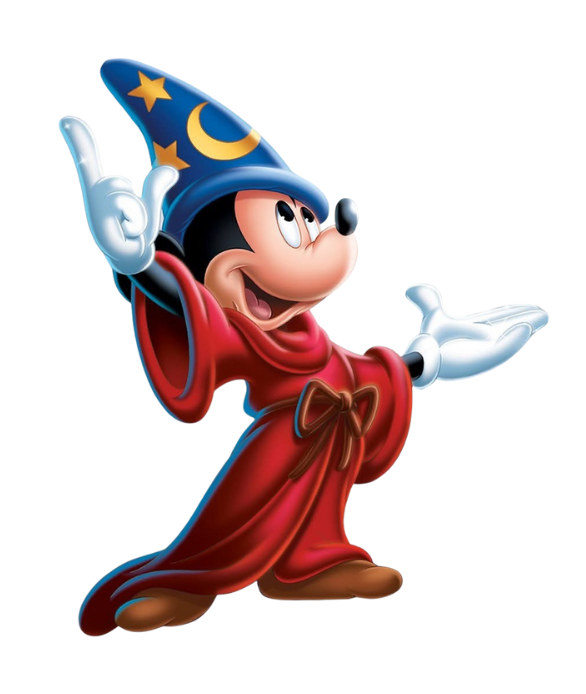
Origins: The Sorcerer’s Apprentice (1940)
The character known as “Sorcerer Mickey” made his big-screen debut in 1940 as the protagonist of “The Sorcerer’s Apprentice” segment in the feature film Fantasia. Because this segment originally began in early 1938 before the concept of what came to be known as Fantasia was developed, the “new” Mickey Mouse was released in three shorts between 1938 and 1940.
- The Problem: By the late 1930s, the classic “pie-eyed” Mickey Mouse, while beloved, was starting to be overshadowed in popularity by more boisterous and comedic characters like Donald Duck and Goofy. Walt Disney sought an ambitious project to bring Mickey back into the spotlight.
- The Concept: The idea originated as an elaborate Silly Symphony short based on the 1897 symphonic poem by Paul Dukas, which was itself inspired by the 1797 poem “Der Zauberlehrling” by Johann Wolfgang von Goethe. The plot involves a young apprentice of the sorcerer Yen Sid (an anagram of “Disney”), who borrows his master’s magical hat to bring a broomstick to life to do his chore of filling a cistern.When the apprentice forgets the counter-spell, the magic spirals wildly out of control, leading to a near-disastrous flood.
- The Expansion: The project grew in scope and budget, particularly after Walt Disney began collaborating with legendary conductor Leopold Stokowski. To justify the immense expense, the decision was made to expand the single short into a revolutionary, full-length animated feature film set to classical music – Fantasia.
Key Differences in the Character
“The Sorcerer’s Apprentice” was the catalyst for a significant redesign and shift in Mickey’s on-screen persona.
| Feature | Classic Mickey (Pre-1940) | Sorcerer Mickey (Fantasia) and After |
| Visual Design | “Pie-eyes” (black ovals with no pupils) and a less-rounded body. | First appearance with pupils for greater expression; rounder, more child-like features (redesigned by animator Fred Moore). |
| Costume | Signature red shorts, white gloves, and yellow shoes. | Iconic blue wizard’s cap adorned with white stars and a crescent moon, a long red robe, and exaggerated brown shoes. |
| Personality | Often a mischievous prankster, happy-go-lucky, or an everyman hero. | Eager, ambitious, and slightly reckless, showcasing a powerful but uncontrolled desire for magic and grandeur. He is a character of pure awe and fantasy. |
Significant Uses Since 1940
Sorcerer Mickey’s image has become one of the most powerful and recognizable symbols of the Walt Disney Company, frequently used to represent magic, creativity, and the entire Disney Parks experience.
- 1950s – Present: Disney Parks Iconography: The costume quickly became a symbol of Disney magic. Sorcerer Mickey appears frequently in character meet-and-greets, merchandise, and as a mascot for major milestones.
- 1989 – Present: Fantasmic!: Sorcerer Mickey is the central figure in the long-running nighttime spectacular Fantasmic! at both Disneyland Park and Disney’s Hollywood Studios at Walt Disney World. In this show, he uses his imagination and the Sorcerer’s Hat to battle villains and save the day, solidifying his role as a heroic wielder of magic.
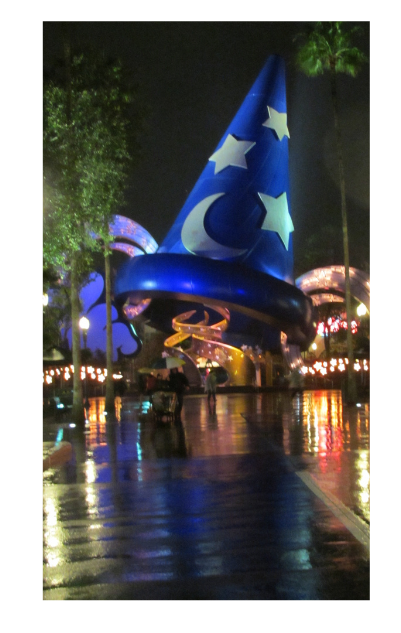
- 1990s – 2015: Disney’s Hollywood Studios Centerpiece: A massive, 122-foot-tall Sorcerer’s Hat stood for many years as the park’s primary icon, serving as a powerful visual tribute to Fantasia.
- 2000: Fantasia 2000: The original “Sorcerer’s Apprentice” segment was remastered and included in the sequel film, Fantasia 2000, reaffirming its importance.
- 2002 – Present: Kingdom Hearts Video Game Series: King Mickey often adopts his Sorcerer Mickey outfit and powers in the popular Kingdom Hearts video game franchise, further expanding his presence in contemporary media.
Why the Character is Beloved
Sorcerer Mickey is cherished by Disney fans for several profound reasons:
- Symbol of Ultimate Disney Magic: He is the visual embodiment of the magic inherent to the Disney brand. The starry hat and sweeping robe instantly conjure feelings of wonder, fantasy, and the limitless potential of imagination.
- The Human Element of Mickey: The “Apprentice” story is highly relatable. Mickey’s desire for an easy shortcut (letting the brooms do the work) and his subsequent panic when the situation spirals out of control showcase a vulnerability that fans connect with. He is a dreamer who makes mistakes, unlike the more perfect, ambassadorial Mickey of later years.
- Aesthetic Grandeur: The music of Paul Dukas and the magnificent, expressionistic animation of the sequence make it one of the most visually stunning pieces of Disney film history. The image of Mickey standing on the mountaintop, directing the cosmos, is a moment of pure, transcendent artistry.
- Legacy and Nostalgia: As the face of Fantasia – a film that, for many, represents Disney’s most audacious and artistic endeavor – Sorcerer Mickey is inextricably linked to a time of creative innovation and grandeur.
The Sorcerer Mickey character, therefore, is not just a costume change; it is the iconic representation of Mickey as the dreamer, the innovator, and the powerful, if sometimes clumsy, master of his own destiny.
Sorcerer Mickey and Walt Disney Imagineering (WDI)
The story of Sorcerer Mickey within the parks is inseparable from the history of Walt Disney Imagineering (WDI). WDI, the highly creative and secretive arm of The Walt Disney Company responsible for designing and building all Disney theme parks and attractions, has a history rooted in the creation of Disneyland.
- 1952: WED Enterprises: Walt Disney founded the company on December 16, 1952, originally calling it Walt Disney, Inc., to handle the immense task of designing Disneyland. The name was quickly changed to WED Enterprises -standing for Walter Elias Disney – to keep it separate from the publicly traded film studio.
- A Unique Blend: WED was a combination of artists, architects, engineers, writers, and technicians. The term “Imagineering” is a portmanteau combining Imagination and Engineering, perfectly defining the division’s mission: to dream up fantastic worlds and figure out the technology to make them real. Walt Disney himself later championed the term, and it officially became Walt Disney Imagineering (WDI) in 1986.
The Sorcerer as the Mascot
Sorcerer Mickey naturally became the unofficial, and often official, mascot and visual signature of Imagineering for decades.
| Element | Rationale |
| Magic and Engineering | The character perfectly embodies the fusion of imagination and engineering. Sorcerer Mickey uses the magical hat to bring his designs (the brooms) to life, but his lack of control requires the Sorcerer/Yen Sid (the master Imagineer) to step in and restore order. It’s a parable for the creative process: inspiration (the magic) must be balanced with discipline and engineering (the counter-spell). |
| The WDI Logo | For many years, an image of Sorcerer Mickey, often standing with his arms raised, appeared on internal WDI merchandise, pins, and as a primary visual identifier for the division. Cast Members who worked for WDI received exclusive merchandise featuring the character, reinforcing the internal identity. |
| The Park Icon | In the most explicit Imagineering use, a colossal, 122-foot-tall Sorcerer’s Hat was constructed at the end of Hollywood Boulevard in Disney’s Hollywood Studios (then Disney-MGM Studios) in 2001. Though sometimes controversial with guests who felt it blocked the view of the Chinese Theatre, its existence was a monumental testament to Imagineering’s ability to create a symbol of pure Disney magic on an epic, structural scale. |
Moving Away in Recent Years
In the 21st century, the prominent use of Sorcerer Mickey as the singular emblem for Imagineering and the parks has gradually been phased out, driven by a desire for a more diverse and contemporary identity.
- Removal of the Icon: The most symbolic change was the removal of the Sorcerer’s Hat at Disney’s Hollywood Studios in early 2015. This decision was part of a larger, long-term effort to transform the park from a generalized “studio” concept back to its original vision of celebrating the Golden Age of Hollywood and, more recently, to focus on immersive, specific IP-based lands (like Star Wars: Galaxy’s Edge). The removal restored the sight lines and eliminated a universal symbol of magic in favor of more specific narrative architecture.
- The Rise of Specific IP: Modern Imagineering projects are increasingly focused on creating fully immersive environments based on powerful intellectual properties (IPs) – from Pandora – The World of Avatar to Toy Story Land. Using a character like Sorcerer Mickey as the universal symbol is less critical when the park’s primary icons are now the Millennium Falcon or the Tree of Life.
- Shift in Internal Branding: While Sorcerer Mickey is still revered, WDI has moved toward using less character-specific or more abstract, modernized logos for official communication. This shift emphasizes innovation and the future of placemaking over a single, historical character portrayal.
Despite these changes, the spirit of Sorcerer Mickey – the ambitious blending of fantasy and feasibility – remains the core principle of Walt Disney Imagineering.
The Origins and Development of Fantasmic!
Fantasmic! is Disney’s premier nighttime spectacular, marrying fire, water, light, and fireworks into a grand, character-driven narrative. Its creation marked a significant moment in Disney Parks entertainment.
The Need for a New Spectacle
- The Setting: The show premiered at Disneyland Park in Anaheim, California, on May 15, 1992.
- The Motivation: By the early 1990s, Disneyland needed a new, spectacular nighttime offering, particularly for the Rivers of America area. While the area hosted the Main Street Electrical Parade and fireworks, Imagineering wanted a show that utilized the unique geography of Tom Sawyer Island (now Pirate’s Lair on Tom Sawyer Island) and the river itself.
- A “Character-Driven” Show: Unlike traditional fireworks shows that focused on pyrotechnics and music, Fantasmic! was conceived as a story-first production. The core creative challenge was: How do you create a massive, exciting water and light show that focuses entirely on a beloved character? The answer was Sorcerer Mickey.
Imagineering’s Creative Breakthrough
The show’s concept originated with Show Director and Creative Vice President Barnette Ricci and her team at Walt Disney Imagineering. The goal was to place Sorcerer Mickey at the center of a dream-like, epic conflict.
- The Premise: The show is presented as a journey inside Sorcerer Mickey’s imagination and dreams. It starts with him conducting the water and light (much like he conducts the cosmos in Fantasia), transitioning through nostalgic Disney moments, and culminating in a terrifying nightmare where the Disney villains try to turn his imagination against him.
- Technological Innovation:Fantasmic! required the invention of new technology to achieve its scale and integration of elements:
- Mist Screens: The show famously uses high-pressure water cannons to create immense, concave sheets of water vapor that serve as 30-foot tall projection screens. This was a breakthrough, allowing animated clips and effects to appear suspended over the water.
- The Dragon: The original show’s centerpiece was the confrontation with a massive, animatronic Maleficent Dragon that breathes real fire. This was one of the largest and most complex animatronics created for an outdoor stage at the time. The dragon was destroyed in a fire in April 2023 and replaced with by an elevated Maleficent figure in her human form during the finale battle with Sorcerer Mickey Mouse.
- The Island Stage: Tom Sawyer Island was completely refitted with hidden pyrotechnics, lighting trusses, and launch mechanisms to serve as the sprawling, multi-level stage for the live actors and boats.
Legacy and Expansion
Fantasmic! was an immediate and overwhelming success, driving attendance and solidifying its place as a cornerstone of the Disneyland experience.
Walt Disney World Version (1998): Due to its popularity, a second, redesigned version of the show opened at what is now Disney’s Hollywood Studios in Florida. This version is performed in a permanent, custom-built stadium called the Hollywood Hills Amphitheater, allowing for greater seating capacity and a much larger stage, featuring different characters and unique effects compared to the California version.
Fantasmic! – in both versions – cemented Sorcerer Mickey’s role not just as a symbol, but as an active, heroic protagonist who uses the power of his imagination – the very magic of Disney – to defeat evil and restore harmony.
No history of Sorcerer Mickey is complete without discussing his “appearance” in the 4D spectacular Mickey’s PhilharMagic. While Donald Duck is the true star of this show, the entire plot hinges on the magical power of the Sorcerer’s Hat.
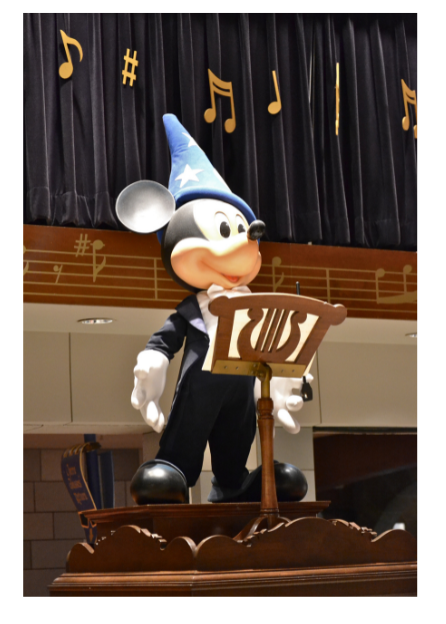
Mickey’s PhilharMagic: A 4D Sym-Funny
Opened in 2003 at Magic Kingdom (and later at Disney parks worldwide), Mickey’s PhilharMagic is a 12-minute 4D experience that serves as a modern love letter to Disney’s musical legacy.
The Sorcerer’s Connection
The story begins with Mickey Mouse preparing to conduct the PhilharMagic Orchestra. Before he takes the stage, he leaves his famous Sorcerer’s Hat on the podium, strictly warning his stagehand, Donald Duck, not to touch it.
Naturally, Donald cannot resist. Upon donning the hat, the magical instruments rebel, and Donald is sucked into a whirlwind journey through the greatest hits of the Disney Renaissance. The hat serves as the “portal” that allows Donald (and the audience) to travel between musical worlds.
Groundbreaking Technology
Imagineering pushed the limits of sensory storytelling with this attraction:
- The World’s Largest Screen: The show features a 150-foot-wide seamless wraparound screen, the largest of its kind ever built. At the climax, the proscenium disappears, and the image expands to fill the guest’s entire field of vision.
- First-Ever 3D Models: This was the first time classic characters like Ariel, Lumière, and Simba were modeled and animated entirely in 3D CGI. Imagineering even brought back original animators (like Glen Keane for Ariel) to ensure the 3D versions remained true to their hand-drawn roots.
- Sensory “4D” Effects: To deepen the immersion, the theater is equipped with:
- Scents: The smell of fresh apple pie during Be Our Guest.
- Water: Light mists during the Sorcerer’s Apprentice broom segment.
- Wind: A cool breeze while flying over London and Agrabah.
Significant Scenes & Updates
The show features iconic sequences including Part of Your World, I Just Can’t Wait to Be King, and A Whole New World. In 2021, a new segment based on Pixar’s Coco was added, featuring the song “Un Poco Loco,” marking the first time a Pixar property was integrated into the show.
The attraction ends with a classic “slapstick” Disney moment: Mickey returns to reclaim his hat and restore order, while a defeated Donald is launched out of a tuba and – through the use of a physical animatronic – ends up stuck in the back wall of the theater.
The story of Sorcerer Mickey is one of resilience, proving that a character born from a “great experiment” in 1940 could become the very soul of a global entertainment empire. As we look toward the future, his role continues to evolve from a mere mascot into a profound symbol of the creative process itself.
The Future: A Return to the Magic
While the mid-2010s saw a temporary “de-Mickeyfying” of some park aesthetics (most notably the removal of the giant Sorcerer’s Hat from Disney’s Hollywood Studios in 2015), the late 2020s are ushering in a “Great Re-Integration.”
- The Return of the Hat (2026): In a move that delighted long-time fans, Disney recently announced that the Sorcerer’s Hat will return to Disney’s Hollywood Studios in 2026. Rather than a standalone icon, it will top the newly reimagined “Magic of Disney Animation” attraction – a replica of the iconic building at the Walt Disney Studios in Burbank. This placement signals a shift: Sorcerer Mickey is no longer just a “signpost,” but a guide to the actual artistry of animation.
- The Hero of the High Seas: On the newest fleet of ships, such as the Disney Destiny (launched in November 2025), Sorcerer Mickey has been elevated to a “Hero” archetype. He serves as the thematic anchor for high-end concierge spaces and elevator banks, positioned as the heroic counterpart to villains like Maleficent.
- A Symbol for the Next Generation: Beyond physical statues, the “Apprentice” persona has become a metaphor for Innovation and AI. As Disney explores new technologies like augmented reality and smart-animatronics, the Sorcerer’s Apprentice remains the perfect avatar for the Imagineer: someone who uses powerful tools to create wonder, while always respecting the “magic” (and the responsibility) behind the craft.
The Eternal Apprentice
Ultimately, Sorcerer Mickey’s impact lies in his relatability. He isn’t a master who knows everything; he is the eternal student. By keeping this version of Mickey at the forefront of the parks, Disney reminds every guest that they, too, possess a “magic hat” – their own imagination – and that with a little courage (and perhaps a bit of pixie dust), they can conduct their own destiny.
Today “Fantasia” and its imagery retain their favored status in American culture. The vision of Mickey, the eternally youthful optimist, atop the promontory – not only reaching for the stars but directing them in their courses – remains one of his most beloved images. (J.B. Kaufman)
Worlds to Conquer is essential reading for any serious Disney enthusiast, animation historian, or art lover. It doesn’t just chronicle the making of the movie; it argues for Fantasia’s enduring place as one of the great cinematic masterpieces of the twentieth century, providing an unparalleled appreciation for the audacity and genius of Walt Disney and his team.
J.B. Kaufman continues his tremendous depth and breadth of Disney animation knowledge with meticulous research, transforming it into a wonderful read and must-have gift for the Disney enthusiast or film historian.

Part of a regular series on 27gen, entitled Wednesday Weekly Reader.
During my elementary school years one of the things I looked forward to the most was the delivery of “My Weekly Reader,” a weekly educational magazine designed for children and containing news-based current events.
It became a regular part of my love for reading, and helped develop my curiosity about the world around us.
 27gen.com