
In the sultry marshlands of Louisiana’s Avery Island, a culinary empire was born from a handful of pepper seeds and one man’s relentless pursuit of the perfect hot sauce. The story of Tabasco brand pepper sauce is not merely a tale of commercial success, but a fascinating chronicle of American entrepreneurship, family tradition, and the transformation of a regional condiment into a global phenomenon that has graced tables from New Orleans to Tokyo for more than 150 years.
The Tabasco story begins in the aftermath of the Civil War with Edmund McIlhenny, a Maryland-born banker who had married into the Avery family of Louisiana. When the war devastated the South’s economy, McIlhenny found himself seeking new ways to support his family on Avery Island, the family’s salt-mining property in the Louisiana bayou country. Around 1868, he received a gift that would change culinary history: a handful of capsicum pepper seeds, believed to have originated in Mexico or Central America.
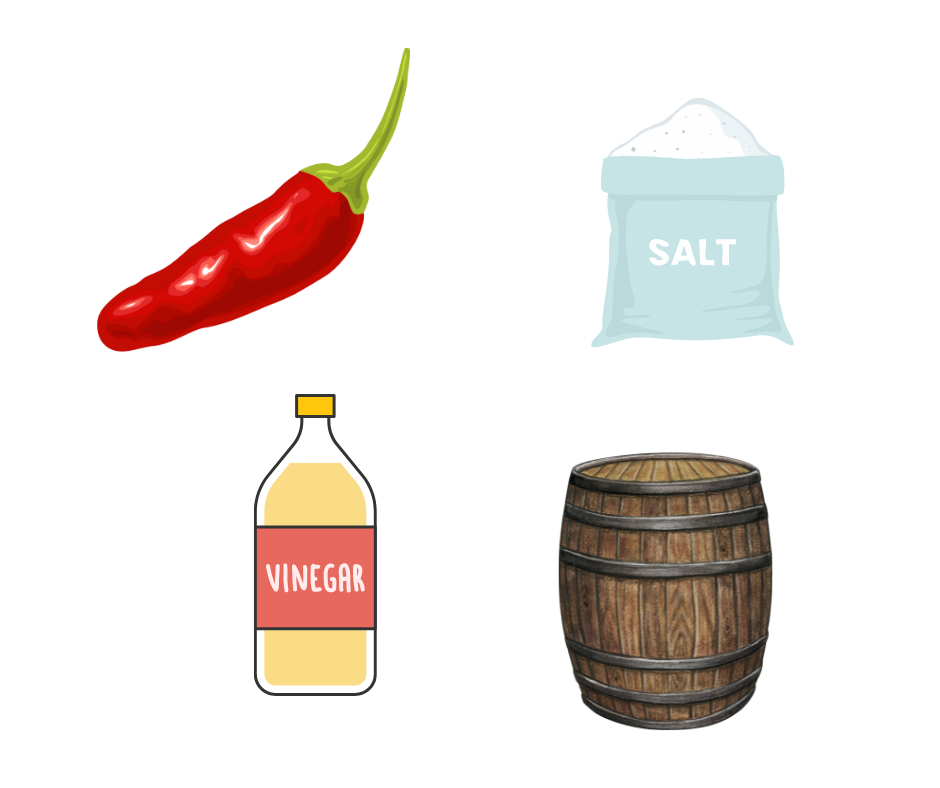
McIlhenny’s background in banking had taught him precision and attention to detail – qualities that would prove invaluable in perfecting his pepper sauce recipe. He began experimenting with the fiery red peppers, crushing them with Avery Island salt, adding vinegar, and aging the mixture in wooden barrels. The humid Louisiana climate provided ideal conditions for fermentation, and after months of patient waiting, McIlhenny had created something extraordinary: a smooth, vinegar-based sauce with a complex heat that built gradually on the palate.
The Birth of a Brand
What set McIlhenny’s creation apart from other pepper sauces of the era was not just its distinctive flavor profile, but his approach to branding and quality control. In 1870, he began selling his sauce commercially, initially calling it “Tabasco” after the Mexican state where he believed the peppers originated. The name itself carried exotic appeal, evoking the mysterious and spicy flavors of distant lands.
McIlhenny’s genius lay in understanding that consistency was key to building customer loyalty. Unlike many condiment makers of his time who varied their recipes based on available ingredients, he insisted on maintaining exact standards. Every bottle had to meet his precise specifications for color, texture, and heat level. This obsession with quality would become the cornerstone of the brand’s enduring success.
The distinctive diamond-shaped label, featuring the word “TABASCO” in bold letters, became one of America’s first recognizable brand identities. McIlhenny even patented his process and trademarked the name, demonstrating remarkable foresight about the importance of intellectual property protection in the emerging industrial economy.
Expansion and Innovation
Following Edmund McIlhenny’s death in 1890, the company passed to his eldest son, John Avery McIlhenny, who proved equally committed to quality while being more ambitious about expansion. Under his leadership, Tabasco sauce began appearing on dining tables across America and beyond. The younger McIlhenny recognized that the sauce’s appeal transcended regional boundaries – its ability to enhance flavors rather than overwhelm them made it versatile enough for diverse culinary traditions.
The company’s growth during the late 19th and early 20th centuries reflected broader changes in American food culture. As the nation became more connected through railroads and telegraph systems, regional specialties could reach national markets. Tabasco rode this wave, establishing distribution networks that would eventually span the globe.
World War I proved a pivotal moment for the brand. American soldiers deployed overseas carried small bottles of Tabasco in their rations, introducing the sauce to European and Asian palates. This military connection would continue through subsequent conflicts, with Tabasco becoming an unofficial ambassador of American flavor around the world.
The Science of Heat
The McIlhenny family’s commitment to their original process has remained remarkably consistent over the decades. The peppers are still grown from seeds descended from Edmund’s original stock, carefully cultivated on Avery Island and selected farms in Central and South America. The three-year aging process in white oak barrels has never been shortened despite modern pressure for faster production methods.

This dedication to traditional methods extends to the company’s approach to pepper selection. Workers still hand-pick peppers at peak ripeness, using a small wooden stick painted the exact shade of red that indicates optimal maturity – a quality control method that dates back to the founder’s era. The peppers are ground with Avery Island salt within hours of harvesting, beginning the fermentation process that creates Tabasco’s distinctive tangy heat.
Cultural Impact and Global Reach
By the mid-20th century, Tabasco had transcended its origins as a regional condiment to become a cultural icon. The sauce appeared in literature, films, and advertisements, often serving as shorthand for American boldness and flavor. Its presence in upscale restaurants alongside humble diners demonstrated its unique ability to cross class and cultural boundaries.
The brand’s international expansion accelerated after World War II, with Tabasco establishing production facilities and distribution networks on multiple continents. Today, the sauce is sold in more than 195 countries and territories, with labels printed in over 20 languages. Yet remarkably, every bottle still contains peppers that can trace their lineage back to Edmund McIlhenny’s original seeds.
Legacy of Family Stewardship
Perhaps most remarkable about the Tabasco story is its continuity of family ownership and management. The McIlhenny Company remains privately held, with leadership passing from generation to generation of the founding family. This continuity has allowed the company to maintain its long-term perspective on quality and brand integrity, resisting pressures that might tempt publicly traded companies to compromise their standards.
The family’s stewardship extends beyond the business to environmental conservation. Avery Island serves as both production facility and wildlife sanctuary, with the company actively protecting the delicate ecosystem of the Louisiana marshlands. This commitment reflects values that extend back to the founder’s respect for the land that made his success possible.
Today, as global food culture continues to evolve and consumers seek ever more intense flavor experiences, Tabasco stands as proof that authenticity and consistency can create enduring value. From Edmund McIlhenny’s first experimental batch to the millions of bottles produced annually today, the brand represents more than just hot sauce – it embodies the American entrepreneurial spirit and the power of staying true to one’s original vision while adapting to a changing world.

McIlhenny’s Gold: A Family’s Pursuit of Excellence
Jeffrey Rothfeder’s McIlhenny’s Gold chronicles how the McIlhenny Company remained a family-run enterprise, preserving Edmund’s original process through generations. Rothfeder highlights the role of Edward Avery McIlhenny, Edmund’s grandson, who expanded pepper cultivation and increased output while preserving the sauce’s artisanal roots.
The company’s leadership – always family – navigated challenges like hurricanes, fluctuating pepper harvests, and the temperamental economics of the late 19th and early 20th centuries. Yet the commitment to slow-aging in wooden barrels, precise salinity, and a consistent pepper-to-vinegar ratio remained unwavering. Edward also pioneered packaging innovations, ensuring Tabasco reached national markets – an early sign of global ambitions.

Illustrated History: Visual Context and Marketing
Shane Bernard’s Tabasco: The Illustrated History richly supplements the narrative through visuals: vintage labels, bottle designs, and advertising ephemera that chart the evolution of the brand’s image and identity. Early labels emphasized the McIlhenny name and Louisiana origins, closely tying the product to place and heritage.
Bernard brings to life the shift from bulk wooden containers and cork-sealed bottles to today’s glued, branded bottles with iconic diamond-shaped labels. These visual artifacts underscore how consumers came to recognize and trust the distinct flavor and presentation of Tabasco – a hallmark of domestic and international marketing acumen.
Speculation and Legacy — What Comes Next?
While both works conclude before the present day, they seed future-oriented questions:
- Innovation within Tradition: Will the McIlhenny Company introduce new aging vessels (e.g., barrel finishes inspired by spirits) without compromising core flavor?
- Sustainability of Peppers: With climate change and agricultural volatility, how will Avery Island pepper cultivation adapt?
- Digital-Age Storytelling: Could immersive augmented-reality labels show mash-and-age timelines or vintage postcards?
- Retail Disruption: As artisanal hot sauces proliferate online, how does the heritage brand maintain preeminence?
These speculations are grounded in the meticulously documented past – innovative stewardship alongside consistency – that both Bernard and Rothfeder chronicle.
The story of Tabasco is a classic American tale of entrepreneurship and ingenuity. It’s a testament to the power of a simple, high-quality product and the importance of preserving a brand’s heritage. The fiery, tangy sauce that started in a post-war Louisiana kitchen has become a beloved fixture on dinner tables around the world, and its history, like its flavor, is truly unforgettable.

Part of a regular series on 27gen, entitled Wednesday Weekly Reader.
During my elementary school years one of the things I looked forward to the most was the delivery of “My Weekly Reader,” a weekly educational magazine designed for children and containing news-based current events.
It became a regular part of my love for reading, and helped develop my curiosity about the world around us.
 27gen.com