
As a Native Tennesseean, specifically Middle Tennessee, I have long been aware of the person of Jack Daniel and the distillery that bears his name.
Interestingly enough, other than name recognition, my first extended exposure to Jack Daniel was through music.
When Jack Daniel opened saloons in Lynchburg in 1892, he thought of a novel way to attract people to the town square. Mr. Jack formed The Silver Cornet Band with musically inclined locals – a bank clerk, grocer, policeman, and even a local lawyer. Like his whiskey, music brought folks together from every walk of life. Mr. Jack’s band played together for another 20 years. Even when the Distillery was closed due to various state and local Prohibition laws, the band kept Jack’s spirit alive.
Mr. Jack Daniel’s Original Silver Cornet Band is an affectionate re-creation of a small town band that existed in Lynchburg, Tennessee from 1892 until about 1914.
The “modern” version of this band was the creation of David Fulmer in the mid-1970s, who wrote the show and performed as the “Professor” for many years.
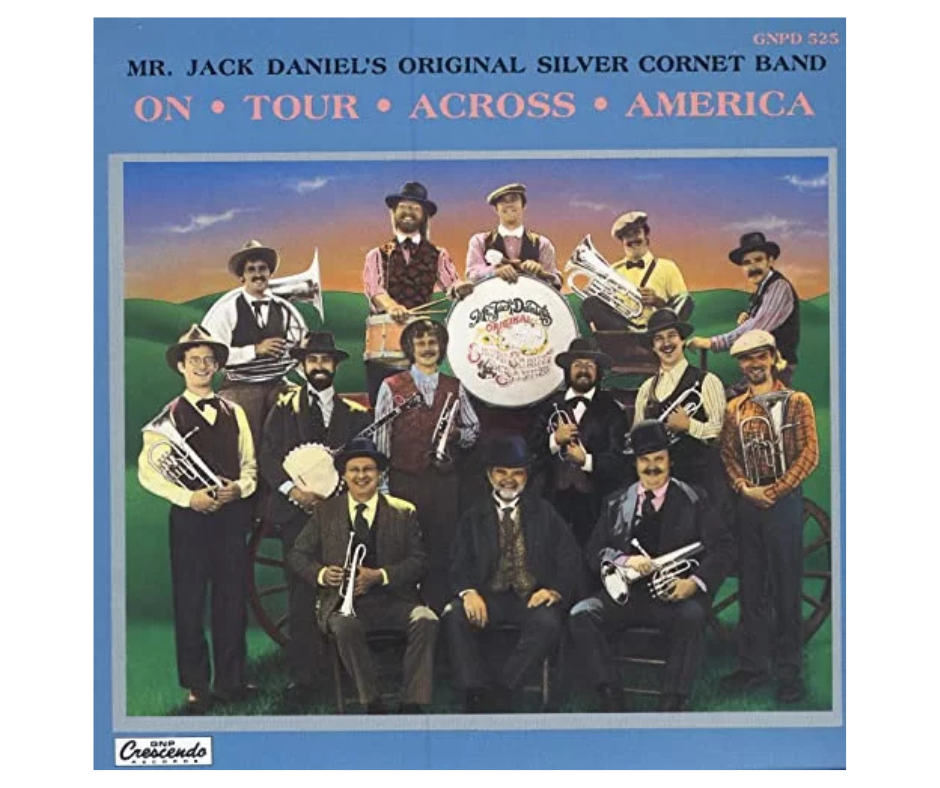
The band began touring in 1978, performing in concert halls throughout the United States and Canada and delighting audiences at music festivals, music educator conferences, and for civic and private events with its joyful style and expert musicianship.
More than just a band concert, a performance by the Silver Cornet Band was a time traveling excursion to an era when life moved at a less hurried pace; when a warm summer evening was spent with a picnic supper in the park, the fellowship of friends and neighbors, and the sound of band music in the air.
I knew several of the band members over the years, as several came from the music program at my college, Tennessee Technological University. Although known primarily as an engineering school, it also had an outstanding low-brass music program, and the attraction of a “brass band” from a turn-of-the-century time period captured the imagination and participation of students.
I was fortunate to attend several concerts over the years, and have all of their music that has been released on CDs. I suppose it was my fondness for the music and the generosity of the man who inspired it, Jack Daniel, who lead me to take the next step in learning more.
Several years after the 100th anniversary of the founding of the distillery, I took part in a tour, fascinated by the stacks of hardwood burning to make the charcoal to filter the liquid, curious about the cave spring that supplied the water, impressed by the craftsmanship needed to create the barrels, and amazed at the huge gallons of mash as it begin the fermentation process that ultimately produced the golden amber liquid that was a part the southern culture of my teenage and college years.
Though not a partaker of alcohol, I was fascinated by the story of Jack Daniel and his life. Over the years, I would read and/or see articles about Jack Daniel and its contribution to culture – particularly the Southern culture from which it arose.
Then, in 2016, a story began to come out: Jack Daniel did own and operate the first registered distillery in the U.S. – but the secret of his charcoal-filtered whiskey came from the knowledge and expertise of a former slave (not owned by Jack Daniel) named Nearest Green who taught a young Jack Daniel all about distilling whiskey…
…and that brings us to today’s Wednesday Weekly reader.
New York Times bestselling author Fawn Weaver unveils the hidden narrative behind one of America’s most iconic whiskey brands. This book is a vibrant exploration set in the present day, delving into the life and legacy of Nearest Green, the African American distilling genius who played a pivotal role in the creation of the whiskey that bears Jack Daniel’s name.

Set against the backdrop of Lynchburg, Tennessee, Love & Whisky weaves together a thrilling blend of personal discovery, historical investigation, and the revelation of a story long overshadowed by time. Through extensive research, personal interviews, and the uncovering of long-buried documents, Weaver brings to light not only the remarkable bond between Nearest Green and Jack Daniel but also Daniel’s concerted efforts during his lifetime to ensure Green’s legacy would not be forgotten. This deep respect for his teacher, mentor, and friend was mirrored in Jack’s dedication to ensuring that the stories and achievements of Nearest Green’s descendants, who continued the tradition of working side by side with Jack and his descendants, would also not be forgotten.
Love & Whiskey is more than just a recounting of historical facts; it’s a live journey into the heart of storytelling, where every discovery adds a layer to the rich tapestry of American history. Weaver’s pursuit highlights the importance of acknowledging those who have shaped our cultural landscape; yet remained in the shadows.
As Weaver intertwines her present-day quest with the historical threads of Green and Daniel’s lives, she not only pays homage to their legacy but also spearheads the creation of Uncle Nearest Premium Whiskey. This endeavor has not only brought Nearest Green’s name to the forefront of the whiskey industry but has also set new records, symbolizing a step forward in recognizing and celebrating African American contributions to the spirit world.
Love & Whiskey invites readers to witness a story of enduring friendship, resilience, and the impact of giving credit where it’s long overdue. It’s an inspiring tale of how uncovering the past can forge new paths and how the spirit of whiskey has connected lives across generations. Join Fawn Weaver on this extraordinary adventure, as she navigates through the layers of history, friendship, and the unbreakable bonds formed by the legacy of America’s native spirit, ensuring the stories of Nearest Green and his descendants live on in the heart of American culture.
The story of Nearest Green, one of the most remarkable yet long-forgotten figures in American whiskey history, has become an essential narrative in understanding the origins of Jack Daniel’s whiskey. Nathan “Nearest” Green was not only the first known African American master distiller, but he was also instrumental in teaching Jack Daniel the craft of whiskey making. His story, rediscovered after more than a century of obscurity, has profoundly reshaped how we view the birth of one of the world’s most famous whiskey brands.
The Early Life of Nearest Green
Nathan Green, commonly known as “Uncle Nearest,” was born into slavery in the early 1800s in Maryland. Like many enslaved people of that time, his skills were not limited to manual labor. Green had an exceptional talent for distilling whiskey, a process that was complex and labor-intensive, requiring a mastery of both art and science. While little is known about his early life, it is likely that he learned the distillation process from earlier generations of enslaved African Americans or European settlers who practiced whiskey-making techniques brought over from Ireland and Scotland.
By the mid-1800s, Green was enslaved on a farm owned by the Reverend Dan Call, a preacher and distiller in Lynchburg, Tennessee. It was at Call’s distillery that Green’s talents in whiskey production would shape history.
Meeting Jack Daniel
Jack Daniel, born Jasper Newton Daniel in 1846, grew up in a world where whiskey was an essential part of southern life. After losing his mother at a young age and suffering from a strained relationship with his father, young Jack left home as a teenager. It was during this period that he was introduced to Reverend Dan Call, who not only took him under his wing but also introduced him to the art of whiskey making. However, it wasn’t Call who would provide Jack with the most important lessons in distilling; that honor belonged to Nearest Green.
Recognizing Green’s unmatched skill, Call entrusted him with teaching Jack Daniel how to make whiskey. Green became Daniel’s mentor, passing on the essential techniques of distillation, including the critical process of charcoal mellowing – an important step in what would later become the defining feature of Tennessee whiskey. The charcoal mellowing technique, also known as the “Lincoln County Process,” involves filtering the whiskey through charcoal to remove impurities and smooth out the flavor. This unique process differentiates Tennessee whiskey from other American whiskeys like bourbon, and it was Green who mastered and shared this process with Jack Daniel.
The Role of Nearest Green in Shaping Jack Daniel’s Whiskey
Nearest Green’s contribution to the Jack Daniel’s whiskey brand goes far beyond simply passing down techniques. His expertise was fundamental to the product’s flavor, consistency, and quality, and his influence is seen in the principles that would guide Jack Daniel’s whiskey production for generations.
Green’s mastery of the charcoal mellowing process allowed Jack Daniel’s whiskey to stand out from competitors. This filtration method gave the whiskey its distinctive smoothness and refinement, creating the signature taste that would make Jack Daniel’s a household name. Green’s influence is not just in the technique but in the philosophy that great whiskey is a product of attention to detail, patience, and craftsmanship.
Even after the end of slavery following the Civil War, Nearest Green remained an integral part of the Jack Daniel’s distillery. When Jack Daniel formally established his distillery in 1866 (which today is considered the oldest registered distillery in the United States), Nearest Green continued to work alongside him, this time as a free man. In fact, records show that Green was one of the distillery’s first employees, making him not only one of the first African American master distillers but also an important partner in the founding of the brand. Later, Green’s two sons continued their father’s legacy at Jack Daniel’s distillery.
The Lost Legacy of Nearest Green
Despite his undeniable contributions, Nearest Green’s role in the creation of Jack Daniel’s whiskey faded from history over the decades. Whiskey production in the 19th century was dominated by white narratives, and the contributions of African Americans were often overlooked or erased altogether. As a result, Nearest Green’s name was not mentioned in the official Jack Daniel’s company history for over 150 years.
It wasn’t until the 21st century that Green’s role began to be rediscovered. In 2016, author and historian Fawn Weaver embarked on a mission to uncover the true history behind the origins of Jack Daniel’s whiskey. Through meticulous research, Weaver uncovered documentation and oral histories that confirmed Nearest Green’s integral role in teaching Jack Daniel how to make whiskey.
Her efforts led to a groundbreaking realization: that Nearest Green was not only Jack Daniel’s teacher but also a key figure in the establishment of one of the most iconic whiskey brands in the world. This discovery marked a turning point in the narrative of American whiskey history and forced a reexamination of the often-overlooked contributions of African Americans to the industry.
Restoring Green’s Place in History
The rediscovery of Nearest Green’s legacy has led to a concerted effort to ensure his contributions are recognized and celebrated. In 2017, Jack Daniel’s officially acknowledged Nearest Green as the first master distiller for the brand. The company has since made efforts to honor his memory, including creating a dedicated section on the distillery’s tour that focuses on Green’s contributions.
Fawn Weaver also founded the Nearest Green Foundation, which aims to preserve Green’s legacy and provide scholarships for his descendants. Additionally, in 2017, a new whiskey brand, Uncle Nearest Premium Whiskey, was launched in his honor. Uncle Nearest Whiskey has quickly gained popularity, and its success serves as a fitting tribute to the man whose expertise and craftsmanship shaped the early days of Jack Daniel’s whiskey.
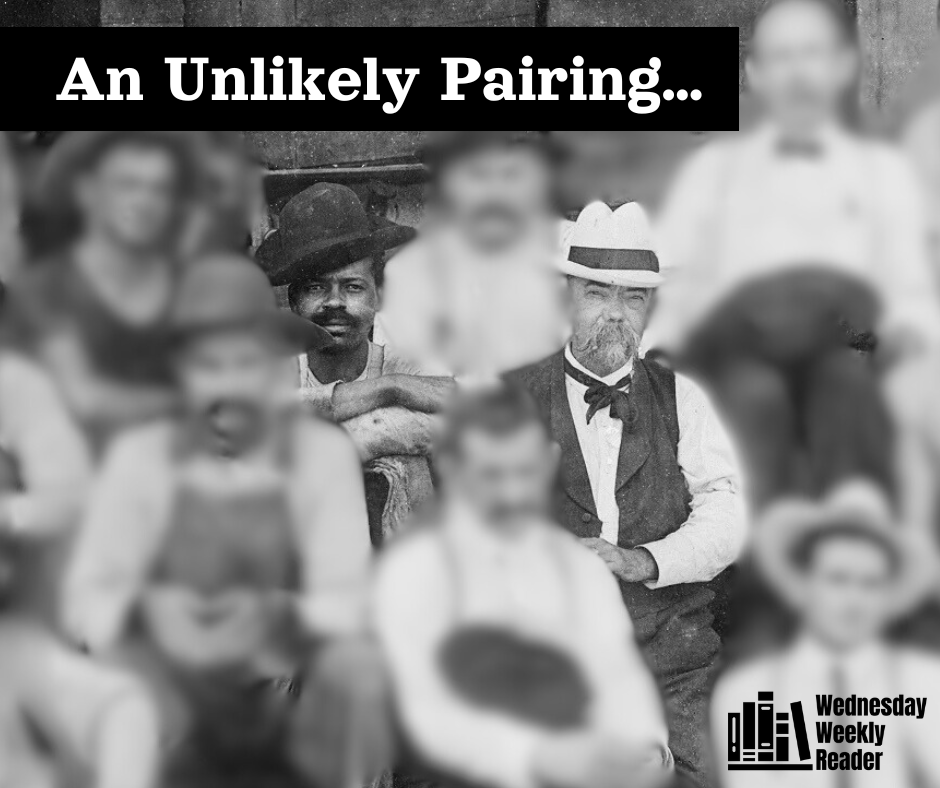
The Legacy of Nearest Green
Nearest Green’s story is not just one of whiskey-making brilliance; it’s a story about how the contributions of African Americans were often sidelined or forgotten in history. The rediscovery of his legacy offers a fuller, more accurate picture of the origins of Jack Daniel’s whiskey and highlights the crucial role African Americans played in shaping the American whiskey industry.
Nearest Green’s influence endures in every bottle of Jack Daniel’s whiskey, a testament to his mastery of distilling and the indelible mark he left on the industry. Today, his legacy is being restored and celebrated, reminding us of the rich and complex history behind one of the world’s most beloved spirits.

Part of a regular series on 27gen, entitled Wednesday Weekly Reader.
During my elementary school years one of the things I looked forward to the most was the delivery of “My Weekly Reader,” a weekly educational magazine designed for children and containing news-based current events.
It became a regular part of my love for reading, and helped develop my curiosity about the world around us.
 27gen.com