
This mini-series about books started off with the history of the library, then went to books at war, and now comes down to the book itself – or rather, how important the design of a book is to the reader.
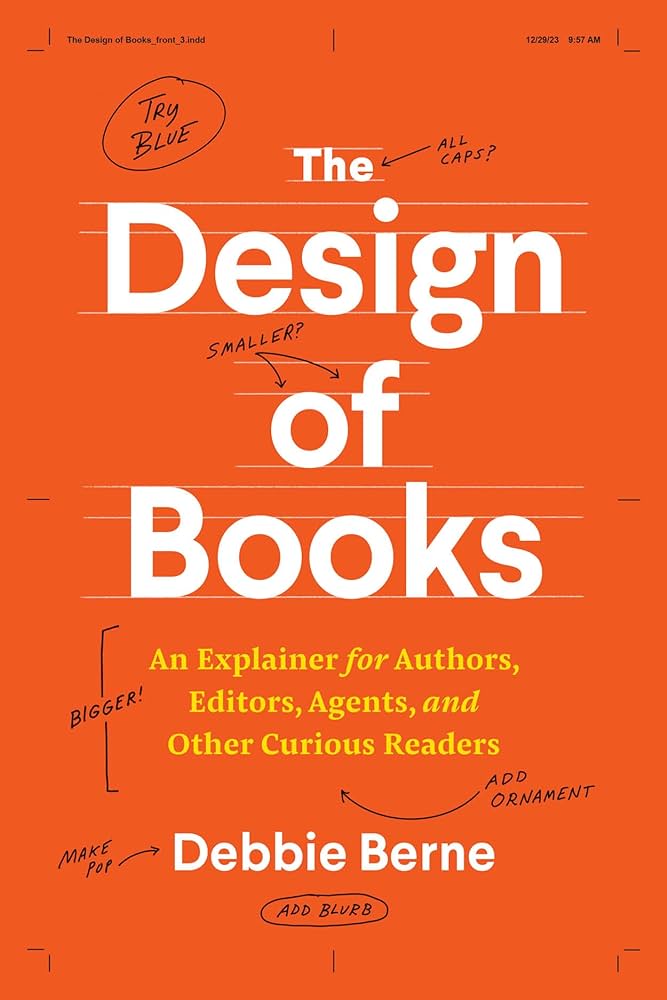
Design is central to the appeal, messaging, and usefulness of books, but to most readers, it’s mysterious or even invisible. Through interiors as well as covers, designers provide structure and information that shape the meaning and experience of books. In The Design of Books, Debbie Berne shines a light on the conventions and processes of her profession, revealing both the aesthetic and market-driven decisions designers consider to make books readable and beautiful. In clear, unstuffy language, Berne reveals how books are put together, with discussions of production considerations, typography and fonts, page layouts, use of images and color, special issues for ebooks, and the very face of each book: the cover.
The Design of Books speaks to readers and directly to books’ creators—authors, editors, and other publishing professionals—helping them to become more informed partners in the design of their projects. Berne lays out the practical steps at each stage of the design process, providing insight into who does what when and offering advice for authors on how to be effective advocates for their ideas while also letting go and trusting their manuscripts with teams of professionals. She includes guidance as well for self-publishing authors, including where to find a designer, what to expect from that relationship, and how to art direct your own book.
Throughout, Berne teaches how understanding the whats, hows, and whys of book design heightens our appreciation of these cherished objects and helps everyone involved in the process to create more functional, desirable, and wonderful books.

Berne embarked on the journey of writing this book because she sensed a gap in understanding among the authors and editors she collaborated with regarding book design. It seemed there was a lack of accessible resources for them to grasp the intricacies of design. Traditional books on design target designers themselves, while online explanations often offer fragmented and bewildering information, focusing on the “what” rather than the “why.” Berne’s aim was to equip those on the editorial side with not only the vocabulary and techniques of design but also the underlying rationale behind design decisions. This endeavor wasn’t solely for enjoyment, although design can indeed be enjoyable, but rather to facilitate more meaningful discussions, enriched experiences, and ultimately, better books.
The Design of Books provides the reader with insights into the mechanics of typography and the significance of factors like line length. It will heighten your awareness of the nuances of headings and how the choice of words influences cover design. Above all, it will enhance your perception of design and its contributions.
As a book designer turned author, Berne advocates for the importance of design in publishing and emphasizes the significance of incorporating the voice and ideas of the designer early in the process. Often, design is an afterthought, introduced late in the game, leading to a discord between the materials provided and the expectations for their presentation. Authors should consider how the design will complement the content from the outset, including collaboration with designers during the developmental stages. Effective design should intertwine seamlessly with the content; attempting to apply it as an afterthought overlooks its essence.
Design inside a book creates order and bestows authority. Reading a badly designed book is like driving over a crumbling road, potholes everywhere.
Debbie Berne

Part of a regular series on 27gen, entitled Wednesday Weekly Reader.
During my elementary school years one of the things I looked forward to the most was the delivery of “My Weekly Reader,” a weekly educational magazine designed for children and containing news-based, current events.
It became a regular part of my love for reading, and helped develop my curiosity about the world around us.
 27gen.com