The Condiment Conundrum: Finding the Perfect Toppings to Elevate Your Burger Experience

In the grand gastronomic symphony that is the hamburger, the role of condiments is nothing short of a crescendo. These seemingly humble additions have the power to transform a mere patty and bun into a sensory masterpiece. Whether you are a burger connoisseur or just love reading about them, it’s time to delve into the condiment conundrum, unraveling the art and science of finding the perfect toppings that take your hamburger experience to unprecedented heights.

The Symphony of Flavor Enhancement

Condiments are the conductor’s baton in the burger orchestra, enhancing flavors with every brushstroke. From the zing of ketchup to the creamy elegance of mayo, each condiment plays a unique note, harmonizing with the meat’s taste and texture. They’re not mere accompaniments; they’re the catalysts that awaken dormant taste buds and elevate the burger from a meal to a multi-sensory experience.

Unleashing Creativity: Innovative Topping Combinations

Imagine the burger as a blank canvas, awaiting a creative touch to bring it to life. This is where innovative topping combinations emerge as the artist’s palette. From the tangy intrigue of pickled red onions to the smoky allure of chipotle aioli, the possibilities are as boundless as imagination itself. Culinary trailblazers are known to fuse ingredients like fig jam, blue cheese, and arugula to create a symphony of sweet, salty, and peppery notes – all in a single bite.

The Balancing Act: A Dance of Flavors

The artistry of burger toppings lies in their ability to strike the perfect balance of flavors. Each element should complement the others, creating a harmonious medley rather than a cacophony. It’s the marriage of opposing forces – the richness of a fried egg offsetting the acidity of a tomato slice, the crunch of lettuce contrasting the tender juiciness of the patty. The condiments’ role isn’t just to shine on their own but to collaborate, ensuring that each bite is a harmonious journey through taste dimensions.

In the culinary world of hamburgers, every element, from the bun to the patty, plays a vital role in crafting the perfect burger. Yet, it’s the toppings that often steal the show, adding layers of flavor, texture, and complexity to this beloved American classic. In our exploration of the condiment conundrum, let’s dive into the art and science of finding the perfect toppings that take your hamburger experience to unprecedented heights. Here are the condiment basics:

Cheese: The Creamy Embrace

Let’s begin with cheese – the crown jewel of burger toppings. Whether it’s the creamy melt of American cheese, the sharp bite of cheddar, or the luxurious indulgence of brie, cheese adds a rich and savory dimension to your burger. It provides a silky texture as it melds with the patty’s heat, creating a luscious contrast to the meat’s juiciness. The condiment connoisseur knows that cheese isn’t just an optional extra; it’s a fundamental component of a truly outstanding burger.

Bacon: The Smoky Savior

Bacon, with its tantalizing smokiness and crispy texture, is a quintessential burger topping. It’s the culinary phoenix that rises above mere condiment status, adding a layer of umami richness that harmonizes with the meat’s flavors. Whether it’s woven into a lattice or stacked in generous strips, bacon provides a smoky, salty contrast that elevates the entire burger experience.

Lettuce and Tomatoes: The Fresh Crispness

Lettuce and tomatoes bring a refreshing crunch and a burst of freshness to each bite. The cool, crisp lettuce leaves provide a textural contrast to the warm, juicy patty, while the vibrant, ripe tomato slices introduce a hint of acidity that cuts through the burger’s richness. Together, they create a symphony of sensations, ensuring that every mouthful is a harmonious blend of flavors and textures.

Onion: The Allium Alchemy

Onions, whether caramelized, raw, or pickled, add a touch of allium magic to your burger. Caramelized onions bring sweetness and depth, creating a luxurious and savory profile. Raw onions offer a sharp, zesty bite that awakens the palate. Pickled onions introduce a tangy twist, balancing the burger’s flavors with their briny notes. In any form, onions are a condiment conundrum essential, enhancing the overall taste experience.

Pickles: The Tangy Counterpoint

Pickles, with their bracing acidity and satisfying crunch, are the unsung heroes of burger toppings. They provide a burst of contrasting flavor that cuts through the burger’s richness, revitalizing the palate with their tanginess. Whether they’re dill or bread-and-butter, pickles add a zesty counterpoint that elevates every bite.

Ketchup and Mustard: The Classic Duo

Ketchup and mustard are the classic condiments that have stood the test of time. Ketchup, with its sweet and slightly tangy profile, adds a luscious, tomatoey richness. Mustard, on the other hand, introduces a sharp, zesty kick that complements the burger’s flavors. Together, they form a timeless duo that evokes a sense of nostalgia and familiarity, reminding us of the classic American burger experience.

Other Burger Condiments: A World of Possibilities

Beyond the classic toppings above, the world of burger condiments is vast and diverse. These days, the proliferation of options has taken the burger into wild and exciting new areas and flavor combinations. Along with the mainstays listed above, here are just a few other popular condiments that can elevate your burger game:

  • Mayonnaise: Creamy and indulgent, mayonnaise adds a silky texture and a subtle richness to your burger.
  • Sauces: Explore a world of sauces, from barbecue and aioli to tzatziki and sriracha, each offering its unique flavor profile.
  • Hot Peppers: Whether it’s jalapeños, banana peppers, or pepperoncini, hot peppers provide a spicy kick that can electrify your burger.
  • Avocado: Creamy, buttery avocado slices bring a dose of healthy freshness to your burger.
  • Barbecue Sauce: Sweet and smoky barbecue sauce can transform a burger into a barbecue-inspired delight.
  • Sriracha: For those who love heat, sriracha provides a spicy and garlicky kick to burgers.
  • Aioli: This garlic-infused mayonnaise-based sauce adds a gourmet touch with its creamy and aromatic profile.
  • Salsa: Salsa, whether mild or hot, adds a burst of flavor and a touch of Mexican flair to burgers.

These condiments can be mixed and matched to create a wide range of burger experiences, from classic and simple to gourmet and adventurous. The choice of condiments allows for a highly customizable culinary journey, making burgers a versatile and beloved meal choice.

Customization: Crafting Your Culinary Tale

One of the greatest pleasures of burger creation is the act of customization. Much like an author weaving characters into a narrative, burger enthusiasts craft their own culinary tales through condiment choices. A dollop of tangy barbecue sauce transforms the burger into a rustic barbecue feast, while a smattering of sautéed mushrooms and Swiss cheese conjures images of Alpine landscapes. Customization allows you to narrate your burger story, expressing your tastes, moods, and cravings.

In the condiment conundrum, there’s no one-size-fits-all solution. It’s a dynamic interplay of personal preferences, flavor profiles, and the adventurous spirit of culinary exploration. As you stand before the canvas of your burger, consider each condiment as a brushstroke – a deliberate choice that adds depth, character, and layers of taste. So, whether you opt for a classic ensemble or venture into avant-garde territory, remember that the condiments are your culinary companions, transforming each bite into a harmonious, flavorful adventure.


Still hungry?

The Whataburger Story: A Tale of Flavor and Family

From Drive-Thru to Cultural Icon: The Story Behind In-N-Out Burger

Burgerology: The Art and Science of the Perfect Patty

Flipping History: How McDonald’s Shaped the Hamburger’s Popularity

Indulging in Burger Bliss: A Quest for Culinary Perfection

White Castle: The Trailblazing Pioneer of Fast Food

Bite Into Tradition: The Best Loved Regional Burger Chains in the Country

Burger Beast Unleashed: The Ultimate Tribute to Burgers in Sef Gonzalez’ Book

Sink Your Teeth into “The Hamburger”: A Culinary Journey by Josh Ozersky

Burger Magic: Exploring the Universal Fascination Behind America’s Favorite Dish

My Quest for the Perfect Hamburger: A Literary, Culinary, and Arbitrary Journey in Pursuit of America’s Iconic Delight

A Tantalizing Top of the Stack, Made to Order

Before Burger Quest


The Whataburger Story: A Tale of Flavor and Family

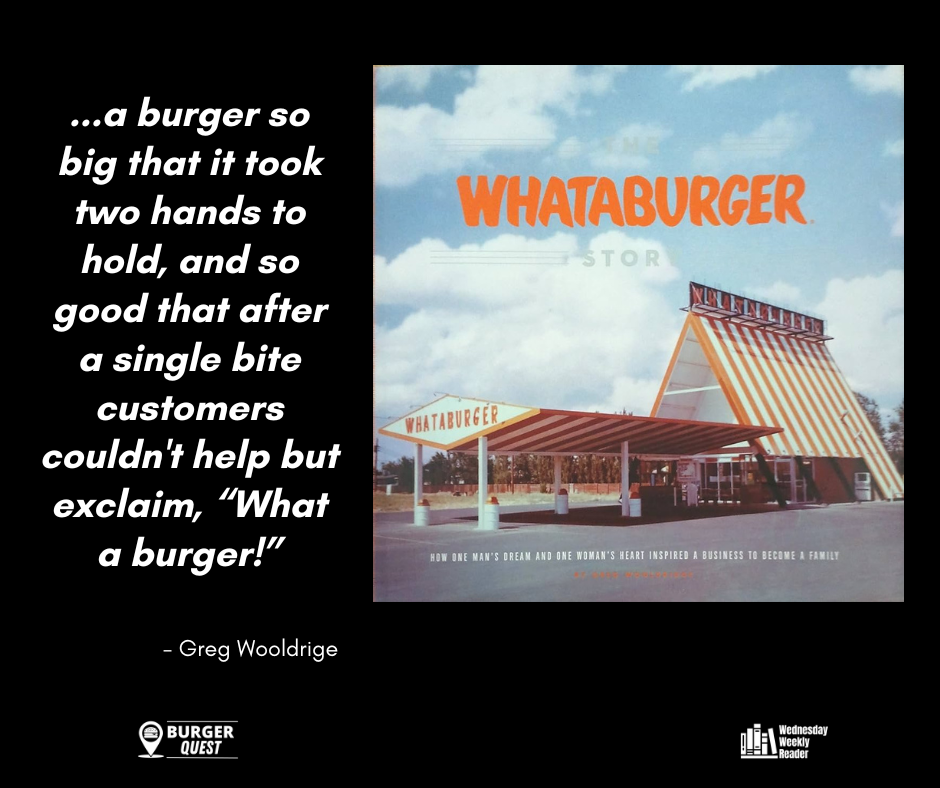
In 1950, an adventurous and determined entrepreneur named Harmon Dobson had a bold idea: to serve a burger so big that it took two hands to hold, and so good that after a single bite customers couldn’t help but exclaim, “What a burger!” He named his humble burger stand, located on Ayers Street in Corpus Christi, Texas, “Whataburger.”

The golden age of drive-ins and American automobiles was just getting started back on August 8, 1950, when Harmon Dobson opened Whataburger #1. This tiny burger stand offered something people had never seen: a burger that was so big, they had to hold its five-inch bun with two hands. It was an instant success, and Harmon began to expand the business to other markets. In 1955, Harmon married Grace Williamson and became Whataburger’s “First Couple.” Together, they raised three children: Hugh, Lynne and Tom. By the end of the decade, Harmon would open Whataburger #21 in Pensacola, Florida. It was the first Whataburger restaurant outside the state of Texas.

During the next 50+ years, over 800 Whataburger restaurants were opened, spanning every state from Arizona to Florida, but the most by far in it’s home state of Texas. Ask any Texan – born or transplanted – and they will all have a Whataburger story, recalled with fondness and good enough to make your mouth water.

The Whataburger Story by Greg Wooldridge is a gastronomic adventure that chronicles the journey of a beloved Texas-based fast-food chain that transcended regional boundaries to become a national icon. The book takes readers on a savory exploration, delving into the origins, growth, and enduring success of Whataburger. Wooldridge intertwines the story of this iconic burger joint with the family values and entrepreneurial spirit that shaped its foundation.

The narrative opens with a vivid glimpse into the early days of Whataburger, where the aroma of freshly grilled beef patties permeated the air. Readers are transported to the small, humble Corpus Christi location, where Harmon Dobson’s vision came to life. With colorful anecdotes and historic photographs, Wooldridge paints a portrait of a man with a passion for burgers and an unwavering commitment to quality.

As the book unfolds, readers witness the expansion of Whataburger’s distinctive orange and white-striped A-frame buildings, which became synonymous with the brand. The story unfolds like a well-seasoned recipe, blending entrepreneurial perseverance, community engagement, and a dash of Texan hospitality that sets Whataburger apart.

The Whataburger Story is a delightful journey through time and taste, a must-read for fans of good food and American entrepreneurship. Greg Wooldridge brings to life the legacy of Harmon Dobson and the enduring success of Whataburger with a captivating narrative that leaves readers craving not just the famous burgers but also the heartwarming culture that the brand embodies.

Wooldridge’s storytelling is akin to the sizzle of a Whataburger patty on the grill, evoking the essence of a bustling 1950s diner. The narrative seamlessly weaves together the history, the people, and the flavors that have made Whataburger an integral part of American fast-food culture.

One of the book’s triumphs is its ability to delve beyond the burger and give readers a glimpse into the values that have driven Whataburger’s growth. The focus on family, community involvement, and employee care adds layers of depth to the story, making “The Whataburger Story” not just a culinary history but a heartwarming tale of the American dream.

Wooldridge captures the essence of Whataburger’s appeal, from its distinctive architecture to its timeless menu offerings. The narrative invites readers to taste the love and care that has gone into every Whataburger creation, leaving a lingering aroma of nostalgia and Texas pride.

In conclusion, The Whataburger Story is a literary feast that serves up a generous helping of history, culture, and delectable burgers. For anyone with a fondness for Whataburger or a craving for a well-told entrepreneurial tale, this book is a fulfilling treat. It’s a reminder that behind every iconic fast-food brand is a story, and in Whataburger’s case, it’s a story seasoned to perfection with the flavors of family, perseverance, and great taste.


Still hungry?

Bun Brilliance: Unveiling the Essence of the Ultimate Burger Bun

From Drive-Thru to Cultural Icon: The Story Behind In-N-Out Burger

Burgerology: The Art and Science of the Perfect Patty

Flipping History: How McDonald’s Shaped the Hamburger’s Popularity

Indulging in Burger Bliss: A Quest for Culinary Perfection

White Castle: The Trailblazing Pioneer of Fast Food

Bite Into Tradition: The Best Loved Regional Burger Chains in the Country

Burger Beast Unleashed: The Ultimate Tribute to Burgers in Sef Gonzalez’ Book

Sink Your Teeth into “The Hamburger”: A Culinary Journey by Josh Ozersky

Burger Magic: Exploring the Universal Fascination Behind America’s Favorite Dish

My Quest for the Perfect Hamburger: A Literary, Culinary, and Arbitrary Journey in Pursuit of America’s Iconic Delight

A Tantalizing Top of the Stack, Made to Order

Before Burger Quest


5 Everyday Ways to Love Your Neighbor and Change the World

What would you call someone who listens without judgment, offers you wise counsel but helps you make your own decision, and loves you no matter what?

That’s a friend!

Jesus had a nickname given to him by the religious leaders of His day – Friend of Sinners (Matthew 11:16-19).

Jesus’ simple strategy to reach the world was friendship and blessing.

There is no better model for what it looks like to “go and bless” than Jesus. His entire life was a blessing. The Gospels give us numerous examples of how Jesus blessed the people He encountered.

Dave Ferguson and Jon Ferguson

B.L.E.S.S. authors Dave Ferguson and Jon Ferguson made a list of all the ways Jesus practiced being a blessing to people, and narrowed it down to the top five. The resulting B.L.E.S.S. practices are five everyday ways that Jesus loved his neighbors.

B: Begin with prayer

When Jesus started His earthly mission, Luke 6 tells us that He went out on a mountain and prayed. Prayer is both how you discover your mission and how you live out your mission.

L: Listen

Asking questions and then listening was central to Jesus’ life and teachings. Any relationship starts with listening to someone’s words and life. True listening may be the kindest and most loving gift you can give someone.

E: Eat

Jesus liked to eat! Over and over, as in Matthew 9, we find Jesus with tax collectors and sinners…doing what? Eating! There is something about sharing a meal together that moves any relationship past acquaintance toward friendship.

S: Serve

Jesus told us straight up, “The Son of Man did not come to be served, but to serve…” (Matthew 20:28). He modeled for us that once you begin with prayer, listen, and eat with someone, there is a good chance that you’ll discover how you can best serve the person God is asking you to bless.

S: Story

When people were ready to listen, Jesus would share his story, as in John 14 with Thomas. When you befriend and bless people, they feel relationally safe and want to know your story. Then, and only then, can you tell them how the love of God and Jesus’ life, death, and resurrection have changed you.

Using the brief descriptions above, and downloading the PDF tool below, write out practices in each of the five B.L.E.S.S. categories.

How will you use one of these practices each day?

Remember, though: B.L.E.S.S. is not a checklist.

Many well-intentioned people have taken these missional rhythms and turned them into a set of linear steps to be performed one at a time. The B.L.E.S.S. practices are NOT a checklist or another church program you graduate from. They are simple, everyday ways to bless the people around you. Never focus more on the practices than on the people you are seeking to bless!


inspired by B.L.E.S.S. by Dave Ferguson and Jon Ferguson

Winning with Insight: Game Film’s Dual Impact on Sports and Organizational Excellence

When the calendar rolls around to September, it means cool weather is not far behind, school has started, pumpkin spice is everywhere, and football – at the high school, college, and professional levels – takes center stage in the world of athletics.

Being a small “f” fan of pro football, my wife and I recently spent some time watching “Quarterback,” the Netflix series documenting the 2022 seasons of pro football quarterbacks Marcus Mariota, Kirk Cousins, and Patrick Mahomes. It was fascinating to watch on many levels, showing glimpses of both the personal and private lives of the three as well as their professional side

What I found most fascinating was the quarterback’s attention to the art and science of watching “film” of both their own performances and those of upcoming opponents. I use “film” as most players and coaches still call it film (from the days when it really was film in a projector) though today it is all video-based.

In the realm of professional sports, victory isn’t just a result of brute strength or natural talent. It’s a product of meticulous preparation, strategic analysis, and continuous adaptation. At the heart of this winning formula lies the practice of game film analysis. By studying past games, athletes and coaches dissect every play, every movement, and every decision to gain a competitive edge. Remarkably, these principles extend beyond the confines of the sports arena and offer invaluable insights for organizations striving for success in the business world.

Game Film in Professional Sports: A Deeper Dive

Breaking Down Game Footage

Game film analysis isn’t a casual viewing of highlights; it’s a comprehensive study of every nuance that unfolds on the field. Coaches and players immerse themselves in the footage, dissecting player positioning, execution of plays, and opponents’ strategies. Just as a chess player analyzes each move to anticipate their opponent’s next steps, teams scrutinize game film to uncover patterns and vulnerabilities.

This process mirrors the world of business, where keen observation is pivotal. Organizations must carefully dissect their operations, team dynamics, and market trends to identify strengths, weaknesses, and opportunities. Just as a coach studies an opponent’s tactics, businesses need to analyze their competitors’ moves to stay ahead.

Strategy Development and Adaptation

Game film isn’t just about looking backward; it’s about using insights to forge ahead strategically. Coaches derive game plans from their analysis, exploiting opponents’ weaknesses and capitalizing on their own strengths. Similarly, halftime adjustments are informed by a thorough review of the first half’s game film, allowing teams to adapt and recalibrate.

In the corporate realm, strategic decision-making is equally crucial. Organizations can develop strategies based on data-driven insights, aligning them with market trends and staying ahead of the curve. The agility to adapt strategies in real-time, as exemplified by halftime adjustments in sports, is essential for businesses facing a dynamic landscape.

Leveraging Advanced Analytics

Modern sports have embraced advanced analytics, ushering in a new era of understanding player performance and team dynamics. Metrics like player tracking data provide granular insights that shape coaching strategies. Similarly, organizations can harness the power of AI, big data, and performance analytics to make informed decisions and gain a competitive edge.

Translating Game Film Principles to Organizational Success

Observation and Analysis in Business

Just as coaches dissect game footage, organizations must keenly observe their internal processes and external environment. Identifying patterns, strengths, and weaknesses allows for more targeted strategies and effective decision-making.

Strategic Decision-Making

The correlation between game plans in sports and business strategies is undeniable. Data-driven decisions, informed by careful analysis, are the cornerstone of success. Adapting strategies based on real-time insights, as done in sports during halftime, is paramount in the corporate world.

Technology’s Role in Organizational Analysis

The integration of technology and data analytics has revolutionized sports, providing insights that were once unimaginable. In the same vein, businesses can leverage AI, big data, and advanced analytics to gain deeper insights into their operations, customers, and market trends.

Fostering a Culture of Continuous Improvement

Sports teams embrace the concept of continuous improvement, learning from both victories and losses. This approach is equally vital in business, where organizations must embrace feedback, learn from setbacks, and cultivate a culture that thrives on growth.

Winning Beyond the Scoreboard

Game film analysis is more than a practice; it’s a mindset that leads to victory. The principles of dissecting game footage, developing strategies, leveraging technology, and fostering a culture of improvement are transferable to organizations seeking success. As businesses adopt the “game film” approach, they can unlock the potential to observe, strategize, adapt, and learn – propelling themselves toward victory on and off the field.


Watching the pros watching game film reminded me of a great article by Dan and Chip Heath (authors of Made to Stick, Switch, and Decisive). Published in Fast Company magazine, it’s entitled “Watch the Game Film.” You really need to check out the whole article, but here’s a quick summary:

  • Football coaches use game film to spot things they’d never see in real time. They have an entire week to review a 60-minute game.
  • In the business world, every day is game day, and leaders don’t take the time to “study the film” of their activities. It’s unfortunate, because studying game film can yield unexpected results.
  • Doug Lemov, a consultant to school districts, utilized film of top-tier teachers in the classroom to train other teachers – resulting in raising students a grade level and a half in one year.
  • It doesn’t have to be film – Jump Associates, a strategy consulting firm, uses trained observers to record client meetings. After the meeting, the Jump staff holds a debriefing, modeled on the Army’s after-action reviews.

In the grand theater of football, game film isn’t just about reliving past moments; it’s a strategic treasure trove. The principles of observation, analysis, adaptation, and technology utilization that are at play in dissecting game film can be seamlessly applied to organizational consulting. The organizational consultant, akin to a coach, guides teams towards excellence by leveraging insights and strategies gleaned from the “game film” of business operations.

Just as a football team’s commitment to reviewing game film elevates their performance, organizations that integrate these principles into their approach can unlock the strategic power needed for sustained success. By embracing the wisdom of the gridiron, the path to peak organizational performance becomes clearer and more achievable than ever before.

What insights might your team be overlooking because no one is observing carefully enough?

Maybe it’s time to press the PAUSE button and start screening some game film.

There are some things you’ll never see unless you look.


The Perennial Paradigm: Shaping the Future Beyond Age

In today’s world, the acceleration of megatrends – increasing longevity and the explosion of technology among many others – are transforming life as we now know it.

In The Perennials, bestselling author of 2030 Mauro Guillén unpacks a sweeping societal shift triggered by demographic and technological transformation. Guillén argues that outmoded terms like Boomers, Gen X, Millennials, and Gen Z have long been used to pigeonhole us into rigid categories and life stages, artificially preventing people from reaching their full potential. A new postgenerational workforce known as “perennials” – individuals who are not pitted against each other either by their age or experience – makes it possible to liberate scores of people from the constraints of the sequential model of life and level the playing field so that everyone has a chance at living a rewarding life. Guillén unveils how this generational revolution will impact young people just entering the workforce as well as those who are living and working longer.

This multigenerational revolution is already happening and Mauro Guillén identifies the specific cultural, organizational and policy changes that need to be made in order to switch to a new template and usher in a new era of innovation powered by the perennials.

The Future Belongs to Perennials: Perennials – individuals defying age stereotypes – are shaping the future across various aspects of life. The aging population, with longer life expectancies, is gaining prominence in the workforce, consumption, and social influence. Retirement is evolving into a period of learning, freelancing, and flexible employment. Technology and a perennial mindset are opening new opportunities for active seniors.

Reducing Intergenerational Friction: Breaking away from the traditional sequential model of life reduces conflicts between generations. More elderly people working lessens the tax burden on the young and fosters intergenerational collaboration. Lifelong learning also promotes better understanding between age groups.

Transforming the Global Economy: Multi-generational households and workplaces are revolutionizing society. They reduce poverty, revolutionize real estate, aid childcare and elderly care, and boost productivity through mentorship and diversity. This shift can address pension financing issues and enhance GDP growth potential.

Leveling the Playing Field: A post-generational society with perennial values can combat ageism and provide equal access to essentials like education, healthcare, employment, and housing. It offers opportunities for those who face setbacks in the traditional life model.

Evolving Work and Careers: The future of work includes multi-generational environments, multiple careers, and lifelong learning. Technology assists in managing work-life balance. Adapting to this change requires developing skills for effective collaboration with technology and enhancing social, negotiation, teamwork, and emotional intelligence skills.


Lead Your Church to Build Community Outside the Walls of Your Building

According to church planter and coach Linda Bergquist, because our lives are already filled with church activities, “neighbor-sphere” friendships continuously elude us. However, when Jesus talked about our becoming salt and light, it was the macrocommunity of people who make up our everyday existence of which He spoke.

It means that we need to figure out how to engage and participate in our larger communities in a healthy way. Being good is not enough; it is a poor imitation of doing good toward others.

The fact that such a small percentage of church members, including leaders, have so little time for people outside their own small group of friends means that something is not working.

This issue of SUMS Remix looks at solutions that will help you lead your church to build community outside the walls of your building. The solutions include: 


Bun Brilliance: Unveiling the Essence of the Ultimate Burger Bun

In the gastronomic universe of the burger, where flavors fuse and textures entwine, there is a quiet star that often steals the show—the bun. This seemingly simple component is the unsung hero, holding together the symphony of flavors within. Any serious look at the burger has to include a journey into the world of burger buns, unraveling their significance, exploring their diverse forms, and discovering how they wield the power to elevate the burger experience to unparalleled heights.

The Pillar of Burger Perfection

The bun is more than just a vessel—it’s the foundation upon which burger excellence is built. Its role extends beyond holding the contents together; it acts as a canvas for the harmonious interplay of flavors and textures. A great bun is like a great stage—it lets the performers shine while providing a solid structure for the grand show. The choice of bun can be the difference between a satisfactory meal and an extraordinary culinary journey.

A Spectrum of Buns: From Classic to Artisanal

Burger buns, much like the burgers themselves, come in a delightful array of forms. The classic soft brioche bun offers a gentle embrace for the patty, complementing its juiciness with a tender, slightly sweet texture. Sourdough buns add a tangy dimension, enhancing the overall flavor profile. And then there are the artisanal creations—pretzel buns, ciabatta rolls, and even lettuce wraps for those embracing low-carb alternatives. Each bun brings its unique character, introducing a diverse spectrum of tastes and textures.

Texture and Flavor: A Multi-sensory Dance

The bun’s texture is a key player in the burger symphony. A soft bun might yield to the pressure of the patty, creating a harmonious marriage of flavors, while a crustier bun introduces an intriguing contrast. But it’s not just about texture; the bun contributes its own flavor notes to the ensemble. A subtly sweet brioche bun enhances the overall sweetness, while a rustic ciabatta bun adds a touch of earthiness. The bun’s flavor and texture, much like a skilled instrumentalist, join the composition with finesse.

The Bun-Patty Symbiosis

The bun-patty relationship is a delicate dance—a symbiosis that can either elevate or undermine the burger experience. A bun that’s too dense or overwhelming might overpower the flavors within. Conversely, a bun that’s too flimsy could disintegrate under the patty’s weight. Achieving the perfect balance—a bun that holds its form without being intrusive—is the holy grail of burger crafting.

Elevating the Burger Experience

Burger enthusiasts understand that the search for the ultimate burger bun is a quest for perfection. It’s a quest that considers not just taste, but texture, aroma, and how the bun complements the entirety of the burger’s ensemble. It’s a recognition that the bun is more than a mere accessory; it’s a co-protagonist in the burger narrative, adding depth and character to every bite.

So, as you sink your teeth into that next perfectly crafted burger, take a moment to appreciate the role of the bun—a humble yet significant component that transforms a meal into a sensory masterpiece. The bun is the unsung symphony behind every bite, and it’s a testament to the intricate artistry that defines the world of burgers—a world where every element, from the patty to the bun, plays its part in creating a culinary masterpiece.


Still hungry?

From Drive-Thru to Cultural Icon: The Story Behind In-N-Out Burger

Burgerology: The Art and Science of the Perfect Patty

Flipping History: How McDonald’s Shaped the Hamburger’s Popularity

Indulging in Burger Bliss: A Quest for Culinary Perfection

White Castle: The Trailblazing Pioneer of Fast Food

Bite Into Tradition: The Best Loved Regional Burger Chains in the Country

Burger Beast Unleashed: The Ultimate Tribute to Burgers in Sef Gonzalez’ Book

Sink Your Teeth into “The Hamburger”: A Culinary Journey by Josh Ozersky

Burger Magic: Exploring the Universal Fascination Behind America’s Favorite Dish

My Quest for the Perfect Hamburger: A Literary, Culinary, and Arbitrary Journey in Pursuit of America’s Iconic Delight

A Tantalizing Top of the Stack, Made to Order
Before Burger Quest

From Drive-Thru to Cultural Icon: The Story Behind In-N-Out Burger

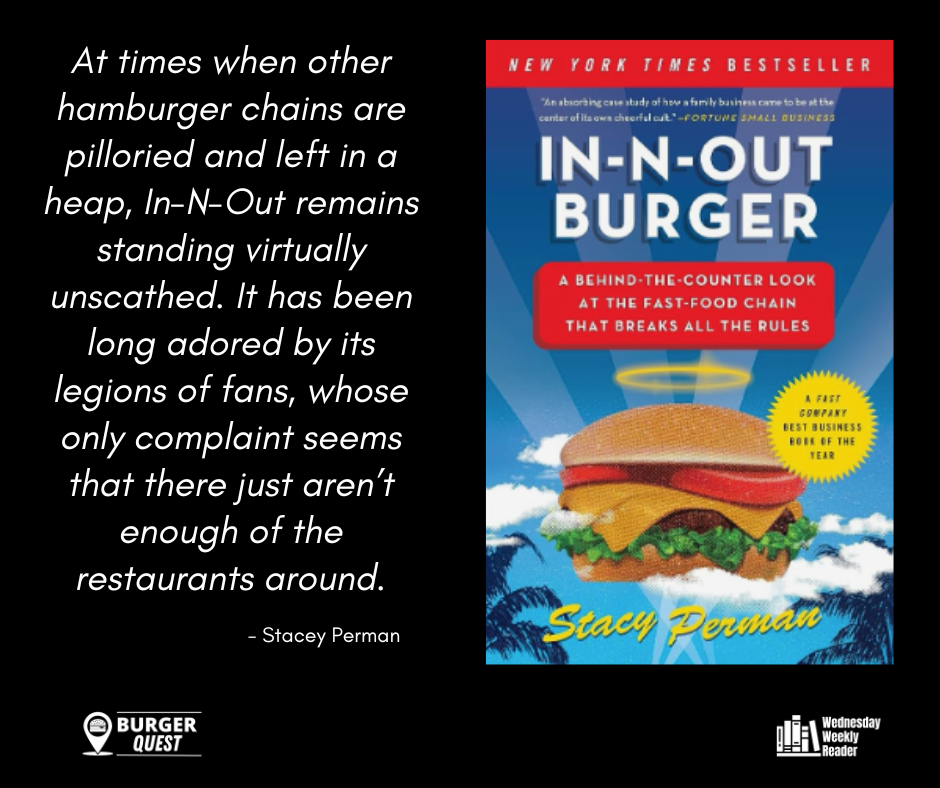
A behind-the-counter look at the fast-food chain that breaks all the rules, Stacy Perman’s In-N-Out Burger is the New York Times bestselling inside story of the family behind the California-based hamburger chain with a cult following large enough to rival the Grateful Dead’s. A juicy unauthorized history of a small business-turned-big business titan, In-N-Out Burger was named one of Fast Company magazine’s Best Business Books of 2009, and  Fortune Small Business insists that it “should be required reading for family business owners.

Stacy Perman’s In-N-Out Burger is a savory literary treat that delves deep into the history, culture, and enduring allure of a fast-food phenomenon that has captured the hearts and taste buds of millions. In this meticulously researched book, Perman uncovers the intriguing story behind the success of In-N-Out Burger, weaving together a narrative that is as satisfying as the restaurant’s legendary Double-Double.

With a captivating blend of storytelling and investigative journalism, Perman brings to life the journey of the Snyder family, the visionary founders of In-N-Out Burger. From the humble beginnings of a single drive-thru in Southern California to its iconic status as a cultural icon, the book traces the brand’s evolution with a focus on the values that have set it apart.

One of the book’s strengths is its ability to capture the essence of In-N-Out’s food philosophy. Perman not only describes the flavors and freshness of the menu items but also peels back the curtain on the restaurant’s commitment to quality. The meticulous attention to detail, from the sourcing of ingredients to the preparation methods, reflects the family’s dedication to serving an exceptional burger experience. This attention to craft resonates with food enthusiasts who seek more than just a quick meal.

Perman also delves into the brand’s fascinating culture, which sets In-N-Out apart in an industry often characterized by rapid turnover and uniformity. The author explores how the company’s dedication to its employees, simple menu, and classic aesthetic have created a loyal following that spans generations. This deep-rooted connection between In-N-Out and its customers is a testament to the company’s ability to maintain its authenticity while expanding into a rapidly changing fast-food landscape.

While In-N-Out Burger is a captivating read that offers a wealth of insight into the brand’s journey, there are a few moments where the narrative can feel overly detailed, potentially overwhelming readers who are looking for a more concise overview – but not for burger lovers! Additionally, a broader exploration of the brand’s challenges and controversies could have added a more balanced perspective to the story. [Note: Lynsi Snyder, granddaughter of In-N-Out founders and now president, is releasing her book The Ins and Outs of In-N-Out in October – a review will becoming here shortly thereafter!]

In conclusion, In-N-Out Burger by Stacy Perman is a flavorful journey through the history and ethos of a fast-food legend. Perman’s writing skillfully captures the essence of what makes In-N-Out Burger a beloved institution, resonating with both loyal fans and those who are curious about the stories behind their favorite comfort foods. For anyone with a fondness for a well-crafted burger and a desire to understand the behind-the-scenes magic of a successful culinary enterprise, this book is a satisfying and enlightening read.


Still hungry?

Burgerology: The Art and Science of the Perfect Patty

Flipping History: How McDonald’s Shaped the Hamburger’s Popularity

Indulging in Burger Bliss: A Quest for Culinary Perfection

White Castle: The Trailblazing Pioneer of Fast Food

Bite Into Tradition: The Best Loved Regional Burger Chains in the Country

Burger Beast Unleashed: The Ultimate Tribute to Burgers in Sef Gonzalez’ Book

Sink Your Teeth into “The Hamburger”: A Culinary Journey by Josh Ozersky

Burger Magic: Exploring the Universal Fascination Behind America’s Favorite Dish

My Quest for the Perfect Hamburger: A Literary, Culinary, and Arbitrary Journey in Pursuit of America’s Iconic Delight

A Tantalizing Top of the Stack, Made to Order

Before Burger Quest

Leadership Lessons from the Sidewalk

In a recent post on walking unplugged, I mentioned that I would be walking the next day with my feet.

I wasn’t trying to be flippant – I was merely stating that your feet can tell you a lot about where you’re walking, and what you’re walking on, and in the process, you can learn a lot.

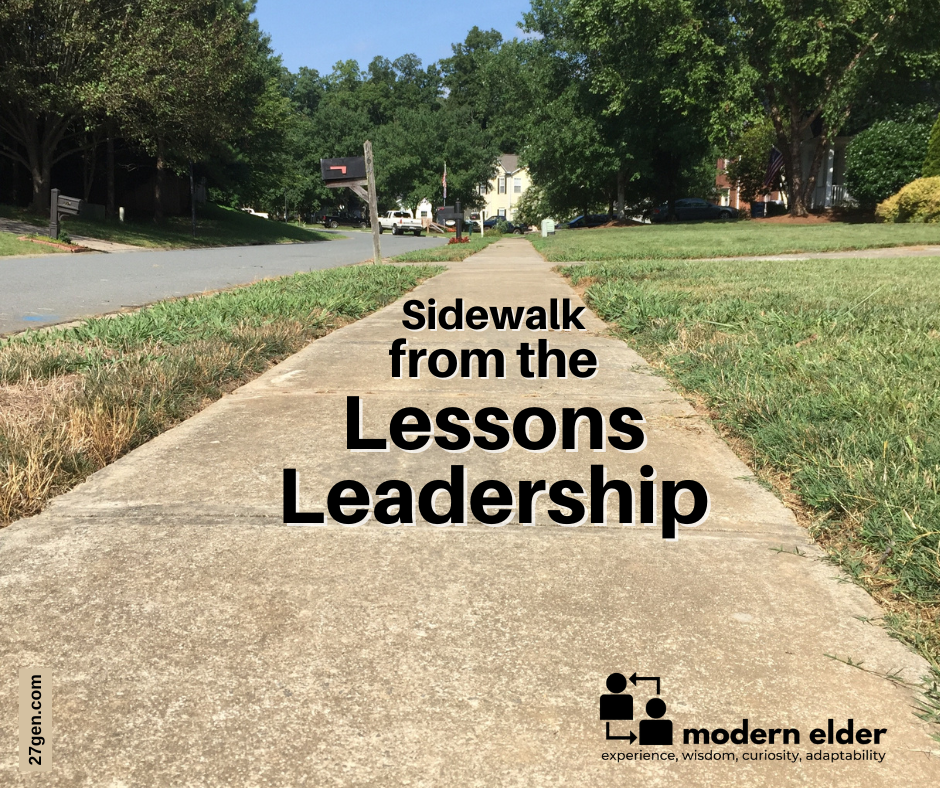
With that going through my head, I began my walk – and it wasn’t long before I realized Leadership Lessons the sidewalk could teach me.

In a short walk through my neighborhood, I felt and observed the following:

  • Raised Sidewalk – visible, growing tree roots: Leaders should always be looking for obscure things that may trip them up.
  • Sunken Sidewalk – hidden sources of erosion: Leaders should be cautious of unseen things that will bring them down and stunt their capabilities.
  • New Sidewalk Section – replacing to make it functional again: As your leadership grows and matures, you can count on learning new ways to do some things better.
  • Clean Sidewalk – appearances matter: Leaders must present themselves in the best manner possible, which instills confidence.
  • Dirty, Stained Sidewalk – see above: Conversely, sloppy appearances give others pause.
  • Cracked Sidewalk – too heavy a load: Leaders aren’t super heroes, and must balance the “load” they carry.
  • Grass in Sidewalk – maybe lazy, but at least distracted: Leaders who allow interruptions won’t be able to focus.
  • Grass growing over the Sidewalk – know your boundaries: Leaders know that boundaries help focus attention and align teams.
  • Sidewalks – take you somewhere: Leaders don’t fly solo; they must take others with them.
  • Sidewalks – make your journey easier: Well-prepared leaders are in a better position to help others on the journey.
  • Sidewalks – make your journey safer: Leaders watch out for the safety and welfare of others.
  • Sidewalks – lift you above the road: Leaders must rise above their surroundings.

In their civic role, sidewalks play a vital purpose in city, town, and suburban life. As conduits for pedestrian movement and access, they enhance connectivity and promote walking.  Safe, accessible, and well-maintained sidewalks are a fundamental and necessary investment.

But for me, they provide great leadership lessons.

And of course, I couldn’t resist sharing Shel Silverstein’s most appropriate poem:

“There is a place where the sidewalk ends
And before the street begins,
And there the grass grows soft and white,
And there the sun burns crimson bright,
And there the moon-bird rests from his flight
To cool in the peppermint wind.

Let us leave this place where the smoke blows black
And the dark street winds and bends.
Past the pits where the asphalt flowers grow
We shall walk with a walk that is measured and slow,
And watch where the chalk-white arrows go
To the place where the sidewalk ends.

Yes we’ll walk with a walk that is measured and slow,
And we’ll go where the chalk-white arrows go,
For the children, they mark, and the children, they know
The place where the sidewalk ends.”

― Shel Silverstein, Where the Sidewalk Ends


How to Take a Walk With All Your Senses

Welcome to the age of white noise.

We live our lives in a constant tether to phones, to apps, and to social media – mostly acquiescing to FOMO.

In this age of distraction, the ability to experience and be present is often lost, as is our capacity to think and to see and to listen.

Rob Walker, The Art of Noticing

In an effort to battle this, I’m inviting you to join me in taking a walk – with all your senses.

In short, I want you to pay attention.

At a basic level, paying attention is simply making a selection among all the stimuli bombarding you at any moment.

Even if we ignore most of what is going on around us, we can only take in so much of the world at a time. Our sensory system has a limited capacity, both in range and in speed of processing.

The sensory system I’m referring to are your five classical senses: sight, sound, touch, taste, and smell.

Limited capacity aside, many times we unfortunately ignore the parts that are available to us. Leonardo da Vinci reflected sadly that the average human:

“looks without seeing, listens without hearing, touches without feeling, eats without tasting, moves without physical awareness, inhales without awareness of odor or fragrance, and talks without thinking.”

A Brief Primer on How Our Senses Work

Sound The outer ear catches and channels sound waves to the middle ear, which contains three tiny bones. These bones vibrate, transmitting the sound the inner ear, where thousands of hair cells are stimulated by the movement of the fluid within the inner ear. An electrical impulse is transmitted along the hearing nerve to the brain creating the sensation of hearing.

Sight The experience of sight begins when photons from the world hit the lens of our eye, and get focused onto over 130 million receptor cells on the retina. These receptor cells convert incoming light into electrical signals to be sent to the brain, making sight possible.

Smell Every day we are confronted with a smorgasbord of smells. Our five million olfactory cells can sniff out one molecule of odor-causing substance in one part per trillion of air. We take about 23,000 breaths per day processing about 440 cubic feet of scent-laden air.

Touch Our bodies have more than 500,000 touch detectors and 200,000 temperature sensors. Each of these sensors gathers sensory information and relay it through specific nerve bundles back to the central nervous system for processing and possible reaction

Taste The complex process of tasting begins when tiny molecules released by the substances around us stimulate special cells in the nose, mouth, or throat. These special sensory cells transmit messages through nerves to the brain, where specific tastes are identified.

Enough of the science lab! God designed our bodies to sense, interpret, and react to the millions of stimuli that occur around us every day.

What do you miss, every day, right in front of you, while walking around the block?

I was paying so little attention to most of what was right before me that I had become a sleepwalker on the sidewalk. What I saw and attended to was exactly what I expected to see. That attention invited attention’s companion: inattention to everything else.

Alexandra Horowitz, On Looking

inspired by Alexandra Horowitz’s On Looking

and Rob Walker’s The Art of Noticing

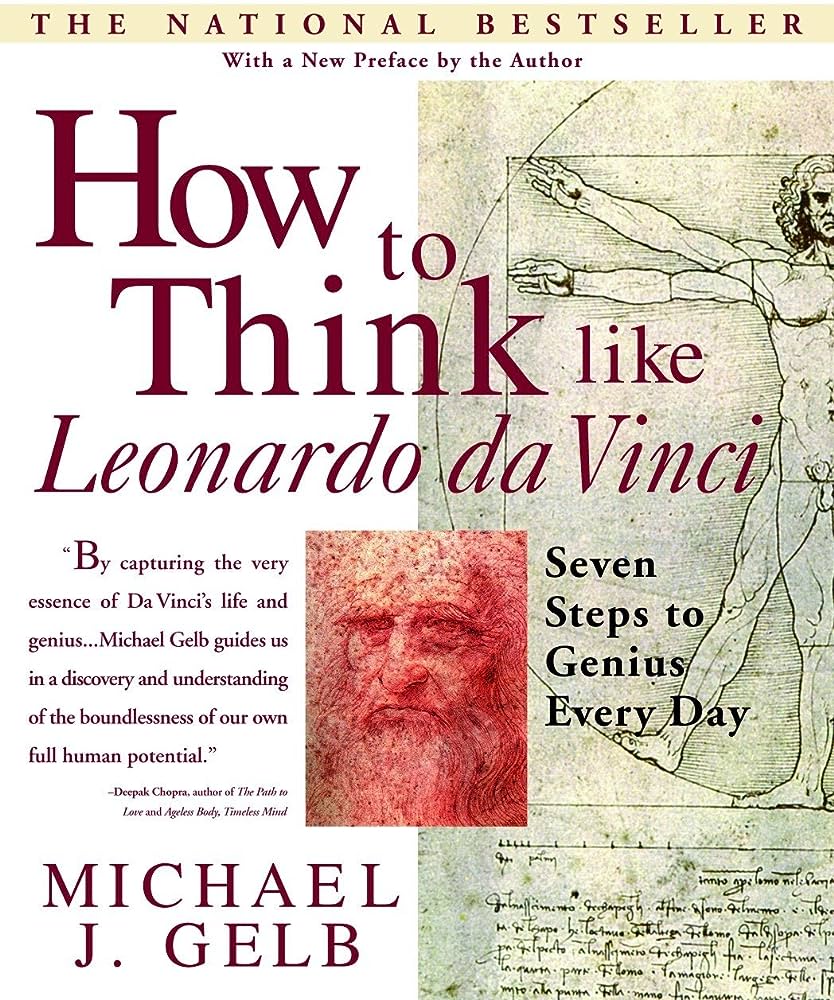
and Michael J. Gelb’s How to Think Like Leonardo da Vinci


Part of a regular series on 27gen, entitled Wednesday Weekly Reader

During my elementary school years one of the things I looked forward to the most was the delivery of “My Weekly Reader,” a weekly educational magazine designed for children and containing news-based, current events.

It became a regular part of my love for reading, and helped develop my curiosity about the world around us.