
Rebuilding Community in Our Isolated Worlds
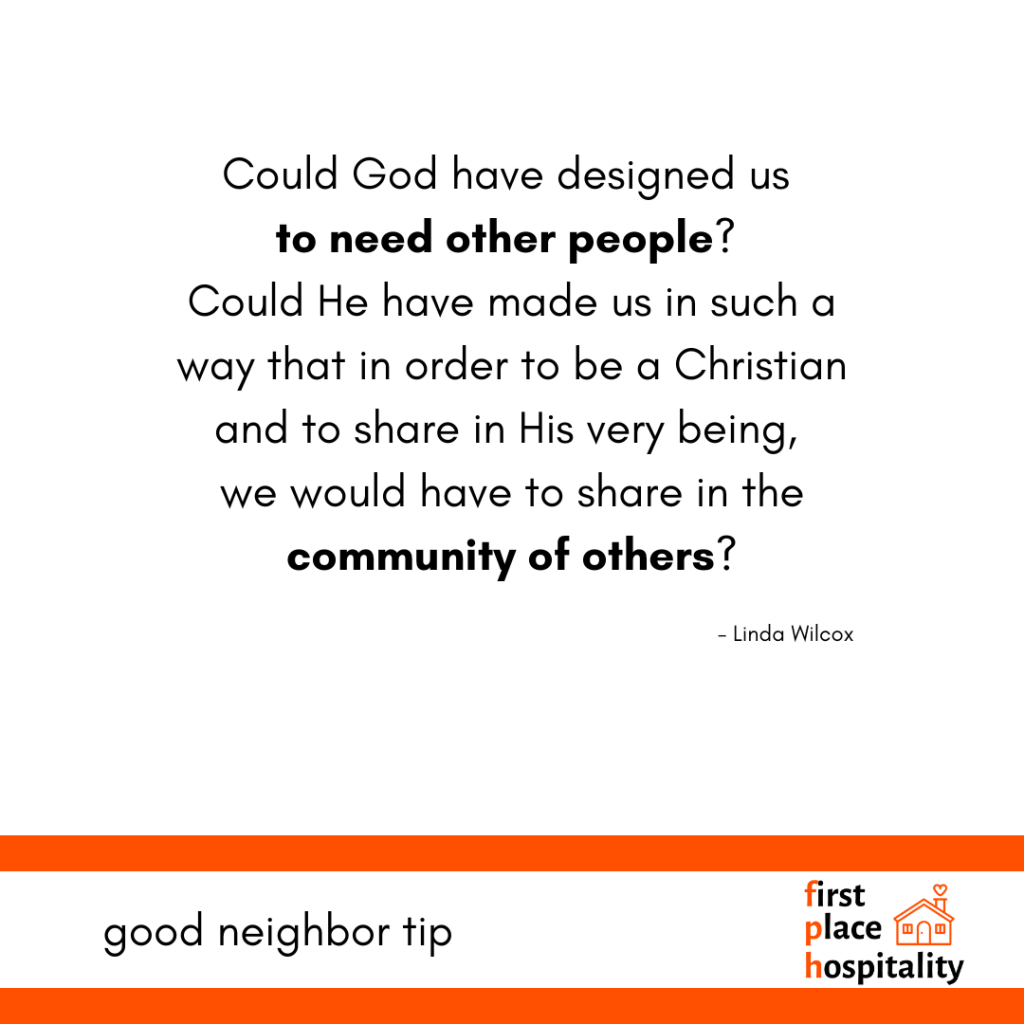
Being a part of God’s kingdom is not just having a private relationship with God but also having a communal relationship with His other children.
Linda Wilcox, No More Front Porches
Front Porches. Once they were a vital part of American society. Whether you had a large verandah that circled the house, or little more than a front stoop, you adorned it with comfortable chairs and spent hours there, talking with friends and relatives, watching what was going on in the neighborhood, looking out for others, and keeping in touch with your world. Front porches symbolized relationships and being involved with life beyond your front door.
Today, life has changed.
Few new homes offer a place to nestle as twilight sets in and few people have the leisure time for this lifestyle, or even for the relationships that it represents. We’ve moved ahead and left front porch attitudes behind as quaint relics.

But in recent decades, as the nation has reeled from tragedies such as the September 11 terrorist attacks, countless shootings, and the pandemic, Americans are again scurrying to regain that closeness, care, and compassion we found in communities that sat on front porches. Perhaps, we’re finding, we need the stability of those front porch attitudes in our lives.
In No More Front Porches, sociologist Linda Wilcox looks at how and why communities, churches, and lifestyles have changed. She evaluates the nostalgia for the ’good old days,’ and explores the offerings of today. Though we can never regain the idealized past, she gives us help and hope for building emotional and community ’front porches’ in the frantic society we now zoom through. She helps us learn how to avoid isolation and refocus our methods for building those close, front porch relationships.
Let No More Front Porches help you discover a little bit more about this society in which we live. And in the process, you’re bound to learn how to better enjoy people in your home, neighborhood, church and world.

According to author Linda Wilcox, it’s not uncommon for us, thanks to 24-hour news availability, to know more about what’s happening on the other side of the planet than what’s happening on the other side of the fence.
Written in 2002, that truism is all the more prevalent today. It’s too easy to become trapped in the digital world of 24/7, feeling always on, FOMO, and living life in the hyperspeed lane.
Only in the last decade, the author writes, have we come to “need” this much immediate contact with each other. Now, it seems, we can’t live without our devices right beside us, if not in our hands most of our waking hours.
At the same time, we desire a personal space that allows us to escape the demands of our public (and digital) lives and a place we can call our own.
And so we retreat into our closed garage doors and empty front porches, emerging in our vehicles off on an errand, returning to the same garage door, closing it before we exit the vehicle.
A pointed, and poignant, quote from the author sums it up: Let’s be realistic. Perhaps we can’t save the world [by being on the front porch], but surely we can do a better job than we have in the past.
Americans are hungry to regain the closeness, care, and compassion we used to find right outside our front doors.
inspired and adapted from No More Front Porches
 27gen.com