
I’m continuing a brief series using the biblical story of Nehemiah as an excellent role model for a Modern Elder:
Today, I wanted to take a look at Nehemiah’s skill as a Visionary Leader. Nehemiah had a clear and specific vision – to rebuild the walls of Jerusalem. This singular focus allowed him to channel his energy and resources towards achieving that goal. Effective leaders often have a well-defined vision that guides their actions and decision-making.
Nehemiah recognized a need, took initiative, conceptualized a vision, devised a strategy, and rallied others to support his cause.
In his work Visionary Leadership, Burt Nanus defines a vision as a compelling future scenario for an organization, one that is both realistic and attractive. It serves as a beacon, guiding the organization towards a destination that surpasses its current state, promising greater success or desirability.
Nanus argues that a potent vision possesses the ability to galvanize action, igniting enthusiasm and prompting the mobilization of resources and talents to bring it to fruition. Effective leaders possess the ability to perceive opportunities beyond the present reality, focusing not only on the immediate concerns but also on future possibilities. This foresight distinguishes them as leaders, enabling them to prioritize what truly matters amidst competing demands.
According to Nanus, vision occupies a central role in leadership, acting as an essential tool for success. Biblical leaders, grounded in the belief of a divine guide, approach leadership with prayerful dependence on God’s guidance. They maintain an optimistic yet pragmatic outlook, aligning their vision with God’s purposes and stewarding resources accordingly.
However, they remain mindful of the need to uphold the integrity of their vision amidst external pressures and personal agendas. They guard against self-serving motives that may distort the vision and hinder the fulfillment of God’s intentions. For them, maintaining alignment with God’s purposes is paramount, ensuring that their leadership endeavors reflect divine guidance and contribute to His ultimate plan.

Nehemiah’s Approach to Communicating the Vision
Articulating the vision with clarity
Nehemiah clearly communicated the goal of rebuilding the walls of Jerusalem to restore its security and honor. He didn’t leave room for ambiguity, ensuring that everyone understood the purpose and significance of the project.
His vision was specific and actionable, providing a clear direction for the entire community to rally behind.
Inspiring others with his passion and commitment
Nehemiah’s personal dedication to the vision was evident in his words and actions. His passion for the well-being of Jerusalem and its people inspired others to join him in the endeavor.
He led by example, demonstrating his commitment through hard work, sacrifice, and unwavering faith in God’s providence.
Addressing doubts and concerns
Nehemiah acknowledged and addressed the doubts and fears of the people, reassuring them of God’s favor and protection throughout the project.
He listened empathetically to the concerns raised by various stakeholders and provided rational responses, instilling confidence and trust in his leadership.
Involvement of key stakeholders
Nehemiah strategically engaged with influential leaders and officials to garner support for his vision. He sought the backing of King Artaxerxes of Persia, as well as local authorities, to secure resources and permissions for the project.
By enlisting the support of key stakeholders, Nehemiah gained credibility and legitimacy for his leadership, enhancing the likelihood of success.
Nehemiah actively involved the entire community in the vision, rallying people from all walks of life to participate in the rebuilding efforts. He organized the population into teams based on their skills and proximity to different sections of the wall, maximizing efficiency and collaboration.
Through effective delegation and coordination, Nehemiah ensured that everyone contributed their talents and resources towards achieving the shared goal.
Overall, Nehemiah’s approach to communicating the vision exemplifies key principles of effective leadership, including clarity, inspiration, empathy, and stakeholder engagement. By skillfully articulating his vision and rallying widespread support, Nehemiah was able to mobilize a diverse community towards the successful completion of a monumental task.
Nehemiah’s Visionary Leadership Lessons
Focused leaders operate from clarity of vision.
Empathic leaders are characterized by their sensitivity to existing needs even before being developing a vision to address them.
Passionate leaders operate from a profound sense of duty and accountability.
Prepared leaders enhance motivation, making leadership tasks more manageable.
Collaborative leaders derive greater satisfaction from empowering others rather than solely focusing on executing tasks themselves.
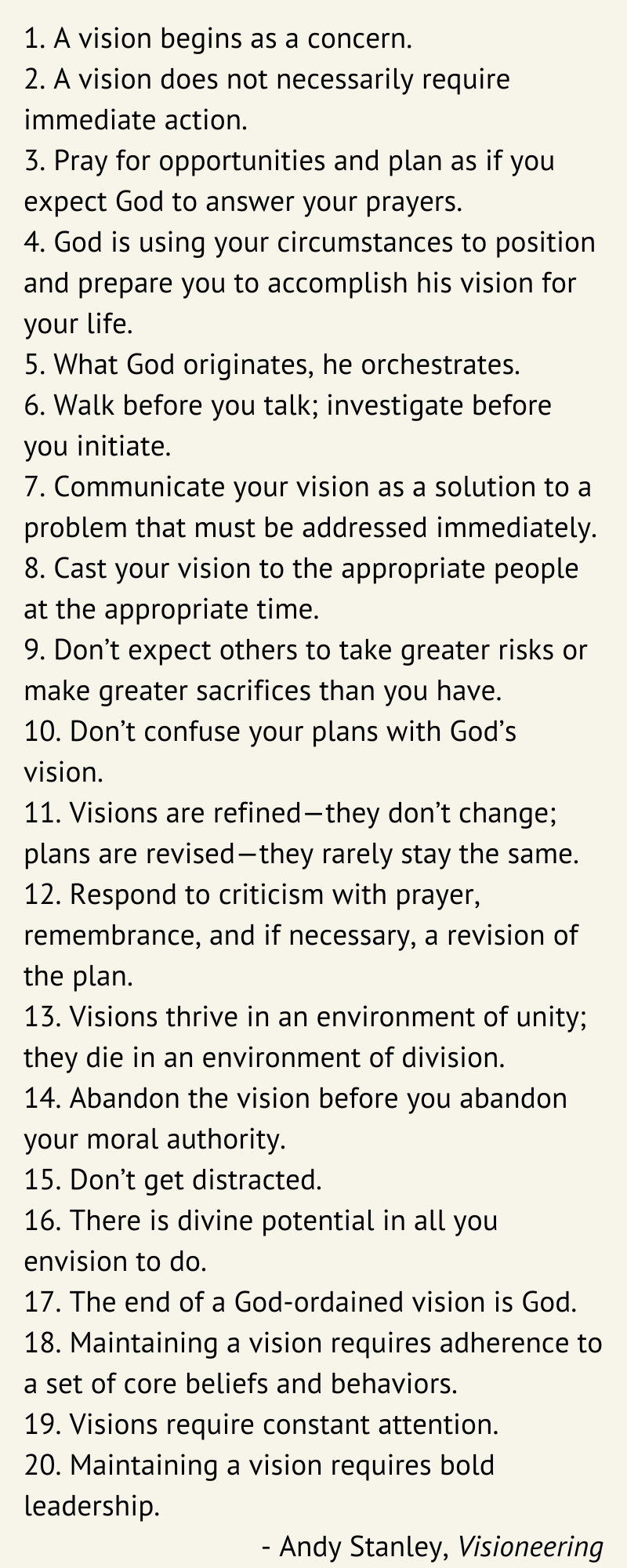
In his book Visioneering, Andy Stanley developed the following “building blocks” that leaders will find helpful as they pursue a vision for the organizations they lead.




 27gen.com