
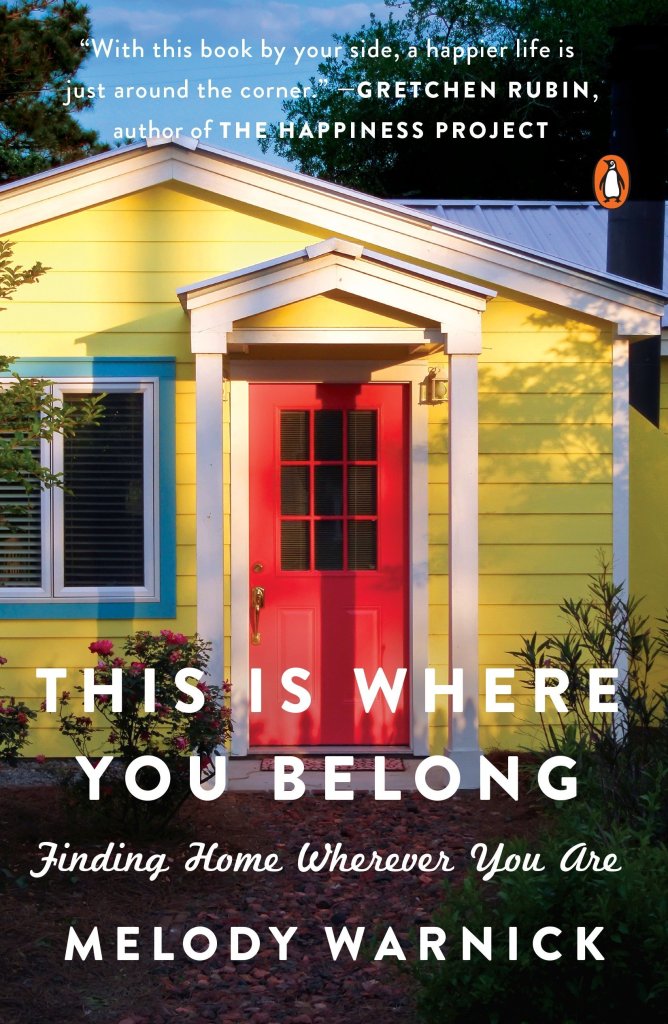
Today’s post is the second in a series of ten posts over the next few weeks, taking a “deeper dive” into the concepts exploring the heart of Melody Warnick’s book, This is Where You Belong.
Here is Warnick’s list of ten placement behaviors that she developed on the journey to “Love where you live.”
- Walk more
- Buy local
- Get to know your neighbors
- Do fun stuff
- Explore nature
- Volunteer
- Eat local
- Become more political
- Create something new
- Stay loyal through hard times
As author Melody Warnick continued her journey of learning to love where she lived, she began to deeply believe that her habits of buying from Target or ordering online from Amazon were contributing to the downfall of Main Street America. Her shopping habits might be killing both her hometown and her prospects of connecting with it, and that had her worried.
Neighborly economics means you don’t go for what’s cheapest and easiest. You think about which relationships and stores you want to preserve in your town, and you shop there. It may be a financial sacrifice, but:
You need to sacrifice for where you live. Sacrifice is going to make your town stronger.
Jay Leeson
Here’s what she found as she began her research:
One hundred years ago, you bought most of what you needed from a store in your community that was owned and operated by someone who lived there. Prescriptions came from the corner drugstore, whose pharmacist knew your kids and your ailments by name. Books were purchased from a local bookseller, who recommended a few new novels you’d like.
With Main Street acting as both substitute town hall and open-air living room, you could chat with your neighbors, debate the problems of day, and still cross milk and socks off your shopping list.
But as the population grew both in number and across the country, spreading from cities to towns to suburbs, chain stores – one store with multiple locations – began to take over. A few decades later, as first malls and big box stores, then retail strips centers expanded, local stores suffered, and then began to vanish.
In spite of research showing that monies spent locally tend to stay in the community in greater amounts, the trend continues for the most part today.
Warnick believes that there are more than just economic costs, though: Shopping locally is a concrete way to help your town thrive economically and to improve your own quality of life. You start buying stuff in your town, particularly from small independent stores owned by people who live there, and all of a sudden more local people have more jobs. So the city collects more taxes. Then the schools have more money for improvements. The streets get repaved, the parks department builds new sports fields, and so on. With millions of dollars, you’d think we’d all jump on board.
Unfortunately, not.
National chains and big-box stores are cheap, quick, and comforting – the retail equivalent of a fast-food cheeseburger – and their spread has turned much of America into a string of bland Anyplaces.
Warnick believes that the first step in any long-term recovery is recognizing you have a problem. She now had another “Love Where You Live” experiment: weaning herself off Target and Amazon and start spreading more of her cash around her hometown.
She called it her “big-box detox.”

You’ll want to get her book to read more about her journey, including:
- Cash mobs
- 3/50 Project
- Support local shops who support local causes
- Don’t showroom
Warnick believes this is how it works:
You buy stuff. Pick your local thing – birthday presents, bicycles, running shoes, books, lamps, camera gear, art prints, oil changes, carpet cleaning, piano tuning, or whatever. Pick something to buy, pick a local person or store to buy it from, and then stick with it.
Melody Warnick
You can be a cash mob of one. When you go into a local store to spend $20, you know that buying stuff does more than just for you.
I can’t emphasize this enough: If you like the idea of loving where you live, of being a better neighbor, or anything remotely connected, you MUST check out the work of Melody Warnick. Follow her on social media. Buy the book. Sign up for the newsletter on her website. Peruse the website for other articles she has written. It’s all PURE GOLD.


 27gen.com