The Irresistible Lure of the American Front Porch


Porch Revival: How an Architectural Classic Reclaimed Its Place in Modern Living

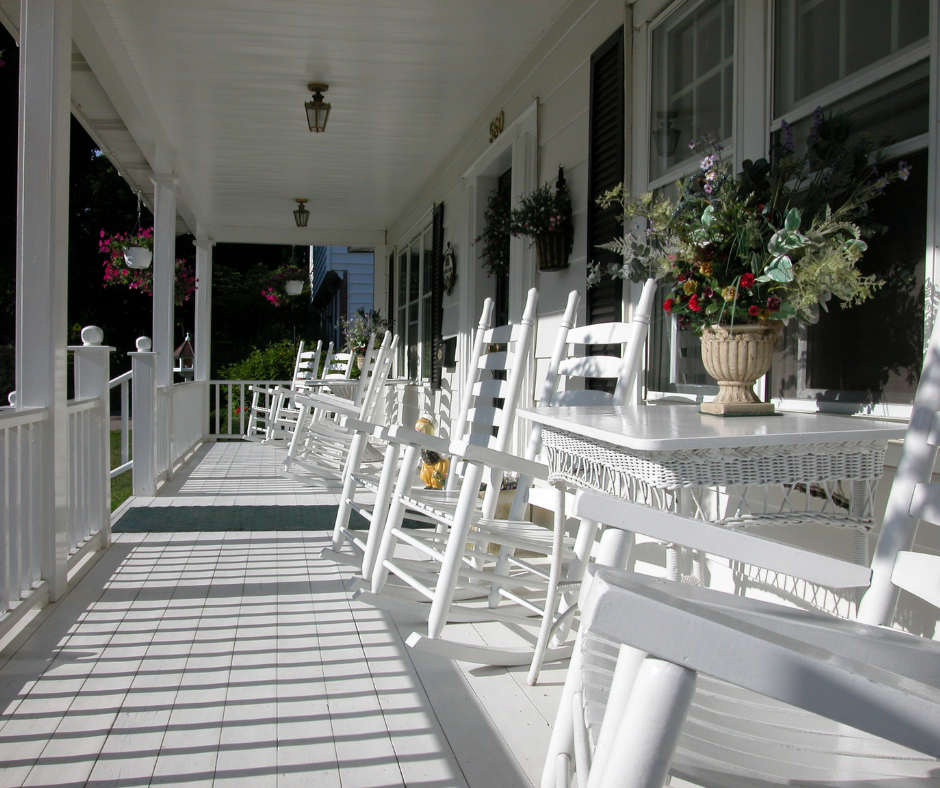
The porch, a quintessential element of American residential architecture, underwent significant transformations in the latter half of the 20th century and into the 21st century. Once a ubiquitous feature of homes across the country, the porch experienced a decline in popularity during the post-World War II era, only to experience a resurgence in recent decades.

The Mid-20th Century Decline

In the 1950s and 1960s, the rise of suburban living and the prevalence of air conditioning contributed to the diminishing role of porches. As families embraced a more private, indoor lifestyle, porches were often seen as unnecessary appendages or relics of a bygone era. Ranch-style homes, which were popular during this period, frequently lacked prominent porch spaces, favoring a sleek, minimalist aesthetic.

The Return of the Porch: 1970s-1990s

By the 1970s and 1980s, a renewed appreciation for traditional architectural styles and a growing interest in outdoor living began to revive the porch’s popularity. The resurgence of Victorian and Craftsman-style homes brought back the iconic wraparound porch, while contemporary designs incorporated more modest porch elements.

During this period, porches evolved to serve multiple functions beyond their traditional role as social gathering spaces. They became extensions of indoor living areas, offering additional seating and entertaining spaces for homeowners. The porch also emerged as a transitional zone between the home’s interior and the outdoors, blurring the boundaries between private and public spaces.

The Modern Porch: 2000-Present

In the 21st century, porches have continued to evolve, reflecting changing lifestyles and architectural trends. Here are some notable developments:

Outdoor Living Spaces: Porches have become integrated into larger outdoor living areas, featuring comfortable seating, outdoor kitchens, and entertainment systems. This trend has blurred the lines between indoor and outdoor spaces, creating seamless transitions between the two.

Sustainable Design: With an increased emphasis on environmental sustainability, porches have been designed to incorporate eco-friendly features such as natural ventilation, shading devices, and energy-efficient lighting. These elements contribute to the overall energy efficiency of the home while providing comfortable outdoor spaces.

Versatile Functionality: Contemporary porches often serve as multifunctional spaces, accommodating a variety of activities. From outdoor dining areas to home offices or exercise spaces, porches have become adaptable extensions of the home’s interior.

Aesthetic Diversity: While traditional porch styles like wraparounds and covered entries remain popular, architects and designers have also explored more modern interpretations. These include minimalist designs with clean lines, cantilevered structures, and the integration of innovative materials like glass and steel.

As societal values and architectural trends continue to evolve, the porch remains a beloved and adaptable element of American residential design. Its ability to seamlessly blend indoor and outdoor living, while reflecting changing lifestyles and sustainability goals, ensures its enduring relevance in the 21st century and beyond.

If you want to build community and attachment to where you live, scientists and neighbors agree: a front porch is just the ticket.

After more than a hundred years of inordinate fondness, Americans at the middle of the twentieth century discarded the porch as old-fashioned, obsolete, and valueless – until a blend of conservation and revival began to restore it to a place of honor and utility. The porch will never be what it once was, but neither will it vanish. Instead, after 150 years of yawing from ubiquity to rejection, the porch will hold its place as a standard element of domestic American architecture, and we will all be the better for that.

Michael Dolan

During the last decades of the Twentieth Century, outdoor life shifted away from the fronts of the houses. Before WW II, even fairly humble houses had front porches where people spent part of their free time. Upper-middle-class houses frequently had side porches. In the half-century after the war, family leisure gravitated to back yards,  which are now routinely equipped with decks or patios. In other words, private areas behind the houses have been upgraded, while public areas facing the streets and sidewalks have surrendered much of their social importance.

Philip Langdon
We thought that the point of requiring porches on the fronts of houses was for environmental reasons – to cool the air doing into the house. We realized after the houses were up that everybody saw the social component of the porch – it status as the important in-between space separating the pubic realm from the private realm.

Elizabeth Plater-Zyberk

People like the image of a porch; it takes them back to simplicity, it conjures up the symbol of ‘I want to go there,’ and the porch takes them there.

Niedra North

For author Michael Dolan, if an American porch is really to be an American porch, it has to have some Americans on it. Latter-day porches often honor that principle in the breach. Instead of serving as community-oriented  centers of conviviality and welcome, these porches stand, with their perfectly-placed rockers and adroitly-arranged tchotchkes, as illustrations of the hospitality folks would extend if only they weren’t so busy being busy, and if only being sociable didn’t intrude so much on their private lives.

He believes that if more houses had porches more people will have the chance to sit on them.

It that were the case, he continued, in time, as it had been for him with his older neighbors when he moved to the neighborhood, the first names would come, and then the friendships – and if not friendship, then neighborhood cordiality, that pleasant state in which you and the guy next door know one another well enough to say hello from the porch or to invite one another up to sit in a rocker or the glider.

Bringing Hospitality Back to Your Porch

Simply put, the front porch is too good an idea to be allowed to slip away, even if the hospitality we display is more theoretical than real.

– Michael Dolan

The good ol’ American front porch seems to stand for positivity and openness; a platform from which to welcome or wave farewell; a place where things of significance could happen. 

– Dan Stevens

Make your front porch a part of your home, and it will make you a part of the world. 

– John Sarris

My porch represents what I want my house to be: sheltering and communal, private and welcoming, a quiet vantage point from which to greet the whole world.

– Melody Warnick

Inspired by these books:

The American Porch, by Michael Dolan

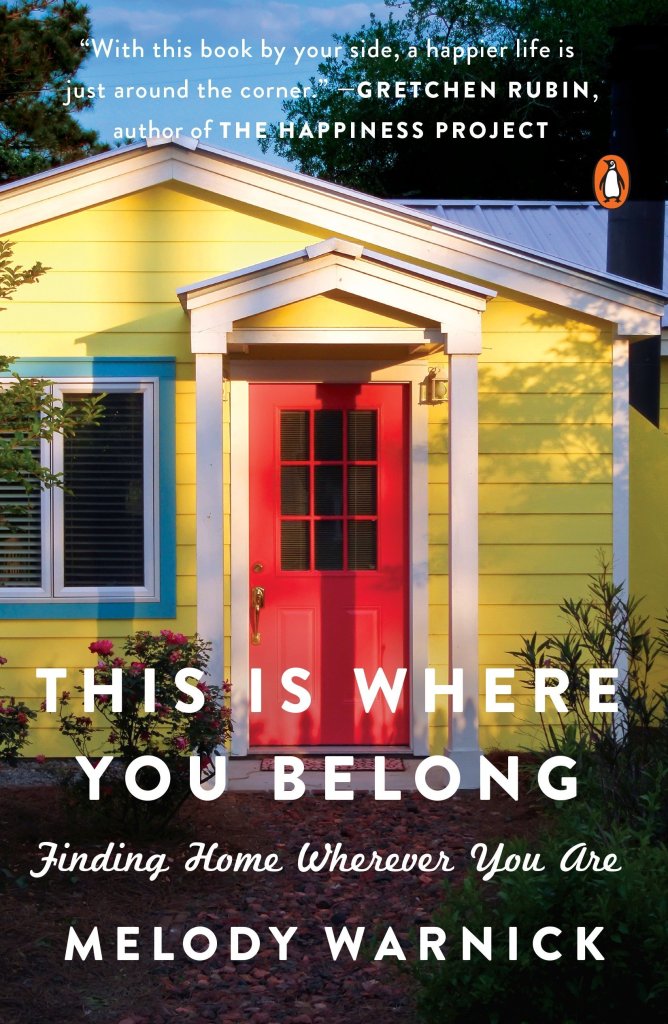
This Is Where You Belong, by Melody Warnick

A Better Place to Live, by Philip Langdon


How to Measure the Power of Place Attachment

To be rooted is perhaps the most important and least recognized need of the human soul

Simone Weil

What if a place becomes the right place only by our choosing to love it?

Melody Warnick, author of the fabulous book This Is Where You Belong, sets the whole tone of her book in the first chapter talking about “Place Attachment.”

Humans are instinctively driven to form connection with places. 

The most common term for this is “place attachment,” because it suggests the affectionate, almost familial connection that can form between us and where we live. You mostly know it when you feel it, which you probably have. When you roll into your town after being away for awhile and say, “It’s good to be home,” that’s a product of place attachment. So is feeling drawn as if by magic to a particular city, never wanting to leave the place where you grew up, or never wanting to leave the place you live right now.

If all this sounds a bit touch-feely, it is. Like happiness, place attachment exists partly as emotion and partly as a pattern of thought, which makes it difficult to quantify.

Over the years researchers have developed a “place attachment scale” of statements they use to gauge the sensation. Study participants are usually asked to rank their agreement on a scale of 1 to 5, but for the sake of simplicity, you can assess your own place attachment by answering each of the questions below “true” or “false” about the town or city where you live. Click here or on the image below for a PDF.

The more times you answer “true,” the more likely you are to be attached to your town. Making nineteen or more “true” answers, which puts you in the top quartile, indicates that you probably feel strongly connected to where you live. Six or fewer, on the other hand, suggests that you live somewhere unfamiliar or in a town you’re not particularly over the moon about. And if you’re not very place attached you may be saying to yourself, “Clearly place attachment feels nice. But why should I care? Will it actually make my life feel better?”

According to place attachment research, the answer is a resounding yes. Studies show that when you pit “Stayers” – long-term residents of a place – against “Movers,” the Stayers are generally far more social.

Where we live matters, and staying where we live matters. When it comes to place attachment, our towns are what we think they are.

No matter what anyone else thinks, your town just has to make you happy.

And being a good neighbor starts with you.


I can’t emphasize this enough: If you like the idea of loving where you live, of being a better neighbor, or anything remotely connected, you MUST check out the work of Melody Warnick. Follow her on social media. Buy the book (below). Sign up for her newsletter on her website. Peruse the website for other articles she has written. It’s all PURE GOLD.

Inspired and adapted from

This is Where You Belong, Melody Warnick

Learn to Love Where You Live by Staying Loyal

Today’s post is the tenth and final one in a series of posts over the past few weeks, taking a “deeper dive” into the concepts at the heart of Melody Warnick’s book, This is Where You Belong

Here is Warnick’s list of ten placement behaviors that she developed on the journey to “Love where you live.”

  1. Walk more
  2. Buy local
  3. Get to know your neighbors
  4. Do fun stuff
  5. Explore nature
  6. Volunteer
  7. Eat local
  8. Become more political
  9. Create something new
  10. Stay loyal through hard times

The trouble with place attachment is that to fall in love with a place is to risk losing it and grieving for it.

Melody Warnick

Author Melody Warnick believes that home is nothing more or less than the place where you feel at home and choose to stake yourself – and maybe not in that order. When we decide to plant roots, often the feeling of at-homeness follows.

The problem is that your town, wherever it is, will in all likelihood fall apart some day.

Warnick believes that what locals do next, after the disaster, is a key measure of how place attached we really are. How loyal will we be when things go wrong?

Warnick’s “Love Where You Live” experiments were used to test her hypothesis that actively seeking the good things in her town, investing her time and energy, and immersing herself in her surroundings would make her feel more like she belonged. For the most part, they had.

What she had never tested, and could not, was whether she had the mettle to make it through a crisis.

In her research of other places’ disasters or crises, she discovered the paradox of resilience: while anticipating Bad Things can make you feel antisocial, the aftermath of the actual event tends to increase social capital. The newfound ties developed during the crisis have the added benefit of making residents feel more rooted just at the moment they’re waffling between fight and flight.

Here are a few ideas from Warnick on Staying Loyal:

  • Create an emergency contact list for your neighbors. You’ll be one another’s first line of defense in case of disaster, with the added benefit that now you have their numbers to invite them to your Sunday Night Dinner.
  • Read about your town’s history so you’ll have a better sense of what it’s been through. Even small towns tend to carry local history books in their library.
  • Make your own personal resilience plan. Identify the most common shocks in your region – earthquakes, floods, wildfires – and figure out what you need to deal with them. You’ll feel less stressed if you know what to do when a Bad Thing happens.

I can’t emphasize this enough: If you like the idea of loving where you live, of being a better neighbor, or anything remotely connected, you MUST check out the work of Melody Warnick. Follow her on social media. Buy the book. Sign up for the newsletter on her website. Peruse the website for other articles she has written. It’s all PURE GOLD.

Learn to Love Where You Live by Creating Something New

Today’s post is the ninth in a series of ten posts, taking a “deeper dive” into the concepts at the heart of Melody Warnick’s book, This is Where You Belong

Here is Warnick’s list of ten placement behaviors that she developed on the journey to “Love where you live.”

  1. Walk more
  2. Buy local
  3. Get to know your neighbors
  4. Do fun stuff
  5. Explore nature
  6. Volunteer
  7. Eat local
  8. Become more political
  9. Create something new
  10. Stay loyal through hard times

The world, I realized, is full of people who say, “That would be fun.” What it needs is more people who say, “Let’s give it a whirl.”

Melody Warnick

In her “Love Where You Live” project, author Melody Warnick found that making cities prettier, more vibrant, or even cooler, can instill hope. According to one survey she found, living in a beautiful city is a more important predictor of personal happiness than objectively more consequential attributes like clean drinking water or safe streets.

In her research, Warnick found that created placemakers aren’t superheros. They’re usually average citizens – teachers, artists, entrepreneurs, lawyers, designers, activists, moms, dads, friends, neighbors – who decide to take matters into their own hands. They have a sense of what their city could be, and they love their place enough to try to change it, even a little bit.

Warnick found that when creative placemaking projects work well, they pull people together in interactions that build trust and a sense of community. Singing, chatting, drawing, painting, and howling together at a really bad joke are free, but they offer an astound return on investment in terms of their place attachment dividend.

Here are a few of the author’s ideas for Creating Something:

  • Find out what events are happening in your neighborhood – concerts, dance shows, festivals – and show up to as many as you can afford, even if it’s not your thing.
  • Throw a few bucks in the case whenever you see a busker in your town. There presence makes your hometown an interesting place to be.
  • Gather friends for an adventure and make something silly and creative happen in your neighborhood.
  • If you have it in you, be a creative initiator and organize a placemaking project in your town.

I can’t emphasize this enough: If you like the idea of loving where you live, of being a better neighbor, or anything remotely connected, you MUST check out the work of Melody Warnick. Follow her on social media. Buy the book. Sign up for the newsletter on her website. Peruse the website for other articles she has written. It’s all PURE GOLD.

Love Where You Live by Getting More Political

Today’s post is the eighth in a series of ten posts over the next few weeks, taking a “deeper dive” into the concepts at the heart of Melody Warnick’s book, This is Where You Belong

Here is Warnick’s list of ten placement behaviors that she developed on the journey to “Love where you live.”

  1. Walk more
  2. Buy local
  3. Get to know your neighbors
  4. Do fun stuff
  5. Explore nature
  6. Volunteer
  7. Eat local
  8. Become more political
  9. Create something new
  10. Stay loyal through hard times

If some small part of me might have once been reluctant about the wonkiness of a nine-week civics class, it had been overshadowed by the recognition that the Citizens Institute was exactly what you would do if you cared about your city.

Melody Warnick

As author Melody Warnick went through a nine-week Citizens Institute in her hometown, she came to two realizations:

  1. Good towns just don’t happen. They are planned into existence.
  2. Making decisions that keep all kinds of residents satisfied is incredibly difficult.

In her research she found support for this line of thought from various sources. “I think town employees are the unsung heroes,” says Rick Morse, an associate professor of public administration and government at the University of North Carolina at Chapel Hill, who studies citizens academies. “They’re always in the background working, and people don’t realize that all in their life is convenient and good because of what these other people do. For citizens, it’s kind of this aha moment: ‘Oh wow, these are good people, and they’re doing good things.'”

According to Warnick, the majority of Americans are crap at civic engagement, the process by which we citizen participate in the running of our town in an effort to make things better – happier – where we live. Very few of us get involved in local politics.

When you live in a town where people are not like you, politically or otherwise, you can feel isolated and alienated. The antidote, and the way to experience more place attachment where you live, is twofold.

First, learn to appreciate other residents for who they are and what they do for you – like Warnick did at the Citizens Institute.

Second, work with other to make good things happen in your town despite your differences.

Here are a few of the author’s ideas for Getting More Political:

  • Follow your mayor and city councilors on social media.
  • Join a local citizen’s academy (they go by many names).
  • Read a local news source online or in print to keep up with what’s happening in your town.
  • Download and use civic apps for your town.
  • Attend a city council meeting.

I can’t emphasize this enough: If you like the idea of loving where you live, of being a better neighbor, or anything remotely connected, you MUST check out the work of Melody Warnick. Follow her on social media. Buy the book. Sign up for the newsletter on her website. Peruse the website for other articles she has written. It’s all PURE GOLD.

Love Where You Live by Eating Local

Today’s post is the seventh in a series of ten posts over the next few weeks, taking a “deeper dive” into the concepts at the heart of Melody Warnick’s book, This is Where You Belong.

Here is Warnick’s list of ten placement behaviors that she developed on the journey to “Love where you live.”

  1. Walk more
  2. Buy local
  3. Get to know your neighbors
  4. Do fun stuff
  5. Explore nature
  6. Volunteer
  7. Eat local
  8. Become more political
  9. Create something new
  10. Stay loyal through hard times

Good food makes cities wealthier and more compelling, but there’s another reason why what we eat makes us love where we live. Food has an inimitable sensory power to connect us to a place.

Melody Warnick

And a starting point for eating local, according to author Warnick, is you local farmers’ market:

  1. The kinds of small, slow transactions that farmers’ markets represent the slow, “French-village” way to shop, filling your arms with the food you will eat for dinner tonight.
  2. Buying your groceries at the farmers’ market returns more money to the town you live in.
  3. The farmers’ market is decidedly social. Some studies show that at community farmers’ markets, people had ten times as many conversations than they did in supermarkets.

If not buying local, what about growing your own food? Studies that people who garden or farm have higher levels of neighborhood attachment; the act of literally putting down plant roots extends metaphorical ones as well.

Then there’s the path of becoming a “regular” at a local restaurant. My regular Tuesday or Wednesday lunch takes place at Big Bite’Z Grill in Cornelius, NC – here’s the story.

In Warnick’s story of choosing a restaurant to eat local, the most telling comment is this:

Perhaps, I thought, being recognized didn’t matter as much as doing the recognizing. So what if I ordered the same chicken cashew sandwich five times in a row and an employee didn’t congratulate me on my steadfastness? I could still enjoy feeling like it was my sandwich, the same way I could still feel this was my restaurant, even if no one who worked there cared.

Here are a few of the author’s ideas for Eating Local:

  • Find a place in your hometown to become a regular.
  • Shop regularly at your farmers’ market.
  • Plant a garden, big or small.
  • Follow local restaurants on social media, and support them there.

All over this country are would-be “third places” – not just coffee shops and diners but potlucks, church dinners, and chili cookoffs – that can make us feel like we belong where we live.

Make them your own.


I can’t emphasize this enough: If you like the idea of loving where you live, of being a better neighbor, or anything remotely connected, you MUST check out the work of Melody Warnick. Follow her on social media. Buy the book. Sign up for the newsletter on her website. Peruse the website for other articles she has written. It’s all PURE GOLD.

Love Where You Live by Volunteering

Today’s post is the sixth in a series of ten posts over the next few weeks, taking a “deeper dive” into the concepts at the heart of Melody Warnick’s book, This is Where You Belong.

Here is Warnick’s list of ten placement behaviors that she developed on the journey to “Love where you live.”

  1. Walk more
  2. Buy local
  3. Get to know your neighbors
  4. Do fun stuff
  5. Explore nature
  6. Volunteer
  7. Eat local
  8. Become more political
  9. Create something new
  10. Stay loyal through hard times

There are a million good reasons to volunteer, one of them being that “you don’t have to move out of your neighborhood to live in a better one,” as urban activist Majora Carter has said. Falling in love with where you live is simply a side benefit.

Melody Warnick

According to author Melody Warnick, volunteering in your hometown gives you a double-whammy benefit: Helping out makes you feel better while simultaneously making your city a better place to live. What’s good for your community is good for you.

One of the by-products of volunteering in and for your city can be a sense of “place identity.” The idea is that, in the same way you might self-identify as a parent or a lawyer or a dog lover, volunteering helps you see yourself as a valuable part of your town. You join the collective “we” of your place, a sentiment that’s summed up tidily in this statement from the place attachment scale: “Where I live tells you a lot about who I am as a person.”

Here are a few of the many ideas in her book:

  • Consider the things about your area that break your heart, like the homeless guy on the ben or the packs of teenagers you see shuffling around at loose ends.
  • Find a place to volunteer. Big cities have lots of opportunities. Small towns often have their own volunteer centers. Check out the local branch of the United Way.
  • Perform random acts of kindness, either on a special day like your birthday or a day you’re bored.
  • Donate to a cause, and make it a family project by saving change in a jar. Let the family decide where the donation will go.

I can’t emphasize this enough: If you like the idea of loving where you live, of being a better neighbor, or anything remotely connected, you MUST check out the work of Melody Warnick. Follow her on social media. Buy the book. Sign up for the newsletter on her website. Peruse the website for other articles she has written. It’s all PURE GOLD.

Love Where You Live by Exploring Nature

Today’s post is the fifth in a series of ten posts over the next few months, taking a “deeper dive” into the concepts at the heart of Melody Warnick’s book, This is Where You Belong. The idea of a deeper dive is the second week in this website’s monthly rotation. The first and third weeks are BookNotes: short excerpts and teasers from great books about hospitality and your neighborhood. The fourth week will develop a tool you can use to become a better neighbor.

Here is Warnick’s list of ten placement behaviors that she developed on the journey to “Love where you live.”

  1. Walk more
  2. Buy local
  3. Get to know your neighbors
  4. Do fun stuff
  5. Explore nature
  6. Volunteer
  7. Eat local
  8. Become more political
  9. Create something new
  10. Stay loyal through hard times

Studies have shown that spending time in green space improves immune system function, lowers blood glucose levels in diabetics, boosts cognitive function and concentration, lengthens attention span, and strengthens impulse control.

Melody Warnick

According to author Melody Warnick, humans are born with an inborn craving for wildness and green, what Harvard biologist E.O. Wilson call “biophilia.” We are, he says, built for nature.

Here’s the rub: Towns and cities usually aren’t.

In addition to the benefits of nature listed above, Warnick also found that green space builds social cohesion, the companion to place attachment that develops in tight-knit neighborhoods. One study showed that when homes are set among trees and plants, neighbors form stronger social ties and a better sense of community. People who live near parks trust each other more and are quicker to aid their neighbors than people who live farther away.

Outcomes like these made Warnick come up with her own hypothesis: that people who lived where they could spend more time in the natural world would feel more enthusiastic about their communities.

Here are a few of the many ideas found in her book:

  • Make a list of your town’s natural assets. If you live in a city, are there parks nearby? Secret gardens? What makes you feel close to nature where you live?
  • Learn the names of the flora and fauna in your area. Check out a book on the subject, or connect with the Master Naturalists or Master Gardeners in your town.
  • Find ways to do the outdoorsy things you love where you live. Even in cities, you can walk through parks, bike greenbelts, or dangle your feet in ponds.
  • Invite friends for a hike, since doing something in nature with people you love creates a happy place anchor.
  • So you’re not outdoorsy.That’s fine. Figure out one beautiful place in your town – a creek, a park a river – and spend some time there. Go for a drive and enjoy the view.

I can’t emphasize this enough: If you like the idea of loving where you live, of being a better neighbor, or anything remotely connected, you MUST check out the work of Melody Warnick. Follow her on social media. Buy the book. Sign up for the newsletter on her website. Peruse the website for other articles she has written. It’s all PURE GOLD.

I’m delighted to report that Melody’s latest book, If You Could Live Anywhere, was just released! I’ve just started reading it, but it is written in the same engaging style, and addresses the question on many people’s minds today:

The future of work is clear: It can happen wherever you are. So where do you really want to be?

How to Love Where You Live: Do Fun Things

Today’s post is the fourth in a series over the next few weeks, taking a “deeper dive” into the concepts at the heart of Melody Warnick’s book, This is Where You Belong.

Here is Warnick’s list of ten placement behaviors that she developed on the journey to “Love where you live.”

  1. Walk more
  2. Buy local
  3. Get to know your neighbors
  4. Do fun stuff
  5. Explore nature
  6. Volunteer
  7. Eat local
  8. Become more political
  9. Create something new
  10. Stay loyal through hard times

Learning my town’s history hadn’t made it to my “Love Where You Live” To-Do list.

Maybe it should have.

Melody Warnick

According to author Melody Warnick, it can take time and effort for your town’s things to become your things. Realistically, determining beforehand how well a city’s social offerings match your interests will increase your chance of loving it there. After all, these are social offerings, and social connectedness is at the heart of place attachment.

In some ways, developing place satisfaction is really a matter of creating a repository of happy memories where you live. Here’s where we toured the historic home. Here’s where we went on the bike ride. Here’s where we spent the day at the museum/football game/park/nature center.

Each shining moment gets pinned to your mental map of your city, and soon it’s entirely overlaid with pleasures big and small.

Here are a few of the many ideas found in her book:

  • Develop your out-of-towner list using the Power of 10+ framework developed by Project by Public Spaces. What ten local sites, historic landmarks, tourist attractions, parks, museums, statues, or events can you show off to visitors? Take people to the places that have meaning to you.
  • Find out what’s going on in your hometown. Most large cities and many smaller ones have websites, magazines, or newspapers with event calendars.
  • Do the stuff your town is good at. Learn to like them. You’ll feel happier faster.
  • Annual festivals are often a focal point of local pride, and they tell you a lot about what your place values and what residents consider themselves good at. Plus, research shows that such community rituals can increase place attachments.
  • Show up. Make a goal to show up to one community social offering a month, even if it’s not what you’d normally do for fun.
  • Create fun for yourself. A shortcut to place attachment is to do the things that make you happy where you live. Pinpoint the ways you like to spend your time, then search out the right kinds of activities in your town – or make them happen yourself.

I can’t emphasize this enough: If you like the idea of loving where you live, of being a better neighbor, or anything remotely connected, you MUST check out the work of Melody Warnick. Follow her on social media. Buy the book. Sign up for the newsletter on her website. Peruse the website for other articles she has written. It’s all PURE GOLD.

Be a Good Neighbor and Get to Know Your Neighbors

Today’s post is the third in a series of posts over the next few weeks, taking a “deeper dive” into the concepts at the heart of Melody Warnick’s book, This is Where You Belong.

Here is Warnick’s list of ten placement behaviors that she developed on the journey to “Love where you live.”

  1. Walk more
  2. Buy local
  3. Get to know your neighbors
  4. Do fun stuff
  5. Explore nature
  6. Volunteer
  7. Eat local
  8. Become more political
  9. Create something new
  10. Stay loyal through hard times

Place attachment research shows that many of the good feelings we have about the cities where we live stem from the sense that we have relationships there. Here was my chance to craft a “Love Where You Live” experiment that could, potentially, make me happier in my town immediately.

I would make an effort to get to know the locals.

Melody Warnick

Warnick believes that falling in love with your town needs to involve knowing ( and at least sort of liking) your neighbors. And it’s because of a little thing called “neighborhood cohesion,” a term used by social scientists to describe the level of closeness and connection neighbors feel toward each other. In studies, it’s measured by asking people whether they can agree with statements like these:

  • This is a close-knit neighborhood.
  • People around here are willing to help their neighbors.
  • People in this neighborhood generally get along with each other.
  • People in this neighborhood share the same values.
  • My neighbors can be trusted.

When people answer yes, it portends positive outcomes for both physical and emotional health.

Warnick determined that if she was going to use a Love Where You Live experiment to challenge her default settings on behaviors that she knew were making it difficult to become attached to her town, she would have to be a better neighbor.

Her first simple goal: find out who her neighbors were.

Here are a few of the many ideas found in her book:

  • Celebrate Good Neighbor Day. It’s September 28th, but you can declare any holiday or even an ordinary day a special day when you feel like meeting your neighbors.
  • Make and update a spreadsheet of the people on your block or apartment hall/building.
  • Welcome anyone who moves into a house you can see from your front porch or in your apartment building. You don’t have to prepare an elaborate welcome gift – just start by saying “Hi” and see what happens from there.
  • Eat a meal with neighbors. Start out simple, and in today’s climate, “socially distanced,” by inviting neighbors to bring whatever they were going to eat and have a picnic outside.
  • Offer to house-sit or pet-sit for neighbors going out of town. This assumes a level of trust, but you would be surprised how quickly your offer may get accepted.
  • And the biggie: Throw a block party! Maybe the most daunting, but most awesome, of all. You will become a neighborhood legend.

I was beginning to understand the value of meeting our neighbors face-to-face, even when – especially when – they’re not like us.

Melody Warnick

The “place” in place attachment isn’t an abstract concept. Place is physical proximity. The process of putting down roots naturally begins close to home, with the people who live right around us.


I can’t emphasize this enough: If you like the idea of loving where you live, of being a better neighbor, or anything remotely connected, you MUST check out the work of Melody Warnick. Follow her on social media. Buy the book. Sign up for the newsletter on her website. Peruse the website for other articles she has written. It’s all PURE GOLD.