
Celebrating National Good Neighbor Day September 28
National Good Neighbor Day is an annual observance in the United States that encourages people to build stronger relationships with their neighbors and foster a sense of community.
Here’s a brief overview of its history and background:
The day was created by Becky Mattson, a resident of Lakeside, Montana, who came up with the idea in the early 1970s. She believed that good neighbors were vital to the strength and well-being of communities and wanted to create a day that would recognize and encourage neighborly relationships.

Mattson began promoting the idea locally and then expanded her efforts to gain wider recognition. She successfully lobbied for the day to be recognized in her home state of Montana.
Encouraged by the state-level success, Mattson launched a campaign to have the day recognized nationally and her efforts caught the attention of members of Congress, who supported the idea.
In 1978, Mattson’s work culminated in success when President Jimmy Carter issued Proclamation 4601, officially designating the fourth Sunday in September as “National Good Neighbor Day.” In his proclamation, Carter stated, “Understanding, love, and respect build cohesive families and communities.”
In 2003, the observance was moved to a fixed date of September 28th each year. National Good Neighbor Day is sponsored and managed by The Hopeful Neighborhood Project.
Mattson’s grassroots effort to promote neighborliness and community spirit is a testament to how individual citizens can influence national observances. Her initiative has since inspired many communities across the United States to organize events and activities that foster better relationships between neighbors.
National Good Neighbor Day aims to promote kindness, consideration, and understanding between neighbors, recognizing the importance of strong community bonds.
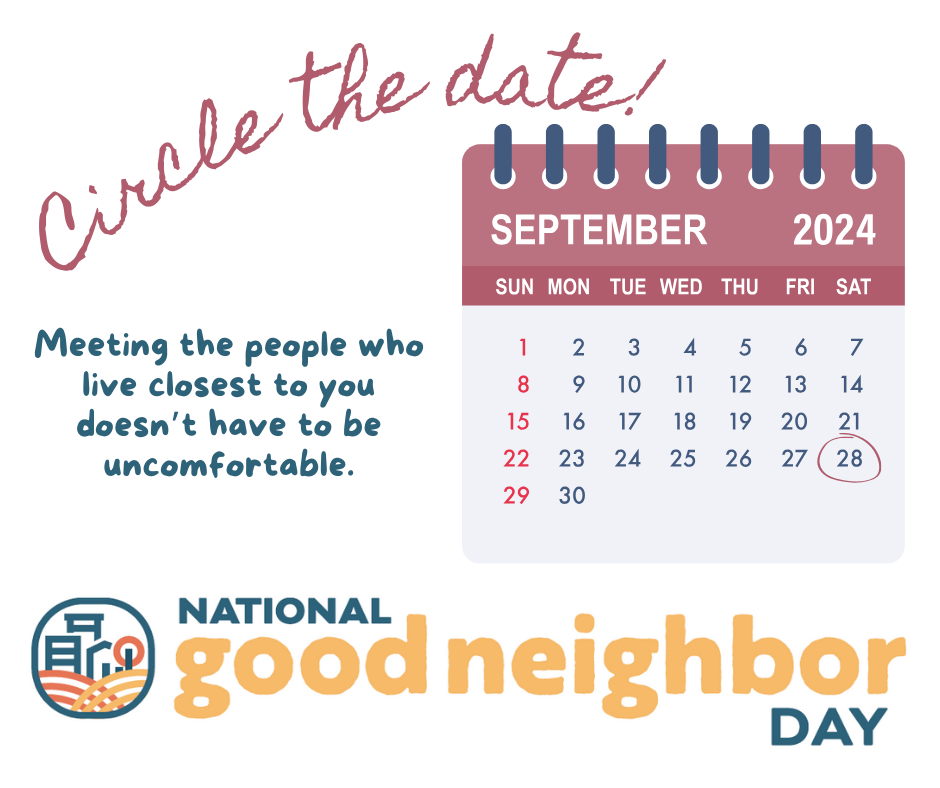
As National Good Neighbor Day approaches, communities across the nation are gearing up to celebrate the spirit of neighborliness. This annual observance offers a perfect opportunity to strengthen bonds and create a more vibrant, connected neighborhood.
Here are some inspiring ways you can participate and make a difference in your community:
Bring the Neighborhood Together – Nothing fosters community spirit quite like sharing a meal. Consider organizing a block party, community potluck, or barbecue in your local park. These gatherings provide an excellent chance for neighbors to mingle, share stories, and create lasting connections.
Lend a Helping Hand – Good Neighbor Day is all about kindness. Why not offer to help an elderly neighbor with yard work or home maintenance? Baking treats to share or offering to pet-sit for a neighbor going on vacation are simple yet meaningful gestures that can brighten someone’s day.
Improve Your Surroundings – Take pride in your neighborhood by initiating community improvement projects. Organize a neighborhood clean-up, plant trees, or start a community garden. These activities not only beautify your area but also give neighbors a chance to work together towards a common goal.
Foster Social Connections – Launch a neighborhood watch program to enhance safety, or start a book club to bring together literature lovers. Setting up a community bulletin board can keep everyone informed about local news and events, fostering a sense of community.
Welcome New Faces – Make newcomers feel at home by creating a welcome committee. Greet new residents with welcome baskets filled with local goodies and information about the neighborhood. Offering a guided tour of the area can help them feel more connected to their new home.
Share Your Skills – Everyone has something to offer. Host workshops where neighbors can share their expertise, whether it’s cooking, home repair, or gardening. Consider setting up a tool-lending library to promote resource sharing within the community.
Celebrate Diversity – Organize multicultural potlucks or cultural performances to celebrate the diversity in your neighborhood. These events can foster understanding and appreciation for different cultures and traditions.
Give Back Together – Coordinate charitable activities like food or clothing drives for local charities. Volunteering as a group at local non-profits not only helps those in need but also strengthens neighborhood bonds.
Promote Health and Wellness – Organize group fitness activities like neighborhood walks or yoga in the park. Hosting health awareness seminars can also contribute to the overall well-being of your community.
Go Green – Initiate environmental projects such as coordinating neighborhood recycling efforts or organizing energy conservation challenges. These activities can bring neighbors together while making a positive impact on the environment.
Engage Youth – Set up mentoring programs or organize youth sports leagues to involve younger residents in community activities. This can help foster a sense of belonging and responsibility among the next generation.
Embrace Technology – Create neighborhood social media groups or websites to improve communication. Organizing digital literacy classes for older residents can help bridge generational gaps and keep everyone connected.
National Good Neighbor Day reminds us that strong communities are built on simple acts of kindness and connection. By participating in these activities, you’re not just celebrating a day – you’re contributing to a more cohesive, supportive, and vibrant neighborhood all year round. So why wait? Reach out to a neighbor today and start planning how you’ll make this Good Neighbor Day on September 28 special for your community.

 27gen.com