The first fundamental of successful city life: People must take a modicum of responsibility for each other even if they have no ties to each other. This is a lesson no one learns by being told. It is learned from the experience of having other people without ties of kinship or close friendship or formal responsibility to you take a modicum of responsibility for you.
Jane Jacobs, Death and Life of Great American Cities
According to author Shauna Pilgreen, neighbors might not be your BFFs, but they’re your wall-sharers, your fence-sharers. God might have more for these relationships, but you’ve got to start the introductions.
In Pilgreen’s words, if we are to live sent, we go to the neighbors to make the introductions.
And to make introductions, we must first pay attention.
Tim Soerens believes that our capacity to be fully present in any given moment is constantly under assault, and this poses a grave danger to making progress in following the way of Jesus in our everyday life.
The world beyond our house and street is impossibly overwhelming and messy. But as Barbara Brown Taylor said, “It is not necessary to take on the whole world at first. Just take the three square feet of each on which you are sitting, paying close attention to everything that lives within that small estate.”
Paying attention is not terribly complicated, but it will ask more of us than we ever imagined.
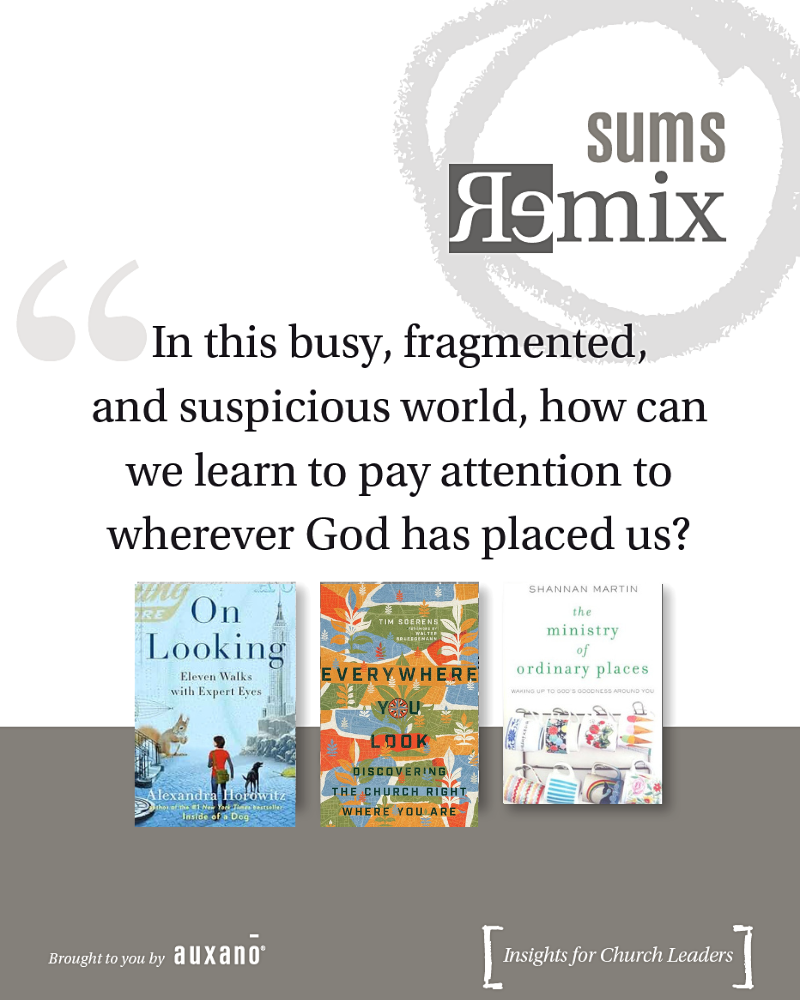
This issue of SUMS Remix looks at solutions that will help you learn to pay attention to the world around you. The solutions include:
In an effort to battle this, I’m inviting you to join me in taking a walk – with all your senses.
In short, I want you to pay attention.
At a basic level, paying attention is simply making a selection among all the stimuli bombarding you at any moment.
Even if we ignore most of what is going on around us, we can only take in so much of the world at a time. Our sensory system has a limited capacity, both in range and in speed of processing.
The sensory system I’m referring to are your five classical senses: sight, sound, touch, taste, and smell.
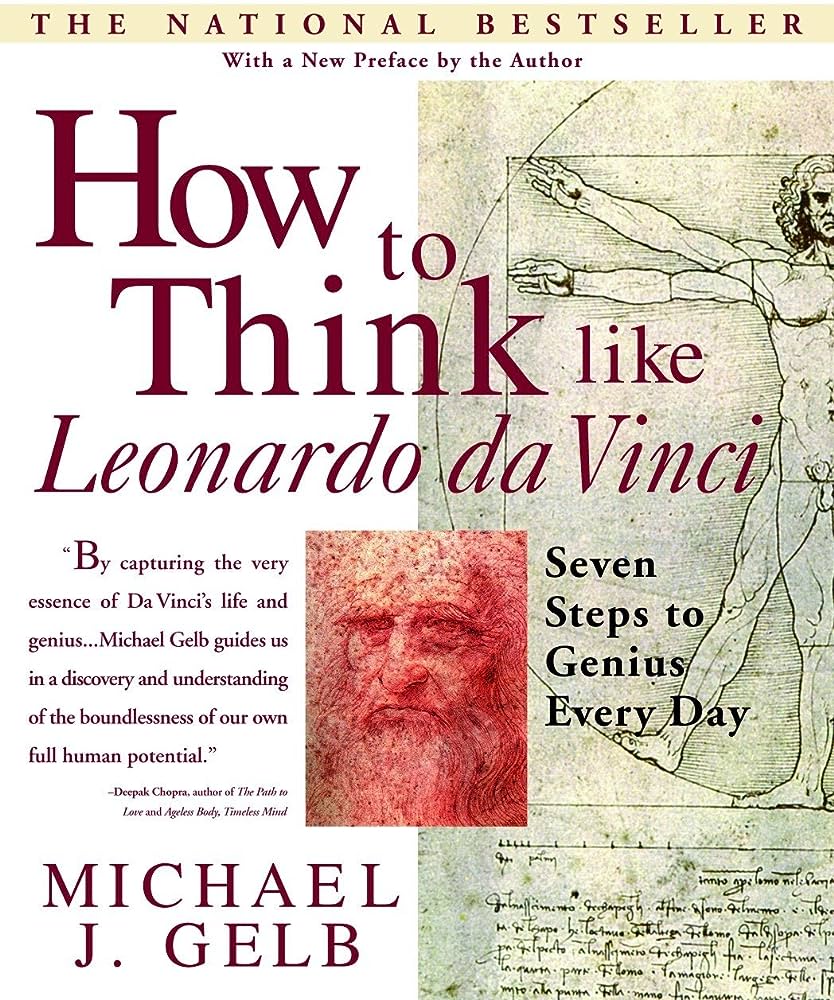
Limited capacity aside, many times we unfortunately ignore the parts that are available to us. Leonardo da Vinci reflected sadly that the average human:
“looks without seeing, listens without hearing, touches without feeling, eats without tasting, moves without physical awareness, inhales without awareness of odor or fragrance, and talks without thinking.”
A Brief Primer on How Our Senses Work
Sound The outer ear catches and channels sound waves to the middle ear, which contains three tiny bones. These bones vibrate, transmitting the sound the inner ear, where thousands of hair cells are stimulated by the movement of the fluid within the inner ear. An electrical impulse is transmitted along the hearing nerve to the brain creating the sensation of hearing.
Sight The experience of sight begins when photons from the world hit the lens of our eye, and get focused onto over 130 million receptor cells on the retina. These receptor cells convert incoming light into electrical signals to be sent to the brain, making sight possible.
Smell Every day we are confronted with a smorgasbord of smells. Our five million olfactory cells can sniff out one molecule of odor-causing substance in one part per trillion of air. We take about 23,000 breaths per day processing about 440 cubic feet of scent-laden air.
Touch Our bodies have more than 500,000 touch detectors and 200,000 temperature sensors. Each of these sensors gathers sensory information and relay it through specific nerve bundles back to the central nervous system for processing and possible reaction
Taste The complex process of tasting begins when tiny molecules released by the substances around us stimulate special cells in the nose, mouth, or throat. These special sensory cells transmit messages through nerves to the brain, where specific tastes are identified.
Enough of the science lab! God designed our bodies to sense, interpret, and react to the millions of stimuli that occur around us every day.
What do you miss, every day, right in front of you, while walking around the block?
I was paying so little attention to most of what was right before me that I had become a sleepwalker on the sidewalk. What I saw and attended to was exactly what I expected to see. That attention invited attention’s companion: inattention to everything else.
Part of a regular series on 27gen, entitled Wednesday Weekly Reader
During my elementary school years one of the things I looked forward to the most was the delivery of “My Weekly Reader,” a weekly educational magazine designed for children and containing news-based, current events.
It became a regular part of my love for reading, and helped develop my curiosity about the world around us.






 27gen.com