
In 2023, on the occasion of my 65th birthday, I set out to document a journey – the journey to becoming a modern elder.
This journey has (and continues) to involve a lot of reading, pondering, observing, and application.
To some it may seem like building a bridge while crossing it (which it is), but that also defines the very nature of the journey!
I set out on the journey with these four broad categories to guide me: experience, wisdom, curiosity, and adaptation.
As I continue the journey, I’ve been working on characteristics that provide a framework for becoming a modern elder.
The first was Noticing. Modern elders are encouraged to become first-class noticers in order to make the unconscious conscious. Noticing (or “awareness”) is a key wisdom skill for making personal changes.
The second was Life Editing. Modern elders are encouraged to use the skill of noticing/awareness for a “life editing.” What must you edit out of your life so that you can edit in something more inspiring and purpose-filled?
Following a teaser post from a few days ago, it’s time to turn my attention to Mastery.
Mastery. Modern elders are encouraged to understand and enrich their own mastery. What experience do you possess that might help someone a generation or two younger than you? What topic being discussed today excites you to the point of wanting to learn it? Ideally, your mastery taps into your wisdom and has your fingerprints all over it.
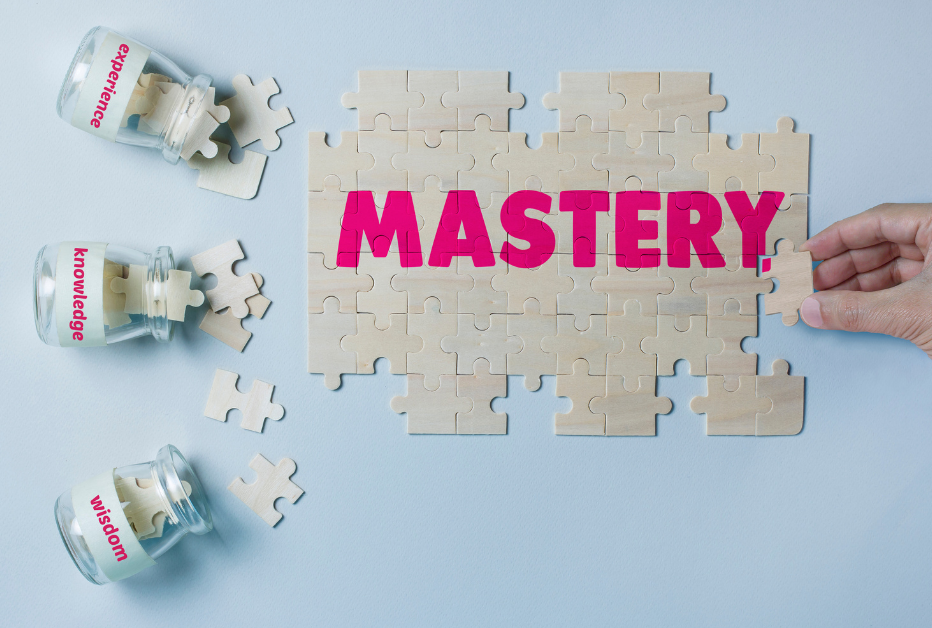
Every two years, find a subject you’re passionate about and become an expert on it. Management theorist Peter Drucker did this for the last 30 years of his life until he passed away in his mid-90s.
Chip Conley
Mastery is a profound and timeless concept that has intrigued humanity for centuries. It signifies the pinnacle of expertise and skill in a particular domain or discipline, achieved through dedicated practice, learning, and a deep understanding of the subject matter.
Because an important principle of becoming a modern elder must include someone who imparts wisdom to younger generations while continuing to learn, mastery is a compelling concept to explore. This introduction will provide an overview of what mastery entails and how it can be a guiding principle in the journey to becoming a modern elder.
A Lifelong Pursuit: Mastery is not a destination but a lifelong journey. It involves a commitment to continual improvement and growth. In the same way that the world around us is constantly changing, mastery is a dynamic process that evolves and develops over time.
Deliberate Practice: Achieving mastery requires more than just accumulating knowledge; it demands deliberate practice. This practice involves setting specific goals, seeking constructive feedback, and pushing the boundaries of your abilities. As you aim to invest in younger generations, deliberate practice can help you refine your mentoring skills and stay relevant in the fast-paced digital world.
Deep Knowledge: To be a master in any field, one must possess deep knowledge and understanding. While I have long practiced syntopical reading (hospitality in the home, the hospitality industry, and the history of Walt Disney are examples), a commitment to voracious reading in multiple areas aligns with this aspect of mastery. It’s about going beyond surface-level information and gaining a profound insight into your chosen areas of interest. A caution – it is not just knowledge for knowledge’s sake, but the applying the wisdom of what you’ve learned along the way.
Resilience and Perseverance: Mastery is often marked by setbacks and challenges. It’s crucial to develop resilience and the determination to overcome obstacles. This resilience is valuable not only in a personal journey but also as a “modern elder” guiding and motivating younger generations.
Legacy and Mentorship: Masters often become mentors, passing on their knowledge to the next generation. A desire to invest in younger generations resonates with this aspect of mastery. It involves not only imparting knowledge but also sharing the wisdom gained through years of experience (as noted in Deep Knowledge above). Mastery is not just about personal expertise but also about the profound impact it can have on those you mentor and the legacy you leave behind.
Adaptation and Innovation: The concept of mastery is not static. It involves staying open to new technologies, ideas, and approaches. As someone who values contrarian ideas and new technologies, I consider myself open to the mindset of someone who continually adapts and innovates.
In my recent reflections on the concepts of mastery, my concepts of schooling – from elementary all the way to post-graduate programs – are not an end point in discovery and learning, but a waypoint on the journey.
My “education” didn’t teach me what I needed to know as much as how I needed to learn.
On this journey towards mastery – viewed as a lifelong pursuit but only fully developed in later life – I am sure to encounter challenges, make discoveries, and evolve both personally and professionally. As noted previously, it combines an educational and vocational history with an insatiable curiosity for the benefit of those around me, especially younger generations.

Do not think that what is hard for you to master is humanly impossible; and if it is humanly possible, consider it within your reach.
Marcus Aurelius

 27gen.com