Low-Effort, High-Impact Neighborly Gestures

Let’s face it, life gets busy. Between work, family, and personal commitments, it can be challenging to find time for everything, let alone building strong neighborly relationships. But the good news is, fostering a great relationship with your neighbors doesn’t require a massive time commitment. Small, simple gestures can go a long way.

What if we took the time to get to know the people next to us and discovered that they aren’t so menacing after all? Perhaps we would find that the people on our block or floor are normal people just like us.

At the end of the day, they long for a place to belong, a place to be accepted and cared for.
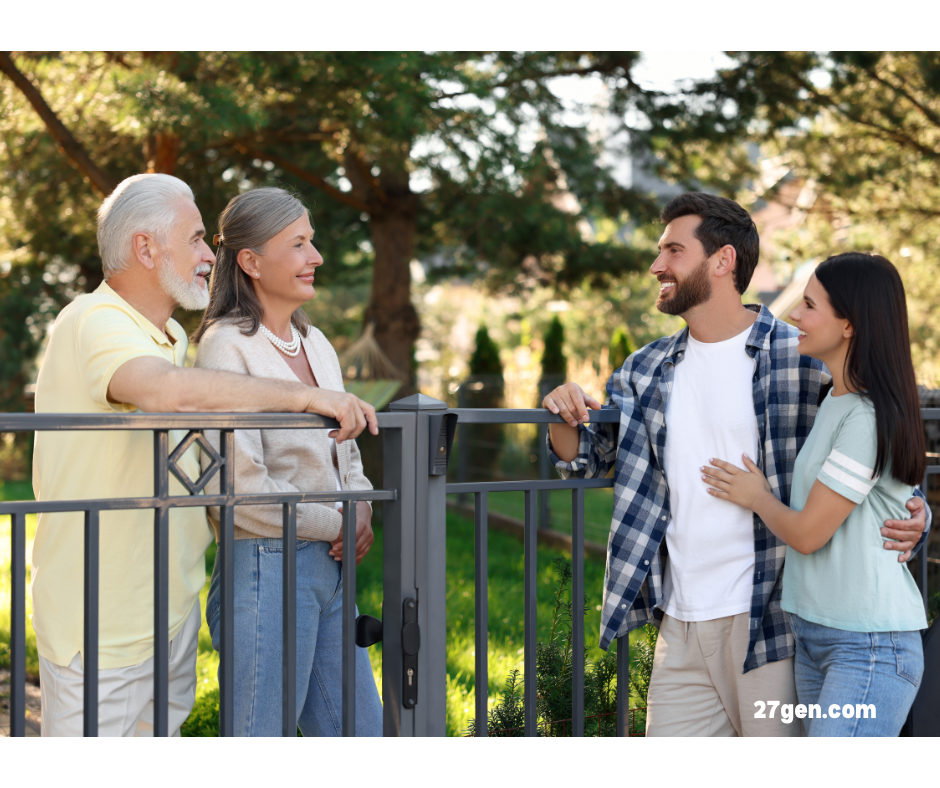
Introduce Yourself – It might seem obvious, but simply introducing yourself to your neighbors can be a great starting point. A friendly hello, a brief conversation about the neighborhood, or even just exchanging names can lay the foundation for a positive relationship. You might be surprised how many people appreciate a warm welcome.

Share the Love (Literally) – Who doesn’t love a homemade treat? Baking is a classic way to show your appreciation. Whether it’s a batch of cookies, a loaf of bread, or a homemade jam, a small, delicious gift can be a wonderful icebreaker. It’s a simple gesture that can spark a conversation and create a positive impression.

Offer a Helping Hand – Small acts of kindness can go a long way. If you notice your neighbor struggling with groceries, offer to help carry them in. If you see their driveway needs shoveling after a snowstorm, lend a hand. These small gestures can make a big difference in someone’s day and strengthen your bond with your neighbor.

Mind Your Manners – Sometimes, the smallest actions can have the biggest impact. Be mindful of noise levels, especially during late hours. Respect shared spaces like sidewalks and lawns. These simple courtesies show that you care about your neighbors and their well-being.

Communicate Openly – If there’s an issue, address it directly and respectfully. Open communication is key to resolving conflicts and building trust. A friendly chat can often clear up misunderstandings and prevent larger problems from arising.

Remember, building strong neighborly relationships takes time and effort. But by incorporating these simple gestures into your daily life, you can create a more connected and supportive community without sacrificing too much of your own time. Small steps can lead to big rewards.

What are your favorite low-effort ways to connect with your neighbors? Share your tips in the comments below!


Check out these other “Good Neighbor Day” articles:

Coming Soon

  • 9/2 Family-Friendly Neighborly Activities
  • 9/9 Creating a Safer and Stronger Neighborhood Together
  • 9/16 Celebrating National Good Neighbor Day
  • 9/23 How to Celebrate National Good Neighbor Day in One Easy Step

– – –
The Importance of Good Neighbors

There’s something undeniably special about a good neighbor. They’re the folks who lend a helping hand, offer a friendly smile, and contribute to the overall fabric of a community. As we navigate increasingly busy lives, the significance of strong neighborly relationships often gets overlooked. But the truth is, good neighbors can make a world of difference.

A strong neighborhood is more than just a collection of houses; it’s a community. It’s a place where people look out for one another, share experiences, and build lasting bonds. When neighbors know and trust each other, it fosters a sense of security and belonging. Children grow up feeling safe and supported, while adults find companionship and camaraderie.

Beyond the emotional benefits, good neighbors can also contribute to a safer community. Studies have shown that areas with strong neighborly connections tend to have lower crime rates. When people know their neighbors, they’re more likely to report suspicious activity and be vigilant about protecting their community. A close-knit neighborhood also creates a sense of shared responsibility, encouraging everyone to work together to maintain a clean and attractive environment.

Moreover, good neighbors offer invaluable support during challenging times. Whether it’s a helping hand with yard work, a listening ear, or a casserole during a family crisis, neighbors can be a lifeline. These acts of kindness not only strengthen individual relationships but also reinforce the idea that we’re all in this together.

In today’s fast-paced world, it’s easy to become isolated and disconnected from our neighbors. But taking the time to build strong relationships can be incredibly rewarding. Whether it’s a simple wave hello or a more involved interaction, every effort to connect with your neighbors contributes to a happier, healthier, and more vibrant community.

So, as we approach National Good Neighbor Day on September 28th, let’s take a moment to appreciate the importance of good neighbors. Let’s reach out to our neighbors, offer a helping hand, and create a stronger sense of community together. After all, a good neighbor is a treasure worth cherishing.

What are your favorite qualities in a good neighbor? Share your thoughts in the comments below.


Check out these other “Good Neighbor Day” articles:

Coming Soon

  • Low-Effort, High-Impact Neighborly Gestures
  • Family-Friendly Neighborly Activities
  • Creating a Safer and Stronger Neighborhood Together
  • Celebrating National Good Neighbor Day
  • How to Celebrate National Good Neighbor Day in One Easy Step

The Art of Cultivating Community: Finding Meaning in Everyday Interactions

You want more. You want to belong to a community that looks out for each other. You believe in your bones we don’t have to live detached, distracted, and divided. The question is, How?

Shannan Martin invites you into deeper connection through simple resets, such as:

Open Door > Perfect Décor. We invite others in, seeking to connect, not impress.

Familiar > Fussy. We serve tacos and pizza like the feasts they are, because fancy is overrated.

Tender > Tough. We greet the world with our hearts exposed and our guards down.

Packed with street-level practices and real-talk storytelling, Start with Hello is your field guide for a life of security, camaraderie, and joy. There is no step too small.


We rely on various figures in our lives to guide us: pastors, priests, and spiritual advisors for matters of faith, doctors and therapists for physical and mental health, and teachers for a wide range of skills, from writing poetry to driving. Yet, there’s a significant gap in our education when it comes to building community. We’re not taught that it’s something we actively create with our own hands, tender hearts, and time. The process isn’t broken down for us, and the tools aren’t readily provided. It might seem like community effortlessly forms for some lucky individuals, leaving the rest of us feeling like we’re missing something.

In Start With Hello, Shannan Martin makes it very clear that she doesn’t offer solutions for anyone’s personal struggles; that’s not the purpose of her book. She still grapples with everyday challenges like lack of sleep or motivation, parenting dilemmas, and domestic disagreements. But what she does confidently share is how profoundly her life has been enriched by living closely connected with others. It’s one of the most genuine truths she has discovered – a truth that has reshaped her worldview and sense of self.

In many ways, Martin’s journey has brought her back to the simplicity and authenticity of her childhood, where quirks and letdowns were expected. It’s also been about discarding the loneliness narrative and embracing a fresh start, akin to opening a new notebook filled with possibilities. She readily shares here missteps, often by overanalyzing and trying too hard. She learned that genuine connections can’t be forced; they thrive on mutual solace and safety.

Martin is discovering how to take the lessons learned and cultivate them, acknowledging that imperfections can serve as fertile ground for growth. Honesty, humility, and humor are invaluable companions on her journey, as is a childlike imagination that dares to believe in better possibilities.

Authentic relationships don’t come with expiration dates; they unfold gradually, enriched by the seemingly insignificant moments. Every interaction holds potential, even if it’s as simple as exchanging a wave with a passing acquaintance. Over time, these small gestures can blossom into meaningful friendships, built on shared experiences and genuine understanding.

Don’t underestimate the power of a genuine connection. You may never bake that perfect coffee cake for your neighbor, but a chance encounter could lead to profound conversations and lasting bonds. It’s all about embracing the kind of person who values human connection and isn’t afraid to extend a friendly greeting.

Start With Hello is organized into the following sections:

  • Awake > Asleep
  • Windows > Mirrors
  • Listening > Talking 
  • Open Door > Perfect Décor
  • Familiar > Fussy 
  • Complexity > Comfort
  • Tender > Tough
  • Practice > Preach
  • Roots > Wheels 
  • Empathy > Everything

In addition to being filled with personal, heart-warming (and sometimes heart-wrenching) stories, each section closes with an “assignment” if you will; a practical action to put both feet and heart to what you’ve just read. Here’s one example from Martin’s section Windows > Mirrors:

The next time you need help, ask for it. This is hands-down my favorite, most foolproof tip for building relationships with the people near you. As we are people taught to solve our own problems, this humble practice cuts to the heart of who we think we want to be. But remember, interdependence is the goal here. Independence is overrated, not to mention lonely. A world where we rely on each other is better, brighter, and safer.

Like everything else worth doing, it will take some practice. Start small. Run next door and ask if they’ll grab your mail while you’re gone for the weekend. Cross the hall and ask for an egg. 

Before running out to buy a small appliance or yard tool that won’t get a lot of use, see if someone nearby has one you could borrow.

The best part? Though this isn’t about keeping score, it can be fun to find creative ways to repay the favor. (I recommend a hefty slice of whatever you baked with that borrowed egg.) 

Showing up needy sets the tone for a life of ordinary connectedness. You go first, and others will follow.

Connection is a circle, not a straight line. From attentiveness to empathy to hope, each feeds the others. I’m convinced staring at something small and beautiful might be the best way to survive this startling world.

Shannan Martin

How Can We Serve Our Neighbors If We Haven’t Paid Attention to Them?

Welcome to the age of white noise.

We live our lives in a constant tether to phones, to apps, and to social media – mostly acquiescing to FOMO.

In this age of distraction, the ability to experience and be present is often lost, as is our capacity to think and to see and to listen.

Rob Walker, The Art of Noticing

At a basic level, paying attention is simply making a selection among all the stimuli bombarding you at any moment.

Even if we ignore most of what is going on around us, we can only take in so much of the world at a time. Our sensory system has a limited capacity, both in range and in speed of processing.

I was paying so little attention to most of what was right before me that I had become a sleepwalker on the sidewalk. What I saw and attended to was exactly what I expected to see. That attention invited attention’s companion: inattention to everything else.

Alexandra Horowitz, On Looking

Questions to Ponder

  • How do you observe the all-too-familiar in order to discover new meaning and discern the activity of God that others miss?
  • What do you look for?
  • How can you learn to scrutinize the obvious?
  • What does it mean to look for the extraordinary in the ordinary?

I would like to suggest the answer to these questions begins with seeing through the lens of love.

Download the tool below to begin a ten-day journey in looking at your neighbors through the lens of love, specifically with the Fruit of the Spirit in mind.


The fruit of the Spirit are not merely characteristics that we aspire to own. They are glorious graces that characterize all those who pursue a Christlike character.

In order to “pay attention” by following the Holy Spirit, use the nine fruit of the spirit as described by pastor, professor, and storyteller, Calvin Miller as a framework for incorporating them into your life.

It’s Good to Be Home: Creating First Place Hospitality

In what may seem to be direct opposition to my thoughts about front porches here and here, my wife and I have just completed a series of home renovations over the last three years that did not change our somewhat smallish front porch, but nevertheless, have increased our neighborhood connections.

It’s all about loving where you live!

Here’s the story…

My wife Anita and I have been married for 44+ years. We have three sons, (with three amazing daughters-in-law) and a daughter (married to a great son-in-law). These amazing kids and their spouses have been blessed with eleven children!

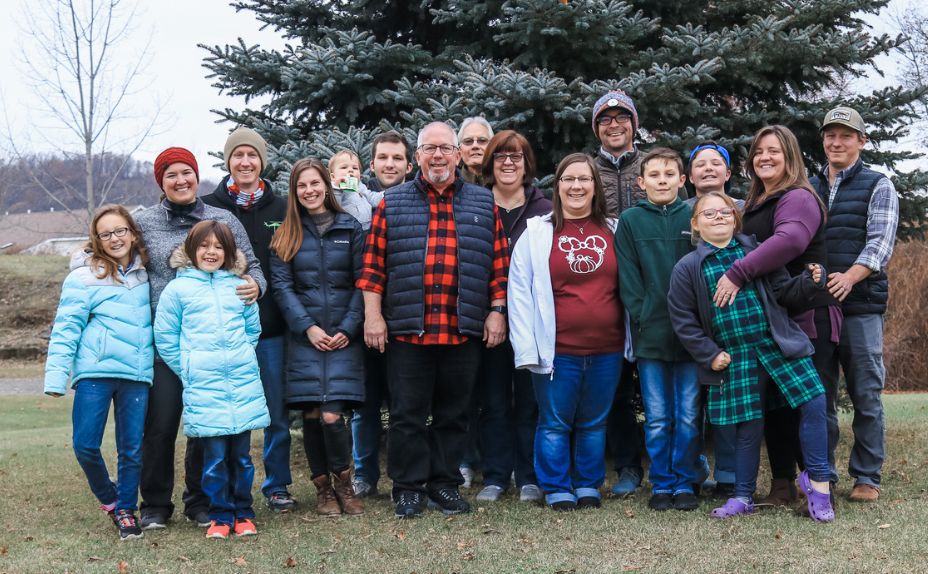
The image below represents the last time we were all together: Thanksgiving 2021 in Greenwich, NY. Since then we’ve added three little ones – all this year! Collectively, we are the #AdamsFamilyExperience!

About three years ago my wife and I, as empty nesters, made the decision to stay in our long-time home (29+ years) where our kids grew up – even as they moved away to establish homes of their own from one end of the country (New Mexico) to the other (New York, then Virginia), along with two who have settled in opposite ends of North Carolina. With one family in the military and moving about every three years, we decided to stay put.

With eleven grandchildren grouped into 2 ages (five age 3 and under, and six ages 10-16), we knew we needed space for lots of different activities.

What that means IRL:

  • With 11 grandchildren, our family numbers 21 when we all gather together (plus up to four dogs). We don’t get to do that as often as we would like, but we want to be prepared when we do! Thus…
  • Our renovations, although with different purposes, were all guided by the primary intention of creating more gathering space. Functionally, that meant keeping all four bedrooms useable, but with a different purpose: each of three bedrooms formerly used by our kids became (respectively) an office for my wife, an office for myself, and a Disney room for the grandchildren. Each of those rooms can sleep two or more.
  • With three bathrooms, we had no reservations about removing the garden tub in the master bath, and creating a walk-in shower. Need to bathe infants? No problem; we’ve still got two tubs.
  • In our family room, we were satisfied with the layout, but decided to mount a large screen TV on the wall to free up space below for additional seating. The fireplace, though adequate, seemed a little lonely on the tallest wall in the house, so Anita and I designed a feature wall that our contractor built to perfection.
  • Our biggest renovation, aka “The Project” was just completed and involved adding square footage to our house footprint, totally renovating the kitchen, removing a wall between the kitchen and dining room, and adding a full-width deck across the back of our house.
  • With the interior complete, up next is the final exterior project: some work on our backyard, freshening up outdoor play space for the younger four of our grandkids who are 3 and younger; correcting drainage flow due to the new roof and deck; and adding cafe lights to a portion of our deck.

Even when our family can’t visit as often as we would love to have them, our home is dedicated to hospitality for friends, neighbors, and those we haven’t met yet. In just the first month, we:

  • Kicked off the newest space with a Mexican fiesta luncheon for our church community group
  • Invited our neighbors on one side to a impromptu family dinner as a treat for all the hard work they’ve been doing on a pool install this summer
  • Hosted two of our kids’ families for the long Independence Day weekend: four extra adults, three grandchildren, and one large dog
  • Planned a neighborhood event that had to be postponed (but will be rescheduled)
  • Made our deck and kitchen available for our neighbor’s 12-year old daughter’s birthday party – even when we weren’t at home for the weekend.

In August, our NM kids and grandkids (two adults, three children) will be staying for five days as part of a two-week vacation.

…and we’ve got lots more planned for the late summer and fall!

My wife and I share a passion: creating hospitality culture lifestyles where ordinary people demonstrate extraordinary love.

In order to help make that possible in a physical space, here’s the dedication pledge my wife and I made over our renovations:

When we understand God’s welcome to us, we can better pass it on to someone else.

When we use our lives exactly as they are, desiring only to create a sacred space for our guests, we turn entertaining upside down and it becomes radical hospitality.

We don’t need to be who we used to be; God sees who we’re becoming – and we’re becoming love.

We can’t love people we don’t know. Saying we love our neighbors is simple. But guess what? Doing it is too. We think Jesus’ command to “love your neighbor” means we’re actually supposed to love our neighbors. Engage them. Delight in them. Throw a party for them.

Jesus wants us to show people who He is by what we do, not just tell them what we think.

It’s time to bring back the table to our homes.

If we really want to learn someone’s story, sitting down at the table and breaking bread together is the best way to start. The table is the place where our identity is born – the place were the story of our lives is retold, reminded, and relived.

(Special thanks to the writings of Bob Goff and Len Sweet)

The solution is to get back to the basics of what Jesus commanded:

Love God and love your neighbors.

Think of it as First Place Hospitality – building bridges to your neighbors in your “First Place,” your home.


Next Time: Images and Acknowledgments for The Project

Learn to Love Where You Live by Staying Loyal

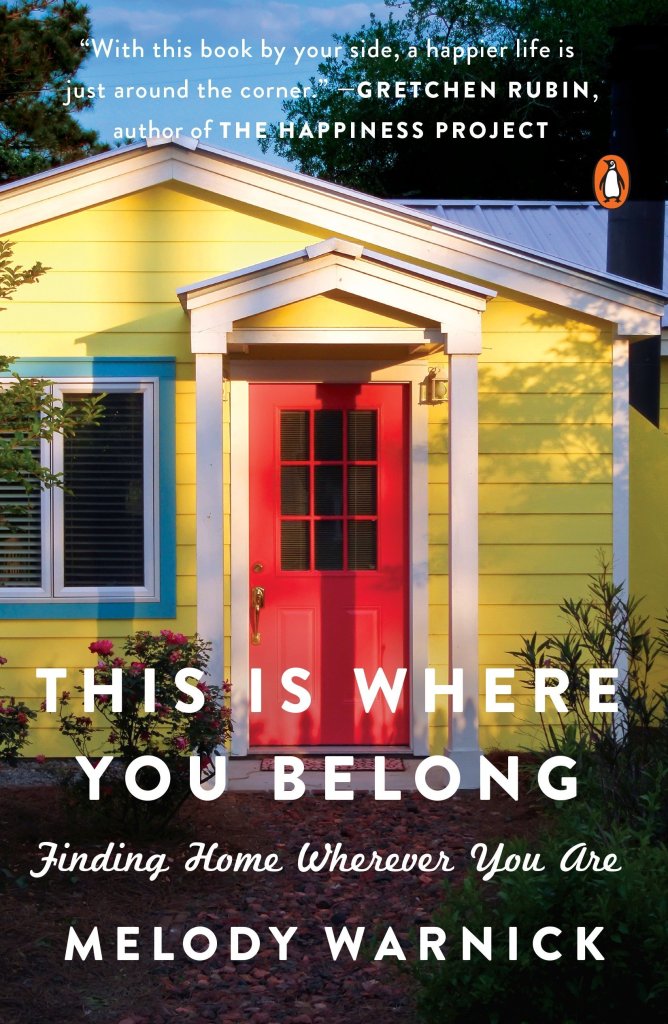
Today’s post is the tenth and final one in a series of posts over the past few weeks, taking a “deeper dive” into the concepts at the heart of Melody Warnick’s book, This is Where You Belong

Here is Warnick’s list of ten placement behaviors that she developed on the journey to “Love where you live.”

  1. Walk more
  2. Buy local
  3. Get to know your neighbors
  4. Do fun stuff
  5. Explore nature
  6. Volunteer
  7. Eat local
  8. Become more political
  9. Create something new
  10. Stay loyal through hard times

The trouble with place attachment is that to fall in love with a place is to risk losing it and grieving for it.

Melody Warnick

Author Melody Warnick believes that home is nothing more or less than the place where you feel at home and choose to stake yourself – and maybe not in that order. When we decide to plant roots, often the feeling of at-homeness follows.

The problem is that your town, wherever it is, will in all likelihood fall apart some day.

Warnick believes that what locals do next, after the disaster, is a key measure of how place attached we really are. How loyal will we be when things go wrong?

Warnick’s “Love Where You Live” experiments were used to test her hypothesis that actively seeking the good things in her town, investing her time and energy, and immersing herself in her surroundings would make her feel more like she belonged. For the most part, they had.

What she had never tested, and could not, was whether she had the mettle to make it through a crisis.

In her research of other places’ disasters or crises, she discovered the paradox of resilience: while anticipating Bad Things can make you feel antisocial, the aftermath of the actual event tends to increase social capital. The newfound ties developed during the crisis have the added benefit of making residents feel more rooted just at the moment they’re waffling between fight and flight.

Here are a few ideas from Warnick on Staying Loyal:

  • Create an emergency contact list for your neighbors. You’ll be one another’s first line of defense in case of disaster, with the added benefit that now you have their numbers to invite them to your Sunday Night Dinner.
  • Read about your town’s history so you’ll have a better sense of what it’s been through. Even small towns tend to carry local history books in their library.
  • Make your own personal resilience plan. Identify the most common shocks in your region – earthquakes, floods, wildfires – and figure out what you need to deal with them. You’ll feel less stressed if you know what to do when a Bad Thing happens.

I can’t emphasize this enough: If you like the idea of loving where you live, of being a better neighbor, or anything remotely connected, you MUST check out the work of Melody Warnick. Follow her on social media. Buy the book. Sign up for the newsletter on her website. Peruse the website for other articles she has written. It’s all PURE GOLD.

Love Where You Live by Exploring Nature

Today’s post is the fifth in a series of ten posts over the next few months, taking a “deeper dive” into the concepts at the heart of Melody Warnick’s book, This is Where You Belong. The idea of a deeper dive is the second week in this website’s monthly rotation. The first and third weeks are BookNotes: short excerpts and teasers from great books about hospitality and your neighborhood. The fourth week will develop a tool you can use to become a better neighbor.

Here is Warnick’s list of ten placement behaviors that she developed on the journey to “Love where you live.”

  1. Walk more
  2. Buy local
  3. Get to know your neighbors
  4. Do fun stuff
  5. Explore nature
  6. Volunteer
  7. Eat local
  8. Become more political
  9. Create something new
  10. Stay loyal through hard times

Studies have shown that spending time in green space improves immune system function, lowers blood glucose levels in diabetics, boosts cognitive function and concentration, lengthens attention span, and strengthens impulse control.

Melody Warnick

According to author Melody Warnick, humans are born with an inborn craving for wildness and green, what Harvard biologist E.O. Wilson call “biophilia.” We are, he says, built for nature.

Here’s the rub: Towns and cities usually aren’t.

In addition to the benefits of nature listed above, Warnick also found that green space builds social cohesion, the companion to place attachment that develops in tight-knit neighborhoods. One study showed that when homes are set among trees and plants, neighbors form stronger social ties and a better sense of community. People who live near parks trust each other more and are quicker to aid their neighbors than people who live farther away.

Outcomes like these made Warnick come up with her own hypothesis: that people who lived where they could spend more time in the natural world would feel more enthusiastic about their communities.

Here are a few of the many ideas found in her book:

  • Make a list of your town’s natural assets. If you live in a city, are there parks nearby? Secret gardens? What makes you feel close to nature where you live?
  • Learn the names of the flora and fauna in your area. Check out a book on the subject, or connect with the Master Naturalists or Master Gardeners in your town.
  • Find ways to do the outdoorsy things you love where you live. Even in cities, you can walk through parks, bike greenbelts, or dangle your feet in ponds.
  • Invite friends for a hike, since doing something in nature with people you love creates a happy place anchor.
  • So you’re not outdoorsy.That’s fine. Figure out one beautiful place in your town – a creek, a park a river – and spend some time there. Go for a drive and enjoy the view.

I can’t emphasize this enough: If you like the idea of loving where you live, of being a better neighbor, or anything remotely connected, you MUST check out the work of Melody Warnick. Follow her on social media. Buy the book. Sign up for the newsletter on her website. Peruse the website for other articles she has written. It’s all PURE GOLD.

I’m delighted to report that Melody’s latest book, If You Could Live Anywhere, was just released! I’ve just started reading it, but it is written in the same engaging style, and addresses the question on many people’s minds today:

The future of work is clear: It can happen wherever you are. So where do you really want to be?