More Ideas for Celebrating National Good Neighbor Day

Picking up from the ideas over the last few weeks here, here, and here, consider these additional ways to celebrate National Good Neighbor Day on September 28:

1. Write Thank-You Notes: Express your gratitude to neighbors who’ve made a positive impact. A heartfelt note can go a long way in strengthening relationships.

2. Volunteer for a Community Project: Organize or participate in a local clean-up, tree-planting event, or food drive. This shows commitment to improving your shared space.

3. Host a Neighborhood Cook Out: Food brings people together. A casual cook out can be an excellent opportunity for neighbors to mingle and get to know each other better.

4. Start a Neighborhood Book Club: Promote intellectual engagement and regular social interaction by initiating a book club with your neighbors.

5. Create a Neighborhood Directory: With permission, compile contact information and special skills of willing neighbors. This can be invaluable during emergencies or when seeking local expertise.

6. Organize a Neighborhood Yard Sale: This event can help declutter homes while providing a fun, community-wide activity.

7. Initiate a “Random Acts of Kindness” Challenge: Encourage neighbors to perform small acts of kindness for one another throughout the day.

8. Host a Skills Exchange Workshop: Neighbors can teach each other various skills, from gardening to basic home repairs.

9. Create a Neighborhood Time Capsule: Collect items and messages representing your community to be opened in the future.

10. Plan a Neighborhood Walking Tour: For areas with historical significance, organize a tour to educate residents about local history.

Making It Happen

To bring these ideas to life:

  • Plan Ahead: Start organizing at least a few weeks in advance.
  • Communicate: Use social media, flyers, or door-to-door invitations to spread the word.
  • Be Inclusive: Ensure your activities are accessible to all neighbors, regardless of age or ability.
  • Follow Local Regulations: Obtain any necessary permits for larger gatherings or events.
  • Document the Day: Take photos and videos to commemorate the celebration.

Call to Action

We encourage you to share your National Good Neighbor Day plans and experiences on social media using the hashtag #GoodNeighborDay2024. By sharing your stories, you’ll inspire others and showcase the power of community spirit.

Remember, being a good neighbor isn’t limited to one day a year. Use National Good Neighbor Day as a springboard for ongoing community engagement and relationship-building. Together, we can create stronger, more connected neighborhoods that enrich all our lives.


The Importance of Good Neighbors

There’s something undeniably special about a good neighbor. They’re the folks who lend a helping hand, offer a friendly smile, and contribute to the overall fabric of a community. As we navigate increasingly busy lives, the significance of strong neighborly relationships often gets overlooked. But the truth is, good neighbors can make a world of difference.

A strong neighborhood is more than just a collection of houses; it’s a community. It’s a place where people look out for one another, share experiences, and build lasting bonds. When neighbors know and trust each other, it fosters a sense of security and belonging. Children grow up feeling safe and supported, while adults find companionship and camaraderie.

Beyond the emotional benefits, good neighbors can also contribute to a safer community. Studies have shown that areas with strong neighborly connections tend to have lower crime rates. When people know their neighbors, they’re more likely to report suspicious activity and be vigilant about protecting their community. A close-knit neighborhood also creates a sense of shared responsibility, encouraging everyone to work together to maintain a clean and attractive environment.

Moreover, good neighbors offer invaluable support during challenging times. Whether it’s a helping hand with yard work, a listening ear, or a casserole during a family crisis, neighbors can be a lifeline. These acts of kindness not only strengthen individual relationships but also reinforce the idea that we’re all in this together.

In today’s fast-paced world, it’s easy to become isolated and disconnected from our neighbors. But taking the time to build strong relationships can be incredibly rewarding. Whether it’s a simple wave hello or a more involved interaction, every effort to connect with your neighbors contributes to a happier, healthier, and more vibrant community.

So, as we approach National Good Neighbor Day on September 28th, let’s take a moment to appreciate the importance of good neighbors. Let’s reach out to our neighbors, offer a helping hand, and create a stronger sense of community together. After all, a good neighbor is a treasure worth cherishing.

What are your favorite qualities in a good neighbor? Share your thoughts in the comments below.


Check out these other “Good Neighbor Day” articles:

Coming Soon

  • Low-Effort, High-Impact Neighborly Gestures
  • Family-Friendly Neighborly Activities
  • Creating a Safer and Stronger Neighborhood Together
  • Celebrating National Good Neighbor Day
  • How to Celebrate National Good Neighbor Day in One Easy Step

Jesus’ Model of Local Engagement: Your Neighborhood as a Mission Field

Think about the homes and people in your immediate vicinity. This is your opportunity to represent Jesus to those around you. Acts 17:26 suggests that your living situation is not random, but purposeful.

Your current location is a chance to practice loving others as Jesus taught.

Viewing your neighborhood as a mission field can transform your perspective and actions. You might spend more time there, interacting with and serving your neighbors differently. God has placed you there to show love to those nearby.

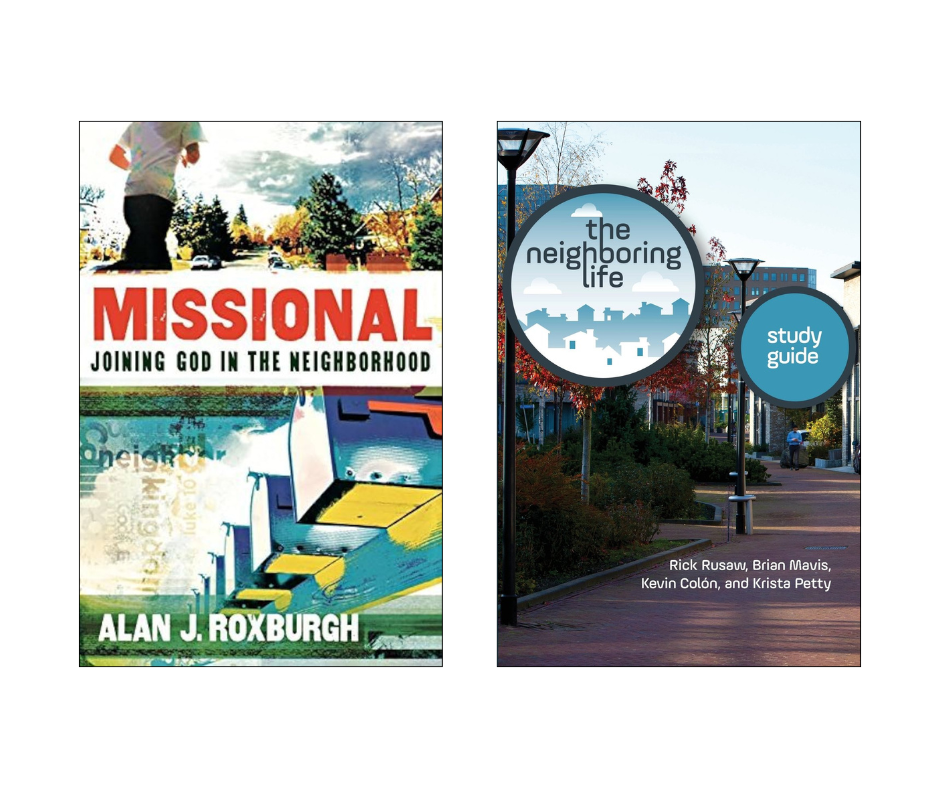
Jesus exemplified this approach. As Alan Roxburgh points out in Missional: Joining God in the Neighborhood, Jesus often appeared in everyday settings and used ordinary examples in his teachings. His stories frequently focused on common activities and needs.

The practice of “staying” in your neighborhood doesn’t have to be complicated. It’s about recognizing the divine in daily life and engaging with your community in simple, relatable ways.

JESUS…

…asked for a drink of water.

…attended a wedding.

…was a guest at someone’s house.

…grieved with friends. 

…told stories, even jokes.

…went fishing.

…made breakfast on the beach for his friends.

…threw raging parties.

…gave his friends nicknames like Rock and Sons of Thunder.

…prayed for his friends. 

…called them by name.

…shared his life.

…made wine.

…visited the sick.

…saw people and their potential.

…even during his worst moments, he blessed his neighbor.

He was touchable, authentic, and available. He was a best friend and the best neighbor.

How can you follow the examples of Jesus presented above?


Inspired by:

Missional: Joining God in the Neighborhood and The Neighboring Life Study Guide


The Art of Cultivating Community: Finding Meaning in Everyday Interactions

You want more. You want to belong to a community that looks out for each other. You believe in your bones we don’t have to live detached, distracted, and divided. The question is, How?

Shannan Martin invites you into deeper connection through simple resets, such as:

Open Door > Perfect Décor. We invite others in, seeking to connect, not impress.

Familiar > Fussy. We serve tacos and pizza like the feasts they are, because fancy is overrated.

Tender > Tough. We greet the world with our hearts exposed and our guards down.

Packed with street-level practices and real-talk storytelling, Start with Hello is your field guide for a life of security, camaraderie, and joy. There is no step too small.


We rely on various figures in our lives to guide us: pastors, priests, and spiritual advisors for matters of faith, doctors and therapists for physical and mental health, and teachers for a wide range of skills, from writing poetry to driving. Yet, there’s a significant gap in our education when it comes to building community. We’re not taught that it’s something we actively create with our own hands, tender hearts, and time. The process isn’t broken down for us, and the tools aren’t readily provided. It might seem like community effortlessly forms for some lucky individuals, leaving the rest of us feeling like we’re missing something.

In Start With Hello, Shannan Martin makes it very clear that she doesn’t offer solutions for anyone’s personal struggles; that’s not the purpose of her book. She still grapples with everyday challenges like lack of sleep or motivation, parenting dilemmas, and domestic disagreements. But what she does confidently share is how profoundly her life has been enriched by living closely connected with others. It’s one of the most genuine truths she has discovered – a truth that has reshaped her worldview and sense of self.

In many ways, Martin’s journey has brought her back to the simplicity and authenticity of her childhood, where quirks and letdowns were expected. It’s also been about discarding the loneliness narrative and embracing a fresh start, akin to opening a new notebook filled with possibilities. She readily shares here missteps, often by overanalyzing and trying too hard. She learned that genuine connections can’t be forced; they thrive on mutual solace and safety.

Martin is discovering how to take the lessons learned and cultivate them, acknowledging that imperfections can serve as fertile ground for growth. Honesty, humility, and humor are invaluable companions on her journey, as is a childlike imagination that dares to believe in better possibilities.

Authentic relationships don’t come with expiration dates; they unfold gradually, enriched by the seemingly insignificant moments. Every interaction holds potential, even if it’s as simple as exchanging a wave with a passing acquaintance. Over time, these small gestures can blossom into meaningful friendships, built on shared experiences and genuine understanding.

Don’t underestimate the power of a genuine connection. You may never bake that perfect coffee cake for your neighbor, but a chance encounter could lead to profound conversations and lasting bonds. It’s all about embracing the kind of person who values human connection and isn’t afraid to extend a friendly greeting.

Start With Hello is organized into the following sections:

  • Awake > Asleep
  • Windows > Mirrors
  • Listening > Talking 
  • Open Door > Perfect Décor
  • Familiar > Fussy 
  • Complexity > Comfort
  • Tender > Tough
  • Practice > Preach
  • Roots > Wheels 
  • Empathy > Everything

In addition to being filled with personal, heart-warming (and sometimes heart-wrenching) stories, each section closes with an “assignment” if you will; a practical action to put both feet and heart to what you’ve just read. Here’s one example from Martin’s section Windows > Mirrors:

The next time you need help, ask for it. This is hands-down my favorite, most foolproof tip for building relationships with the people near you. As we are people taught to solve our own problems, this humble practice cuts to the heart of who we think we want to be. But remember, interdependence is the goal here. Independence is overrated, not to mention lonely. A world where we rely on each other is better, brighter, and safer.

Like everything else worth doing, it will take some practice. Start small. Run next door and ask if they’ll grab your mail while you’re gone for the weekend. Cross the hall and ask for an egg. 

Before running out to buy a small appliance or yard tool that won’t get a lot of use, see if someone nearby has one you could borrow.

The best part? Though this isn’t about keeping score, it can be fun to find creative ways to repay the favor. (I recommend a hefty slice of whatever you baked with that borrowed egg.) 

Showing up needy sets the tone for a life of ordinary connectedness. You go first, and others will follow.

Connection is a circle, not a straight line. From attentiveness to empathy to hope, each feeds the others. I’m convinced staring at something small and beautiful might be the best way to survive this startling world.

Shannan Martin

How Can We Serve Our Neighbors If We Haven’t Paid Attention to Them?

Welcome to the age of white noise.

We live our lives in a constant tether to phones, to apps, and to social media – mostly acquiescing to FOMO.

In this age of distraction, the ability to experience and be present is often lost, as is our capacity to think and to see and to listen.

Rob Walker, The Art of Noticing

At a basic level, paying attention is simply making a selection among all the stimuli bombarding you at any moment.

Even if we ignore most of what is going on around us, we can only take in so much of the world at a time. Our sensory system has a limited capacity, both in range and in speed of processing.

I was paying so little attention to most of what was right before me that I had become a sleepwalker on the sidewalk. What I saw and attended to was exactly what I expected to see. That attention invited attention’s companion: inattention to everything else.

Alexandra Horowitz, On Looking

Questions to Ponder

  • How do you observe the all-too-familiar in order to discover new meaning and discern the activity of God that others miss?
  • What do you look for?
  • How can you learn to scrutinize the obvious?
  • What does it mean to look for the extraordinary in the ordinary?

I would like to suggest the answer to these questions begins with seeing through the lens of love.

Download the tool below to begin a ten-day journey in looking at your neighbors through the lens of love, specifically with the Fruit of the Spirit in mind.


The fruit of the Spirit are not merely characteristics that we aspire to own. They are glorious graces that characterize all those who pursue a Christlike character.

In order to “pay attention” by following the Holy Spirit, use the nine fruit of the spirit as described by pastor, professor, and storyteller, Calvin Miller as a framework for incorporating them into your life.