Mentorship Excellence: The Ongoing Transition in Modern Mentorship

The landscape of mentorship has undergone a profound transformation in recent years. Gone are the days when effective mentoring meant having all the answers or closely directing every step of a mentee’s journey. Today’s most impactful mentors understand that true mentorship excellence lies not in micromanaging or prescriptive guidance, but in the delicate art of asking powerful questions that unlock self-discovery and foster genuine growth.

Today’s article is the sixth of a 12-part exploration of the Modern Elder’s core competencies distilled from my 40+ year career journey. As I have learned over that entire journey, Mentorship Excellence has evolved dramatically. For the modern elder, it represents the ability to guide others without micromanaging, asking powerful questions that lead to self-discovery.  

Moving Beyond Traditional Mentoring Models

Traditional mentorship often followed a hierarchical model where experienced professionals would share their knowledge through direct instruction and advice-giving. While this approach had its merits, it frequently created dependency rather than independence, with mentees waiting for direction rather than developing their own problem-solving capabilities.

Modern mentorship excellence recognizes that each individual’s path to success is unique. Rather than imposing a one-size-fits-all approach, today’s exceptional mentors act as facilitators of growth, helping mentees discover their own strengths, values, and pathways. This shift acknowledges that the mentor’s role is not to clone themselves in their mentee, but to help the mentee become the best version of themselves.

The evolution from directive to collaborative mentoring reflects a deeper understanding of how people truly develop. When individuals arrive at insights through their own reflection and analysis, those discoveries carry more weight and staying power than externally imposed solutions. This transformation requires mentors to embrace vulnerability, admitting they don’t have all the answers while demonstrating confidence in their mentee’s ability to find solutions.

Question-Based Mentoring Techniques

The cornerstone of mentorship excellence lies in mastering the art of inquiry. Powerful questions serve as catalysts for insight, pushing mentees to examine their assumptions, explore new perspectives, and uncover hidden potential. These questions go beyond simple information gathering to probe deeper layers of understanding and motivation.

Effective mentoring questions often begin with “What if,” “How might,” or “What would happen if.” Instead of asking “What should I do about this conflict with my colleague?” a skilled mentor might ask, “What underlying needs or values might be driving this conflict, and how could understanding those change your approach?” This reframing moves the mentee from seeking a quick fix to developing a more nuanced understanding of the situation.

The timing and sequence of questions matter enormously. Exceptional mentors create a rhythm of inquiry that builds naturally, allowing space for reflection between questions. They resist the urge to fill silence, recognizing that the pause after a powerful question is often where the real work happens. This patience demonstrates trust in the mentee’s capacity for insight while creating psychological safety for vulnerable sharing.

Questions should also scale appropriately to the mentee’s readiness. Surface-level questions help establish comfort and rapport, while deeper inquiries about values, fears, and aspirations require a foundation of trust and psychological safety. The best mentors attune themselves to their mentee’s emotional state and developmental stage, calibrating their questions accordingly.

Creating Space for Self-Discovery

Mentorship excellence requires creating both physical and psychological space for self-discovery. This means resisting the mentor’s natural impulse to jump in with solutions or share similar experiences from their own journey. Instead, exceptional mentors hold space – maintaining presence and attention while allowing their mentees to work through challenges independently.

Creating this space involves active listening that goes beyond hearing words to understanding emotions, motivations, and unspoken concerns. Mentors who excel at this practice often reflect back what they hear, not to demonstrate their listening skills, but to help mentees hear their own thoughts more clearly. “It sounds like you’re feeling torn between your desire for advancement and your commitment to work-life balance” can help a mentee recognize internal conflicts they hadn’t fully articulated.

The physical environment also plays a role in fostering self-discovery. Moving conversations outside traditional office settings – perhaps to a coffee shop, park, or during a walk – can shift the dynamic from formal advice-giving to collaborative exploration. These changes in environment often unlock different types of thinking and conversation.

Reverse Mentoring Relationships

One of the most significant developments in modern mentorship is the recognition that learning flows in multiple directions. Reverse mentoring relationships, where younger or less experienced individuals share their expertise with senior colleagues, have become increasingly valuable in our rapidly changing world.

These relationships challenge traditional power dynamics and create opportunities for mutual growth. A senior executive might learn about digital trends from a recent graduate, while simultaneously offering strategic thinking and organizational wisdom. This bidirectional exchange requires mentors to embrace beginner’s mind, approaching conversations with curiosity rather than certainty.

Exceptional mentors actively seek these reverse mentoring opportunities, recognizing that staying current and relevant requires continuous learning. They model intellectual humility by asking questions about areas outside their expertise and demonstrating genuine interest in perspectives that differ from their own experience.

Full-Circle Mentoring – My Journey

As I have considered what it means to become a mentor, I have to begin the journey from the early days of my career. As a full-time student in seminary, but also employed in two different but related jobs that equalled full-time employment, I was grateful for supervisors and peers who patiently “showed me the ropes,” in the process becoming unintentional (on their part!) mentors that had impacts that continue to this day. In each of my three church staff positions, I benefited immensely from the guidance of seasoned ministers who helped to shape my development. Simultaneously, I begin to develop the early stages of becoming a mentor myself. In each of these positions, I can look back and see how my connection to individuals shaped their growth while at the same time shaping mine. Moving from serving on a church staff to serving church staffs (in a consulting role in two different organizations) created a unique opportunity: while still mentoring/being mentored within the respective organizations, I was able to establish numerous connections across the country with like-minded leaders in my passion area of Guest Experiences. Whether onsite with an experiential learning opportunity, connecting virtually, or communicating via my writing, these mentoring relationships became a two-way connection of mutual respect, learning, and challenge to continue to grow.

Measuring Mentorship Impact

Assessing the effectiveness of mentorship relationships requires looking beyond traditional metrics to capture the full spectrum of development. While career advancement and skill acquisition remain important measures, mentorship excellence also encompasses less tangible outcomes like increased confidence, clearer self-awareness, and enhanced decision-making capabilities.

Effective measurement involves both the mentor and mentee in regular reflection on progress and growth. Rather than imposing external benchmarks, exceptional mentors help their mentees define success on their own terms and create systems for tracking movement toward those goals. This might include regular check-ins focused on personal insights gained, challenges overcome, or new perspectives developed.

The true measure of mentorship excellence often becomes apparent long after the formal relationship has ended, when former mentees demonstrate the ability to navigate complex challenges independently and, in turn, become exceptional mentors themselves. This ripple effect – where the skills and approaches learned through quality mentorship are passed forward to others – represents the ultimate success of the mentoring relationship.

Modern mentorship excellence demands a fundamental shift from knowing all the answers to asking the right questions, from providing solutions to facilitating discovery, and from creating dependence to fostering independence. In mastering these skills, mentors not only accelerate their mentees’ development but also continue their own journey of growth and learning.

Intergenerational Collaboration: Bridging the Age Gap in Today’s Workplace

Today’s workplace presents an unprecedented demographic landscape where up to five generations – from Traditionalists and Baby Boomers to Gen X, Millennials, and Gen Z – may work side by side, each bringing distinct perspectives shaped by their formative historical, technological, and cultural contexts. This remarkable age diversity creates both significant opportunities and potential friction points that organizations must navigate effectively. For modern elders, the ability to foster Intergenerational Collaboration has evolved from a desirable skill to an essential competency – one that transforms generational differences into powerful sources of innovation, resilience, and competitive advantage in an increasingly complex business environment.

This article is the second of a 12‑part exploration of the Modern Elder’s core capacities distilled from my 40+ year career journey. Effective intergenerational collaboration requires recognizing that generational differences represent complementary strengths rather than deficits, with modern elders serving as crucial translators and bridges between various age groups.

As workplaces continue to diversify, the modern elder who masters intergenerational collaboration doesn’t merely navigate differences – they transform them into a powerful organizational asset that enhances resilience, sparks innovation, and creates a sustainable competitive advantage.


Understanding Generational Differences

Each generation brings distinct perspectives shaped by the historical, technological, and cultural contexts of their formative years. Modern elders recognize that these differences extend beyond stereotypes into genuine variations in communication preferences, work styles, and core values.

Baby Boomers often value face-to-face interaction and detailed context, while Gen Z might prefer quick digital exchanges and visual information. Gen X typically appreciates autonomy and direct feedback, while Millennials may seek more collaborative approaches and regular affirmation. Rather than viewing these differences as obstacles, the modern elder sees them as complementary strengths that, when properly aligned, create more robust solutions.

“The most common mistake is assuming generational differences represent deficits rather than distinctions,” notes workplace anthropologist Dr. Leah Reynolds. “Different isn’t lesser – it’s just different. The modern elder understands this intuitively.”

Communication Bridges Across Generations

Effective intergenerational collaboration begins with communication adaptability. Modern elders develop what might be called “multilingual” workplace communication – the ability to adjust tone, medium, and context to connect meaningfully with colleagues of any age.

This might mean learning to appreciate the efficiency of text-based communication with younger colleagues while helping them understand the value of occasional in-person meetings. It could involve translating between the precise, technical language preferred by some generations and the more narrative approach favored by others.

Building Mutual Respect

Respect forms the cornerstone of successful intergenerational relationships, but it must be actively cultivated rather than assumed. Modern elders demonstrate respect by genuinely engaging with diverse perspectives, avoiding age-based assumptions, and recognizing the valid contributions of colleagues regardless of their career stage.

This means acknowledging that wisdom isn’t exclusively the domain of experience, nor is innovation the sole province of youth. A 23-year-old digital native might offer invaluable insights about user experience design, while a 63-year-old product manager might provide crucial context about product evolution that prevents repeating past mistakes.

The modern elder creates environments where respect flows in all directions – not just up the traditional authority hierarchy, but laterally across age groups and downward from experienced to emerging talent.

Leveraging Complementary Strengths

The most productive intergenerational teams capitalize on the complementary strengths each generation brings. Modern elders excel at identifying these strengths and creating partnerships that leverage them.

A generation that grew up with social media brings intuitive understanding of digital engagement. Colleagues who navigated multiple economic cycles offer perspective on market fluctuations. Those who built careers during organizational transformations provide change management wisdom. The modern elder doesn’t just recognize these differences – they actively design collaborations that align these varied strengths with organizational needs.

Intergenerational Collaboration in Acton

Having worked across multiple churches and organizations from 1981 to 2025, I have experienced spanning organizational “generations” – from pre-digital church ministry to modern content marketing systems in a consulting setting. This positioning as an organizational translator who understands both traditional ministry contexts and contemporary digital engagement exemplifies the modern elder’s role in intergenerational collaboration.

Here are a few examples:

  • Bridging Digital and Traditional Communication Methods: At Auxano/Lifeway I developed social media platforms (Facebook, Twitter/X, Instagram, LinkedIn) while also maintaining traditional forms of communication. This demonstrates adapting to multiple generational preferences – creating digital touch points for younger audiences while maintaining approaches that would resonate with older generations.
  • Technology Evolution Across Career Span: The progression from creating new multimedia ministry opportunities to computer network implementation to website development to implementing social media shows how I bridged technological evolutions throughout my career – adapting to each new wave while bringing valuable context from previous eras.
  • Cross-Generational Knowledge Transfer: The establishment of visionroom.com as an online clarity information source and the creation of the SUMS Remix book excerpt product represents transforming traditional wisdom and knowledge into digital formats accessible to younger generations – demonstrating how a modern elder can serve as a bridge between established knowledge and new consumption methods.

Creating Intergenerational Mentoring Circles

Traditional mentoring typically flows in one direction – from experienced to novice. The modern elder, however, recognizes the limitations of this model in today’s rapidly changing workplace. Instead, they champion mentoring circles where knowledge and skills flow multidirectionally.

These structured groups bring together colleagues of various ages and experience levels around shared learning objectives. A marketing mentoring circle might include a veteran marketer sharing campaign development principles, a mid-career professional offering project management techniques, and an early-career team member demonstrating emerging social platform strategies.

This approach democratizes expertise, acknowledging that everyone has something valuable to teach and something important to learn. It also normalizes cross-generational learning as an organizational practice rather than an exception.

The Modern Elder’s Unique Contribution

What makes the modern elder particularly valuable in intergenerational collaboration is their ability to serve as translators and bridges. Having witnessed workplace evolution firsthand, they understand both where organizations have been and where they’re heading. This enables them to contextualize changes for colleagues of all ages, reducing resistance and building cohesion.

As workplaces continue to diversify in age, experience, and perspective, the ability to foster productive intergenerational collaboration becomes increasingly valuable. The modern elder who masters this competency doesn’t just navigate generational differences—they transform those differences into a powerful source of organizational resilience and innovation.

By understanding generational contexts, adapting communication approaches, fostering mutual respect, leveraging complementary strengths, and creating multidirectional learning opportunities, the modern elder helps organizations harness the full potential of their age-diverse workforce. In doing so, they don’t just bridge the generational gap – they turn it into a competitive advantage.


Wisdom Exchange: The Dual Path of Mentorship for Modern Elders

In the evolving landscape of today’s environments, the concept of mentorship has undergone a significant transformation. For Modern Elders, the traditional role of mentor has expanded to include that of mentee in a practice known as reverse mentorship. This dual approach not only allows seasoned professionals to share their hard-earned wisdom but also keeps them relevant and adaptable in a rapidly changing world.

From scripture in the life of Paul and his compatriots, we see the importance of three types of mentoring relationships:

  1. Peer Mentoring (Barnabas to Paul): Supporting and advocating for peers, seeing their potential.
  2. Classical Mentoring (Paul to the Thessalonian church): Nurturing and guiding others like a parent, setting an example.
  3. Reverse Mentoring (Timothy to Paul): Younger generations offering valuable insights to older leaders, especially in areas like technology and cultural trends.

Everyone needs to be a Paul, a Barnabas, and a Timothy at some point in their lives.

In my personal life, especially as I move past the mid-60s, I am finding equal pleasure and value in all three as described above.

The Art of Mentorship: Guiding Others and Sharing Wisdom

Mentorship is a powerful tool for transferring knowledge and fostering professional growth. As experienced individuals, Modern Elders have the unique opportunity to guide and inspire younger colleagues through effective mentorship practices. This article explores key strategies for successful mentoring, including active listening, contextual guidance, and encouraging personal development. It also offers insights on enhancing mentorship skills to create meaningful and impactful relationships with mentees.

Effective mentorship involves:

  • Active Listening: Understanding the mentee’s goals, challenges, and aspirations before offering advice.
  • Contextual Guidance: Providing insights that are relevant to the mentee’s current situation and future aspirations.
  • Encouraging Growth: Challenging mentees to step out of their comfort zones and take calculated risks.
  • Sharing Failures: Discussing not just successes, but also failures and lessons learned, to provide a balanced perspective.
  • Building Confidence: Offering support and encouragement to help mentees believe in their abilities.
  • Network Expansion: Introducing mentees to valuable contacts and opportunities within your professional network.
  • Customized Approach: Tailoring your mentorship style to suit the individual needs and learning preferences of each mentee.

To enhance your mentorship skills:

  • Stay Current: Keep abreast of industry trends to ensure your advice remains relevant.
  • Develop Emotional Intelligence: Hone your ability to understand and respond to the emotional needs of your mentees.
  • Practice Patience: Remember that growth and development take time.
  • Set Clear Expectations: Establish goals and boundaries for the mentorship relationship from the outset.

The Power of Reverse Mentorship: Learning from Younger Colleagues

Reverse mentorship flips traditional mentoring dynamics, empowering younger employees to share their unique knowledge with more experienced colleagues. For Modern Elders, this innovative approach offers a valuable opportunity to stay current in rapidly evolving areas such as technology, cultural trends, and innovative thinking. This article explores the benefits of reverse mentorship and provides strategies for leveraging this relationship to enhance professional growth and adaptability in today’s fast-paced work environment.

For Modern Elders, embracing reverse mentorship can be a game-changer:

  • Technological Proficiency: Learn about the latest digital tools and platforms from digital natives.
  • Fresh Perspectives: Gain insights into emerging trends and new ways of thinking.
  • Cultural Awareness: Understand the values and motivations of younger generations in the workplace.
  • Innovation Insights: Learn about new problem-solving approaches and innovative ideas.
  • Social Media Savvy: Navigate the world of social media and personal branding with guidance from younger colleagues.

To make the most of reverse mentorship:

  • Approach with Humility: Be open to learning and acknowledge that you don’t have all the answers.
  • Ask Questions: Don’t be afraid to seek clarification or ask for help with new concepts or technologies.
  • Embrace Discomfort: Be willing to step out of your comfort zone and try new approaches.
  • Offer Reciprocal Value: While learning, also share your own insights to create a mutually beneficial relationship.
  • Challenge Assumptions: Use reverse mentorship as an opportunity to question long-held beliefs and practices.

The Synergy of Dual Mentorship

The integration of traditional mentorship with reverse mentorship creates a powerful synergy in the workplace. This dual approach leverages the strengths of both experienced professionals and younger employees, fostering innovation, bridging generational gaps, and promoting continuous learning. While this model offers significant benefits, it also presents unique challenges. This article explores the advantages of combining mentorship approaches, addresses potential obstacles, and provides strategies for implementing effective dual mentorship programs in organizations.

This dual strategy creates a symbiotic relationship that benefits both parties and the organization as a whole:

  • Bridging Generational Gaps: Foster better understanding and communication between different age groups.
  • Driving Innovation: Combine experienced insights with fresh perspectives to create innovative solutions.
  • Enhancing Organizational Learning: Create a culture of continuous learning that permeates the entire organization.
  • Improving Retention: Strengthen intergenerational relationships, leading to higher job satisfaction and employee retention.
  • Developing Future Leaders: Prepare younger employees for leadership roles while keeping experienced leaders relevant and adaptable.

Overcoming Challenges in Dual Mentorship

While the benefits are significant, implementing effective mentorship and reverse mentorship programs can face challenges:

  • Overcoming Stereotypes: Address preconceived notions about age and experience that can hinder open exchange.
  • Balancing Power Dynamics: Navigate the potential discomfort of role reversal in reverse mentorship situations.
  • Time Management: Ensure that mentorship activities are valued and given appropriate time and resources.
  • Measuring Impact: Develop metrics to assess the effectiveness of mentorship programs.

To address these challenges:

  • Provide Training: Offer workshops on effective mentorship and reverse mentorship practices.
  • Create a Supportive Culture: Foster an organizational culture that values learning and knowledge sharing across all levels.
  • Lead by Example: As a Modern Elder, actively participate in both mentorship and reverse mentorship programs.
  • Recognize and Reward: Acknowledge and celebrate successful mentorship relationships and outcomes.

Reciprocal Wisdom

For Modern Elders, embracing both mentorship and reverse mentorship is not just an opportunity – it’s a necessity in today’s multigenerational workplace. By skillfully guiding others and remaining open to learning from younger colleagues, you position yourself as an invaluable asset to your organization. This dual approach to mentorship allows you to share your hard-earned wisdom while continuously updating your skills and perspectives.

Remember, the goal is not to cling to the role of all-knowing expert, but to engage in a dynamic exchange of knowledge and ideas. By doing so, you not only contribute to the growth of others but also ensure your own continued relevance and growth. In this way, you truly embody the essence of a Modern Elder – one who combines timeless wisdom with an insatiable appetite for new knowledge.


Part Six in a Series – Find the Introduction here, along with previously published articles.


Legacy Building through Orbital Influence: A Modern Elder’s Perspective

Humans have always been intrigued by the movement of celestial bodies. The study of planetary orbits involves delving into the laws of celestial mechanics, a field that has evolved significantly since the time of Copernicus (shown) and Johannes Kepler, whose laws of planetary motion developed in the early 17th century provided a groundbreaking understanding of how planets move in elliptical orbits around the Sun. These laws laid the foundation for modern celestial mechanics.

Planets, with their predictable orbits, have often been seen as symbols of order and stability in a seemingly chaotic universe.

With the above in mind, it’s not too far a stretch to use the metaphor of planets in orbit in terms of orbital influence of a modern elder.

Definition of Orbital Influence

Core Concept: Orbital influence refers to the gravitational force exerted by an experienced individual within an organization or community. It symbolizes the impact that a seasoned professional, often a modern elder, can have on the trajectory and development of those around them.

Metaphor Explained: Drawing inspiration from celestial bodies in orbit, the concept likens the influence of an experienced individual to the gravitational pull that shapes the paths of planets. In this context, the ‘gravitational pull’ represents the wisdom, insights, and expertise of the modern elder.

Dynamic Nature: Orbital influence is not a static force; rather, it adapts and evolves with the changing dynamics of the environment. It involves the intentional sharing of knowledge, fostering a sense of continuity and growth.

Significance in Mentorship and Leadership

Mentorship Paradigm: Orbital influence transforms traditional mentorship paradigms. Instead of a top-down approach, it encourages a circular exchange of knowledge and ideas, where both mentor and mentee contribute to each other’s development.

Leadership Impact: Within a leadership context, orbital influence emphasizes the pivotal role of experienced individuals in steering the organization. Modern elders become beacons of guidance, using their accumulated knowledge to influence strategic decisions and inspire innovation.

Cultural Impact: The concept contributes to the development of a positive organizational culture. It promotes a collaborative atmosphere where individuals, regardless of age or experience, recognize the value of shared insights and contributions.

Long-term Legacy: Orbital influence extends beyond immediate results, aiming for a lasting impact. Modern elders, through intentional mentorship and leadership, contribute to the creation of a legacy that outlasts their direct involvement.

With these thoughts in mind over the last six months, here is the initial visualization of the orbital influence of my journey to becoming a modern elder:

Understanding Orbital Influence’s Core Principles

Gravitational Pull of Experience

Accumulated Wisdom: Orbital influence begins with the wealth of experience that a modern elder brings to the table. Years of navigating challenges, successes, and failures contribute to a reservoir of wisdom that can guide and inspire others.

Holistic Perspective: The gravitational pull is not confined to a specific domain but extends across various aspects of professional and personal development. Modern elders draw from a broad range of experiences, providing a holistic perspective on decision-making and problem-solving.

Cultivation of Expertise: The gravitational pull is amplified when the modern elder actively cultivates their expertise. Continuous learning and adaptation to emerging trends ensure that their influence remains relevant and impactful.

Spheres of Expertise

Identifying Strengths: Modern elders leverage their spheres of expertise, recognizing where their knowledge and skills align most effectively with organizational needs. This targeted approach enhances their ability to make meaningful contributions.

Collaborative Approach: Orbital influence encourages collaboration among individuals with diverse spheres of expertise. By fostering a culture of knowledge sharing, modern elders facilitate the cross-pollination of ideas, leading to innovation and problem-solving.

Adaptive Application: The concept acknowledges that spheres of expertise may evolve. Modern elders remain agile, adapting their influence to match the changing landscape, embracing new technologies, and staying abreast of industry developments.

The Modern Elder’s Role

Shaping Organizational Trajectory

Strategic Guidance: Modern elders play a crucial role in shaping the trajectory of an organization by providing strategic guidance based on their experience. This involves participating in decision-making processes and offering insights that consider long-term implications.

Change Leadership: In times of organizational change, modern elders serve as stabilizing forces. Their ability to navigate uncertainty, coupled with a steady hand in leadership, helps the organization adapt and thrive in dynamic environments.

Fostering Innovation through Experience

Innovative Thinking: The modern elder encourages a culture of innovation by infusing the organization with creative thinking. Drawing from past experiences, they inspire teams to explore new possibilities and embrace a mindset of continuous improvement.

Risk Mitigation: Orbital influence includes a nuanced understanding of risk. Modern elders guide the organization in taking calculated risks, drawing on their experiences to navigate potential challenges and maximize opportunities.

Legacy of Learning: Recognizing the importance of learning, modern elders actively contribute to the development of a learning culture within the organization. They champion ongoing education, ensuring that the workforce remains adaptable and prepared for future challenges.

As I continue this journey, I will be exploring how orbital influence can be practically applied in mentorship, leadership, and organizational development. Additionally, I will be working on a more detailed exploration of the core principles underlying orbital influence and the specific role that a modern elder plays in shaping organizational dynamics. Above all, I want to remain firm in keeping God at the center of all my relationships and interactions as a developing Modern Elder.

What do you think? Comments welcome!


The Modern Elder’s Dilemma: Balancing Lifelong Learning and Mentoring the Next Generation

My journey to becoming a modern elder is a fascinating one, characterized by a profound commitment to both personal growth and guiding the generations that follow. There is a delicate balance between being a lifelong learner and a mentor – let’s shed some light on why this equilibrium is vital in today’s rapidly evolving world.

The Lifelong Learner’s Quest – and a Current Example

Imagine history as an endless library, with each book representing a treasure trove of knowledge. As someone with an insatiable curiosity, you’ve made it your mission to explore these volumes continuously. The principle of being a lifelong learner is rooted in the idea that the pursuit of knowledge knows no age limit. 

I’ve always been an avid reader, and my passion for history knows no bounds. It’s a passion that takes me on fascinating journeys through time. I’m on one such journey now: revisiting the history of the U.S. during the Gilded Age (1877-1900) – a period roughly sandwiched between the Reconstruction Era following the Civil War and the Progressive era (1896-1917) – a period of widespread social activism and political reform across the U.S. focused on defeating corruption, monopoly waste, and inefficiency. 

I am discovering that this time period serves as both a mirror and a cautionary tale for our contemporary society. As we confront modern economic disparities, we must draw upon the lessons of history. The echoes of the past remind us that the pursuit of wealth must be tempered with compassion and a commitment to the well-being of all. In the subsequent articles, we will delve deeper into the Gilded Age’s legacy, exploring how it reverberates in today’s world of technological advancement and economic complexity.

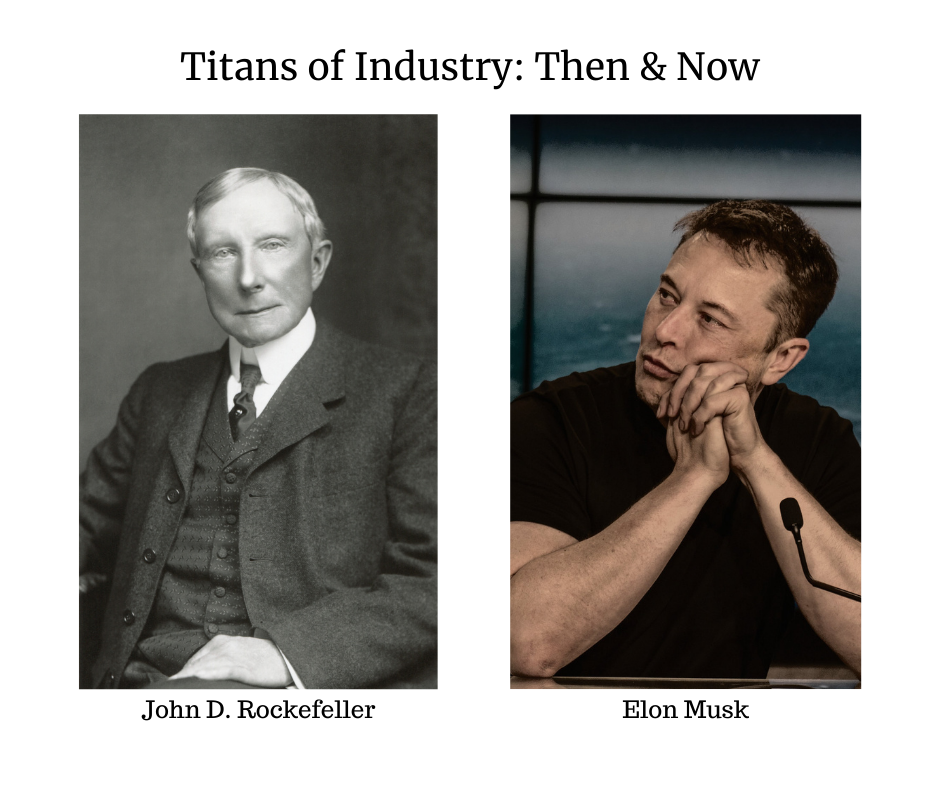
In the heart of this tumultuous era stood titans of industry like Andrew Carnegie, whose steel empire forged the very skeleton of the modern age, and John D. Rockefeller, whose Standard Oil Company oiled the wheels of progress. Their fortunes grew at a staggering pace, giving rise to the notion that the age was “gilded” in a veneer of gold.

Yet, as skyscrapers pierced the heavens and railroads stitched the nation together, countless workers toiled in oppressive conditions, their sweat and blood sustaining the grandeur above. They faced grueling hours, meager wages, and perilous workplaces. Their lives stood in stark contrast to the opulence of the industrial barons. Poverty festered in the shadows, casting a pall over the grandeur. The “gilded” surface of society hid the harsh reality of life for the many.

As we look back upon this tumultuous epoch, it’s essential to recognize the striking parallels that echo through the corridors of history and into our present day. Income inequality, which simmered beneath the surface in the Gilded Age, remains a pressing issue today. The struggle for workers’ rights and the fight against social injustices continue to shape our society, echoing the challenges of yesteryears.

The allure and paradox of the Gilded Age serve as a poignant reminder that, despite the passage of time, certain themes persist. The titans of industry today are in the information business, represented by Elon Musk. This period invites us to reflect on our own age – a time of remarkable technological advancements, where the glimmer of prosperity coexists with the shadows of inequality.

As a lifelong learner, I thrive on these sensory descriptions. They remind me that history is not just about facts and dates; it’s about stories and emotions. It’s about stepping into the shoes of those who came before us and understanding their world. The pursuit of knowledge keeps my mind sharp and open to new ideas.

Here are some key aspects of a lifelong learner to consider:

Embracing Change

Lifelong learning keeps your mind agile and adaptable. In a world where new technologies and ideas constantly emerge, being open to change is crucial.

Staying Relevant

By actively seeking new information and skills, you ensure that you remain relevant in your field and continue to contribute to your organization and society.

Personal Fulfillment

Learning is not just a means to an end but a source of personal fulfillment. It enriches your life, broadens your perspective, and keeps your passion for knowledge burning brightly.

Guiding the Next Generation

While your personal growth is paramount, you also recognize the importance of mentoring and investing in younger generations – while at the same time learning from them! This role as a guide carries immense responsibility and rewards:

Passing the Torch

By sharing your experiences, knowledge, and insights, you help prepare the next generation for the challenges they will face. You become a bridge between the past and the future.

Nurturing Talent

Guiding young individuals allows you to identify and nurture their talents, helping them unlock their full potential.

Legacy Building

Mentoring is a way to leave a lasting legacy. The impact you have on the lives of those you mentor can ripple through time, shaping the future in profound ways.

The Art of Balancing

Balancing lifelong learning with mentoring can be challenging, but it’s a dance worth mastering. Here’s how you can achieve this equilibrium:

Structured Learning

Allocate dedicated time for your own learning endeavors. Consider it an investment in your ability to mentor effectively.

Integration

Find ways to weave your newfound knowledge into your mentoring relationships. This integration makes your guidance more relevant and powerful.

Adaptive Mentorship

Recognize that the needs of the next generation are ever-evolving. Be willing to adapt your mentoring style and content to meet these changing needs.

The Ripple Effect

As a modern elder, the commitment to both learning and mentoring creates a positive ripple effect. I hope to inspire those around me to embrace lifelong learning as a path to personal growth. Simultaneously, I want to empower younger generations to navigate their journeys with wisdom and confidence. Along that journey, I plan to learn from them.

The modern elder’s journey is a testament to the beauty of balance. By relentlessly pursuing knowledge while guiding the next generation, I don’t want to be just an individual; I want to be a beacon of inspiration and wisdom. This delicate dance between personal growth and mentorship can result in the crucial role in shaping a brighter, more informed, and empowered future for all.