How to Help You Live SENT in the Place You Call Home

Not so long ago, neighbors generally kept their doors open to one another. Smaller houses seemed less confining, because the more porous divisions between homes – separated not by doors of wood or steel but by “screen doors” – encouraged socializing with neighbors.
An essential ingredient in community formation is dying out: the strong relational ties that are built when we let our guard down with each other, when we claim common space as an appropriate forum for conversation, play, and eating.
I used to think hospitality was a lost art. Now I’m convinced it is a lost heart.

Len Sweet, From Tablet to Table

Here are some more helps in learning to build bridges with hospitalityfrom your home to your neighbors.

These bridges are the next step in the ongoing shift in thought from a facility-focused ministry (church as a place) to one based in people’s homes (church as the body of Christ BEING the church).

Think of it as shifting:

  • From a buildings to your block
  • From a campus to your cul-de-sac
  • From in-person to in-the-neighborhood

Why not BE the church in your neighborhood TODAY, instead of BRINGING your neighbors to church?

Here is a link to the webinar recording I did entitled How to Help You Live SENT in the Place You Call Home

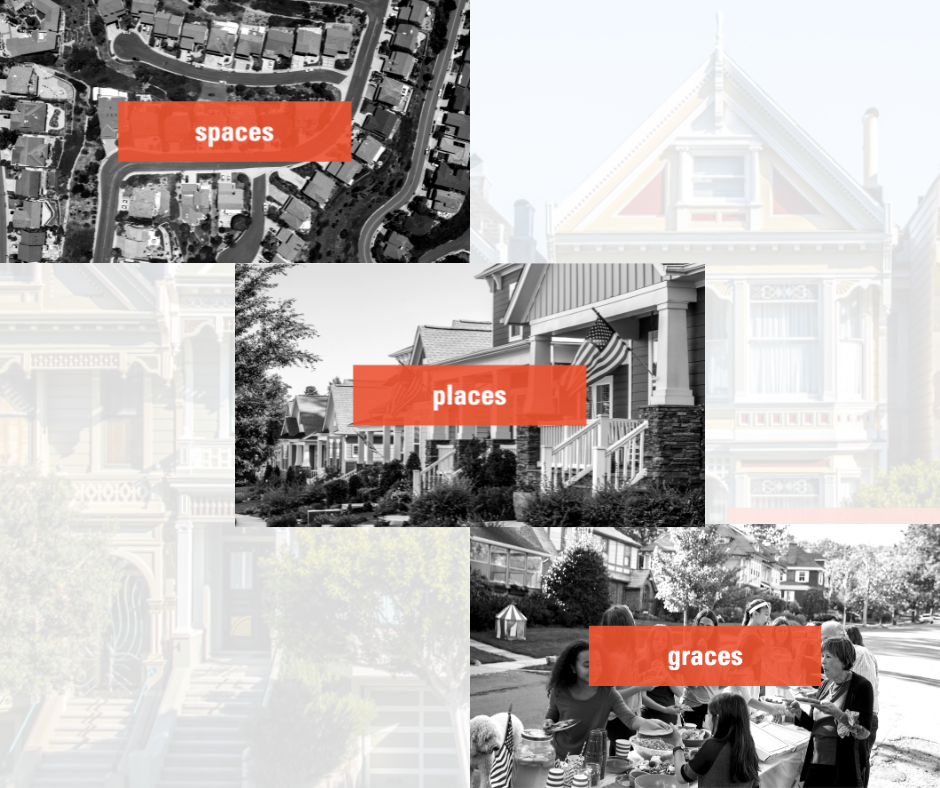
You will learn about the spaces, places, and graces that will help you become bridge builders to your neighbors. I unpacked those three words with ideas, examples, and tools to help you BE the church where you live.

Even though recorded at the height of the pandemic in the summer of 2020, the webinar concepts are valid and needed just as much today.

Here are some next steps from the content covered in the webinar:

> Download a blank Spaces/Places/Graces Listening Guide PDF

> Download a brief synopsis of the key slides used

> Recommended Books Referenced:

   Primary

   Other Good Resources

As discussed on the webinar, the ideas and resources we talked about are just the tip of the iceberg when it comes to Building Bridges to Your Neighbors. You can find many more by searching on this site using the key words “First Place Hospitality.”

For an essential First Place Hospitality library, check out this page.


TeamUP+ – Additional Helps for Bringing Hospitality Home

Earlier this year, I introduced you to the concept of Building Bridges to Your Neighbors. The intent was to learn how to build bridges of hospitality from your members’ homes to their neighbors.

Featured in that article was a TeamUP (Auxano’s eBook series) called Bringing Hospitality Home: Helping the People BE the Church Everyday. (you can download a copy here).

During the original research and writing, I came across so much good material that we couldn’t use because we wanted to keep the TeamUP short. So I developed a series of seven short TeamUP+ documents – one for each of the seven main points in the original TeamUP.

Click on each below to download them.

I hope you will find the TeamUP and the additional TeamUP+ as useful tools to expand your hospitality to your neighbors!

Households of Faith

Faith formation is connected to and increases with hospitality. Households that regularly host non-family guests are more likely to talk about faith, pray, or read the Bible together.

Barna

Barna studies have revealed much about the state of religion in the United States an how faith is perceived and discussed in public. But what about how faith is being nurtured in private – with the spouses, children, parents, roommates, and even frequent visitors who spend time under our roofs?

How Christians order their days and connect with relatives and housemates is a critical aspect of spiritual growth. Households of Faith, the second in a series of studies produced in partnership with Lutheran Hour Ministries, presents a vivid portrait of the domestic lives of U.S. practicing Christians, including:

  • An overview of modern living arrangements and the relationships that define them
  • Details of housemates’ regular interactions – practical, recreational, and spiritual
  • Insights about relationships that have a positive and enduring influence on housemates
  • Analysis of how faith heritage is linked to beliefs and rituals in adulthood
  • Interviews with experts in elder, family, and youth ministry about reaching a variety of households
  • Custom profiles of vibrant households that embrace hospitality and spiritual practices

According to the research Barna conducted for this book, here’s what happens when close friends get together:

  • 51% have deep conversations
  • 46% play together
  • 41% have dinner on a regular basis
  • 34% ask for help
  • 33% go on vacation together
  • 30% appear in family photos
  • 25% borrow household items

These percentages are among those who have regular visitors.

On the flip side, 4 in 10 practicing Christian households do not regularly host visitors. Couples are the least likely (49%) to admit they don’t have people over very often.

In summarizing the recommendations that stemmed from their research, Barna concluded they could do no better than Romans 12, which begins with its famous exhortation to be “a living and holy sacrifice.” As the chapter goes on, the focus shifts from the individual to the collective – from “your bodies” to “Christ’s body.” We are reminded:

  • “We all belong to each other.”
  • “Love each other with genuine affection.”
  • “Work hard and serve the Lord enthusiastically.”
  • “Keep on praying.”
  • “Don’t be too proud to enjoy the company of ordinary people.”
  • “Always eager to practice hospitality.”

Taken together, these principles build not only a vibrant household but a flourishing community of faith.

inspired and adapted from Households of Faith

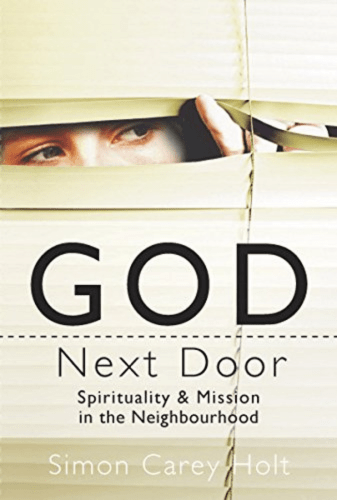
God Next Door

Spirituality & Mission in the Neighborhood

Look again at your neighborhood, not just as the place you happen to live but as an important context for spirituality and mission.

Simon Carey Holt

What if God lived next door? Would you recognize him? Would you talk to him at the fence or avoid catching his eye? Would you love him as you love yourself?

Simon Carey Holt listened to the experiences of numerous men and women of faith – people who live in neighborhoods of all shapes and sizes – and concluded that though they are a largely forgotten resource when it comes to matters of faith, neighborhoods are places rich with the most inspiring stories and exciting possibilities for mission.

According to author Simon Carey Holt, we all live in neighborhoods. Yours may be as different to mine as the proverbial chalk is to cheese. Your closest neighbor may be far away, hidden behind a high wooden fence, or close enough to hear as she walks overhead. Every neighborhood is unique. Yours will have a look and feel of its own; they all do. No matter where it’s located or how old it is, each neighborhood has its own history, atmosphere and personality; each one its distinctive blend of housing types, commercial and community facilities, and public places. Yet every neighborhood – from the trendy city highrise to the ever expanding housing developments on the urban fringe and anything else in between – is a variation on the same basic principle: people living in close proximity to other people.

And yet increasingly, some of us struggle to simply name those who live next door, let alone know the details of their lives.

At the heart of the Christian story lie the two commands Jesus identified as the essence of living, the heart of spirituality: ‘You shall love the Lord your God with all of your heart, soul, mind and strength;’ and ‘You shall love your neighbour as yourself.’ As I struggle with these two directives and how to make them alive in my everyday experience, there are some questions that beg for answers, questions like these:

  • What does it mean to love God where I live?
  • What does the command, ‘You shall love your neighbor as yourself’ mean for the people who live next door?
  • How do the realities of contemporary urban and suburban life impact upon my experience of faith and community?
  • What has my spirituality got to do with the neighbors?

The desire to close the door on the world and create a haven of self-sufficiency, identity and security is strong.

But Holt believes the neighborhood remains a fundamentally important context of life and deserves to be taken more seriously by those who live in one. He believes that in ignoring the health and wellbeing of our local neighborhood, we’re ignoring the glue that binds the wider city together and makes it a genuinely human environment. And perhaps most importantly, he believes a spirituality that does not nurture our connections with the daily places of life fails to reflect the life-transforming nature of the Christian faith.

Inspired and adapted from God Next Door: Spirituality & Mission in the Neighborhood by Simon Carey Holt


Practical Hospitality: A Guide to Building Bridges in Your Church and Neighborhood

Your church – its members – can be viewed as islands without bridges. The “islands” are the homes, apartments, or condos of your members. Wherever they live, it will be all too easy and natural to want to retreat into themselves and spend their influence mostly on themselves and their families, isolated and disconnected from their neighbors across the street or down the hall.

They are often strangers to their own neighbors.

The secret weapon for gospel advancement that builds bridges is hospitality, and your church members can practice it whether you live in a house, a dorm, or a high-rise apartment.

Thinking like this requires viewing the home as primarily a weapon for the gospel before it is anything else. Biblical hospitality chooses to engage rather than unplug, open rather than close, initiate rather than sit idly.

During the early months of the pandemic in 2020, I worked with the Auxano team to develop this TeamUP eBook to introduce you to the possibility of leading you and your church to build bridges – from member’s homes to their neighbors – and it starts with you.

These bridges are the next step in the ongoing shift from a facility-focused ministry to one based in people’s homes.

In this TeamUP, you will find excerpts, practical ideas, and actions from some of the best practicers of this concept.

These seven ideas and accompanying actions have been highlighted to first raise your awareness in your own life, and then, as a leader, encourage your team or church to do the same in their own lives.

Bridges are born of practical necessity, an astonishing marriage of technology and art. Crossing an often imposing obstacle, they succeed in linking two parts, providing the opportunity for connection and conversation. Bridges are links; they connect people and communities.

It’s time for your church to use hospitality as a bridge to your neighbors.

Happy Hour

Etiquette and Advice on Holy Merriment

Party develops and sustains the communal life of the community and it is the foundation of spiritual movement. If people find friends, great conversations, a safe place to be themselves and to bring others to, then you have the makings of a kingdom movement. If someone finds you through the party, then finding God will be much easier for them because they will already have a community of people to walk with.

Hugh Halter

All good missionaries know the power of social engagement.

Whether you are called to Spain, Italy, Iceland, or Portland, Oregon, we now live in a pure mission field, and people won’t move spiritually until they are connected socially. In other words, the Gospel will not be heard until our front doors open, our tables are set, and we practice the art of hospitality, celebration, and party.

Why has this ancient art of party been lost?

Because the church has defined holiness as “exclusion” from the world, abstinence from food and drink and separation from real people. In Jesus, we get to be holy as He was holy. Our inward commitments to Him remain intact while at th same time we are deeply entrenched in the life and customs of those around us.

Party is sacrament and we must relearn and reorient our lives around friends, food, and celebration if we are going to have any influence upon the culture right next door.

In Happy Hour, Hugh will unpack the theology of party as well as give you practical etiquette and ideas for making merriment a way of life and a way of mission.

According to author Hugh Halter, the one skill every believer must develop is the discipleship skill of throwing a great party.

No, it’s not just about outreach to lost friends. It’s really about our discipleship after Jesus. If He did it, and we claim to follow Him, then we must stretch past church attendance and Bible studies to learn how to be great human beings like He was.

Happy Hour is a book for missionaries in a missionary context.

Which is all believers.

inspired and adapted from Happy Hour: Etiquette and Advice on Holy Merriment, by Hugh Halter


Loving My Actual Neighbor

7 Practices to Treasure the People Right in Front of You

Jesus was 100 percent clear: Love God, love others. May we do so in a way that is honoring to both our Creator and those he created, with respect for all involved and dignity in every interaction.

Alexandra Kuykendall

As Christians, we know we are called to love our neighbor. We may even grasp that “neighbor” encompasses more than just the people living next door or down the street. But what we too often don’t know is how to begin. How do we love our neighbor? Where do we start? What does this look like in our increasingly isolated world?

Following practices outlined in the first chapter of 2 Peter, Alexandra Kuykendall lays out the framework for where to begin. From practicing humility to listening with understanding to being generous in our relationships, Loving My Actual Neighbor offers practical, start-now steps readers can take to love their neighbors. With her approachable, friendly tone and down-to-earth advice, Kuykendall has carved out for herself a place in the hearts of readers, who will be thrilled to extend her commonsense approach into this sphere of their lives.

As we begin the journey together of exploring how to love our neighbors well, may we remember that God’s grace is covering it all. We are imperfect people stumbling through life, trying to love other imperfect people.

If we are getting more honest in relationships, there will be moments (or days or weeks or years) that will be difficult. Things won’t go as we picture they will. The mess will seep out and we will miss opportunities that come up. We will likely say things we regret, and we will face feeling and ideas that make us uncomfortable.

But we will also experience life as God intended with more depth as we interact with those right in front of us on a more intentional level.

Loving My Actual Neighbor


How to Help Your Church Live Sent in the Place They Call Home

Not so long ago, neighbors generally kept their doors open to one another. Smaller houses seemed less confining, because the more porous divisions between homes – separated not by doors of wood or steel but by “screen doors” – encouraged socializing with neighbors.

An essential ingredient in community formation is dying out: the strong relational ties that are built when we let our guard down with each other, when we claim common space as an appropriate forum for conversation, play, and eating.

I used to think hospitality was a lost art. Now I’m convinced it is a lost heart.

Leonard Sweet

I want to introduce you to the possibility of leading your church to build bridges with hospitality – from member’s homes to their neighbors.

These bridges are the next step in the ongoing shift from a facility-focused ministry to one based in people’s homes.

Think of it as shifting:

  • From your buildings to their blocks
  • From your campus to their cul-de-sac
  • From in person to in the neighborhood

Why not encourage and equip your members to BE the church in their neighborhoods TODAY, before asking them to BRING their neighbors to church in the future?

Watch the video replay of How to Help Your Church Live SENT in the Place They Call Home. You will learn about the spaces, places, and graces that will help your church become bridge builders to their neighbors. I unpack these three words with ideas, examples, and tools to help your church BE the church where they live.

To help you get the most out of the video, download this Listening Guide prior to watching the video, then work along with it to develop your own “bridges” in your neighborhood.


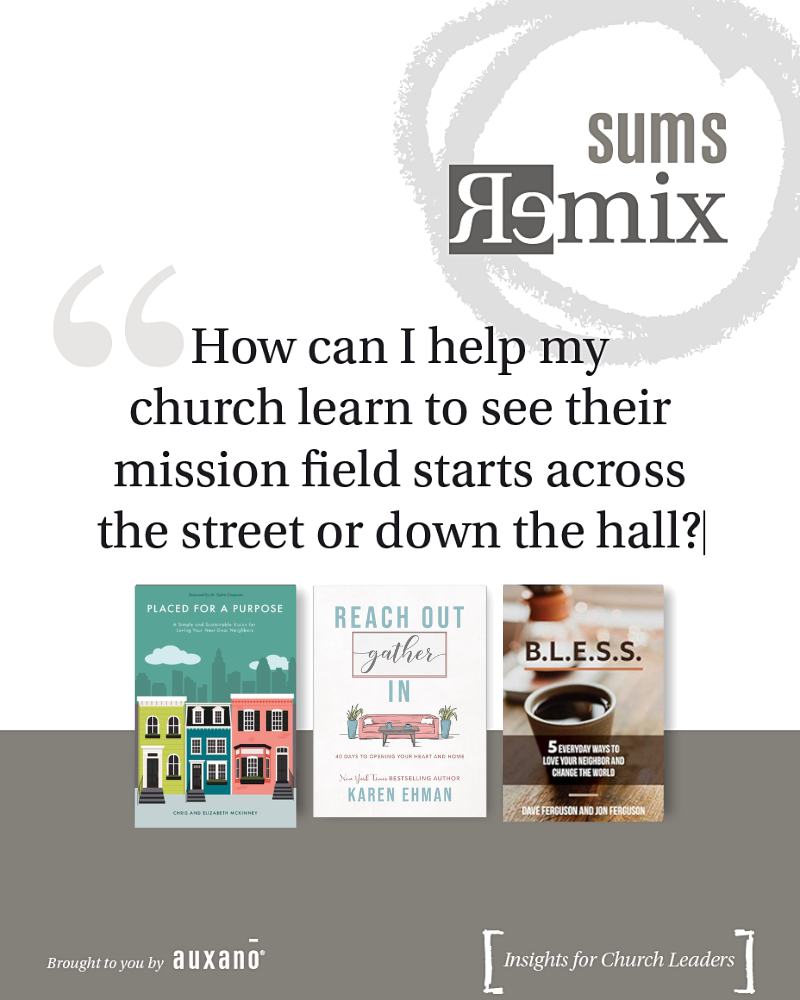
 How Can I Help My Church Learn to See Their Mission Field Starts Across the Street or Down the Hall?

Love your neighbors – not the neighbors you pick out, but the ones you have.

Wendell Berry

Is this a common sight in the neighborhoods of your community?

  • Empty front porches
  • Closed garage doors
  • Lifeless front yards
  • Silent encounters in the halls

Unfortunately, this is the norm in all too many neighborhoods.

Does your neighborhood lack neighborliness?

Maybe it’s time to see the mission field right across the street with a clear vision to serve “the neighbors you have.”

If you wear glasses or contacts, you’ve probably gone through the adjustment period of seeing with clear vision because of new lenses. Seeing things you’ve not seen before, seeing a little too clearly, can give you a headache.

When you begin to look at your neighborhood with a clear vision that these are your neighbors and you have been called to love them, you may have the same feelings.

It’s time to offer your lives to your neighbors, beyond the everyday, incidental encounters of taking out the trash cans or walking your dog.

This issue of SUMS Remix looks at solutions that will help you learn to connect to a place and the people who live in it. The solutions include: 

Adopt a framework for neighboring

Begin a journey that turns good intentions into actions

Change the world without changing your routine

The Character of Hospitality

Authors Pat Ennis and Lisa Tatlock, in their wonderful book Practicing Hospitality, surveyed the Scriptures and created a word collage of what a person of character who desires to practice hospitality might look like. Here’s their summary version:

H – Humble

Humility is the opposite of self-sufficiency and is a necessary prerequisite if I am going to be of service to my heavenly Father. I can exercise humility by choosing to step out of my comfort zone and invite individual into my home with whom I may not be totally at ease, or those who may have unrealistic expectations about the event.

O – Obedient

The primary evidence that individuals are Christians is their choice to obey all of their Father’s command. I demonstrate obedience by obeying all of my Father’s commands that focus on hospitality.

S – Sincere

Genuine, as well as absence of deceit or hypocrisy, describes sincere actions. I will “stay on my knees” until I can extend sincere invitations.

P – Prayerful

Prayer – that is, communicating with my heavenly Father – shows my desire for His direction about and dependence on Him for the event. I resolve to pray about all aspects of the events that I play.

I – Interested in Integrity

Integrity is choosing to dow hat is right when given a choice between right and wrong, even when it is unpopular. I will choose to adhere to my heavenly Father’s standards, regardless of what the mainstream of society is doing.

T – Trustworthy

A trustworthy home provides an ambience of trust and confidence. I will study Elizabeth’s life in Luke 1:39-56 as a model for my life.

A – Adopted into God’s Family

Adoption is choosing to legally integrate an individual into one’s home and nurturing that individual as one’s very own child. I will choose, through the strength of the Holy Spirit, to behave in a way that reflects my royal heritage, so that my guests will observe a bit of “heaven on earth” in my home.

L – Led by the Spirit

Walking in the Spirit literally mens keeping in step with the Holy Spirit. I will propose to walk tin the Spirit so I will not carry out the desire of my flesh (Galatians 5:16).

I – Instrumental in Producing Righteousness

An instrument of righteousness brings “every through captive to obey Christ” (2 Corinthians 10:5) and refuses to fret or worry about anything (Philippians 4:6-8). I must control what I think about and purpose to be spiritually renewed by humble presenting my concerns to my loving heavenly Father – even when the hospitality event appears to be beyond my capabilities.

T – Thankful

Being thankful is an act of the will that generates the giving of thanks to God – regardless of the circumstances. I choose t learn to be content regardless of my circumstances. (Philippians 2:11).

Y – Yielded

We are to possess a willingness to yield to our heavenly Father’s specific instructions in relation to practicing hospitality. I demonstrate my love to Him by choosing to embrace His instructions with my whole heart – and that is when my joy is complete (1 John 1:4; 2 John 12).

With the summary of the word collage above, you can create your own personal version. Click here to download the image below. Use it to personalize your own ideas in developing a character of hospitality.


I hope you have been intrigued enough by the information above to pick up a copy of Practicing Hospitality and explore the many other useful tools the authors have created.