
One of the most persistent myths in professional development is that learning capacity diminishes with age. This outdated belief not only limits individual potential but also creates organizational barriers that waste decades of accumulated wisdom. For the modern elder, developing and maintaining a growth mindset isn’t just about personal development – it’s about dismantling age-based assumptions and demonstrating that experience and adaptability can powerfully coexist.
Today’s article is the fifth of a 12-part exploration of the Modern Elder’s core competencies distilled from my 40+ year career journey. Having a Growth Mindset is centered on an openness to learning, evolving, and challenging existing assumptions.
Redefining Learning at Every Life Stage
The concept of a growth mindset, pioneered by psychologist Carol Dweck, centers on the belief that abilities and intelligence can be developed through dedication, hard work, and learning from failure. For the modern elder, this principle takes on unique dimensions that younger professionals rarely encounter.
Unlike early-career professionals who may approach learning with uncertainty about their capabilities, modern elders bring a complex relationship with learning. They possess deep expertise in certain areas while simultaneously facing rapidly evolving technologies, methodologies, and workplace cultures. This creates a fascinating tension: confidence in proven abilities alongside humility about emerging domains.

The key insight is that growth mindset for experienced professionals isn’t about starting from scratch – it’s about leveraging existing knowledge as a foundation for new learning. This approach transforms potential obstacles into advantages.
Combating Fixed Mindset Assumptions About Aging
Society perpetuates numerous myths about aging and learning capacity. These include assumptions that older professionals are “set in their ways,” resistant to change, or technologically challenged. The modern elder must actively combat these stereotypes, not just externally but internally.
Fixed mindset thinking often manifests as self-limiting beliefs: “I’m too old to learn this,” “This is how we’ve always done it,” or “Let the younger generation handle that.” The modern elder recognizes these thoughts as learned limitations rather than biological realities.
Research in neuroplasticity – the brain’s ability to form new neural connections throughout life – provides scientific backing for what many modern elders intuitively understand: the capacity for learning doesn’t diminish with age; it simply changes form. The mature brain may process information differently than a younger brain, but different doesn’t mean deficient.
Neuroplasticity and Lifelong Learning
Recent neuroscience research reveals that adult brains remain remarkably adaptable. Dr. Michael Merzenich, a pioneer in neuroplasticity research, notes that “the brain is designed to change throughout life.” This biological reality supports what successful modern elders demonstrate daily: learning continues to be possible and valuable at every career stage.
The modern elder’s approach to neuroplasticity-based learning often differs from younger colleagues. Where a 25-year-old might learn through trial and error, a 65-year-old might leverage pattern recognition from previous experiences to accelerate new skill acquisition. This isn’t a limitation – it’s a sophisticated learning strategy that combines novelty with wisdom.
Strategies for Challenging Comfort Zones
Growth mindset requires intentional discomfort. For the modern elder, this means systematically challenging assumptions and expanding beyond established expertise areas.
Effective strategies include:
- Reverse Mentoring Relationships: Actively seeking guidance from younger colleagues creates mutual learning opportunities while challenging hierarchical assumptions about knowledge flow.
- Adjacent Learning: Exploring fields related to but distinct from core expertise. A marketing executive might study behavioral psychology, or a financial analyst might explore data visualization design.
- Failure Reframing: Transforming setbacks from career threats into learning opportunities. The modern elder’s experience provides context for understanding that individual failures rarely define career trajectories.
- Skill Stacking: Building complementary capabilities that enhance existing strengths rather than replacing them entirely.
Learning from Younger Colleagues Without Ego
One of the most challenging aspects of maintaining a growth mindset as an experienced professional is accepting that younger colleagues may possess superior knowledge in certain areas. This requires what researchers call “intellectual humility” – the recognition that expertise has boundaries and that valuable insights can come from unexpected sources.
The modern elder who masters this balance creates powerful learning relationships. They offer contextual wisdom and strategic thinking while remaining genuinely curious about new approaches and emerging trends. This reciprocal learning model enriches both parties and challenges organizational assumptions about knowledge hierarchy.
Balancing Confidence with Openness
The modern elder faces a unique challenge: maintaining confidence in hard-earned expertise while remaining open to new possibilities. This balance requires sophisticated emotional regulation and self-awareness.
Successful modern elders develop what might be called “confident humility” – strong conviction about core principles combined with flexibility about methods and applications. They understand that being right about fundamental concepts doesn’t mean being right about every implementation detail.
Growth Mindset IRL
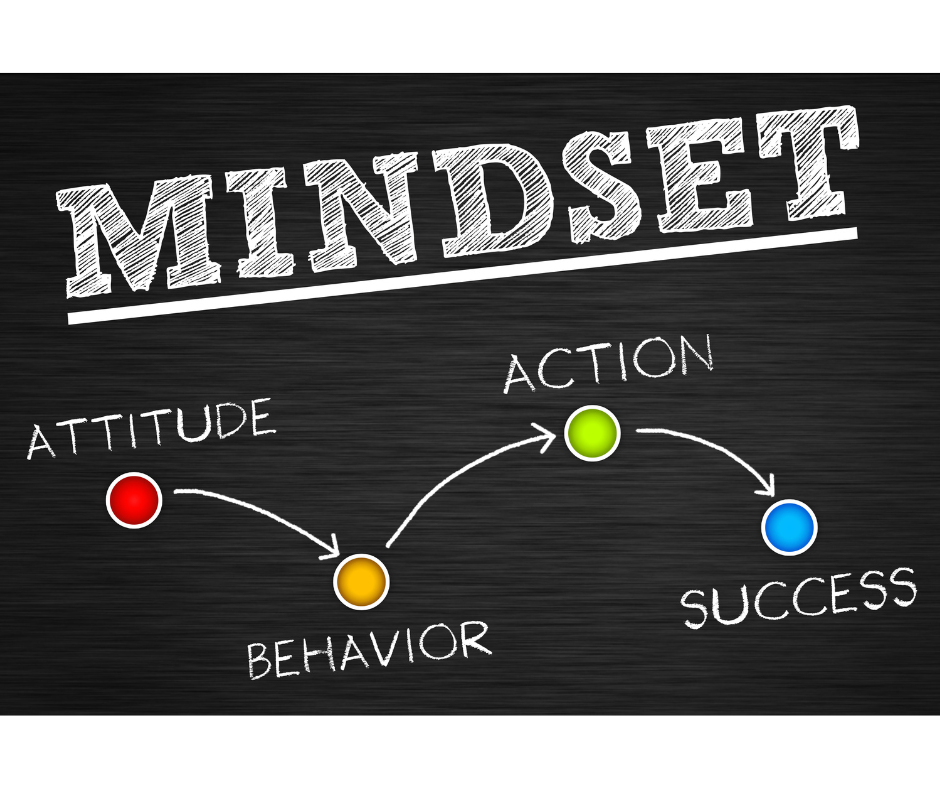
My entire career encompasses a growth mindset; it hasn’t been a straight line but an expanding circle of possibilities where each transition becomes a gateway to transformation rather than an ending. Embracing a growth mindset as a Modern Elder means viewing your accumulated experience not as a fixed credential but as a foundation for continuous learning and evolution. During my 44-year journey from media ministry to administrative and discipleship pastor to construction consulting to clarity consulting, my willingness to adapt, learn new technologies, and challenge existing assumptions is in the process of transforming me from someone who simply ages into someone who grows whole. This mindset shift allows me to leverage decades of wisdom while remaining digitally fluent and emotionally intelligent, positioning me not for traditional retirement but for maximum influence where my unique perspective becomes increasingly valuable in a rapidly changing world.
The Growth Mindset Advantage
Modern elders with genuine growth mindsets possess several distinct advantages:
- Contextual Learning: They can quickly connect new information to existing knowledge frameworks, accelerating comprehension.
- Risk Assessment: Experience provides better judgment about which risks are worth taking in pursuit of growth.
- Persistence: Having weathered previous learning challenges, they possess resilience for sustained effort.
- Teaching Ability: Their learning journey becomes a valuable resource for mentoring others.
Creating a Learning Culture
Perhaps most importantly, modern elders with growth mindsets become catalysts for organizational learning cultures. By modeling curiosity, embracing challenges, and treating setbacks as learning opportunities, they give permission for others to do the same.
The modern elder’s growth mindset isn’t just about personal development – it’s about transforming workplace assumptions about age, expertise, and learning capacity. In demonstrating that experience and adaptability can coexist, they create more dynamic, inclusive, and innovative organizations where wisdom and curiosity work together to drive success.
The journey of cultivating a growth mindset never ends, regardless of career stage. For the modern elder, this ongoing learning journey represents not just professional necessity but personal fulfillment – proof that the best chapters of a career may still be ahead.

 27gen.com