
Embarking on the journey to becoming a modern elder is akin to setting sail on a voyage of self-discovery, one where the maps are drawn not just from personal experience but also from the timeless wisdom embedded in the stories we read.
Just as ancient mariners navigated by celestial bodies, those seeking to embrace this evolving role can find guidance in the enduring patterns of human character and experience captured in literary archetypes. From the sage advisor to the resilient hero, these recurring figures offer profound insights into the qualities, challenges, and ultimate contributions of those who embrace the mantle of elderhood in a contemporary world.
By exploring these archetypal representations, we can better understand the multifaceted nature of this transformative journey and glean valuable perspectives on how to navigate its unique terrain.
Previous individual posts and series have taken a more contemporary view of the journey to my becoming a modern elder. In addition, Nehemiah provides an excellent source of characteristics a modern elder should emulate. While those approaches are certainly valuable, over the past few months I have come to realize that journey can draw from many different sources. They even all don’t have to be contemporary.
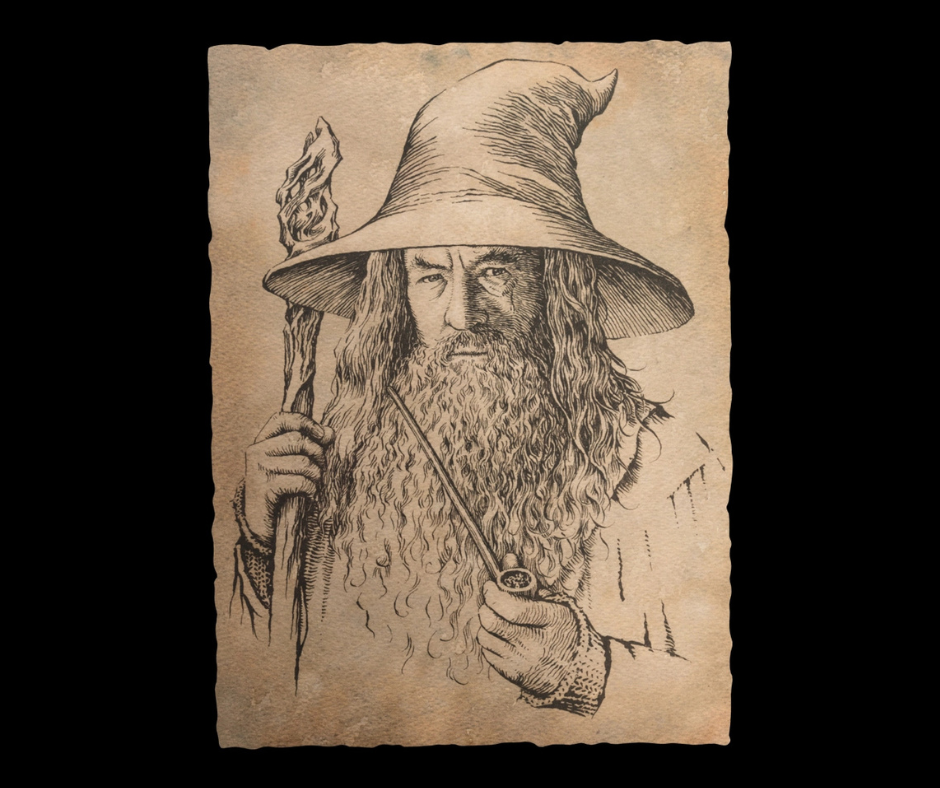
All we have to decide is what to do with the time that is given us.
Gandalf, from J.R.R. Tolkien’s “Lord of the Rings”
In an era often captivated by the allure of youth and the relentless pursuit of innovation, the concept of the “modern elder” emerges as a vital counter-narrative. It champions the enduring significance of accumulated wisdom, seasoned experience, and the profound impact of mentorship in navigating the ever-increasing complexities of contemporary life. While the term itself is relatively new, the archetype of the wise elder resonates across cultures and throughout the annals of storytelling. Within the rich tapestry of literature, perhaps no character embodies this archetype more compellingly than Gandalf, the enigmatic and powerful wizard from J.R.R. Tolkien’s monumental 3-volume work, The Lord of the Rings, and his earlier book, The Hobbit.
For reference, I have long been a fan of Tolkien’s work – I first acquired and read the LOTR paperback versions around 1970, as I was beginning junior high. In the many years since then, I have reread both The Hobbit and LOTR several times, and have been working through the rest of Tolkien’s works. In addition, there are many scholars and serious students of Tolkien who have written about his works; there’s certainly no shortage of source material!
Earlier this year, I began a Tolkien quest of my own: reading through the 12-volume History of Middle-earth. The History of Middle-earth dives deep into the creation of the myths, languages, and histories behind Tolkien’s classics – The Hobbit, The Lord of the Rings, and The Silmarillion – all thanks to Tolkien’s son Christopher’s thorough documentation and insightful commentary.
As I jumped around the different volumes, it struck me that there was one character who stood out in terms of a modern elder – even though this was a fictional character! At first glance, drawing a parallel between a figure of high fantasy and a contemporary social concept might seem like a whimsical exercise.
Gandalf, with his iconic flowing grey beard, his pointed hat that speaks of ancient lore, and the staff that serves as both a tool and a symbol of his authority, inhabits a world of magic and mythical creatures. Yet, beneath this fantastical veneer lies a core of qualities, a fundamental essence, that aligns remarkably with the defining principles of a modern elder. By delving deeper into Gandalf’s actions and his counsel throughout LOTR (and the Hobbit), we uncover a timeless model for those seeking to embrace the profound and evolving role of elderhood in our own world.
A Deep Wellspring of Hard-Earned Experience
One of the foundational tenets of the modern elder is not simply the accumulation of years, but the depth and breadth of life experiences that have shaped their understanding of the world. They are individuals who have weathered personal and societal storms, celebrated moments of profound joy, and, most importantly, extracted invaluable lessons from both triumph and tribulation. Gandalf, as one of the Istari – angelic beings sent to Middle-earth in human form millennia prior to the events of The Lord of the Rings – possesses an almost incomprehensible reservoir of experience. He has witnessed the ebb and flow of ages, the rise and fall of civilizations both great and small, and has engaged in battles against ancient evils that predate recorded history in the Tolkien timeline. This vast tapestry of lived history profoundly informs his judgment, allowing him to offer perspectives and insights that younger, less seasoned characters within Middle-earth simply cannot grasp. Consider his strategic counsel to the Fellowship of the Ring, advice drawn not just from tactical acumen but from centuries of understanding the insidious nature of darkness and the enduring power of hope, even in the face of overwhelming despair. His knowledge of ancient lore, forgotten languages, and the intricate web of Middle-earth’s history provides a crucial foundation for the Fellowship’s perilous quest.
The Transformative Power of Intentional Mentorship
A central and defining role of the modern elder is that of a mentor – an individual who consciously and compassionately guides, supports, and empowers others to discover their own potential and navigate their unique paths. Gandalf stands as the quintessential mentor figure throughout The Lord of the Rings. He recognizes the inherent courage within Frodo Baggins, nurturing his nascent bravery and guiding him through the daunting responsibility of bearing the One Ring. He patiently steers Aragorn towards embracing his rightful destiny as the king, offering both encouragement and challenging him to rise to the occasion. His interactions with the entire Fellowship are marked by timely and insightful advice, often delivered in cryptic yet ultimately illuminating ways. Crucially, Gandalf does not dictate or impose his will; instead, he illuminates possibilities, encourages critical thinking, and fosters self-reliance. His famous and oft-quoted line, “All we have to decide is what to do with the time that is given us,” perfectly encapsulates this empowering approach, emphasizing individual agency and the importance of choice rather than blind obedience to authority. He sees the potential in each member of the Fellowship, even the seemingly insignificant hobbits, and helps them recognize their own strengths.
Navigating the Inevitable Currents of Change with Grace and Adaptability
The modern world is characterized by a relentless and often disorienting pace of change. Modern elders, having witnessed numerous societal and personal transformations throughout their lives, possess a unique ability to navigate these shifting currents with a sense of perspective, resilience, and adaptability. Gandalf, despite his ancient origins and deep understanding of tradition, remains remarkably relevant and influential in a rapidly evolving Middle-earth. He recognizes the shifting tides of power, the emergence of new threats, and the need for unconventional alliances. His dramatic return as Gandalf the White after his battle with the Balrog in the Mines of Moria signifies not a nostalgic clinging to the past, but a powerful evolution. He embraces new responsibilities and wields a greater authority, demonstrating an ability to adapt and grow in the face of profound personal and external challenges. This transformation underscores the idea that true elderhood is not about stagnation, but about continued growth and relevance.
An Unwavering Anchor of Enduring Values
In a world often swayed by fleeting trends and shifting moral landscapes, modern elders often serve as vital anchors of enduring values. They embody principles such as integrity, compassion, resilience, and a deep-seated commitment to ethical conduct. Gandalf consistently demonstrates these fundamental qualities throughout his interactions. He exhibits unwavering loyalty to his friends and allies, remains steadfast in his commitment to the forces of good, and possesses a profound empathy for the struggles and vulnerabilities of others, especially the seemingly small and unassuming hobbits. His moral compass remains true and unwavering, providing a vital ethical framework for the other characters as they navigate the treacherous path towards Mordor and confront the seductive power of the Ring. His wisdom is not merely intellectual; it is deeply intertwined with a strong sense of justice and a profound understanding of the importance of compassion.
Influence Beyond Brute Force – The Power of Wisdom and Connection
While Gandalf undoubtedly possesses considerable magical power, his true and lasting strength lies not solely in his ability to wield spells and command the elements, but in his wisdom, his profound understanding of people and their motivations, and his remarkable ability to inspire hope and foster unity. Modern elders understand that true influence transcends physical capabilities or material wealth. Their power resides in their accumulated insights, their extensive networks of connections, and their capacity to see the larger, interconnected picture. Gandalf’s impact on the War of the Ring is not solely through his direct magical interventions, but perhaps more significantly through his strategic guidance, his ability to forge alliances between disparate factions (Elves, Men, Dwarves, and Hobbits), and his unwavering belief in the inherent capacity for good to triumph over evil, even when all seems lost. He understands the power of collaboration and the importance of recognizing the unique strengths that each individual and group brings to a common cause.

While Gandalf is undeniably a figure of fantasy, a powerful wizard inhabiting a richly imagined world, his essence resonates deeply with the core principles of the modern elder. He embodies the profound wisdom gained through millennia of experience, the transformative power of intentional mentorship, the crucial ability to navigate change with grace and adaptability, and the steadfastness of enduring core values. By thoughtfully examining his character, his actions, and his interactions with the world around him, we gain a richer and more nuanced understanding of the vital role that elders – both fictional and real – play in guiding, inspiring, and ultimately shaping the course of our journeys through life. Gandalf serves as a timeless reminder that true strength lies not just in overt power, but in the enduring wisdom of a life lived with purpose, integrity, and a generous spirit of guidance. His legacy extends far beyond the realm of fantasy, offering profound insights into the enduring value of elderhood in our own modern world.
For another model of modern eldership, see the series on Nehemiah here.


 27gen.com