The 5th Discipline of Guest Experiences: Governance

Organizations that want to produce a high-quality Guest experience need to perform a set of sound, standard practices. Harley Manning and Kerry Bodine, in their book Outside In, have developed six high-level disciplines which can be translated into Guest experiences: strategy, Guest understanding, design, measurement, governance, and culture.

An overview of all six Disciplines can be found here. These disciplines represent the areas where organizations that are consistently great at Guest experiences excel.

If you want to deliver a great Guest Experience, these disciplines are where you need to focus, too.  

Governance

The word governance may bring to mind images of executives in closed-door meetings talking about compliance. Senior decision makers are important part of governance at many organizations, but governance isn’t about a committee that hands out edicts from the top floor.

In reality, governance models are as varied as the organizations they support.  Governance practices will help you drive accountability by assigning specific Guest Experience management tasks to specific people within your organization.

You need to use your insights and metrics to identify Guest Experience improvement opportunities and, as you put new programs into place, keep tabs on the progress of those initiatives.

Measurement Practices

  • Define a consistent set of Guest Experience standards across the organization
  • Include alignment with the Guest Experience strategy as a criterion for evaluating project funding and prioritization decisions
  • Include impact to Guest Experience as a criterion for organizational decisions about policies, processes, technology, and communications
  • Maintain a dedicated queue of Guest Experience improvement projects
  • Review Guest Experience program status and metrics regularly to monitor progress toward organizational goals, adjusting tactics or resource allocations if needed
  • Assign role-specific Guest Experience management tasks to team members as a requirement of their positions
  • Evaluate team member performance against role-specific Guest Experience metrics
  • Facilitate the necessary coordination across groups that share responsibility for a given experience
  • Whenever a change is approved to a policy, organizational process, or other system that affects the Guest Experience, proactively redesign that experience to reflect the change

The Guest Experience governance discipline is designed to help you adhere to practices that will consistently deliver a great Guest Experience. Your job is to decide the rules of your own game – the right Guest Experience governance model and policies for your organization.

Application to ChurchWorld

  1. Make Guest Experience Governance part of basic job responsibilities
  2. Find and fix Guest Experience problems
  3. Keep Guest Experience problems from happening in the first place
  4. Define a consistent set of Guest Experience standards

The governance discipline is all about intentional management and oversight.

I will be happy to discuss Guest Experience initiatives for your church and partner with you to design a WOW! Guest Experience.

Next: To help reinforce the rationale behind your governance practices and make sure team members actually adopt them, you’ll need to develop a Guest-centric culture.

Want to know more about the Guest Experience in your church?

  • Learn why the Guest Experience matters here
  • Contact me here
  • Read up a little here

The 4th Discipline of Guest Experiences: Measurement

Organizations that want to produce a high-quality Guest experience need to perform a set of sound, standard practices. Harley Manning and Kerry Bodine, in their book Outside In, have developed six high-level disciplines which can be translated into Guest experiences: strategy, Guest understanding, design, measurement, governance, and culture.

An overview of all six Disciplines can be found here. These disciplines represent the areas where organizations that are consistently great at Guest experiences excel.

If you want to deliver a great Guest Experience, these disciplines are where you need to focus, too. 

Measurement 

As the saying goes, “What gets measured matters.” Measurement practices take the guesswork out of managing your Guest Experience. It does this by capturing what actually happens in a Guest Experience, how the Guest felt during the interaction, and whether the Guest is willing to recommend your organization to others afterward. Measurements tell your team what’s going right (or wrong), what, if anything to do about it, and what impact your organization can expect as a result.

Measurement Practices

  • Define a Guest Experience quality framework that aligns with how Guests judge and experience and is consistent across the organization
  • Define the subsets of Guest Experience metrics that show how each group, role, and individual contributes to Guest Experience quality
  • Measure how Guests perceive their experiences with the organization based on the criteria in the Guest Experience quality framework
  • Collect descriptive metrics about each experience that provide context for Guest perceptions
  • Analyze Guest Experience metrics to determine differences in experience quality among key Guest segments, tasks,  or aspects of the experience
  • Model the relationship between drivers of Guest Experience quality, Guest perceptions of their experiences, and desired outcomes
  • Share Guest Experience metrics and models with all team members

The foundation of your measurements is creating a Guest Experience Framework. This framework strings together cause, effect, and outcomes into a coherent story for your organization. It’s a tool that helps you decide what to measure, how to measure it, and what your findings mean to your organization.

Your framework is structured around two tiers. The first tier will give you the big picture, a broad view of your overall Guest Experience. The second tier will capture perceptions of discrete, end-to-end Guest journeys – giving you details about the Guest’s specific experiences with individual touch points they encounter along the way.

Picking the Guest Experiences that you want to measure is half the battle. The second half of the battle is deciding how to measure those experiences. There are three types of metrics to use:

  1. Perception metrics measure Guest perceptions that exist only in the minds of your Guests
  2. Descriptive metrics consist of operational data about your Guests’ interactions
  3. Outcome metrics tell you what Guests intend to do – or actually did – after interacting with your organization

All effective measurement programs model the relationships between Guest Experience quality, the factors that drive it, and results.

The measurement discipline isn’t as glamorous as strategy or design, but it’s like rocket fuel for all your Guest Experience initiatives.

  • It drives interest in your programs by demonstrating results
  • It keeps people on track by connecting them to hard data about their effectiveness
  • It provides a reality check for the other Guest Experience disciplines

By identifying the things that matter most from the perspective of your Guests – and then identifying them systematically over time – you’ll know whether your strategy is on track, whether your Guest understanding is accurate, and how well the experience you designed is resonating with Guests.

Application to ChurchWorld

  • Measurement keeps Guest Experiences on track
  • Connect the dots across your measurement framework
  • Let measurement power your Guest Experience efforts

Want to know more? I will be happy to discuss Guest Experience initiatives for your church and partner with you to design a WOW! Guest Experience.

Next: How can your organization act on the insights you gained through measurement? The answer to that question is governance.


Want to know more about the Guest Experience in your church?

  • Learn why the Guest Experience matters here
  • Contact me here
  • Read up a little here

The 3rd Discipline of Guest Experiences: Design

Organizations that want to produce a high-quality Guest experience need to perform a set of sound, standard practices. Harley Manning and Kerry Bodine, in their book Outside In, have developed six high-level disciplines which can be translated into Guest experiences: strategy, Guest understanding, design, measurement, governance, and culture.

An overview of all six Disciplines can be found here. These disciplines represent the areas where organizations that are consistently great at Guest experiences excel.

If you want to deliver a great Guest Experience, these disciplines are where you need to focus, too. 

Design

Design isn’t just choosing the right images and fonts for your next website revision. It’s a problem-solving process that incorporates the needs of Guests, team members, and partners in your mission. It’s a way of working that creates and refines real-world situations.

Design is the secret weapon of organizations that gives them a strategic advantage in figuring out what services their Guests need and in defining the exact characteristics of every Guest interaction. Design helps you understand how a Guest accesses your website, what a Guest is likely to do as they approach your campus, and gives you clues about creating a welcoming environment.

Design is the most important discipline that you’ve probably never heard of.

The human-centered design process starts with research to understand Guest needs and motivations. It’s all those activities in the discipline of Guest Understanding. Analysis is next – synthesizing the data into useful forms. The next phase is ideation, which is just what it sounds like – coming up with ideas. After that, it’s time to prototype – ranging from a simple redesigned Guest survey to a full-scale mock-up of your typical Guest experience on the weekend. Next, these prototypes are put into action with real people while you observe the results. Finally, you must document the features of the resulting product or service that has evolved.

Design Practices

  • Follow a defined Guest Experience design process any time a new experience is introduced or an existing experience is changed in some way
  • Use Guest understanding deliverables and insights to focus and define requirements for projects that affect Guest Experiences
  • Engage Guests, team members, and partners as part of the experience design process
  • Use iterative ideation, prototyping, and evaluation as part of the experience design process
  • Identify the set of complex interdependencies among people, processes, and technologies that shape interactions with Guests (the Guest Experience Ecosystem)

The right Guest Experience changes, implemented the right way, won’t just fall into your lap. You must actively design them. This requires learning – and then sticking to – the steps in a human-centered design process.

I will be happy to discuss Guest Experience initiatives for your church and partner with you to design a WOW! Guest Experience.

Application to ChurchWorld

  1. Guest interactions need to be designed, not left to chance
  2. Design is an activity best done with people, not to them
  3. Prototyping can help keep ideas alive while you create buy-in

Design will stretch your skills and challenge your old ways of working.

Next: How do you know when your design work is having the effects you intended? That’s where the measurement discipline comes in.

Want to know more about the Guest Experience in your church?

  • Learn why the Guest Experience matters here
  • Contact me here
  • Read up a little here

The 2nd Discipline of Guest Experiences: Guest Understanding

Organizations that want to produce a high-quality Guest experience need to perform a set of sound, standard practices. Harley Manning and Kerry Bodine, in their book Outside In, have developed six high-level disciplines which can be translated into Guest experiences: strategy, Guest understanding, design, measurement, governance, and culture.

An overview of all six Disciplines can be found here. These disciplines represent the areas where organizations that are consistently great at Guest experiences excel.

If you want to deliver a great Guest Experience, these disciplines are where you need to focus, too. 

Guest Understanding

You need a set of practices that create a consistent shared understanding of who Guests are, what they want and need, and how they perceive the interactions they’re having with your organization today. This discipline includes research practices, analyzing the information you’ve collected, and documenting your findings. Guest Understanding provides a foundational level of insight that guides the rest of the disciplines.

Guest Understanding Practices

  • Solicit feedback from Guests about their experiences with your organization (through surveys or interviews)
  • Collect unsolicited feedback from Guests about their experiences with your organization (through mining calls, email, or social media posts)
  • Gather input from team members about their experiences with Guests and their role in delivering the Guest Experience
  • Conduct observational research studies in Guests’ natural environments
  • Analyze Guest insight drawn from across research techniques and organizational boundaries to identify key Guest pain points and opportunities
  • Document Guest Understanding in a way that is easy for team members to understand and use (through the use of personas, Guest Journey maps, etc.)
  • Share Guest understanding with all team members

Thinking you know what Guests want is risky. Knowing what they want leads to Guest Experience improvements that matter.

Guest Survey from Pearland Vineyard, Pearland, TX

Most organizations neglect to build a foundation of Guest understanding before they develop their service and experience strategies – and then proceed with costly initiatives. Where do most organizations miss the boat on understanding their guests?

  1. Team members often fall into the seductive trap of assuming that what they want is what Guests want
  2. Many organizations view Guests only through a numerical lens
  3. Many Guests use qualitative research methods inappropriately

The good news is that you can avoid these pitfalls by using techniques that will help you to understand who your Guests are, how they perceive the interactions they are having with you today, and what they want and need from you tomorrow.

If you want to harness the power of delivering a WOW! Guest Experience, you have to start with a complete picture of who they are and what they want from you. This picture will come into focus as you begin to analyze Guest data that spans multiple research techniques and organizational boundaries.

While you may have the in-house know-how to do some of these activities, you will likely need to partner with outside experts. They will be able to help you set up studies, ask the right questions, collect the right data, and synthesize the results into meaningful insights.

I would be happy to talk with you about how you can begin the journey to understanding and delivering  a WOW! Guest Experience every week at your church.

If you try to skimp on this part of the process – by continuing with assumptions about what you think Guests need and want – you’ll not only fail to create true Guest understanding, you will also put the rest of your Guest Experience practices at risk.

Guest insights ultimately drive your Guest Experience strategies.

Application to ChurchWorld

  1. What you think you know about your Guests is probably wrong
  2. You won’t find all your answers in a survey
  3. Document your findings in easy to understand formats
  4. Share your Guest insights early and often

Guest Understanding should become the foundation of all your Guest Experience efforts.

Next in the series: How understanding your Guests becomes the primary input into your Guest Experience design process.


Want to know more about the Guest Experience in your church?

  • Learn why the Guest Experience matters here
  • Contact me here
  • Read up a little here

The 1st Discipline of Guest Experiences: Strategy

Organizations that want to produce a high-quality Guest experience need to perform a set of sound, standard practices. Harley Manning and Kerry Bodine, in their book Outside In, have developed six high-level disciplines which can be translated into Guest experiences: strategy, Guest understanding, design, measurement, governance, and culture.

An overview of all six Disciplines can be found here. These disciplines represent the areas where organizations that are consistently great at Guest experiences excel.

If you want to deliver a great Guest Experience, these disciplines are where you need to focus, too.

Strategy

This is your game plan. It’s a set of practices for crafting a Guest experience strategy, aligning it with the organization’s overall attributes and brand attributes, and then sharing that strategy with team members to guide decision-making and prioritization across the organization. The strategy discipline is critical because it provides the blueprint for the experience you design, deliver, manage, and measure.

Strategy Practices

  • Define a guest experience strategy that describes the intended Guest experience.
  • Align the strategy with overall organization strategy.
  • Align the strategy with the organization’s brand strategy.
  • Share the strategy with all team members (distribute documentation, conduct training sessions, review and evaluate practices).

Great Guest experiences don’t happen by accident. They’re the result of countless deliberate decisions made by every single person in your Guest Experience teams on a daily basis. To align those decisions, team members and partners need a shared vision: a Guest Experience strategy.

Without that vision, team members are forced to set out on a random journey, and their decisions and actions will inevitably be at odds with each other despite all the best intentions.

You have a choice.

You can continue to let your team members wonder what they should do to improve the Guest Experience and flounder as they try to coordinate their own activities with those of other teams.

But the better path is to guide them toward a common vision and facilitate concerted efforts by crafting a Guest Experience strategy that clearly defines the intended experience.

Application to ChurchWorld

  1. Your Guest Experience must support your overall organizational strategy
  2. Your Guest Experience must align with your brand
  3. Your Guest Experience must be specific, clear, and memorable

Tomorrow: How to differentiate your Guest Experience in the minds of those you are trying to reach and impact.

Want to know more about the Guest Experience in your church?

  • Learn why the Guest Experience matters here
  • Contact me here
  • Read up a little here

Translating Customer Experience for ChurchWorld Leaders

Customer service is, quite simply, how customers perceive their every interaction with an organization. This may come as a shock to you, but churches should have customers, too. 

We just call them Guests.

Just over two years ago, Harley Manning and Kerry Bodine, customer experience analysts at Forrester Research, released a book entitled “Outside In.” Subtitled The Power of Putting Customers at the Center of Your Business, Outside In offers a complete road map to attaining the experience advantage.

When I read the book, it created a whole new awareness of how “customer service” in the corporate environment could be “translated” into the Guest Experience at churches.

If you are a ChurchWorld leader, you need to understand the powerful truths contained in this book. Today I will begin a series of updated posts from two years ago about the book Outside In. This will help introduce a new season of personal emphasis on Guest Experiences for churches, and some exciting news!

Outside In certainly stands on its own, but over the next few days I’m going to be translating the content into the language of ChurchWorld Guest Services, and making applications to how you can take advantage of the Guest Experience in your church. Go ahead and order a copy from Amazon now. It’ll be here in a couple of days. You’ll be referring to it frequently. In the meantime, here’s an outline for your consideration.

The Value of Guest Experience

  • You need your Guests more than they need you
  • You are in the Guest experience business – whether you know it or not

The Guest Journey

  • Discover
  • Evaluate
  • Attend
  • Access
  • Use
  •  Get support
  • Leave
  • Re-engage

The Three Levels of Guest Experience

  • Meets needs – I accomplished my goal
  • Easy – I didn’t have too work hard
  • Enjoyable – I felt good about that

The Guest Experience Ecosystem

  • Deconstructed
  • Visible to customers
  • How to create a Guest experience ecosystem

The Six Disciplines of Guest Experience

  • Strategy
  • Guest Understanding
  • Design
  • Measurement
  • Governance
  • Culture

The Path to Guest Experience Maturity

  • Improve
  • Transform
  • Sustain

The Four Adoption Levels of Guest Experience

  • Missing
  • Ad Hoc
  • Repeatable
  • Systematic

Transformation Priorities

  • Build on strengths
  • Shore up weaknesses

The Rise of the Guest Experience Team

Part 1 of a multi-part series based on the book Outside In 

Outside In

These posts “translate” the world of customer service to the language and setting of Guest Experiences in the church.

NEXT: The Value of Guest Experiences

Take the Magnetic Test for Your Guest Experience Teams

Magnets have wonderful properties; one of the most amazing is they can both attract and repel.

In a previous post, I wrote about “Magnetic Personalities“. If you haven’t read it yet, I encourage you to jump over and take a look at it – it’s a quick read, and it will give some background to the rest of this post. Go ahead – I’ll wait…

What goes for magnetic persons also goes for magnetic teams – like the Guest Experience team at your church. Sometimes the very thing that makes you “attractive” may also be “repelling” to someone else. Your team may go by another name, you may have multiple teams, but I am willing to bet that if you are the leader of such a group, you are always looking for ways to improve how you do what you do. Are you ready?

Not so fast! Before you can improve, you need to know where you are – you need to establish a baseline measurement.

Here is a list of questions to assist you in identifying your present level of Guest Experiences. The list is adapted from a great book by Chip Bell entitled Magnetic Service. Answer “Yes” or “No” to each question:

  1. Do your Guests believe your church listens to them more deeply than almost any other organization they can think of?
  2. Do you anticipate Guests’ future needs so well that Guests feel you can practically read their minds?
  3. Are Guests given an opportunity to participate in a different way than they would have expected?
  4. Does your Guest Experience have such sufficient consistency such that Guests can trust it as being repeatable and not serendipitous?
  5. Do Guests see your church as rather daring or gallant in this approach?
  6. Do Guests think you and other team members in your church have more fun than most people?
  7. Are Guests given a chance to learn a lot simply through their encounter with your church?
  8. Do Guests witness you and others on your team perpetually improving service?
  9. Is the interpersonal engagement with you so unforgettable that Guests think positively about it again and again?
  10. Do Guests view their Guest Experience as special, distinctive, and not the usual “same old same old” approach?
  11. Do Guests comment on how the church is almost always super comfortable to be a part of?
  12. Do Guests feel completely free of dissonance and anxiety when dealing with your church?
  13. Does your Guest Experience reflect a deeper destiny, vision or commitment to serve?
  14. Is your Guest Experience delivered in a way that clearly reflects a wholesome and generous attitude?

How many honest “no’s” did you have? If you answered “no” more than three or four times, you have gaps to fill, holes to repair, and practices to start.

Congratulations! You now have a baseline measurement of your Guest Experience…

…where do you go from here?

Exceeding Guest Expectations Has a Unique Starting Point

There are 2 steps you must take in order to exceed your Guest’s Expectations.

Exceeding Guest Expectations

First, you have to meet their expectations. What you add from there will create experiences that are memorable. That’s the “easy” part!

Second, you have to become one of them – a guest.

Bet you haven’t thought about that one much – or at all!

As a matter of fact, it takes a lot of work to see through a Guest’s eyes. After all, everything to you is old hat, normal, and just fine.

But to a Guest? Maybe not so much.

When is the last time you talked to Guests – of all ages, backgrounds, and family situations? Have you asked them questions that reflect your interest in them, and give you insight into their thoughts and expectations?

Have you entered your campus for worship and considered what your expectations might be if this were your first time?

  • Where do I turn in?
  • Where do I park?
  • Which door do I enter?
  • Where do I take my kids?
  • How do I find out more information about anything?
  • Where do I go for worship?
  • What’s my next step?

Remember, your Guest hasn’t been to your campus before, so they don’t know anything about the questions above!

What about Guests in a wheelchair? Or a single mom carrying an infant in one arm with a diaper bag over her shoulder while holding on to a 4-year old? Or a hearing-impaired Guest? Or…

 You don’t know what the expectations of your Guests are until you understand who your Guests are.

If your Guests don’t have their expectations met, then you’ve missed the first step in exceeding those expectations. To first meet their expectations, you have to know and understand who your Guests are, and what they are expecting.


Guest Experience Survey Results Provide 4 Key Findings

In the fall of 2011, I collaborated with Worship Facilities Expo on a brief survey about guest services practices to its online audience. The survey was not intended to be a scientific survey, but instead sought baseline information to indicate trends in guest services in churches.

The 22 questions dealt in broad areas ranging from sanctuary size to number of worship services held weekly to the number of volunteers in guest services roles to training for guest services teams. From the responses, a snapshot of guest services practices in churches is beginning to take shape.

I’m in the process of preparing an updated survey, but I thought it would be helpful to look at the original results one more time: Here’s a look at some summary findings, four key points, and an invitation to continue the conversation.

Selected Survey Stats

  • Responses came from 33 states in the US and 9 countries around the world
  • Church attendance ranged from 100 to 19,000
  • The majority of churches responding offered multiple worship services
  • The majority of churches responding had only one location
  • About one-third of respondents had auditoriums seating 300 or less; almost one half had auditorium seating for 300-800
  • Guest service components include a wide range of services – from parking to greeting to ushers to information centers and more
  • The size of Guest Services teams ranges from a few to hundreds
  • Leadership of Guest Services teams is primarily voluntary
  • 1-3 hours of initial training is provided to Guest Services teams by a large majority of respondents
  • Almost half of the respondents offer no updated or ongoing refresher training
  • A large majority of respondents have no formal statement of expectations for Guest Services teams
  • Recruiting and retaining team members and developing leaders are the biggest needs of Guest Services teams
  • Respondents had great success stories and encouragement for other Guest Services teams

A more detailed review of the survey responses began to show a pattern – there were four key findings that a majority of the respondents identified:

1. Guest Services Components The survey identified the following eight areas of typical Guest Services teams: Prayer, Greeters, Ushers, VIP/First Time Guests, Resources, Next Steps, Set-up, and Parking. Additional responses included Kiosk check in, Hospitality time with Pastor, Gift for Guests, and Communion. The largest areas of service were Greeters and Ushers – every respondent had some level of service in these areas. Prayer was another large component, reported by majority of respondents. Areas on the low side were VIP/First Time Guest and Parking.

2. Expectations/Covenant Less than twenty percent of respondents indicated that their Guest Services teams had a formal statement of expectations or covenant agreement.

3. Greatest Need As with any mainly volunteer ministry, a wide range of needs were identified by the respondents.  After a closer review of individual responses, the following three areas began to emerge:

  • Training of existing volunteers
  • Recruitment of new volunteers
  • Organization and leadership of the volunteer teams and process

4. Success Stories Respondents were asked to list a brief success story of their Guest Services teams. The responses were able to be categorized into four areas:

  • Being known as a friendly church and/or providing a warm environment
  • No success story! (more below)
  • Commitment of the Guest Services team members
  • Follow-up by Guest Services team members

It’s beyond the scope of this post to go into detail on all the findings, but a review of the four summary findings above do provide a unique glimpse into what Guest Services teams are doing – and how they might be challenged to improve on their services. Here are a few that I see:

  • Guest Service teams are a very visible and important part of the experience on your church campus – no matter the size. From the street to the seat, your Guest Services team has an opportunity to provide a ministry to Guests and members so that they enter into worship ready to worship. Adjust the services you provide to the scale of your church, but make sure that your Guests and members have no doubt they are welcome
  • Guest Services teams – like all volunteer teams at your church – need a vision to serve, a target to aim at, and guide to serve by. A statement or expectations or covenant of service – common to all volunteer teams in your church but tailored to the specifics of Guest Services teams – is the best way to help them minister to the people they encounter every weekend.
  • Not surprisingly, Guest Services teams want to know what they are supposed to be doing – and given the tools and training to carry out their jobs. It’s critically important that your Guest Services teams – and all volunteer teams at your church – be a part of solid training at the initial training AND ongoing continuing education along the way.
  • Serving should mean celebrating – individuals serving on your Guest Services team provide the front line, first contact experience with Guests and members. They should be delivering and receiving powerful opportunities to pour into people’s lives. When the second largest category of responses to the survey’s “Success Story” question is “None,” something needs to change!

You’ve probably figured out by now that Guest Services is a big deal to me! It’s more than a big deal – it’s a passion of mine. I want churches to realize that they have a chance – usually a single chance – to make a WOW! first impression on Guests coming to their facility this weekend.

If you would like to be a part of the ongoing research and communication in the next Guest Services survey, just drop me a note at bob@auxano.com and I will send you the survey when it is available later this summer.

GENE 2014 – First Look

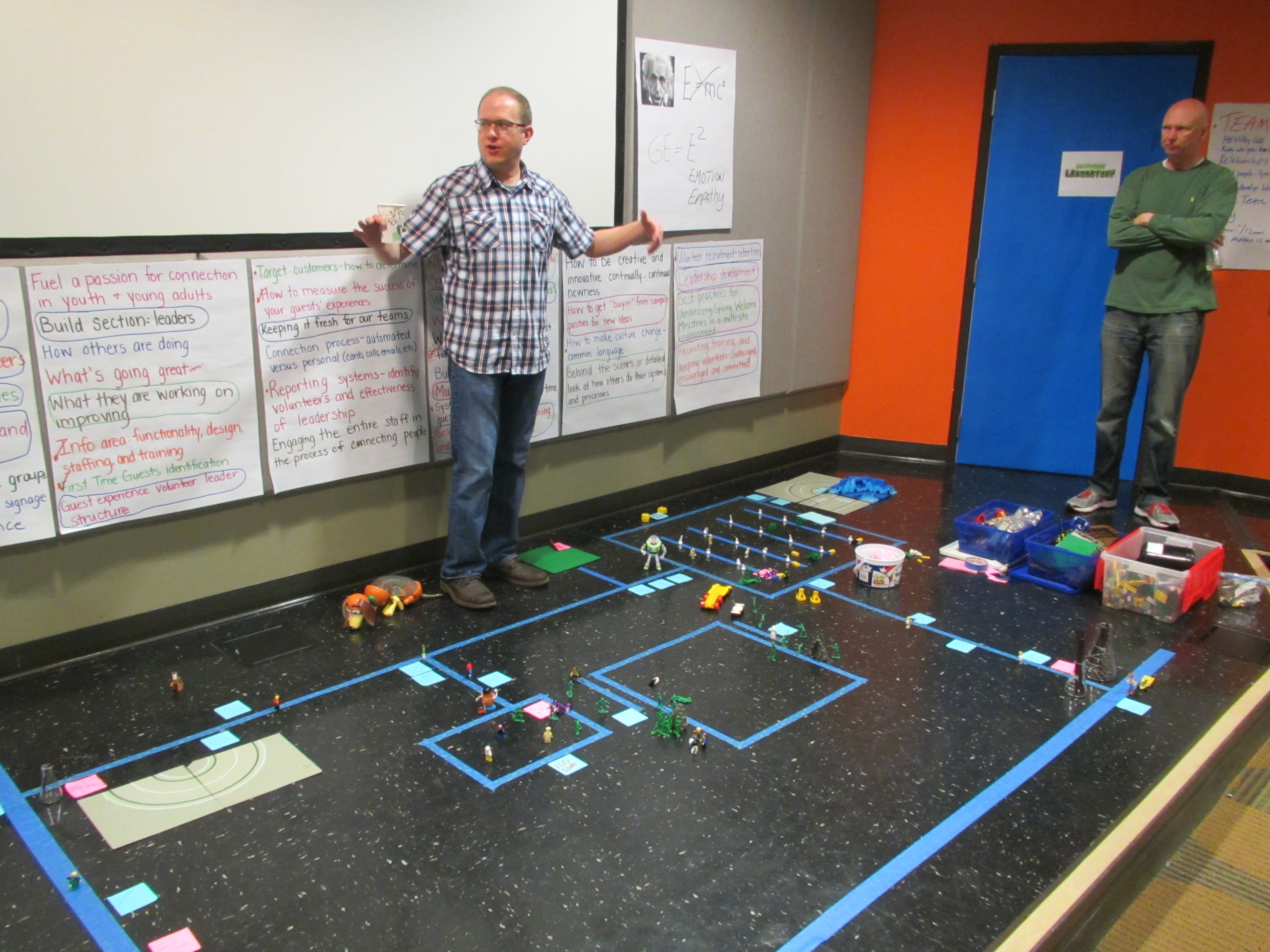
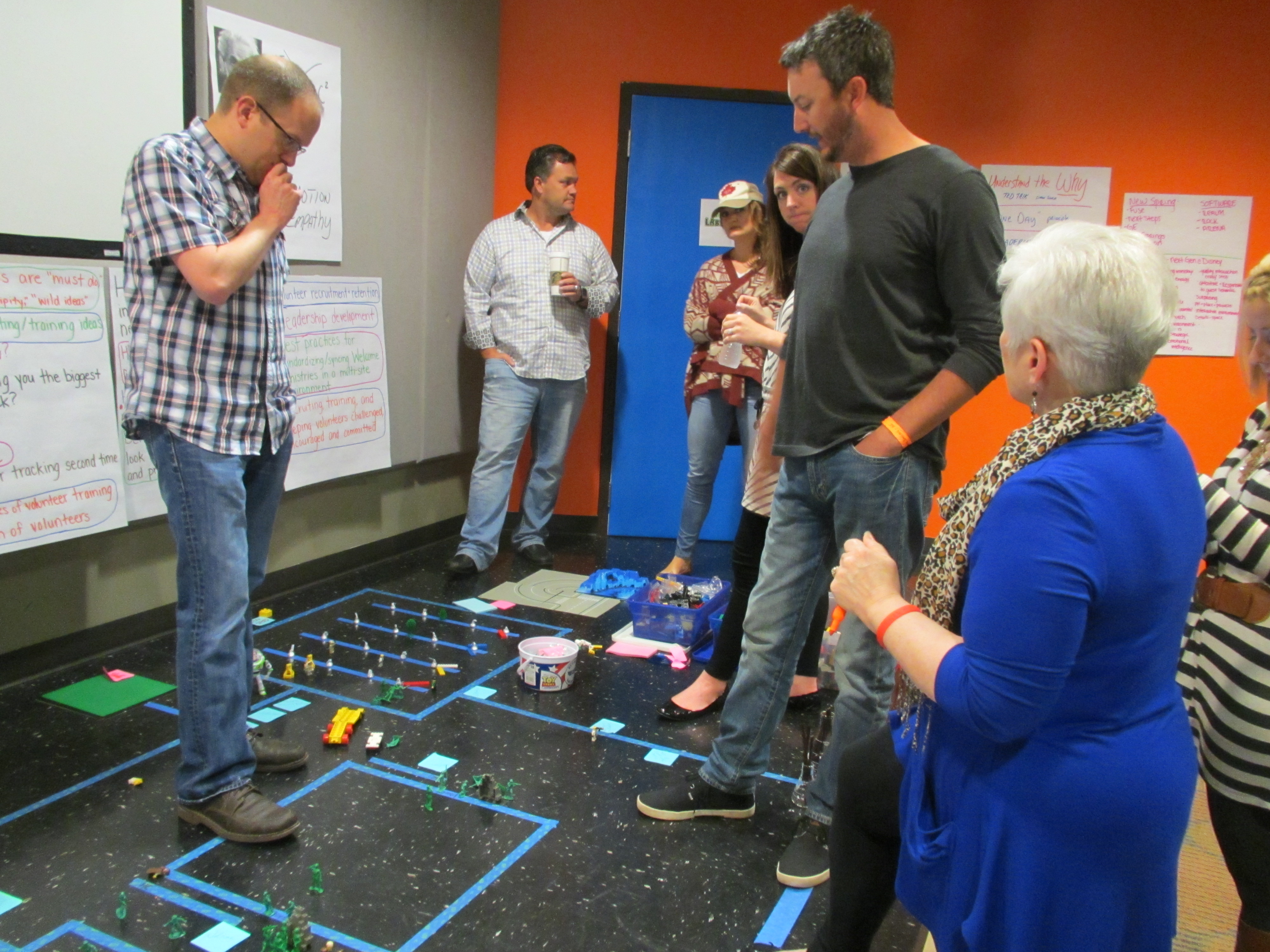
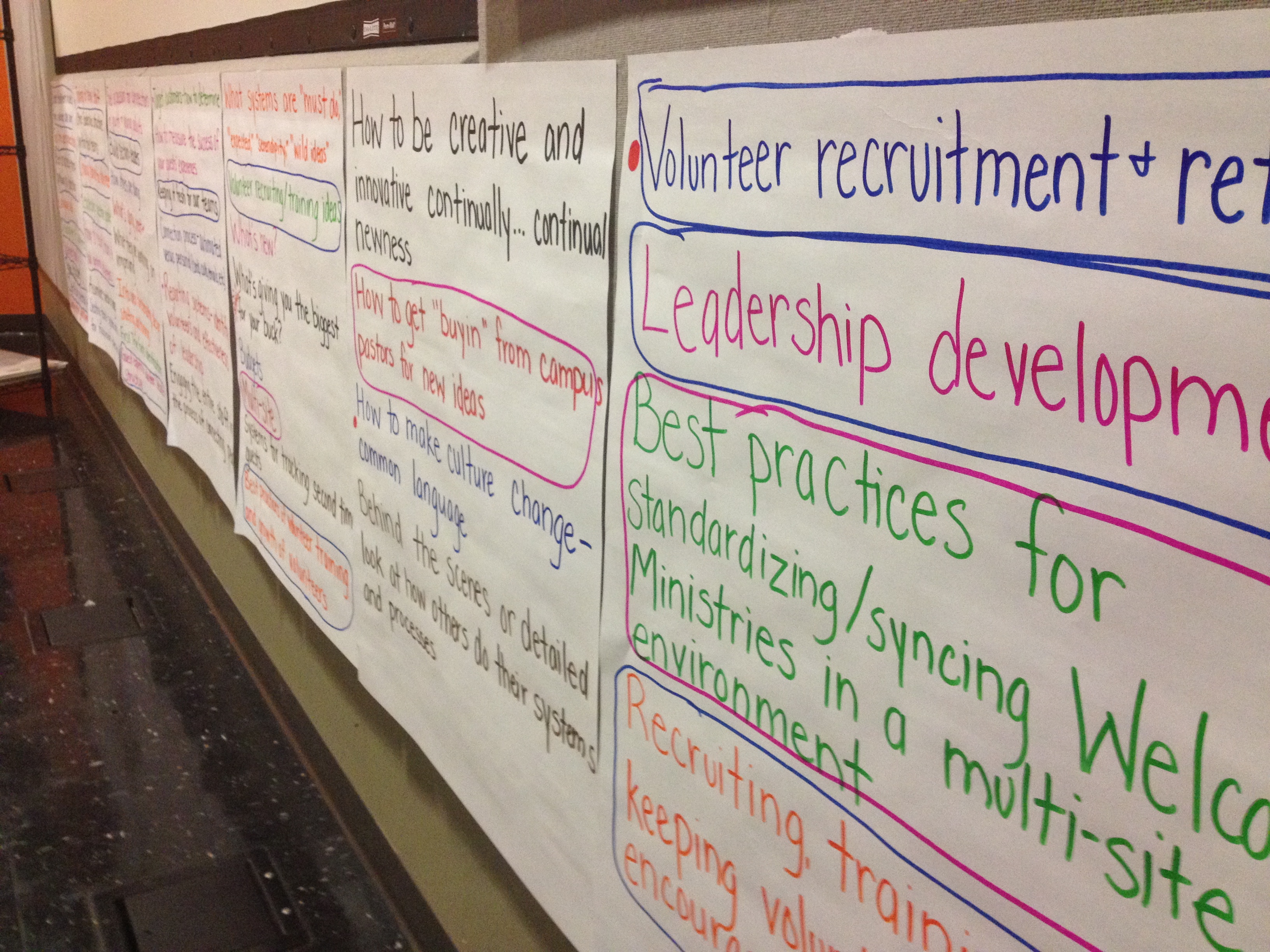
Over the last three days, 18 of the top leaders in church Guest Experiences gathered to answer this question:

What would the DNA of the ultimate Guest Experience look like?

Details will follow, but I wanted to share a few representative photos:

IMG_6936

Participants in the Guest Experience Networking Event 2014 at work creating a Guest Journey Map.


IMG_6979

Danny Franks describes his team’s work in creating the ultimate parking experience for their “church.”


IMG_6898

Pondering the best ideas for vehicle and pedestrian traffic flow.


Charting problems solved...

Charting problems solved…

Table writing...

Table writing…

One-upping Einstein.

One-upping Einstein.