
THE QUICK SUMMARY
The development of meaningful relationships, where every member carries a significant sense of belonging, is central to what it means to be the church. So why do many Christians feel disappointed and disillusioned with their efforts to experience authentic community?
Despite the best efforts of pastors, small group leaders and faithful lay persons, church is too often a place of loneliness rather than connection. In this revised and updated version of his bestselling book, Randy Frazee shows us how church can be so much…better – more intimate and alive. The answer may seem radical today, but it was a central component of life in the early church.
First-century Christians knew what it meant to live in vital community with one another, relating with a depth and commitment that made “the body of Christ” a perfect metaphor for the church. What would it take to reclaim that kind of love, joy, support, and dynamic spiritual growth? Read The Connecting Church 2.0 and find out.
A SIMPLE SOLUTION
According to author Randy Frazee, rediscovering your neighborhood begins with a commitment to the call: embracing the values and the way of life that will make you a good neighbor. This is a decision to take what God has given you and is forming in you and offer it to other people for their sake. It’s climbing out of the pool of individualism, isolation, and consumerism into a way of life that finds individual and satisfying purpose in aligning one’s life to God’s story.
If you embrace this challenge, you will need to start wearing a new set of glasses and learn to see your neighborhoods with fresh eyes. You will need to start looking for opportunities to be considerate and helpful in the smallest of ways. You should be friendly, acknowledging people’s presence with a wave and a smile as you enter and exit the neighborhood. You’ll need to ask questions, seeking to learn about your neighbors by listening to their stories. You should make a decision, in advance, to say yes to as many invitations to dinners and birthday parties in the neighborhood as possible much like Jesus did when He was invited to join the gatherings of His day. And as you walk the streets of your neighborhood, you should pray for the people in each house you pass. When you learn of a need, roll up your sleeves and look for tangible ways to help.
Experience and history have proved that people who share a common geographic place – a neighborhood, an apartment building, a college dormitory, a military barracks – facilitate the four characteristics of community: spontaneity, availability, frequency, and sharing meals.
Here are a few specific tips for rediscovering your neighborhood:
Cut Down the Commute – If at all possible, live in the neighborhood closest to your workplace. If this isn’t possible, try to arrange your schedule to avoid traffic jams. If you’re spending two or three hours a day commuting, it will be difficult to have much time left for anything else. If possible, work remotely from home.
Choose Stability – The U.S. population is characterized by high mobility, mostly for a company transfer or a new job. The difficulty of moving to chase an extra few thousand dollars of income per year is that it doesn’t provide an opportunity for relational roots to grow deep enough to matter. While at times we must face realities that require a move, we must learn to value the benefits of stability and longevity – characteristics that give community a real chance to succeed.
Set Geographic Boundaries – One of the easiest steps you can take to create community in a suburban setting is to use those spaces to create your own geographic boundaries. Using your home as its center, scope out a one-mile radius around your home. Make this area your place of concentration. Seek to do as much within this radius as possible. Shop in this zone. Send your children to school there. Seek to concentrate as much of your “life” there as possible.
Identify a Core – Bring the matter to God in prayer and then seek out one or two Christian families in your neighborhood that you would like to get to know better. It isn’t absolutely essential that these families attend the same church; it actually will be a wonderful expression of the body of Christ.
Free Up Your Schedule – Over the next six months, begin to free up your schedule. Make a master list of the things you do, and start saying no to what splinters your life and leaves you feeling hurried and stressed. This will mean you will say no to some of the things you enjoy, which will be hard to do. The truth is, these “good” commitments can pull you away from an experience of deep community as effectively as secular commitments can.
Spend Time Together – Begin spending time together with the one or two families or singles you have sought out in your neighborhood or apartment community. Start by sharing a dinner where everyone brings something. If you can’t do dinner, do dessert. Take walks together in the neighborhood. The list of possibilities is unlimited, and the beauty is that community doesn’t have to cost a lot of money.
Play in the Front Yard Together – One of the simplest and most practical things you can do to create community in your neighborhood is to spend time on your front porch – or even play out in the front yard. Purchase lawn chairs or a swing and sit on your porch or in the front yard in the evenings or on weekends. Bring out a jut of iced tea with some extra glasses. Put up a corn hole set on the sidewalk or front yard and invite people to play a quick game. Wave to people driving by; one day they will stop by.
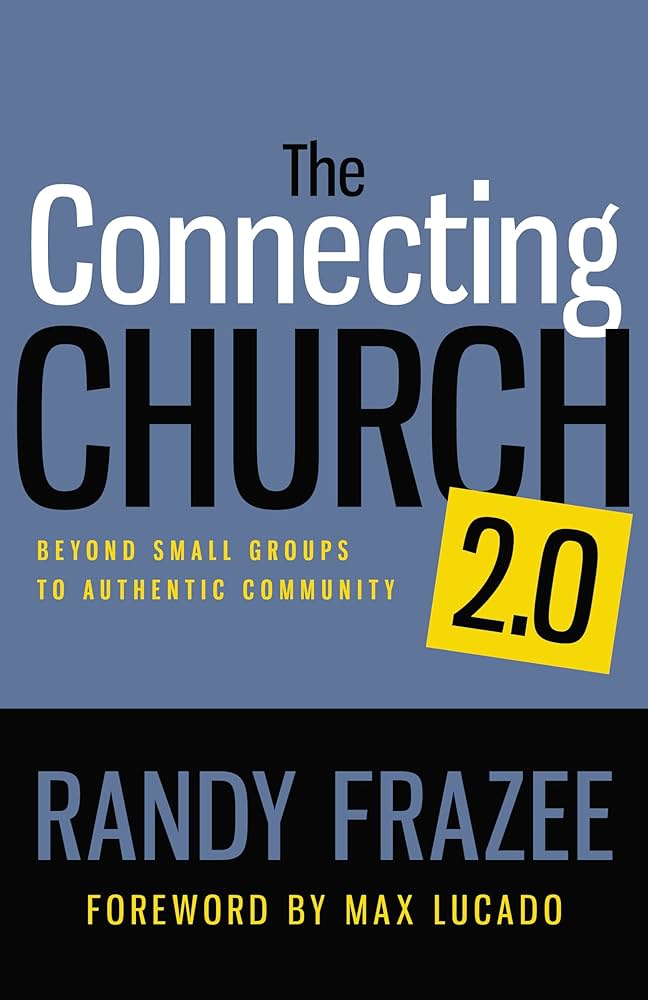
Randy Frazee, The Connecting Church: Beyond Small Groups to Authentic Community
A NEXT STEP
According to author Randy Frazee, it is not reasonable to expect that everyone will move from the suburbs to a small town. Given the scenario of people remaining in a suburban or urban context, how can a family began to create unity without relocating? With the architectural forces that work against achieving community in the suburbs, this pursuit will have to be intentional. If you venture on this journey, you will be pioneering an ancient idea for a new day.
If you are having a tough time seeing how this vision can be accomplished in your current neighborhood, view these steps listed above as though you are going to move to a new place and make a fresh start. One of the biggest mistakes people make today is looking only to buy a house, not to find a neighborhood. We spend a lot of money for an inspection to ensure the quality of the home’s construction, yet because relationships are more important than sticks and bricks, commonsense suggests it would be wise to conduct a neighborhood inspection as well. Even if you are not planning a move, seeing your current neighborhood through the eyes of an outsider can bring fresh vision to helping rediscover your neighborhood.
Answer the following questions and reflect on your responses, determining 2-3 actions to take in the next 30 days.
- If you just moved to your neighborhood, who would you invite over to dinner?
- What activities and times of the year make it possible to connect with those who live in proximity? How can you use them as a point of connection?
- Which neighbor could you get to know better, and how will you do this?
 27gen.com