
In the fast-paced, often short-sighted world we’re in, the ability to think strategically is a invaluable asset. For Modern Elders, strategic thinking is not just a skill – it’s a natural extension of their accumulated experience and wisdom. This article explores how Modern Elders can leverage their unique ability to see the big picture, recognize patterns, and anticipate long-term implications to become indispensable strategic assets in their organizations.
In our world today, any concept of “normal” is an illusion. The future constantly defies our predictions and plans, making adaptability crucial. While knowledge and answers are readily available, they quickly become outdated. Instead of seeking a stable norm or relying solely on facts, we must embrace constant change and use existing knowledge as a starting point for further exploration and discovery.
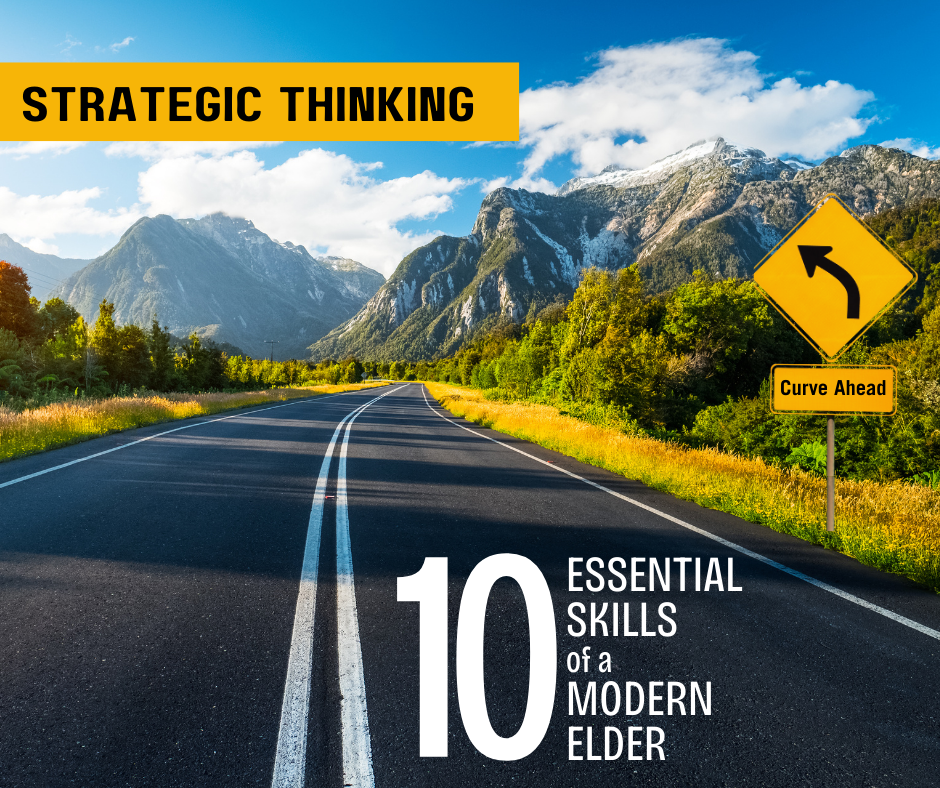
The Essence of Strategic Thinking
Strategic thinking for Modern Elders encompasses two key components:
- Big Picture Perspective: The ability to step back and see the broader context and long-term implications of decisions and actions.
- Pattern Recognition: The capacity to identify trends, cycles, and recurring themes based on years of accumulated experience.
Cultivating the Big Picture Perspective
Modern Elders are uniquely positioned to see the big picture due to their wealth of experience. To enhance this ability:
- Contextual Analysis: Always consider decisions within the broader context of industry trends, economic conditions, and societal changes.
- Long-Term Thinking: Look beyond immediate results to consider the potential long-term consequences of actions and strategies.
- Systems Thinking: Understand how different parts of an organization or industry interact and influence each other.
- Scenario Planning: Regularly engage in exercises that envision various possible futures and their implications.
- Cross-Industry Insights: Draw parallels and lessons from other industries to gain fresh perspectives on your own.
- Historical Perspective: Use your knowledge of past events and cycles to inform future predictions and strategies.
Practical steps to develop big picture thinking:
- Regular Reflection: Set aside time for deep thinking and reflection on broader issues affecting your organization and industry.
- Diverse Information Sources: Consume a wide range of information from various fields to broaden your perspective.
- Collaborative Discussions: Engage in strategic conversations with colleagues from different departments and levels.
- Mentorship: Share your big picture insights with younger colleagues while also gaining fresh perspectives from them.
Mastering Pattern Recognition
Pattern recognition is a powerful tool that Modern Elders can bring to the table. It involves:
- Trend Identification: Spotting emerging trends before they become obvious to others.
- Cycle Awareness: Recognizing recurring business, economic, or social cycles that may impact strategy.
- Anomaly Detection: Noticing when current events or data deviate from expected patterns, potentially signaling important shifts.
- Cross-Pollination: Identifying patterns in one area that may apply to another, fostering innovation.
To enhance pattern recognition skills:
- Reflection on Experience: Regularly review past experiences and extract lessons and patterns.
- Data Analysis: Combine your intuitive pattern recognition with data-driven insights for more robust conclusions.
- Interdisciplinary Learning: Study patterns from various fields (e.g., nature, history, psychology) to apply to business contexts.
- Mindful Observation: Practice being present and observant in various situations to pick up on subtle patterns.
- Hypothesis Testing: Form hypotheses based on perceived patterns and test them against new information.
Applying Strategic Thinking in the Modern Workplace
As a Modern Elder, your strategic thinking can add significant value in various ways:
- Decision Making: Provide a balanced perspective that considers both short-term needs and long-term implications.
- Risk Management: Identify potential risks and opportunities that others might overlook.
- Innovation: Use pattern recognition to inspire novel approaches and solutions.
- Mentorship: Guide younger colleagues in developing their own strategic thinking skills.
- Change Management: Help organizations navigate change by providing historical context and anticipating future trends.
- Crisis Navigation: Draw on past experiences to maintain calm and strategic focus during turbulent times.
Overcoming Challenges to Strategic Thinking
While Modern Elders have a natural advantage in strategic thinking, there are potential pitfalls to avoid:
- Resistance to Change: Guard against using past experiences to resist necessary changes.
- Overconfidence: Balance confidence in your insights with openness to new information and perspectives.
- Analysis Paralysis: Avoid getting stuck in endless analysis; know when to act on your strategic insights.
- Communication Barriers: Work on articulating your strategic thoughts clearly to those who may not share your level of experience.
To address these challenges:
- Continuous Learning: Stay current with new methodologies and technologies that can enhance your strategic thinking.
- Diverse Collaboration: Regularly engage with younger colleagues and those from different backgrounds to challenge your assumptions.
- Balanced Approach: Combine your intuitive pattern recognition with data-driven analysis for more robust strategic insights.
- Effective Communication: Develop skills in storytelling and data visualization to convey complex strategic ideas more effectively.

As a Modern Elder, your capacity for strategic thinking is one of your most powerful assets. Your ability to see the big picture, recognize patterns, and anticipate long-term implications can provide invaluable guidance in an increasingly complex and fast-paced business environment.
By consciously cultivating and applying these skills, you position yourself as a crucial strategic asset to your organization. Your unique perspective can help bridge the gap between short-term pressures and long-term sustainability, fostering more resilient and forward-thinking organizational strategies.
Strategic thinking is not about predicting the future with certainty, but about being prepared for various possibilities and guiding your organization towards sustainable success. As you continue to refine your strategic thinking skills, you’ll not only enhance your own value as a Modern Elder but also contribute significantly to the long-term success and resilience of your organization.
Part Seven in a Series – Find the Introduction here, along with previously published articles.

 27gen.com