
If a person is a point of view, then to know them well you have to ask them how they see things.
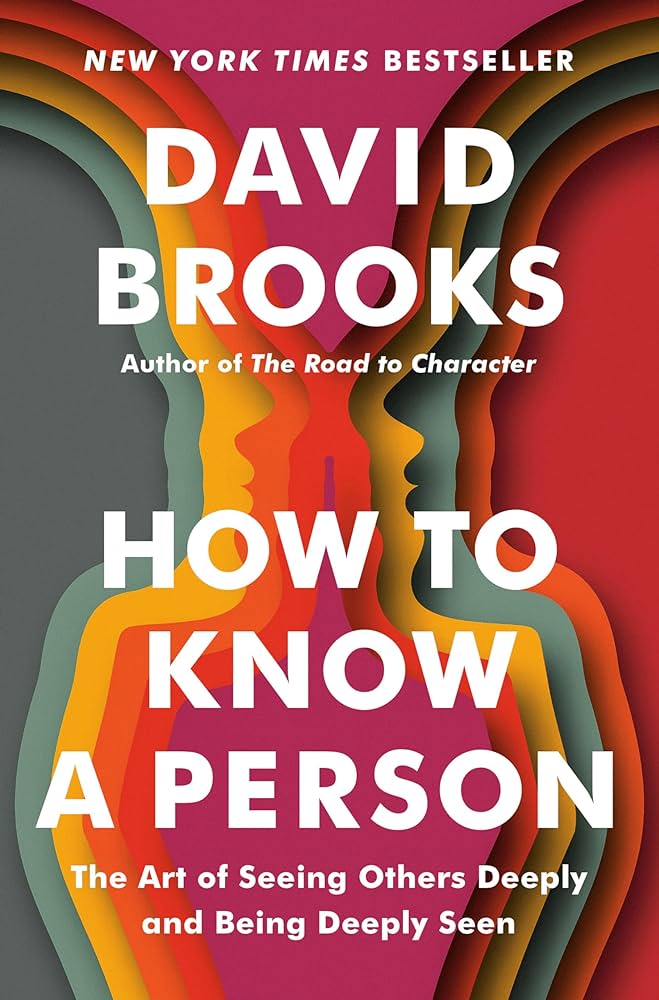
David Brooks, How to Know a Person
It doesn’t work to imagine what’s going on in people’s heads – you have to ask them.
You have to have a conversation.

A good conversation is an act of joint exploration. Somebody floats a half-formed idea. Somebody else seizes on the nub of the idea, plays with it, offers their personal perspective based on their memories, and floats it back so the other person can respond. A good conversation sparks you to have thoughts you never had before. A good conversation starts in one place and ends up in another.
Author David Brooks spent time talking with conversation experts and reading their books. He put together the following list of some of the nonobvious ways to become a better conversationalist.
- Treat attention as an on/off switch, not a dimmer. If you’re in a conversation, you’re going to stop doing anything else and just pay attention to this.
- Be a loud listener. When another person is talking, you want to be listening so actively that you’re practically burning calories. Active listening is an invitation to express.
- Favor familiarity. People have trouble picturing and getting excited about the unfamiliar, but they love to talk about what they know.
- Make them authors, not witnesses. Good conversationalists don’t only want to talk about what happened, they want to know how you experienced what happened.
- Don’t fear the pause. Wait for the end of the other person’s comment, and then pause a few beats to consider how to respond to what’s been said.
- Do the looping. Repeat what someone just said in order to make sure you accurately received what they were trying to project.
- The midwife model. In conversation, a midwife is there not to lead with insights but to receive and build on the insights the other person is developing.
- Keep the gem statement at the center. In the midst of many difficult conversations, there is a truth underneath the disagreement, something both parties can agree upon.
- Find the disagreement under the disagreement. When you search for the disagreement under the disagreement, you are looking for the moral, philosophical roots of why you each believe what you do.
- Don’t be a topper. When someone tells you about a situation, don’t turn around and say, “I know exactly what you mean. Here’s what’s going on with me.”
The experience of being listened to all the way on something – until our meaning is completely clear to another human being – is extremely rare in life.
Mónica Guzmán
In the pursuit of meaningful, engaging conversations, it’s essential to develop a set of social skills and master the art of conversation. The ultimate goal is to make the experience of being actively listened to and truly understood a more common occurrence in our lives.
Inspired by, and adapted from, How to Know a Person by David Brooks

 27gen.com