Sign Language

A wayfinding system links different people together, even if they do not share a common language or destination, by guiding all of them through the same spaces with a single system of communication. The unifying language of a wayfinding system creates a public narrative of how people witness, read, and experience a space. Each sign in a system, each separate voice, serves a particular function and displays a specific kind of content called a message, which might include nonverbal graphic symbols, images, or words.

– David Gibson, The Wayfinding Handbook

Most wayfinding systems can be broken down into several categories of signs: identification, directional, orientation, and regulatory.

EXTERIOR

Identification – the building blocks of wayfinding

  • Site monument identification
  • Site entry identification
  • Building mounted identification
  • Entrance identification
  • Parking area identification
  • Accessible parking identification

Directional – the circulatory system of wayfinding

  • Off-site trailblazers
  • On-site vehicular directional signs
  • Pedestrian directional signs

Regulatory – describes the do’s and don’ts of a place

  • Parking regulations
  • Entrance information

INTERIOR

Identification

  • Store identification
  • Area/level identification
  • Public amenity identification
  • Service and maintenance identification
  • Office identification
  • Elevator and stair identification

Directional

  • Directional signs

Orientation – provides an overview of surroundings

  • Building directory
  • Elevator/floor directory

Regulatory

  • Fire egress maps
  • Life safety signs

The sign narrative is the voice of the building and its owner, revealing the pathways and destinations of the building or space, the rules that govern how to use it, and essential information about activities happening within. It is the job of the wayfinding designer to weave these voices together into a single eloquent statement as people navigate the space.

Wayfinding systems serve living environments where functions for areas change, spaces are renovated, and new facilities are constructed. Wayfinding systems must be flexible and adapt to the evolution of a place.

Information from this series of post this week has come from The Wayfinding Handbook by David Gibson. A concise and engaging work, it is an excellent resource for leaders wanting to apply the art and science of wayfinding to their organization. The extensive illustrations, using real-life examples, provide a visual analysis of the fundamentals that lead to great wayfinding design.

You may not think of yourself as a designer; you would be wrong.

Wayfinding design is an intuitive process we use all the time, one that helps us navigate the places and spaces we encounter every day. Leaders may not design a wayfinding system, but it is a process that they need to have a firm grasp on.


part of the 2013 GsD (Doctor of Guestology) journey

Where is your Red X?

In this case, literally.

The one that says “You Are Here.”

red x

Exciting the subway in the middle of a city or stepping off the elevator onto a strange floor is momentarily disorienting: you scan the space to figure out where you are and find clues that will lead you where you want to go. This scanning is similar to searching for an article in a magazine or perusing the home page of a website to figure out how it is organized and how to read a specific section.

All these reflex actions are about wayfinding.

 – Christopher Pullman, design consultant and senior critic at Yale University School of Art

Wayfinding pays a very important part in ChurchWorld – from the design of your website to the design of your graphic pieces to the design of your building (notice the common word – design.) If you are a ChurchWorld leader and don’t think you are or need to be a designer, I invite you to join me in a conversation that started here.

People will always need to know where they are, how to reach their destination, what is happening there, and how to exit.

Yesterday, I enjoyed spending some time with Zach and Benjamin from The Avenue Church in Waxahachie, TX – they were visiting Elevation Church’s Uptown campus. Zach is the Associate Connections Minister there, and he and I had some great conversations about Guest Experiences, specifically wayfinding.

Increasingly, my discussions with church leaders about Guest Experiences include the issue of wayfinding – most of the time in a physical sense of the spaces they are using, renovating, or preparing to build. Sometimes, it’s just a dreaming conversation, but even that is a great place to start!

For the next few days, I want to dive into the topic of wayfinding in ChurchWorld – I hope you will enjoy the journey!


part of the 2013 GsD (Doctor of Guestology) journey
The LEGO Principle

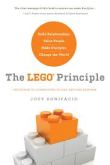
Pastor Joey Bonifacio, author of The LEGO Principle, has written a brilliantly simple book about discipleship – built on the metaphor of the LEGO brick.

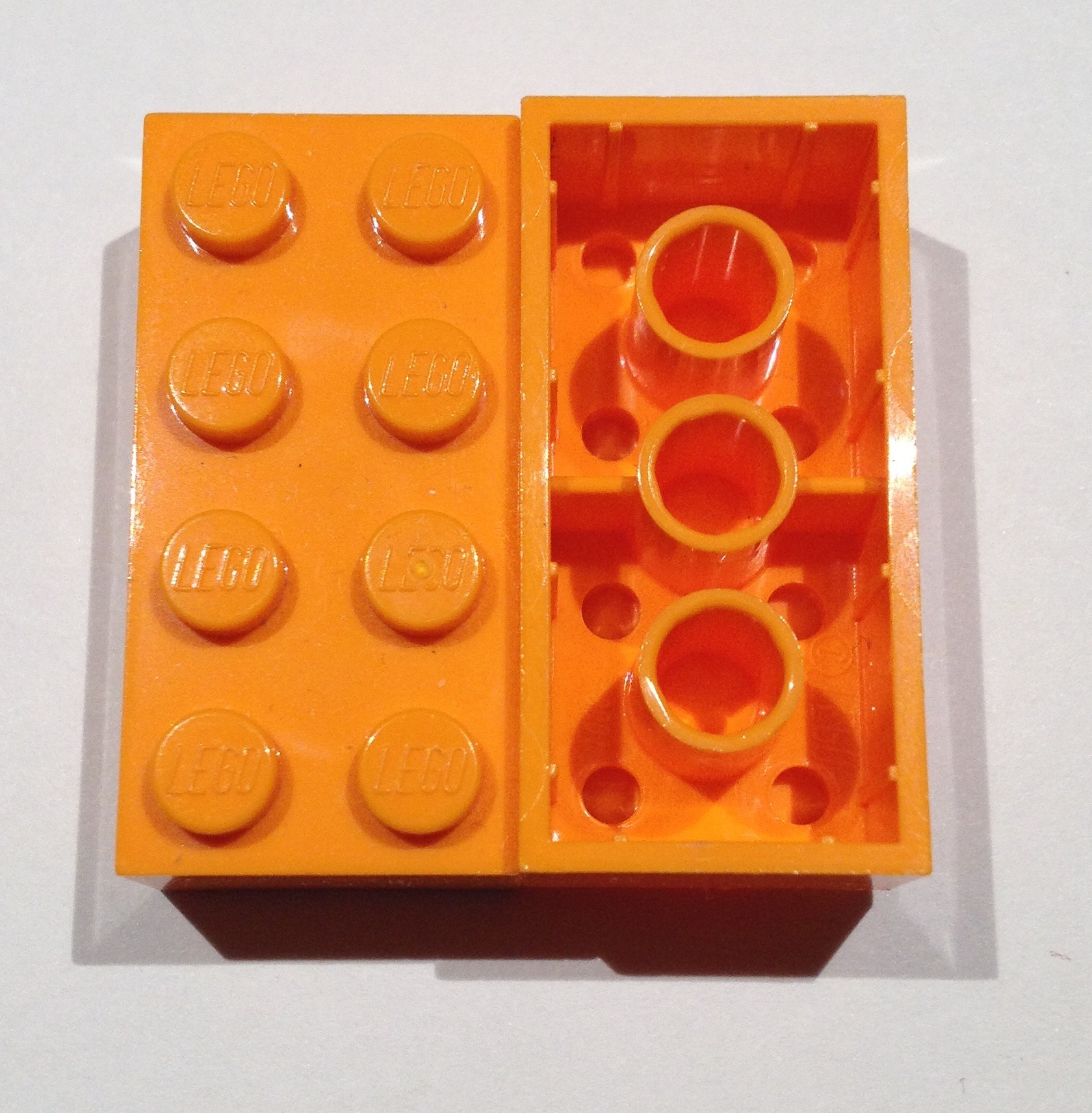
LEGO brick orange copy

The LEGO Principle: Connect first to God and then to one another.

You’ve gotta love it!

Regardless of the shape, size, or color of a LEGO brick, each one is designed to do just one thing: connect. LEGO pieces are designed to connect at the top with studs and the bottom with tubes.

Like LEGO, if you can connect to the top with God and to the bottom with others, you can pretty much shape the world you live in.

Here are a few examples pulled from the LEGO world, with Bonifacio’s application to the life of the believer:

Not all LEGO pieces have the same ability to connect. Some have the capacity to connect with as many as twelve or more bricks while others are limited. There are pieces that can connect to only one other brick. The secret of LEGO is not that every brick connects with the same number of other pieces but that each piece has the capacity to connect.

This secret applies to believers as well: every believer has the ability to connect directly to God.

Each LEGO brick comes with studs that give it the ability to connect. Every stud has the LEGO trademark engraved on it, a symbol of trust. In the past others have tried to copy LEGO bricks but have been unsuccessful. Their studs did not connect as well.

Like trusted LEGO bricks, we connect best when we are the real thing.

Two eight-stud LEGO bricks can be combined in twenty-four ways. Three eight-stud bricks can be combined in 1,060 ways. Six eight-stud bricks can be combined in 102,981,500 ways. With eight bricks the possibilities are virtually endless.

Just like LEGO bricks, using love to connect with people has endless possibilities.

By 1968, nineteen years after the first LEGO brick was made, the LEGO company built its first LEGOLAND – an entire city of LEGO structures in its hometown of Billund, Denmark. Something was missing: people.

In 1974 LEGO began making people, starting with the LEGO family. These mini figures soon became the biggest-selling product, enjoyed by both boys and girls. Several billion of these figures have been built to date. LEGO realized that people love people. What good is a world without people?

To the degree that we value and love people will we  engage our community and culture.

LEGO bricks are built to connect multigenerationally. That means bricks made in the 1950s connect just as well with those made in 2013. Connecting bricks made decades apart is not a problem.

In the same way, when people make disciples through relationships, generational, traditional, and denominational differenced fall by the wayside.

And like LEGO bricks, when the connections happen, the possibilities are endless.

The Lego Principle

The LEGO Principle